


Freshwater vs Saltwater Pearls: Differences & Buying Guide
When you shop for pearl jewelry, you'll notice two main types: freshwater and saltwater. Freshwater pearls grow in mussels that live in rivers and lakes, while saltwater pearls form inside oysters in oceans and seas. Both are real pearls, but they look different, cost different amounts, and have unique qualities that make each type special for different reasons. Understanding these differences helps you choose pearls that match your style and budget perfectly.
This guide breaks down everything you need to know to make a smart buying decision. You'll learn how each pearl type is grown, what makes them look the way they do, and which one fits your budget and lifestyle needs. We'll compare their appearance, durability, and value side by side so you can see the differences clearly. You'll also get practical tips on caring for your pearls and guidance on choosing the right type for your jewelry collection. By the end, you'll know exactly which pearl suits you best and why.
Why freshwater vs saltwater pearls matters
Your choice between these two pearl types directly affects how much you spend, what your jewelry looks like, and how well it lasts. The difference isn't just technical; it changes your daily experience wearing the pearls and the compliments you receive. When you understand what sets freshwater vs saltwater pearls apart, you avoid paying more than necessary and pick pieces that match your lifestyle perfectly.
Budget Impact and Value
Saltwater pearls typically cost two to ten times more than freshwater ones with similar size and quality. This price gap exists because saltwater oysters produce only one or two pearls at a time, while freshwater mussels can grow up to 50 pearls simultaneously. Your budget stretches further with freshwater pearls, letting you buy larger pieces or build a bigger collection without overspending. If you want the prestige of saltwater pearls for special occasions, you'll pay premium prices for that status symbol.
The type of water where a pearl grows determines both its rarity and your final cost.
Daily Wearability Differences
Freshwater pearls contain thicker nacre layers, which makes them more durable for everyday wear. You can wear them more confidently during normal activities without worrying about damage. Saltwater pearls show brighter, mirror-like luster that catches light dramatically, but their thinner nacre means you need to handle them more carefully. The choice between durability and dramatic shine depends on whether you plan to wear your pearls daily or save them for special events. Understanding these practical differences helps you select pearls that fit your wearing habits, not just your aesthetic preferences.
How to choose the right pearl type for you
Your personal needs and lifestyle determine which pearl type serves you best, not just which one looks prettiest in the store. You need to consider when you'll wear the jewelry, how much you want to spend, and what style matches your wardrobe. The decision between freshwater vs saltwater pearls becomes easier when you answer three key questions about your specific situation and preferences.
Consider Your Occasion and Wearing Frequency
Think about whether you plan to wear your pearls every day or save them for special events. If you want jewelry that handles daily activities without constant worry, freshwater pearls make the smarter choice because their thicker nacre withstands regular wear better. You can shower, exercise, and go about your normal routine with less risk of damage. Saltwater pearls demand more careful handling and work better for occasions when you dress up and stay conscious of your jewelry.

Daily wear requires durability, while special occasions call for dramatic beauty.
Your lifestyle also matters when choosing pearl size and style. Professional settings often look better with smaller, classic pearls (7-9mm) that stay subtle and sophisticated. Evening events or formal occasions let you wear larger statement pieces (10mm+) that draw attention and create impact. Match your pearl choice to how often you actually dress up versus dress casually.
Match Pearls to Your Budget Reality
Set a clear spending limit before you start shopping, then see which pearl type fits that number. Freshwater pearls let you buy quality pieces for $50-$300, giving you attractive jewelry without financial stress. Saltwater options start around $300 for basic quality and climb to thousands for premium pieces. Your budget determines not just which type you buy, but also the size and quality grade you can afford.
Calculate the price per wear to understand real value. A $200 freshwater necklace worn 100 times costs $2 per wear, while a $1,000 saltwater necklace worn 10 times costs $100 per wear. Consider buying freshwater pearls if you want multiple pieces to rotate through your wardrobe. Choose saltwater if you prefer owning one exceptional piece that makes a strong impression on important occasions.
Evaluate Your Style Preferences
Look at your existing jewelry to identify patterns in what you actually wear. If you favor bright, shiny metals like polished silver or white gold, saltwater pearls' mirror-like luster complements that aesthetic perfectly. People who wear warm, matte finishes like brushed gold find freshwater pearls' softer glow matches better with their jewelry style.
Color availability also affects your decision. Freshwater pearls come in natural pastel shades including white, pink, peach, and lavender without dyeing. Saltwater pearls offer limited natural colors, typically white, cream, black (Tahitian), or gold (South Sea). Your wardrobe colors should guide this choice. Cool-toned clothing works well with white or black pearls, while warm-toned outfits pair beautifully with peach or gold pearls. Pick the pearl type that offers colors you'll actually wear with your existing clothes.
What freshwater pearls are and how they are grown
Freshwater pearls form inside mussels that live in rivers, lakes, and ponds rather than oceans. These pearls develop naturally when farmers insert a small piece of donor tissue into the mussel's body, which triggers the nacre-coating process. The mussel covers this irritant with layer after layer of nacre, creating the pearl's distinctive surface over time. China produces most freshwater pearls today, with some cultivation also happening in Japan's Lake Biwa region.
The Tissue-Nucleation Process
Farmers create freshwater pearls using a different method than saltwater pearl cultivation. They insert a tiny piece of mantle tissue from a donor mussel into the host mussel, rather than using a round bead nucleus. This tissue fragment triggers the nacre secretion that builds the pearl. Each mussel can receive multiple tissue implants at once, which means a single mussel grows 20 to 50 pearls simultaneously. This high yield per mussel explains why freshwater pearls cost less than their saltwater cousins.
The tissue dissolves over time, leaving behind a solid nacre pearl without any bead core inside. This full-nacre composition makes freshwater pearls stronger and more durable than saltwater types. You get a pearl that resists chipping and peeling better because the entire structure consists of the same protective material. The downside shows in the pearl's shape, since without a bead template, freshwater pearls often grow into off-round or baroque shapes instead of perfect spheres.
Growing Timeline and Conditions
Freshwater mussels need two to six years to produce harvestable pearls, depending on the desired size and quality. Farmers keep the mussels in controlled freshwater environments where they monitor temperature, water quality, and food supply constantly. The mussels filter nutrients from the water while building their pearls layer by layer. Chinese pearl farms dominate this industry because their climate and freshwater resources create ideal growing conditions.
Freshwater pearl farms can harvest multiple times from the same mussel, making production more efficient.
Modern farming techniques now produce round freshwater pearls called Edison pearls by inserting a bead nucleus instead of just tissue. These pearls grow larger (10-15mm) and rounder than traditional freshwater types, bridging the gap in the freshwater vs saltwater pearls comparison. Pearl farms harvest these larger specimens less frequently because they need more growing time to achieve premium size and quality.
Natural Color Development
Freshwater pearls display natural pastel colors without any treatment or dyeing required. The mussel's inner shell color determines what shade the pearl develops. You'll find natural white, cream, pink, peach, and lavender pearls from the same farming operations. These soft, subtle hues make freshwater pearls popular for jewelry that complements different skin tones and outfit colors. Farmers cannot fully control the color outcome, which adds uniqueness to each harvest and makes certain shades rarer than others.

What saltwater pearls are and main types
Saltwater pearls develop inside oysters that live in oceans, seas, and coastal bays where salt water provides the growing environment. These pearls form when farmers insert a round bead nucleus into the oyster along with a piece of mantle tissue. The oyster coats this bead with layers of nacre over time, creating the pearl's surface. Each saltwater oyster produces only one or two pearls per harvest cycle, which makes them rarer and more expensive than freshwater varieties. Japan, French Polynesia, Australia, Indonesia, and the Philippines host most saltwater pearl farms today.
The Bead-Nucleus Growing Method
Saltwater pearl cultivation relies on a spherical bead nucleus made from Mississippi River mussel shells in most cases. Farmers surgically implant this bead along with donor tissue into the oyster's gonad, the reproductive organ. This bead stays inside the pearl permanently, serving as the core around which nacre layers accumulate. The process yields perfectly round pearls more consistently than tissue-nucleated methods because the bead provides a spherical template for growth.
The oyster needs six months to three years to coat the bead with enough nacre for harvest, depending on the pearl type. Saltwater pearls have thinner nacre layers than freshwater pearls because the bead takes up most of the internal space. You get a pearl with brilliant, mirror-like luster that reflects light sharply, but the thinner nacre means you need to handle these pearls more carefully to prevent damage.
Akoya Pearls: Classic Elegance
Akoya pearls represent the traditional pearl necklace most people picture when they think of pearls. These grow in Akoya oysters found primarily in Japanese coastal waters, with additional farms in China and Vietnam. You'll find Akoya pearls ranging from 2mm to 10mm in size, with most falling between 6mm and 8mm. Their defining feature shows in their exceptionally sharp luster that creates mirror-like reflections on the pearl's surface.
Natural Akoya colors include white with pink or cream overtones, plus silvery blue and light gold shades. Most Akoya pearls receive bleaching or pinking treatments to enhance their white color and create the classic pearl appearance buyers expect. The cultivation process takes 10 to 18 months, making these the quickest growing saltwater pearls. When comparing freshwater vs saltwater pearls, Akoyas offer the brightest shine but come at higher prices than freshwater options of similar size.
Tahitian Pearls: Dark Beauty
Tahitian pearls grow exclusively in black-lipped oysters found in French Polynesian lagoons and atolls. These are the only pearls that develop natural black and dark gray colors without any dyeing or treatment. You'll discover these pearls in sizes from 8mm to 16mm, with their dark body colors ranging from black to charcoal gray, silver, and even rare white. Their surfaces display iridescent overtones in peacock (green-purple), green, blue, or gold that shimmer when light hits them.

Tahitian pearls offer the only natural dark pearl colors in the cultured pearl market.
Cultivation takes two to three years, and each oyster produces just one pearl per cycle. The combination of limited growing regions, long cultivation time, and large sizes makes Tahitian pearls command premium prices. You pay for rarity and the dramatic look these dark pearls create in jewelry designs.
South Sea Pearls: Luxury Giants
South Sea pearls come from the largest pearl oysters and produce the biggest cultured pearls available, typically 9mm to 20mm. These grow in Australian, Indonesian, and Philippine waters where the large Pinctada maxima oysters live. You'll find two distinct color varieties: white South Sea pearls with silver overtones from silver-lipped oysters, and golden South Sea pearls from gold-lipped oysters. Both types display a soft, satiny luster rather than the sharp shine of Akoyas.
The growing period spans two to four years, longer than any other pearl type, which contributes to their exceptional size and thick nacre layers. South Sea pearls represent the most expensive cultured pearls because of their rarity, size, and the intensive farming requirements. You choose these when you want a statement piece that signals luxury and sophistication in your jewelry collection.
Side by side comparison of look and value
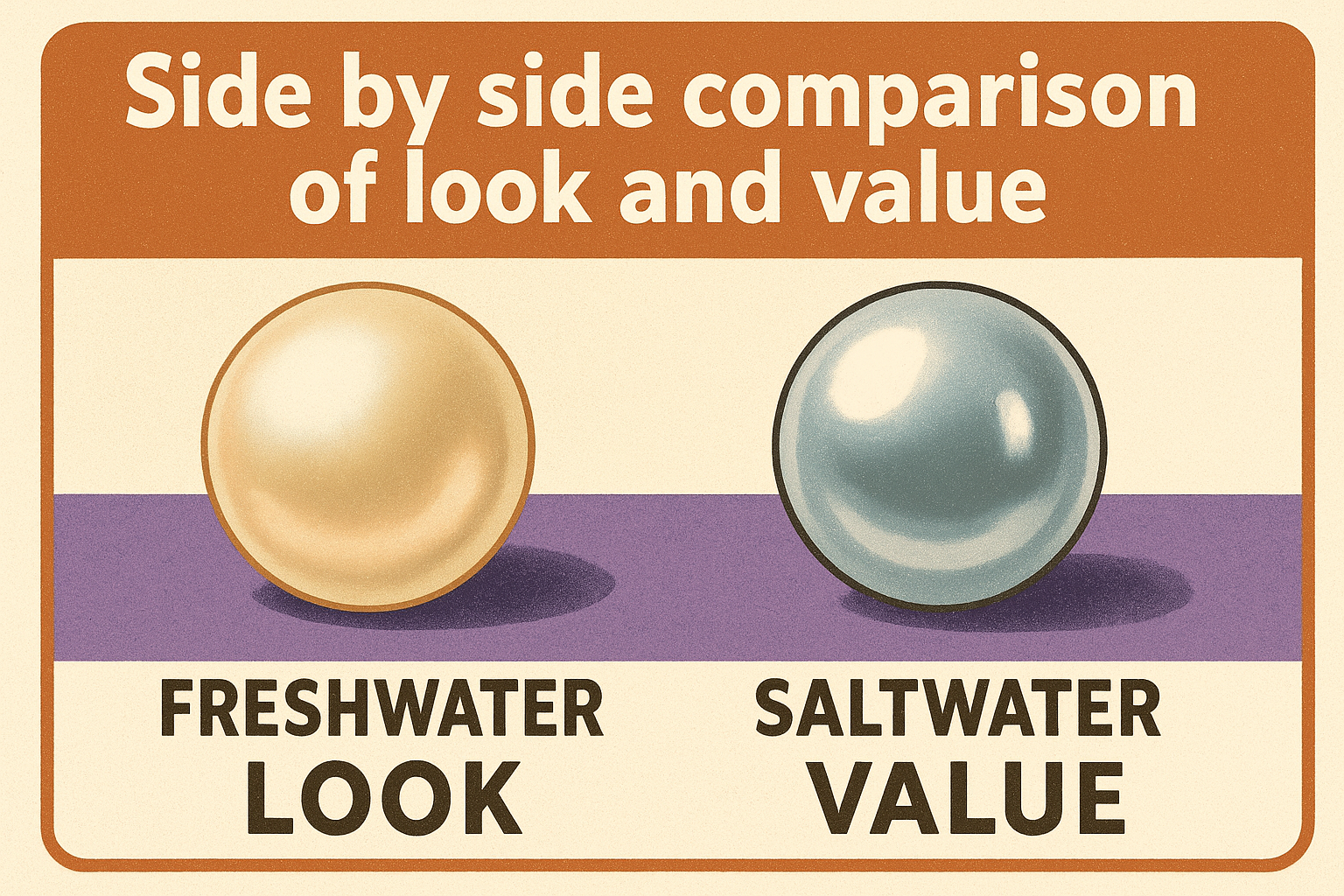
The real differences between freshwater vs saltwater pearls become clear when you place them side by side and examine their appearance and pricing. You'll notice distinct variations in how light reflects off each type, different shape characteristics, and significant price gaps that affect which pearl fits your budget. Understanding these concrete differences helps you make informed decisions rather than relying on vague descriptions or sales pitches.
Luster and Surface Quality Differences
Saltwater pearls display sharper, more reflective luster that creates mirror-like surfaces you can see your reflection in clearly. When you hold an Akoya saltwater pearl under light, you notice bright, crisp reflections that almost sparkle. Freshwater pearls show softer, creamier luster with a subtle glow rather than sharp shine. This difference comes from the nacre layer structure, where saltwater pearls have thinner layers that reflect light more intensely, while freshwater pearls have thicker layers that diffuse light gently.
Luster quality determines how much your pearls catch attention in different lighting conditions.
You can test this yourself by comparing two pearls under a lamp. The saltwater pearl will show defined light spots that move as you rotate it, while the freshwater pearl displays a more uniform glow across its surface. Neither type looks better inherently; saltwater suits dramatic, attention-grabbing jewelry while freshwater works for understated elegance.
Shape and Size Options
Round freshwater pearls remain harder to find and cost more within their category because the tissue-nucleation method produces irregular shapes naturally. You'll see many baroque, oval, and off-round freshwater pearls at affordable prices, but perfectly round ones command premiums. Saltwater pearls achieve near-perfect spherical shapes more consistently because the bead nucleus provides a round template. This makes saltwater your better choice when you want guaranteed symmetry.
Size ranges differ significantly between types. Freshwater pearls typically span 6mm to 12mm, with anything above 10mm considered large. Saltwater options reach much larger sizes, with South Sea pearls growing to 20mm and Tahitians commonly hitting 15mm. Your size needs directly impact which type serves you better.
Price Comparison Across Quality Levels
Budget-conscious buyers find freshwater pearls offer excellent value, with quality strands starting around $50 to $150 for 7-8mm sizes. Comparable saltwater Akoya strands begin at $300 to $500 for similar sizes. The price gap widens dramatically with larger sizes and premium grades. A 10mm freshwater strand might cost $200 to $400, while a 10mm Akoya strand jumps to $1,000 or more.
Luxury saltwater varieties reach extreme price points. Tahitian pearls start around $500 for basic quality and climb to several thousand dollars for exceptional specimens. South Sea pearls represent the highest investment, with quality strands beginning at $2,000 and top-grade pieces exceeding $10,000. You get what you pay for in terms of rarity and prestige, but freshwater pearls deliver beautiful jewelry without requiring luxury budgets. Factor in your planned wearing frequency when deciding whether premium saltwater prices make sense for your situation.
Tips for caring for any pearl jewelry
Both freshwater and saltwater pearls need proper care to maintain their beauty and last for decades. You protect your investment by following simple maintenance routines that prevent damage from chemicals, rough handling, and environmental exposure. These care practices apply whether you own budget-friendly freshwater pieces or luxury saltwater treasures, since all pearls share similar vulnerability to certain conditions and substances.
Clean Your Pearls After Each Wear
Wipe your pearls with a soft, damp cloth immediately after wearing them to remove body oils, perfume, and cosmetic residue that dull their surface. You prevent buildup that damages nacre by making this quick cleaning part of your jewelry removal routine. Use plain water or add a drop of mild soap if needed, but always dry the pearls completely before storing them. Deep cleaning once or twice yearly with a professional jeweler helps maintain luster and catch any stringing issues early.
Store Pearls Separately From Other Jewelry
Keep your pearls in a soft pouch or lined jewelry box away from harder gemstones and metals that scratch their delicate surface. You need separate storage because pearls rate only 2.5 to 4 on the Mohs hardness scale, making them softer than most other jewelry materials. Store them flat rather than hanging to prevent stress on the stringing material. The storage space should have moderate humidity since pearls contain water and can crack in extremely dry environments.
Proper storage prevents 90% of pearl damage that occurs outside of wearing time.
Avoid Chemicals and Extreme Conditions
Apply perfume, hairspray, and makeup before putting on your pearls, never after, since these products contain acids that eat away nacre. You should remove pearl jewelry before swimming, showering, or exercising because chlorine, soap, and sweat accelerate surface deterioration. Understanding the freshwater vs saltwater pearls comparison helps here: both types react identically to chemicals despite their different origins. Take your pearls off during household cleaning tasks to protect them from ammonia, bleach, and other harsh substances that permanently damage their surface.
Bringing your pearl look together
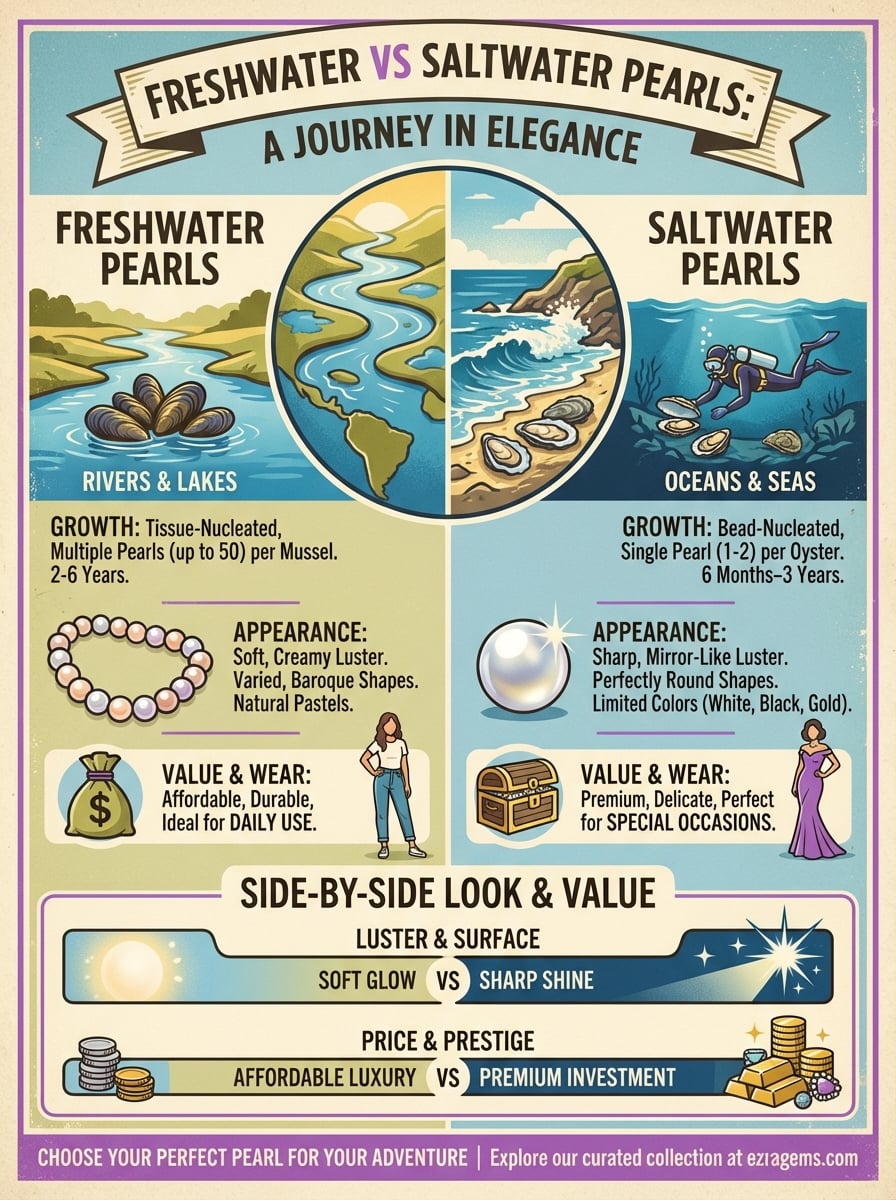
You now understand the complete freshwater vs saltwater pearls comparison and can confidently choose the type that matches your style, budget, and lifestyle needs. Freshwater pearls deliver durability and affordability with soft luster and natural pastel colors perfect for everyday elegance. Saltwater pearls offer dramatic shine and prestige when you want statement pieces that command attention at special events. Your decision comes down to how you plan to wear the jewelry and what matters most in your collection.
Start building your pearl collection with pieces that complement your existing wardrobe and fill gaps in your jewelry rotation. Mix pearl types strategically by choosing freshwater for daily wear and adding one exceptional saltwater piece for occasions that call for luxury. Both types create timeless beauty when you care for them properly and select quality pieces from trusted sources.
Ready to find your perfect pearl jewelry? Explore our curated collection of necklaces, earrings, and sets that bring elegance to every style and budget.
Kommentar hinterlassen