


Most pearls sold today are cultured, meaning genuine, but imitations are everywhere from costume counters to estate sales. Run a quick combination of the tooth test, a luster check, and a drill-hole inspection to screen what you have. Anything with real financial or sentimental weight deserves an X-ray or gemological lab report before you trust a home test’s verdict.
TL;DR:
- Genuine pearls, whether natural or cultured, develop nacre over years, creating a gritty surface and a deep orient glow that imitators cannot replicate.
- At-home tests such as tooth grit, luster, weight, and inspection of drill holes can help distinguish real pearls from glass or plastic fakes, but should be combined for accuracy.
- Fake pearls are usually made from glass, plastic, or shell, and can pass some tests, especially temperature and weight, making magnified drill-hole checks critical.
- High-value pearls require professional lab testing, such as X-ray or microscopic analysis, to definitively confirm authenticity and identify treatments or natural origin.
- Prices vary widely, with cultured freshwater pearls starting around $50, saltwater varieties costing hundreds or thousands, while simulated pearls typically cost $10 to $40.
Table of Contents
- Real vs Fake Pearls: What Separates Them Chemically and Visually
- Checklist: 6 Quick Tests to Try Now
- How Do You Perform Each Pearl Authenticity Test?
- What Are the Different Types of Pearls, and How Do They Test?
- When Should You Get Professional Pearl Testing?
- Why Ezragems Talks Straight About Simulated and Genuine Pearls
- What Do Real Pearls Cost Compared to Fake Ones?
- What Materials Are Fake Pearls Actually Made From?
- How Should You Care for Real Pearls vs. Fake Ones?
- How Much Testing Does Your Pearl Actually Need?
- Ezragems’ Real and Simulated Pearl Options, Explained
- Sources
Real vs Fake Pearls: What Separates Them Chemically and Visually
The difference between a real pearl and a fake one comes down to what’s actually inside it. Real pearls, whether natural or cultured, form when a mollusk secretes layer after layer of nacre around an irritant, a process that takes 5 to 10 years. That slow buildup of translucent nacre is what gives genuine pearls their signature depth of shine, called orient, and their slightly gritty surface texture.
Fake pearls skip that process entirely. Most are glass, plastic, or shell beads dipped or coated in a pearlescent lacquer to fake the look. Cultured pearls, despite the name, are not fakes. They’re real pearls grown with human assistance inside a living mollusk, and they now account for nearly all pearls sold on the market. Natural pearls, formed without any human intervention, are rare enough today that most jewelry buyers will never encounter one outside an auction house or estate collection.
Here’s the practical distinction that matters for testing: authenticity checks are really checking for nacre. Anything with true nacre, natural or cultured, will behave one way under a magnifier and a fingernail. Anything without it, no matter how convincing the coating, will eventually give itself away.
Checklist: 6 Quick Tests to Try Now
Before you dig into the details, run through this fast screening sequence. None of these tests alone proves anything, but together they’ll tell you whether a strand is worth a closer look or a trip to a lab.
- Tooth test. Gently rub a clean pearl against the biting edge of your front teeth. A gritty, sandpaper-like texture suggests real nacre; a smooth, slippery glide suggests glass or plastic.
- Tilt for luster. Hold the pearl under natural light and rotate it slowly. Real pearls show orient, a soft glow that seems to rise from beneath the surface, not just bounce off it.
- Check the drill holes. Look for chipped coating, a visible core color different from the surface, or buildup of flaking material around the hole edge.
- Compare weight. Real and cultured pearls feel denser in the hand than plastic imitations of the same size, though glass fakes can come close.
- Test the temperature. Real pearls feel cool against your skin for a few seconds before warming; plastic warms almost instantly.
- Look for imperfections. Genuine pearls rarely match perfectly in size, shape, or color across a strand. Suspiciously uniform, flawless pearls are a red flag.
No single test here is conclusive on its own. Combine at least two or three before drawing a conclusion, and treat a “fail” on any test as a reason to dig deeper rather than a final verdict.
Pro Tip: Test in a spot on the strand you don’t mind marking slightly, like near the clasp, and never use excessive force on the tooth test. Hard rubbing can damage genuine nacre just as easily as it can scuff a coating.
How Do You Perform Each Pearl Authenticity Test?
Each of the six checks above works on a different principle, and each has a specific way it can mislead you. Knowing the mechanics behind the test is what separates a confident buyer from someone guessing.
The tooth and texture test
Rub the pearl lightly along the edge of clean, dry front teeth. Real nacre is made of overlapping calcium carbonate platelets, and that layered structure creates microscopic friction you can feel as grittiness. Glass and plastic imitations are molded as a single smooth surface, so they glide without resistance.
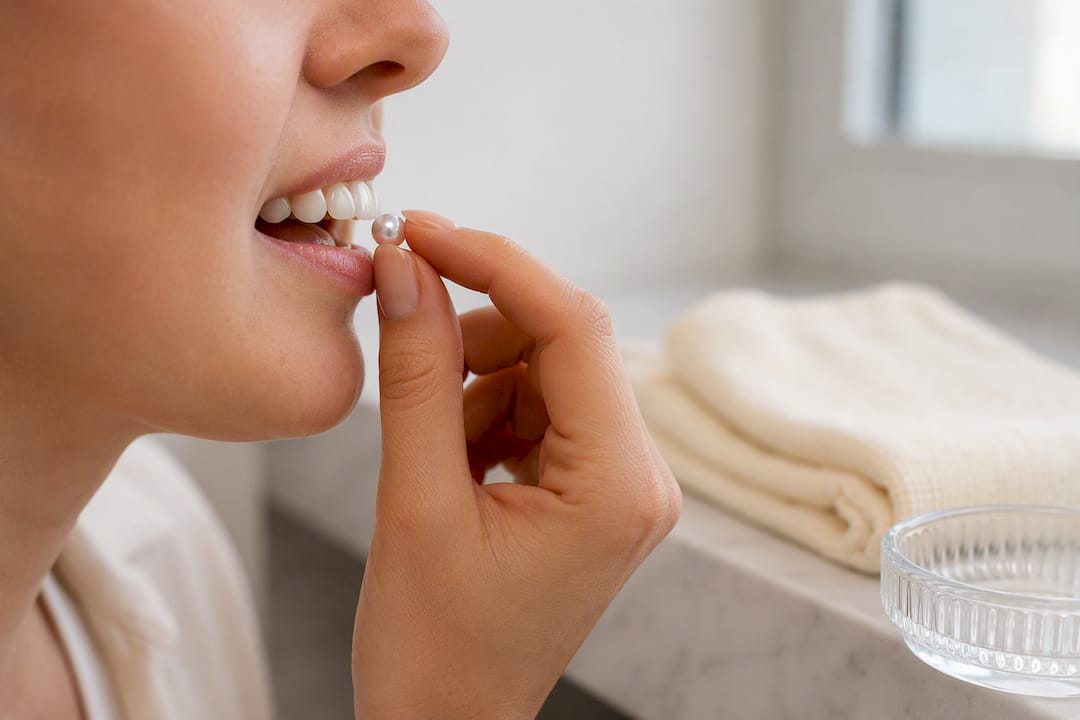
The catch: some high-end fakes are coated with a textured lacquer specifically designed to mimic that grit, and a few cheap “pearlized” beads use rough finishes that can feel gritty in the wrong direction. Wash your hands first, since oils and lotion residue can smooth out the texture reading on a genuine pearl and give you a false negative.
Luster and orient under natural light
Move the pearl away from artificial light and hold it against a plain dark background, ideally black cloth or a dark tabletop. Slowly tilt it back and forth. A genuine pearl’s orient comes from light passing through multiple translucent nacre layers and reflecting back with a soft, almost three-dimensional glow. Fakes tend to show a flat, uniform shine that sits on the surface and doesn’t shift much as you turn the pearl.
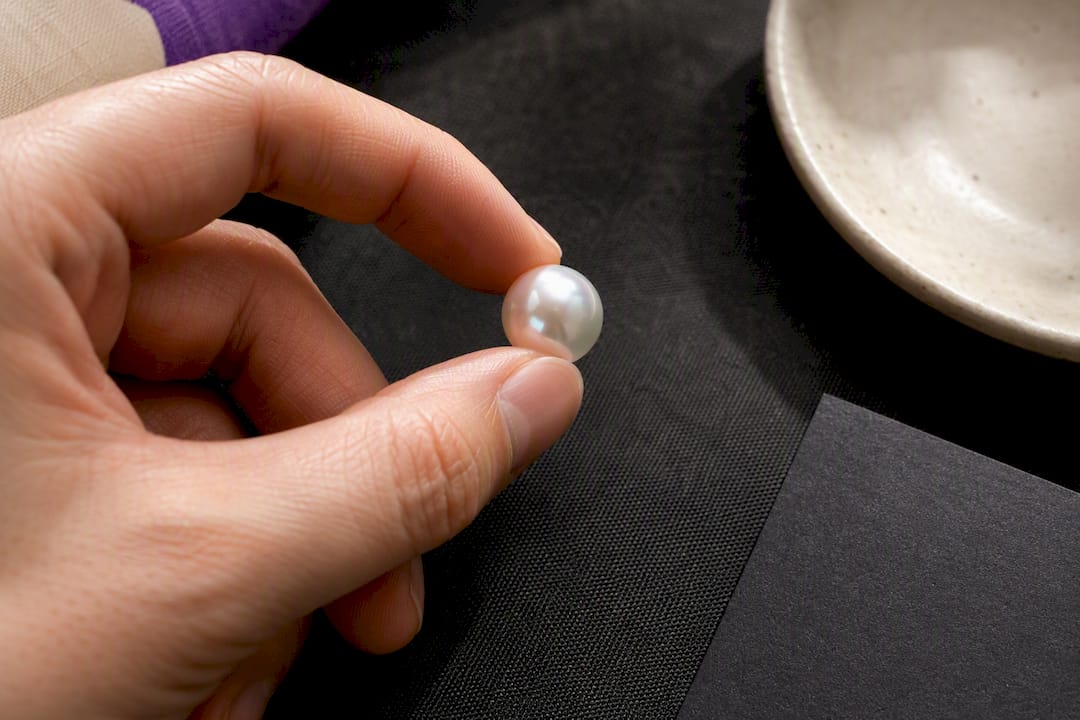
This is one of the more reliable at-home checks, but it takes practice to trust your own eye. Comparing a known-fake pearl side by side with a suspected real one, even a cheap costume piece from a drawer, trains your eye faster than reading a description of “orient” ever will.
Temperature and weight comparisons
Press the pearl to your cheek or inner wrist. Real pearls and high-quality glass imitations both feel cool at first contact because they’re dense, but real pearls warm more gradually as your body heat transfers through the nacre layers. Cheap plastic warms almost instantly because it’s a poor thermal conductor in the other direction and it doesn’t hold cold at all.
Weight follows a similar logic. Roll the pearl in your palm next to a pearl of known origin if you have one. Genuine and cultured pearls have a noticeable heft for their size. The problem is that glass-core imitations can weigh close to the real thing, so this test works best paired with the tooth or luster check rather than alone.
Drill-hole and magnifier inspection
The drill hole is often where fakes are most exposed. Use a jeweler’s loupe or even a strong phone camera zoom to look directly into the hole. You’re checking for:
- A visible seam or edge where coating meets a different-colored core material
- Flaking, chipped, or peeling material around the hole’s rim
- An “orange-peel” textured surface, which often signals a coated bead rather than solid nacre
- Tiny air bubbles trapped just under the surface, a telltale sign of glass
Shell-based and coated-glass pearls have gotten sophisticated enough that some pass a single test cleanly. A magnified drill-hole check paired with the luster and tooth tests closes most of the gaps any one test leaves open.
What Are the Different Types of Pearls, and How Do They Test?
Understanding what you’re actually testing for makes every check above more accurate. Pearls on the market fall into four broad categories, and each behaves differently under scrutiny.
- Natural pearls form entirely without human help, when an irritant enters a wild mollusk. They’re rare, expensive, and almost always require lab documentation to sell at value.
- Cultured pearls form the same biological way, but a technician inserts the irritant, usually a bead or tissue graft, into a farmed mollusk. This is what most “real pearl” jewelry actually is today.
- Shell pearls are made from ground mother-of-pearl compressed into a bead and coated. They can feel surprisingly heavy and cool, which is why the temperature and weight tests alone can be fooled.
- Glass and plastic simulants use a solid core dipped in a pearlescent lacquer, often made from fish scale essence or synthetic resin. These are the easiest to catch with the tooth and loupe tests.
One buyer protection worth knowing: sellers are required to disclose when pearls are simulated rather than genuine, using clear terms like “simulated” or “imitation” in listings. If a listing is vague about origin, or the price seems implausibly low for “genuine cultured pearls,” treat that as a red flag before you even pick up a loupe. For buyers trying to understand how freshwater and saltwater varieties differ in nacre thickness and price, a closer look at freshwater vs. saltwater pearls fills in the gaps this section doesn’t cover.
When Should You Get Professional Pearl Testing?
At-home tests are a screening tool, not a verdict. When a strand’s value, sentimental or financial, is high enough that being wrong would sting, it’s time to bring in a professional.
- X-ray radiography or micro-CT imaging is the gold standard. It shows whether a pearl has a bead nucleus or concentric natural growth, which is the single clearest way to separate natural from cultured pearls without damaging them.
- Microscopic analysis examines surface structure and drill-hole composition up close, confirming or ruling out coatings that fooled the naked eye.
- Cost and turnaround vary by lab and pearl count, so ask upfront for a quote and expected timeline before submitting a piece.
- What to request from a seller: a lab report, any treatment disclosures (dyeing, bleaching, or coating), and provenance information if the piece is marketed as natural or antique.
Choosing a lab with real gemological accreditation matters as much as the test itself. The same logic applies across gemstones broadly, not just pearls. As one partner guide on certified versus non-certified gems points out, a certificate from a recognized lab is what actually protects your investment, not a seller’s verbal assurance.
Why Ezragems Talks Straight About Simulated and Genuine Pearls
Ezragems sells both waterproof, hypoallergenic jewelry built with genuine pearls and pieces made with simulated pearls, and the difference is stated plainly on every listing, not buried in fine print.
Buyers deserve to know exactly what they’re wearing. A simulated pearl earring and a genuine cultured pearl pendant can both be beautiful and durable, but they are not the same product, and pretending otherwise is how trust gets broken.
That transparency is backed by a large number of verified customer reviews, and by detailed buying guides covering topics like how to clean pearl jewelry safely without stripping nacre or damaging coatings. When you’re shopping anywhere, ask for the same clarity: material composition, whether the pearls are cultured or simulated, and care instructions in writing.
What Do Real Pearls Cost Compared to Fake Ones?
Price is often the fastest gut check, and it’s more reliable than people expect. Genuine cultured freshwater pearls, the most affordable real option, typically start in the range of $50 to a few hundred dollars for a simple strand or pair of studs, depending on size, shape, and luster grade. Saltwater varieties like Akoya, Tahitian, or South Sea pearls climb into the hundreds or thousands, since they take longer to culture and produce thicker nacre.
Simulated pearls, by contrast, usually run anywhere from $10 to $40 for a full piece, sometimes less. There’s essentially no material cost driving the price up, since you’re paying for a coated bead and craftsmanship, not years of biological growth.
The danger zone is the middle. Sellers sometimes price convincing fakes at $80 to $150 to mimic entry-level genuine pearl pricing, banking on the assumption that shoppers equate a higher price with authenticity. That’s exactly the gap where the tooth test, loupe inspection, and a request for documentation earn their keep. If a listing calls a strand “genuine cultured pearls” at a price that undercuts typical freshwater pricing by half, treat it as a prompt to test before you buy, not a bargain to grab quickly. Shoppers comparing freshwater pearl necklace prices across styles will notice this pattern repeat across nearly every price bracket.
What Materials Are Fake Pearls Actually Made From?
Knowing the raw materials behind common imitations makes the drill-hole and tooth tests much easier to interpret. Three materials dominate the fake pearl market.
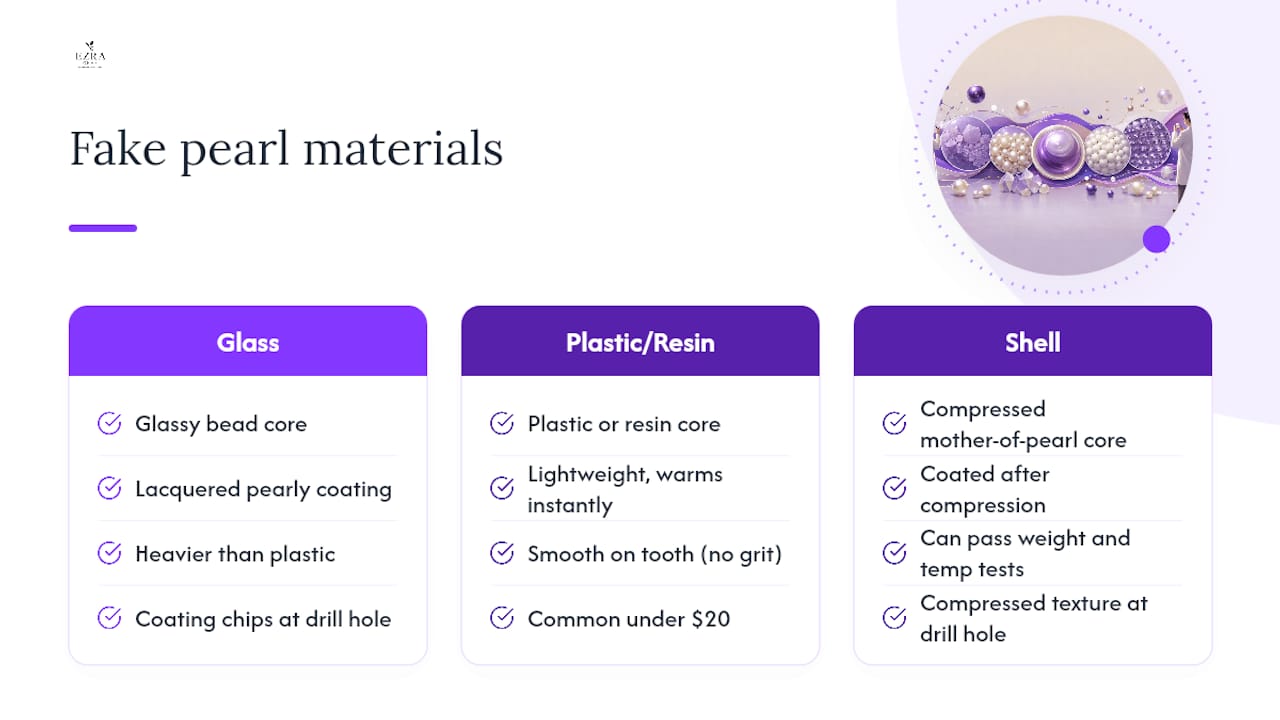
Glass pearls use a solid glass bead core dipped multiple times in a lacquer made from fish scale essence or synthetic resin to build up a pearly sheen. They’re heavier than plastic, which makes the weight test unreliable on its own, but the coating often chips at the drill hole and reveals a glassy, uniform core underneath.
Plastic and resin pearls are the cheapest and easiest to spot. They’re lightweight, warm up instantly against skin, and glide smoothly under the tooth test with none of the expected grit. Cost-wise, they’re also the most common material behind sub $20 fashion pearls.
Shell pearls, sometimes called “Majorica” style pearls, are made from crushed mother-of-pearl shell compressed into a bead shape and coated. These are the trickiest fakes because the base material is a genuine biological substance, just not grown the way a real pearl grows. They can pass the temperature and weight tests convincingly, which is exactly why the loupe inspection of the drill hole matters most here, looking for the compressed shell texture versus true layered nacre.
How Should You Care for Real Pearls vs. Fake Ones?
Genuine pearls are organic gems, and nacre is soft compared to most other jewelry materials, roughly a 2.5 to 4.5 on the Mohs hardness scale. That softness means real pearls need protection from perfume, hairspray, sweat, and household chemicals, all of which can dull nacre over time. Wipe them with a soft cloth after each wear and store them separately from harder gems that could scratch the surface.
Fake pearls, especially glass and plastic versions, tolerate more casual handling but come with their own weak point: the coating. Chemicals and abrasive cleaning can strip the pearlescent lacquer off a simulated pearl far faster than they’d damage real nacre, exposing the plain bead underneath. Avoid ultrasonic cleaners on both types, since vibration can crack coatings and loosen nacre layers alike.
How Much Testing Does Your Pearl Actually Need?
Not every pearl deserves the same level of scrutiny, and treating a $15 costume necklace like an heirloom wastes time you don’t need to spend.
For low-value, clearly labeled costume pieces, a glance and maybe one quick test is plenty. If the listing is upfront about “simulated pearls,” believe it and move on. For mid-range purchases, anything from a nice gift to a strand you’re buying secondhand, run the full six-step checklist and ask the seller for a return policy or written material disclosure before you commit.
Heirlooms, inherited strands, or anything marketed as natural or high-grade cultured pearls are a different category entirely. At that value level, a professional lab report isn’t optional caution, it’s the only way to know what you actually own before insuring it, selling it, or passing it down.
— Ezra
Ezragems’ Real and Simulated Pearl Options, Explained
The company carries pearl pieces at both ends of that spectrum, labeled clearly so you know exactly what you’re buying. The Simulated Pearl Round Stud Earrings give a classic pearl look at a fraction of the cost, ideal for everyday wear or anyone who wants the aesthetic without the price tag or upkeep of genuine nacre.
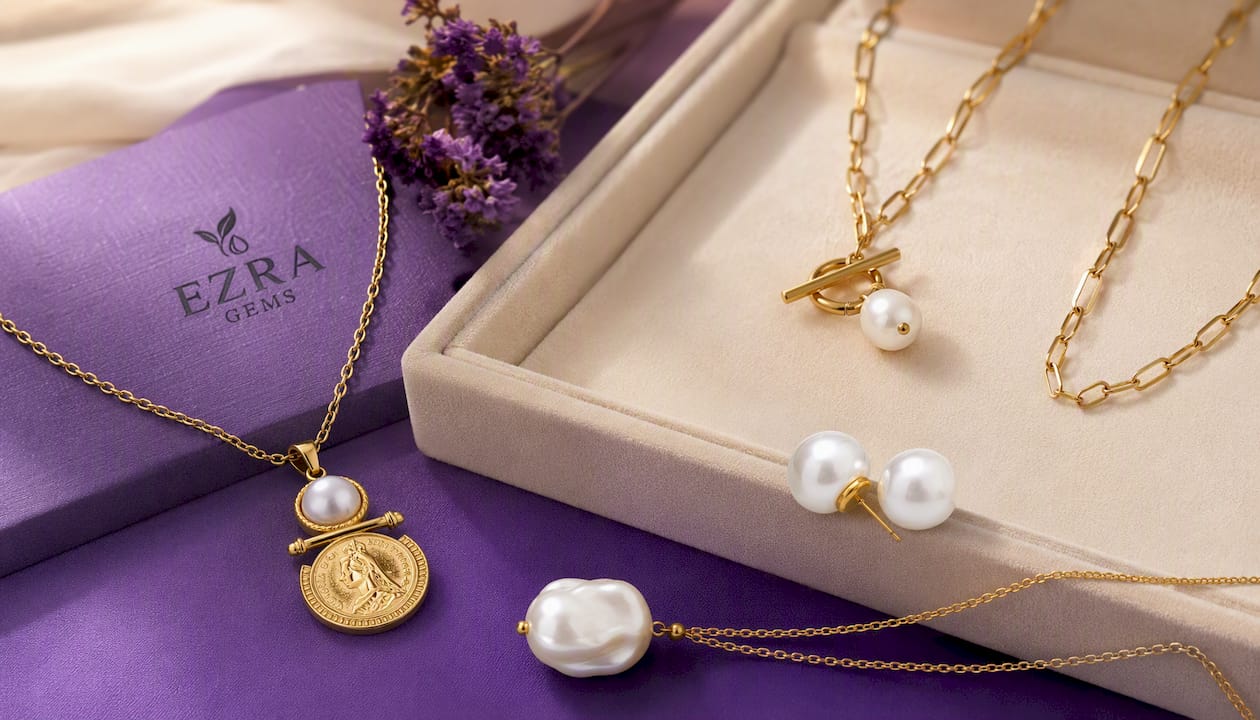
For buyers who want the real thing, the Baroque Freshwater Pearl Pendant Necklace uses genuine cultured freshwater pearls with the irregular, organic shape that signals authenticity at a glance, all set in metal designed for daily wear. If you want something with more presence for a gift or a statement occasion, the Pearl Cameo Portrait Necklace pairs pearl detailing with a vintage-inspired design distinct from a basic strand.
Every listing states its materials plainly, backed by numerous verified customer reviews from buyers who’ve already put these pieces through daily wear. Browse the current pearl collection and pick the piece that matches how you actually plan to wear it, whether that’s a simulated stud for weekend errands or a genuine freshwater pendant for something you’ll keep for years.
Sources
- Pearl Buying Guide | Jewelers of America
- GIA — Pearl quality factors (luster/orient)
- How to Tell if Pearls Are Real | Jewelers Mutual
Kommentar hinterlassen