


A baroque pearl is any pearl with an irregular, non-spherical shape. The word describes shape only, not whether the pearl is natural or cultured, freshwater or saltwater. That distinction trips up more shoppers than any other pearl term, and it’s the one thing worth locking in before you read another product listing. The appeal is straightforward: no two baroque pearls form the same twist, ripple, or curve, which makes each one a small, unrepeatable sculpture instead of a stand-in for a round pearl that didn’t quite make it.
TL;DR:
- Saltwater baroque pearls, such as Tahitian and South Sea types, are rarer and tend to command higher prices than freshwater baroque pearls of similar size.
- True baroque pearls come in a variety of shapes, including off-round, teardrop, semi-baroque, circled, Keshi, and freeform, each suited for specific jewelry designs.
- High-quality baroque pearls are evaluated mainly for luster, surface cleanliness, nacre thickness, and size, rather than shape, with irregularity often adding to their value.
- Authenticity is confirmed through close inspection of luster, surface flaws, drill holes, size in millimeters, and, in high-value cases, lab reports; uniformity in shape is rare.
- Good design emphasizes the pearl’s natural contours, making baroque pearls a desirable focal point rather than a flaw, and careful handling preserves their appeal.
Table of Contents
- What Do Baroque Pearls Mean in the World of Pearl Shapes?
- How Does a Baroque Pearl Actually Form?
- Freshwater vs. Saltwater Baroque Pearls: Where Do They Come From?
- What Are the Different Baroque Pearl Shapes?
- How Much Are Baroque Pearls Worth?
- How Do You Identify and Buy a Genuine Baroque Pearl?
- Why Ezra Gems Treats Baroque Shapes as a Design Feature, Not a Flaw
- The Real Meaning of “Imperfect” Pearls
- Shop Baroque Pearl Pieces from Ezra Gems
- Sources
What Do Baroque Pearls Mean in the World of Pearl Shapes?
The term borrows from the Baroque art movement, which prized ornate, asymmetrical forms over rigid symmetry. Pearl dealers adopted the word centuries ago to describe exactly that kind of departure from the sphere, and it stuck.
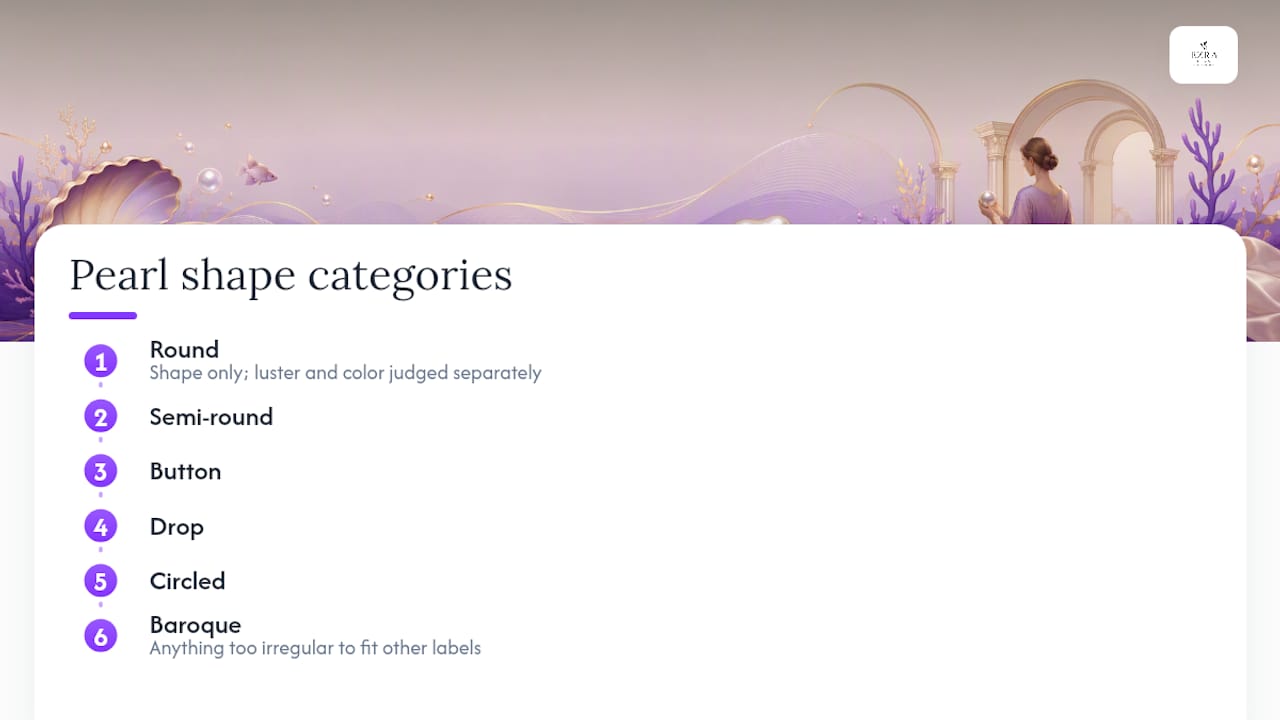
Gemologists sort pearls into a handful of shape categories: round, semi-round, button, drop, circled, and baroque. Baroque pearls sit at the far end of that spectrum, covering anything too irregular to fit the other labels. That’s the whole test. A pearl can be freshwater or saltwater, natural or cultured, and still qualify as baroque if its outline refuses to settle into a clean curve. Shape is the only variable that matters here. Everything else, including luster and color, is judged separately.
How Does a Baroque Pearl Actually Form?
A mollusk lays down nacre in concentric layers around an irritant, and when those layers deposit unevenly, the pearl twists, flattens, or bulges instead of rounding out. Several factors push nacre deposition off balance, including the irritant’s position, the oyster’s health, and shifts in water temperature during growth.
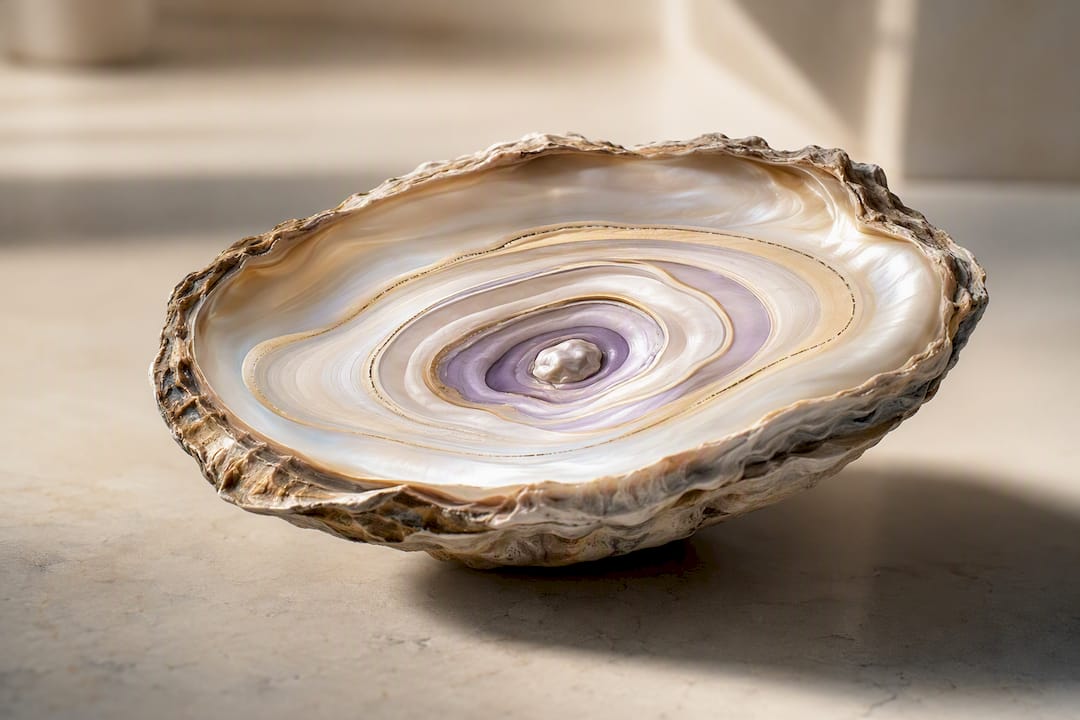
Nucleation method matters just as much. Most cultured freshwater pearls form around a graft of mantle tissue rather than a round shell bead, and that tissue based method produces irregular shapes far more often than bead nucleation does. Saltwater pearls, grown around a bead, tend toward rounder or teardrop forms, though they can still turn baroque if the bead shifts or nacre builds unevenly.
Cultivation length plays a role too. The longer a pearl stays in the oyster, the more chances nacre has to drift off-center. Some Tahitian farms that run extended growth cycles report baroque or semi-baroque rates above 40 percent in a single harvest.
Freshwater vs. Saltwater Baroque Pearls: Where Do They Come From?
Origin drives both look and price, and the gap between freshwater and saltwater baroque pearls is bigger than most buyers expect.
- Freshwater baroque pearls come mostly from farmed mussels in China, are mantle-tissue nucleated, and are the most common and most affordable baroque pearls on the market.
- Tahitian baroque pearls grow inside the Pinctada margaritifera oyster, prized for dark, often peacock-toned nacre with strong overtones.
- South Sea baroque pearls come from Pinctada maxima, the largest pearl-producing oyster, yielding bigger sizes and thick, satiny nacre.
- Akoya baroque pearls are less common than the other saltwater types but show up occasionally with the crisp, bright luster Akoya oysters are known for.
Saltwater varieties are rarer and typically command higher prices than freshwater baroque pearls of similar size. Color and origin stack on top of size to drive desirability. A gray-green Tahitian baroque pearl with strong orient reads as a different tier of object than a small white freshwater one, even though both wear the same label. Curious how freshwater and saltwater pearls stack up beyond shape? A freshwater versus saltwater pearl comparison breaks down the fuller picture.
What Are the Different Baroque Pearl Shapes?
Baroque isn’t one shape. It’s a category with recognizable subtypes, and knowing them helps you picture what you’re buying before it arrives.
- Off-round: nearly spherical but visibly lopsided, the mildest form of baroque.
- Teardrop: elongated with a rounded end, common in saltwater cultured pearls and a favorite for single-pearl pendants.
- Semi-baroque: symmetrical along one axis but irregular along another, often used in matched strands where slight variation reads as intentional.
- Circled: marked with concentric ridges or rings, prized for texture as much as form.
- Keshi: small, dense, nacre-only pearls with no bead nucleus, known for exceptional luster.
- Freeform: fully asymmetrical, no repeating pattern, usually the choice for statement pieces.
Teardrops and freeforms suit pendants and rings where one pearl carries the whole design. Semi-baroque and circled shapes work better in strands, since their partial symmetry lets several pearls sit together without clashing. True matching is rare across any of these shapes. Because no two baroque pearls form identically, a well-matched baroque strand takes considerably longer to assemble than a round one, and that labor shows up in the price.
How Much Are Baroque Pearls Worth?
Value follows the same framework gemologists use for any pearl. GIA’s core pearl quality factors, luster, nacre quality, surface cleanliness, color, orient, and size or weight, apply to baroque pearls exactly as they do to round ones. Shape is a separate axis entirely.
- Luster: how sharp and mirror-like the reflection appears on the surface.
- Nacre quality: thickness and consistency of the layers beneath the surface.
- Surface: freedom from spots, bumps, or chips beyond the pearl’s natural contour.
- Orient: the rainbow-like sheen visible under the surface luster, most striking in Tahitian and South Sea pearls.
- Size and weight: measured in millimeters and carats, with larger sizes commanding steep premiums in saltwater varieties.
Freshwater baroque pearls generally cost less than their round counterparts simply because so many freshwater harvests turn out baroque by default, making them abundant rather than scarce. Rare Tahitian or South Sea baroque pearls flip that logic. A large, richly colored Tahitian baroque pearl with strong orient can command prices rivaling round pearls of the same origin, because the shape itself becomes part of the appeal rather than a discount factor. Price here tracks rarity and beauty, not conformity to a sphere.
How Do You Identify and Buy a Genuine Baroque Pearl?
Spotting a real, well-made baroque pearl takes the same discipline you’d use for any fine pearl purchase, just applied through an irregular lens.
- Check the luster first. A genuine pearl reflects light sharply, almost like a mirror, even across an uneven surface. Dull or chalky reflection usually signals thin nacre or an imitation.
- Inspect the surface up close. Look for natural bumps and ridges (expected in baroque pearls) versus cracks, flaking, or peeling coating (a red flag).
- Examine the drill hole. A clean, centered drill hole with no chipping around the edge suggests careful handling; a jagged or off-center hole suggests rushed production.
- Ask for exact measurements in millimeters, not vague terms like “medium” or “large.” Size drives both look and price, so a seller who won’t specify mm is worth questioning.
- Request a lab report for high-value pieces. Any Tahitian or South Sea baroque pearl priced at a premium should come with documentation confirming it’s a genuine cultured pearl.
- Watch for identical “baroque” pairs. True baroque pearls are never identical twins. Matched earrings that look suspiciously uniform in an irregular shape are worth a second look.
Pro Tip: Ask the seller for a close-up, unedited photo taken in natural light. Filtered or heavily lit product shots can hide surface flaws that show up the moment the pearl arrives.
Before you check out, confirm the seller’s return policy and reputation. A legitimate jeweler will stand behind a baroque pearl piece the same way they would a round one.
Why Ezra Gems Treats Baroque Shapes as a Design Feature, Not a Flaw
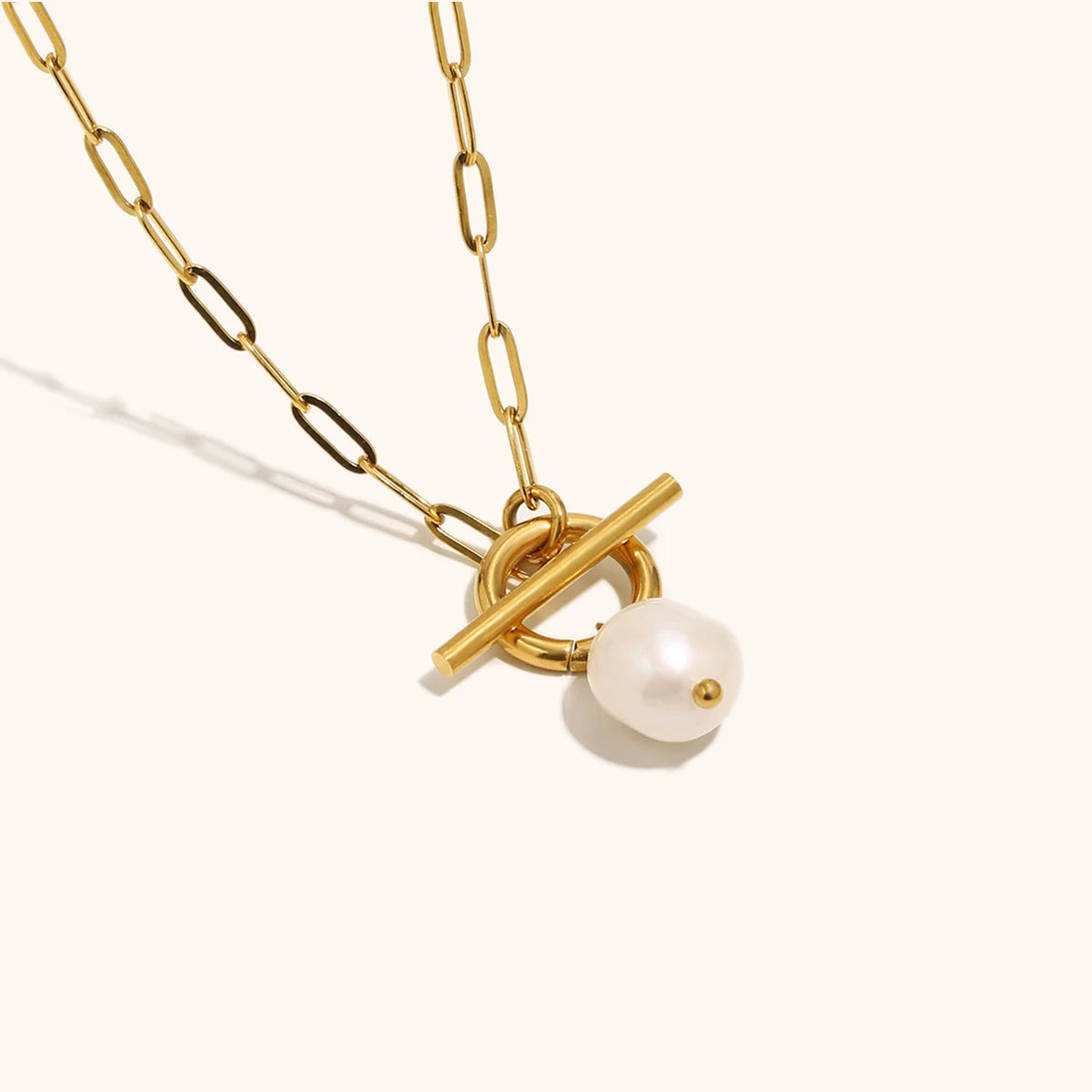
Good settings follow a baroque pearl’s natural contour instead of forcing it into a symmetrical bezel that fights the shape. That approach lets the pearl’s twist or ripple read as intentional, which is closer to how designers have always used baroque pearls as focal points rather than fillers.
Care is simple: wipe pearls with a soft, damp cloth after wear, keep them away from perfume and harsh cleaners, and store them separately from harder stones that can scratch nacre. Ezra Gems builds its pearl pieces on waterproof, hypoallergenic 18k gold plated and stainless steel bases, backed by over 1,000 verified customer reviews.
The Real Meaning of “Imperfect” Pearls
Most jewelry guides still frame baroque pearls as the budget option, the shape you settle for when a round pearl isn’t in the cards. That framing gets it backward. Museums and high jewelry houses have treated baroque pearls as prized objects for centuries, not because they were cheap, but because their irregularity couldn’t be replicated. A round pearl is a commodity. A well-formed baroque pearl is closer to a fingerprint.
The mistake most buyers make is judging baroque pearls against a round pearl’s standards, symmetry, uniform size, matched pairs, and then feeling shortchanged when they don’t measure up. Judge them on luster, surface quality, and the strength of the shape itself, and the calculation changes entirely. A deeply lustrous, richly colored Tahitian baroque pearl with a compelling silhouette is a better buy than a mediocre round pearl at the same price, full stop.
If you’re shopping for a first baroque piece, prioritize luster and surface condition over finding the “roundest” baroque shape you can. That instinct to chase symmetry within an irregular category defeats the entire point of choosing baroque in the first place.
— Ezra
Shop Baroque Pearl Pieces from Ezra Gems
If you’re ready to wear the shape rather than just read about it, Ezra Gems builds baroque pieces around exactly the qualities this guide covers: strong luster, genuine nacre, and settings that let the pearl’s natural silhouette lead.
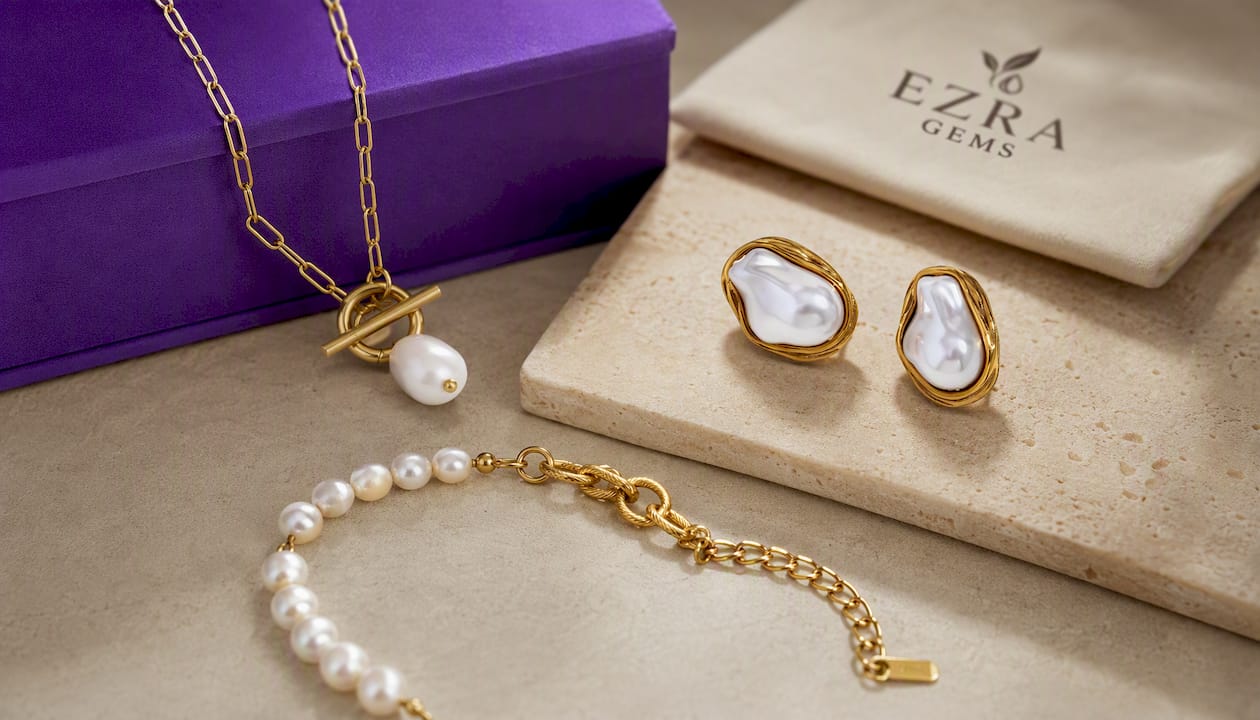
The Baroque Freshwater Pearl Pendant Necklace puts a single, sculptural pearl front and center on a waterproof chain, an easy entry point if you’re new to the shape. The Baroque Pearl Stainless Steel Earrings pair irregular pearls with hypoallergenic stainless steel posts, built for daily wear without the tarnish or irritation that plagues cheaper metals. For layering or gifting, the Pearl & Gold Bracelet combines baroque accents with 18k gold plating for a piece that mixes texture without overwhelming an outfit. If you’re building out a full look, a Victorian Gothic blouse with a ruffled collar pairs surprisingly well with a statement baroque pendant.
Every piece ships with a return policy intact, so you can check luster and surface quality in hand before deciding. Browse the current baroque collection and pick the shape that fits how you actually get dressed.
Sources
- Baroque Pearls: Meaning, Value, Types & How They Form
- Baroque pearl — Wikipedia
- GIA pearl buyers guide
- What is a baroque pearl? — Cicala Jewellers
- Pearl insights: Baroque pearls — American Gem Society
Deje un comentario