


A tennis necklace combines sporty origins with undeniable glamour. Featuring a continuous line of stones that wraps elegantly around your neck, this style has become a staple for everyday sparkle, whether you're dressing up or keeping things casual.
But with so many options available, shopping for one can feel overwhelming. Should you go for diamonds or cubic zirconia? Gold-plated or solid gold? And how do you know which length will actually flatter your neckline? These details make all the difference between a necklace you'll reach for daily and one that sits forgotten in your jewelry box.
This guide covers styles, materials, lengths, and fit tips to help you find your perfect match. At Ezra Gems, we create waterproof, tarnish-resistant jewelry built for real life, so we know what makes a tennis necklace worth wearing every single day.
What a tennis necklace is and why it's called that
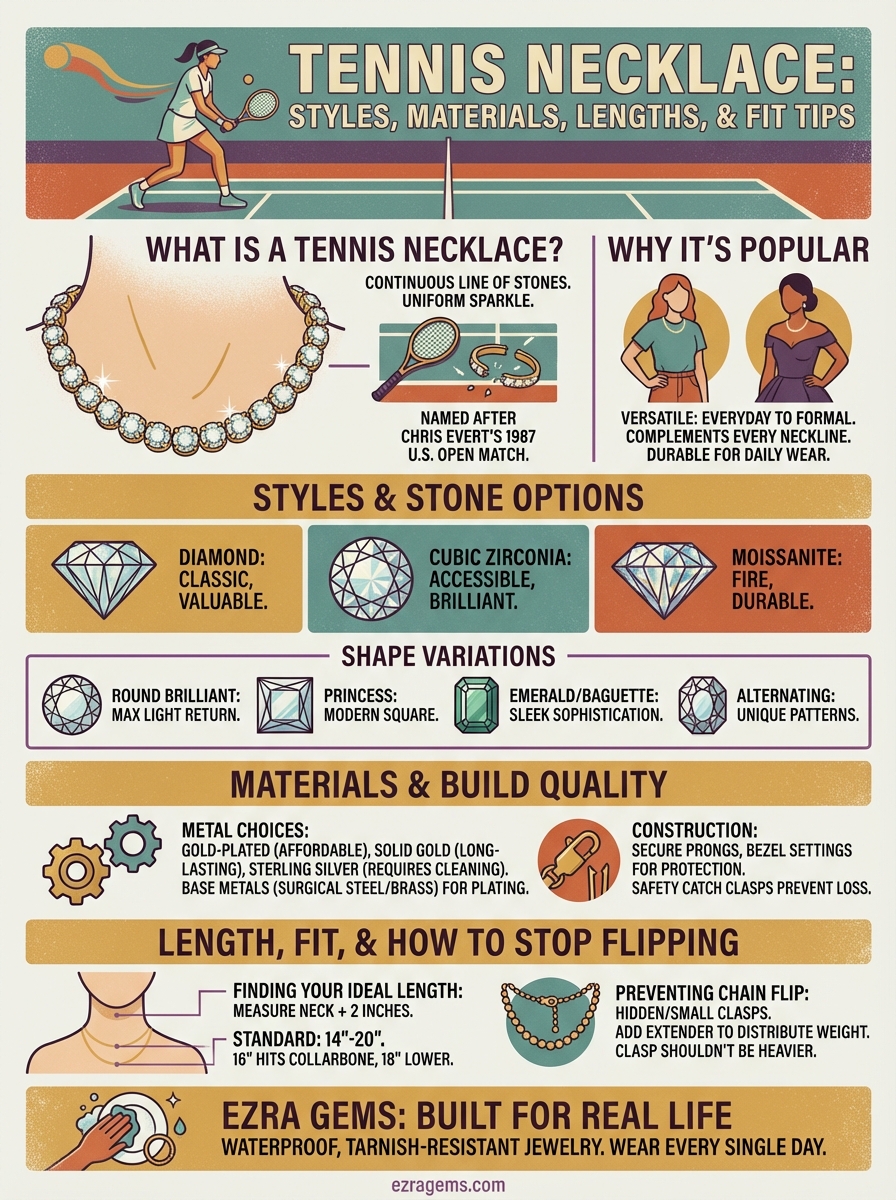
You'll recognize a tennis necklace by its signature continuous line of stones set closely together in a single row. Each stone sits in its own metal setting, connected by links that create a flexible, fluid chain around your neck. The design offers consistent sparkle from every angle, with no gaps or bare metal visible between the gems.
The design that defines it
The beauty lies in its simplicity. A tennis necklace features uniform stones that match in size, shape, and quality, creating a balanced look that draws the eye without overwhelming your outfit. Most designs use round brilliant cuts because they maximize light reflection, though you'll also find princess, emerald, and oval stone variations. The metal settings hold each stone securely while allowing the necklace to drape naturally against your collarbone.
A well-made tennis necklace moves with you, staying comfortable whether you're sitting at your desk or dancing at a wedding.
How it got its name
The term "tennis necklace" came from a 1987 U.S. Open match when professional player Chris Evert's diamond bracelet broke mid-game. She stopped play to search for it, and the moment became so memorable that jewelers started calling these continuous stone designs "tennis" pieces. The name stuck because it perfectly captured the athletic elegance of wearing fine jewelry during active moments. What started as a bracelet style quickly expanded to necklaces, and now tennis jewelry represents pieces you can wear through any activity without worrying about tarnish or damage. The story reminds us that beautiful jewelry doesn't need to sit in a safe; it belongs on your body, adding confidence to every movement you make.
Why tennis necklaces stay popular
Tennis necklaces have remained a jewelry staple for decades because they bridge the gap between casual and formal with effortless grace. You can wear one with your everyday jeans and sweater, then layer it with other pieces for a night out without changing your look completely. The continuous line of sparkle adds just enough shine to elevate simple outfits while never feeling overdone or costume-like.
They work with every wardrobe style
Unlike statement pieces that only pair well with specific outfits, a tennis necklace complements every neckline you own. It sits beautifully against crew necks, V-necks, and open collars, giving you consistent styling options without the guesswork. The uniform design means it never competes with your outfit but instead enhances what you're already wearing.
The best jewelry choices are the ones you never have to think twice about before putting them on.
Another reason they've lasted is durability. Modern tennis necklaces, especially those built with quality materials and secure settings, can handle daily wear without losing stones or breaking unexpectedly. You don't need to baby them or save them for special occasions, which makes them actually worth the investment compared to delicate pieces that spend most of their time hidden away.
Tennis necklace styles and stone options
Your choices extend far beyond basic round diamonds. Modern tennis necklaces offer diverse stone shapes and quality levels that affect both appearance and price, giving you flexibility to match your budget and personal style preferences.
Stone types and quality tiers
Diamonds remain the classic choice, but cubic zirconia and moissanite deliver similar sparkle at accessible price points. CZ stones cost significantly less while still catching light beautifully under everyday conditions. Moissanite sits between CZ and diamonds in price, offering more brilliance and durability than cubic zirconia with impressive fire that some prefer to diamond's more subtle glow. Real diamonds command premium prices but hold value and carry the prestige of genuine gemstones.
The stone you choose matters less than finding one that fits your lifestyle and makes you feel confident wearing it daily.
Shape and setting variations
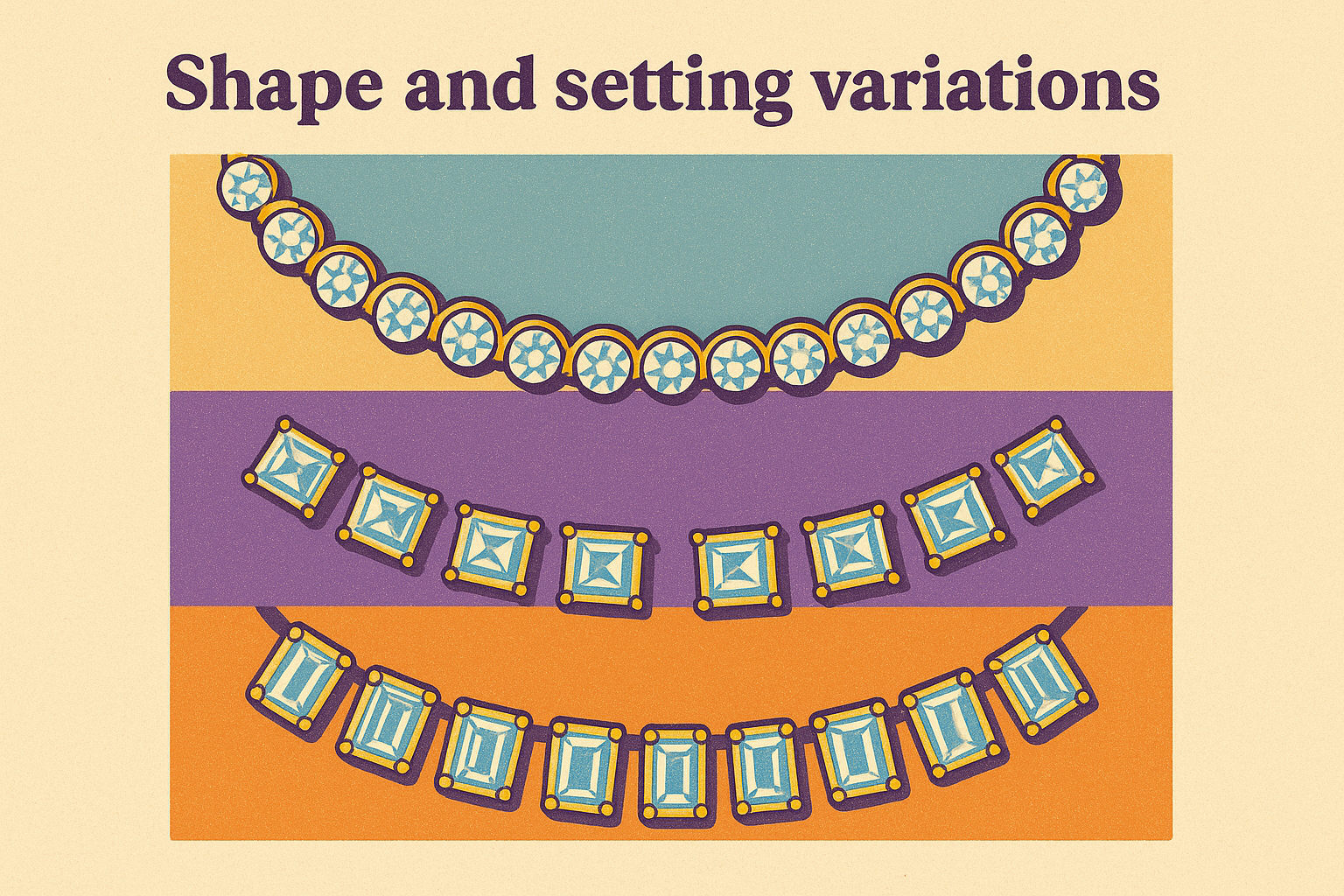
Round brilliant cuts dominate tennis necklace designs because they maximize light return from every angle. Princess cuts offer a modern square aesthetic with sharp corners that create geometric interest. Emerald and baguette cuts provide sleek sophistication with their elongated rectangular shapes and step-cut facets that emphasize clarity over sparkle. Some designs alternate stone shapes or sizes to create unique patterns, though traditional uniform sizing remains the most versatile option for layering with other pieces.
Materials and build quality to look for
The metal you choose determines how your tennis necklace handles daily wear. Gold-plated options offer affordability while delivering a luxury appearance, but you need to verify the base metal quality and plating thickness to avoid quick tarnishing. Solid gold (10k, 14k, or 18k) costs more but lasts longer without special maintenance, while sterling silver requires regular cleaning to maintain its shine.
Metal choices that last
Base metals matter as much as surface finishes when evaluating plated jewelry. Look for pieces using surgical-grade stainless steel or brass as the foundation, since these metals resist corrosion better than cheap alloys that turn your skin green. Quality plating should measure at least 2.5 microns thick to withstand friction from clothing and skin contact.
Thin plating wears through quickly at stress points, especially where the necklace bends most frequently near your collarbone.
Setting and clasp construction
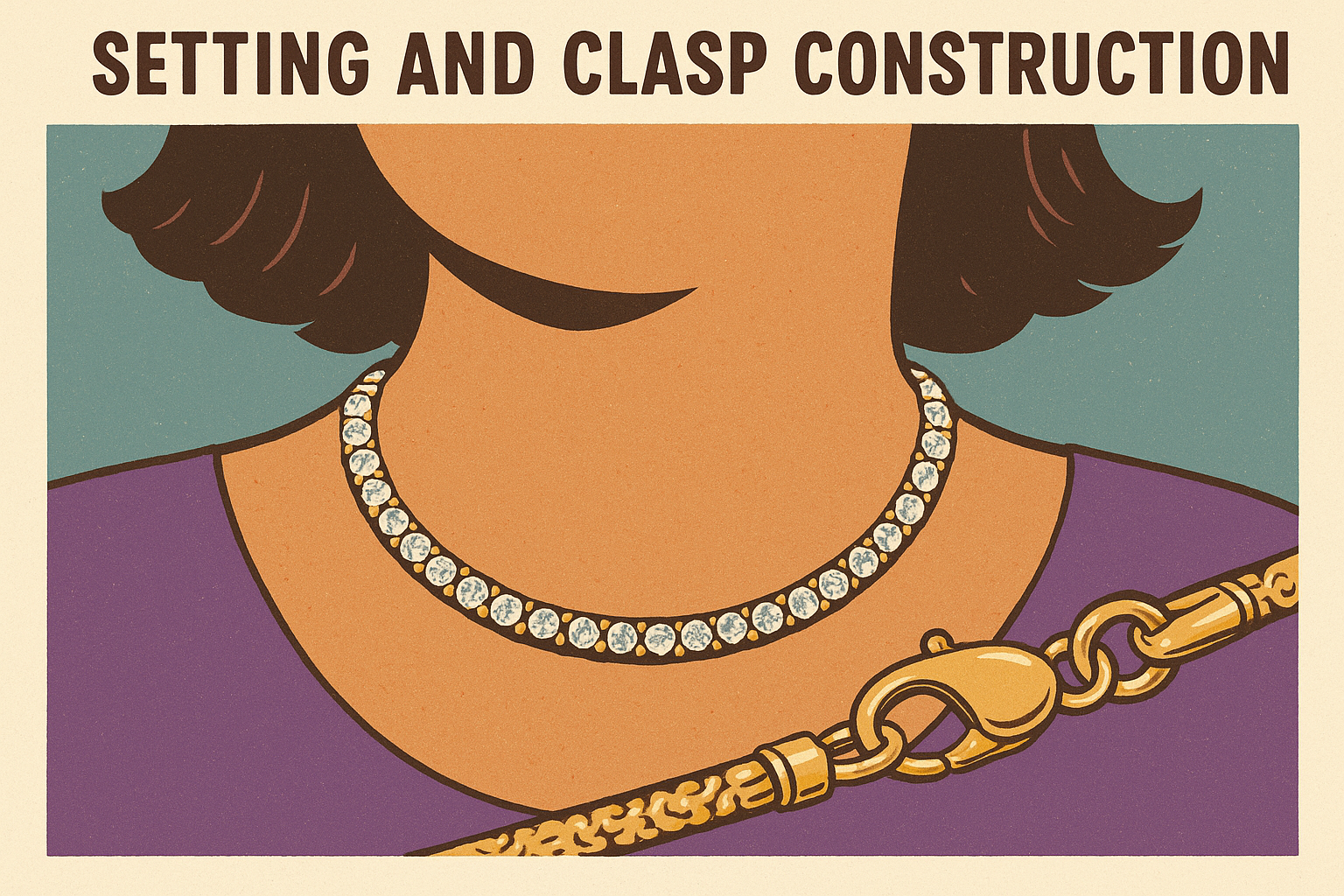
Stone settings require prongs that hold securely without scratching your neck or catching on fabric. Four-prong settings offer good security while showing more of each stone, whereas bezel settings wrap metal around the stone's edge for maximum protection during active wear. Your clasp should include a safety catch or secondary locking mechanism, since losing an entire tennis necklace because of clasp failure costs far more than choosing quality hardware upfront.
Length, fit, and how to stop flipping
Tennis necklace length affects how it sits on your neck and whether it stays visible above your clothing. Standard lengths range from 14 to 20 inches, with each measurement creating a different look against your body. A 16-inch tennis necklace hits most collarbones directly, while 18 inches drops slightly lower for relaxed placement.
Finding your ideal length
Measure your neck with flexible tape, then add 2 inches for comfortable movement without tightness. A 16-inch chain fits close to your neck, showing off stones against bare skin or open necklines. An 18-inch length provides breathing room and works better if you plan to layer with other pieces. Petite frames look best with shorter lengths that don't overpower your proportions, while taller builds handle 18 to 20 inches without the necklace looking lost on your frame.
Preventing chain flip
Tennis necklaces flip when the clasp weighs more than the stones, creating imbalance that pulls everything sideways. Choose designs with hidden or small clasps that don't create weight distribution problems during movement. Adding a small extender chain distributes weight more evenly across the piece.
The right fit means you forget you're wearing it until someone compliments the sparkle.
Next steps for choosing the right one
Now that you understand styles, materials, and fit, start by defining your budget range and deciding whether you want genuine diamonds, moissanite, or cubic zirconia stones. Your choice should reflect how often you plan to wear the piece and what activities you'll do while wearing it. Think about whether you need formal elegance for special occasions or everyday versatility that transitions from work to weekends.
Measure your neck and add those two inches for proper fit, then decide which length and style flatters your frame best. Consider whether you want a tennis necklace that stands alone or layers with other jewelry you already own.
At Ezra Gems, we design waterproof necklaces built to handle real life without tarnishing or losing stones. Browse our collection to find durable, affordable pieces that deliver daily sparkle without the maintenance hassles that come with traditional fine jewelry.
Deje un comentario