


A bracelet is a piece of jewelry worn around the wrist that can range from simple chains to elaborate statement pieces. Whether you prefer delicate gold links, chunky cuffs, or beaded designs, bracelets add personality to any outfit. They come in countless styles, materials, and price points, making them one of the most accessible and versatile jewelry categories you can own.
This guide breaks down everything you need to know about bracelets in 2026. You'll discover the most popular bracelet types, learn how to choose durable materials that won't tarnish, and get practical tips for stacking and styling your wrist wear. We'll also show you how to measure your wrist accurately so your bracelets fit perfectly. By the end, you'll have the knowledge to build a collection that matches your style and lasts for years.
Why bracelets are the ultimate style statement
Bracelets sit at the perfect intersection of visibility and versatility. Unlike necklaces that hide under scarves or earrings that disappear behind your hair, bracelets stay visible throughout your day. You catch glimpses of them when you type, gesture during conversations, or reach for your coffee. This constant presence makes them one of the most impactful jewelry pieces you can wear, even if you choose something simple.
They instantly upgrade any outfit
You can throw on jeans and a basic tee and still look intentional when you add the right bracelet. A chunky gold cuff transforms a casual look into something polished, while a delicate chain adds subtle elegance without overwhelming your style. Bracelets give you the power to shift your aesthetic in seconds, making them ideal for people who want maximum impact with minimal effort. They work equally well with professional attire, weekend wear, and everything in between.
The beauty of bracelets lies in their immediate effect. You don't need to build an entire outfit around them like you might with statement earrings or bold necklaces. Instead, they complement what you're already wearing and enhance your existing style rather than competing with it. This flexibility makes them essential for anyone who values practical elegance.
You notice them every time you move
Your wrists are in constant motion, which means bracelets catch light and draw attention throughout the day. When you wave hello, sign a document, or scroll through your phone, your bracelet becomes part of the gesture. This dynamic quality sets them apart from static jewelry pieces that only show when someone looks directly at you.
Bracelets work harder than any other jewelry category because they stay in your line of sight all day long.
The repeated visual contact creates a personal connection with your jewelry. You develop favorites based on how they make you feel each time you glance down. This psychological element explains why people often reach for the same bracelet daily, even when they own multiple options.
They're the easiest pieces to stack and personalize
Layering necklaces requires careful length coordination and often leads to tangling. Stacking rings means managing different finger sizes and worrying about proportions. Bracelets eliminate these complications. You can mix metals, textures, and widths on the same wrist without following strict rules. Three thin bangles look just as intentional as one thick cuff paired with two delicate chains.
This stacking freedom lets you build a signature look over time. You can start with one bracelet and gradually add pieces that speak to you, creating combinations that feel uniquely yours. The casual nature of wrist jewelry means you can experiment without overthinking it. Your personal style emerges naturally through the pieces you choose to wear together.
Bracelets also adapt to any budget or occasion. You can invest in one quality piece and wear it daily, or collect affordable options to match different moods. Unlike engagement rings or heirloom necklaces that carry specific meanings, bracelets give you permission to play with your style without commitment.
Defining the most popular bracelet types
Understanding the main categories of bracelets helps you identify what works for your style and build a versatile collection. Each type offers distinct aesthetic qualities and wearing experiences. Some slip on effortlessly, while others require clasps or closures that you might need help fastening. The designs range from minimalist chains to bold statement pieces that command attention.
Chain bracelets
Chain bracelets connect individual metal links to create flexible strands that drape naturally around your wrist. You'll find them in various link sizes, from delicate cable chains that barely catch the light to chunky curb chains that make bold statements. Tennis bracelets feature a continuous line of gemstones set in metal links, originally designed for athletes but now worn for any occasion.
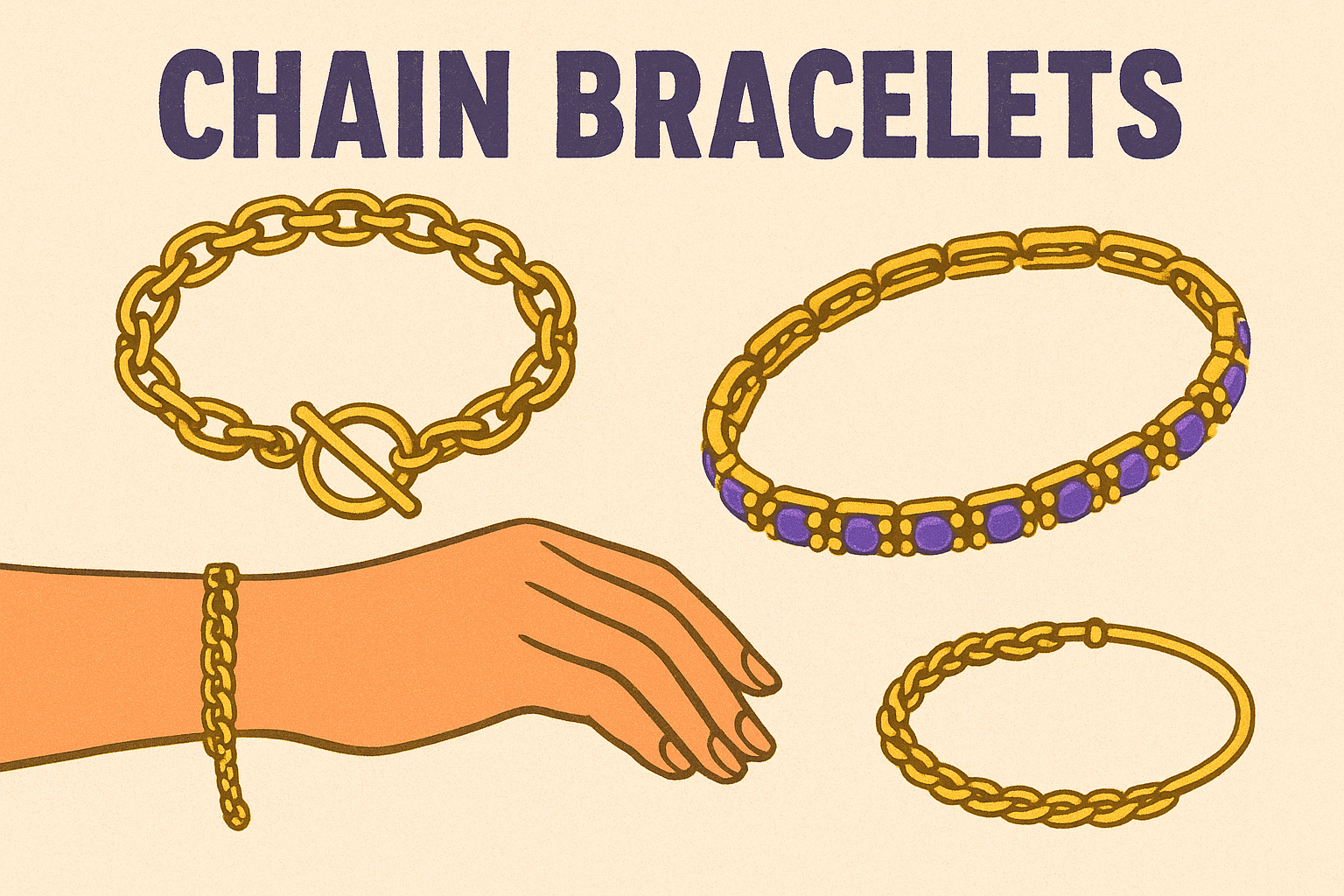
The main advantage of chain styles lies in their adjustability and movement. Most include extension chains or lobster clasps that let you customize the fit. They layer beautifully with other bracelet types because the open link structure prevents them from looking too heavy when stacked.
Cuff and bangle styles
Cuffs are solid metal bands with an opening that lets you slip them onto your wrist without clasps. They maintain their shape and create clean lines against your skin. Bangles form complete circles without openings, so you slide them over your hand. Both styles make strong visual statements with minimal fuss.
Rigid bracelets eliminate the daily struggle with tiny clasps that slip through your fingers.
You can wear multiple bangles together for a layered look, or choose one substantial cuff that stands alone. The thickness ranges from thin wire designs to wide statement pieces that cover several inches of your forearm. These styles work particularly well when you want jewelry that stays in place during active movement.
Beaded and charm variations
Beaded bracelets string individual elements like gemstones, pearls, or wooden beads onto elastic cord or wire. They offer endless customization options since you can mix colors, sizes, and materials. Charm bracelets let you attach meaningful pendants to a base chain or bangle, building a personal story through the pieces you add over time.
These designs appeal to people who value sentimental connections with their jewelry. Each bead or charm can represent memories, achievements, or interests. The casual nature of beaded styles makes them perfect for everyday wear, while precious metal charm bracelets transition easily to formal settings.
How to choose the right materials for longevity
The metal you select determines how long your bracelet maintains its appearance and whether it withstands daily wear without tarnishing or turning your skin green. Different materials require varying levels of maintenance, and understanding these differences helps you invest in pieces that match your lifestyle. You want jewelry that looks as good six months from now as it does the day you buy it.
Gold-plated options that resist tarnish
Gold-plated bracelets feature a base metal core coated with a thin layer of real gold, giving you the luxurious appearance of solid gold at a fraction of the cost. The quality depends on the thickness of the plating and the base metal underneath. Look for pieces with at least 2.5 microns of gold plating, which provides better durability than cheaper alternatives.
Modern plating techniques create jewelry that survives showering, sweating, and daily activities without losing its shine.
Higher-quality base metals like brass or stainless steel prevent the green discoloration that occurs when copper mixes with your skin's natural oils. You can wear well-made gold-plated pieces every day, but removing them before swimming in chlorinated pools extends their lifespan significantly.
Sterling silver and its care requirements
Sterling silver contains 92.5% pure silver mixed with other metals for strength, which explains why you see the ".925" stamp on authentic pieces. This material naturally oxidizes over time, developing a dark patina that some people love and others find unappealing. You can restore the original shine with polishing cloths or mild cleaning solutions.
Silver works beautifully for special occasions but requires more maintenance than plated options if you want it to stay bright. Storing your silver bracelets in anti-tarnish bags when you're not wearing them slows the oxidation process. The metal itself lasts generations, making it worth the extra care for heirloom-quality pieces.
Understanding stainless steel durability
Stainless steel delivers exceptional resistance to scratches, tarnish, and water damage at affordable prices. This industrial metal has crossed into fashion jewelry because it maintains its appearance with zero maintenance. You can wear stainless steel bracelets through intense workouts, showers, and beach days without worrying about damage.
The main drawback involves weight and aesthetics. Stainless steel pieces often feel heavier than gold-plated alternatives and lack the warm glow of precious metals. However, modern designs incorporate polished finishes and mixed materials that make steel bracelets look sophisticated rather than industrial.
How to style and stack your wristwear
Stacking bracelets transforms individual pieces into a cohesive statement that reflects your personal aesthetic. The key lies in balancing variety with intention, mixing different widths, textures, and finishes without creating visual chaos. You don't need to follow strict rules, but understanding a few fundamental principles helps you create combinations that look deliberate rather than random. The goal is making your wrist jewelry feel like a curated collection instead of an accidental pile.
The odd-number rule for balanced stacking
Wearing one, three, or five bracelets creates more visual interest than even numbers because odd groupings prevent your eye from pairing pieces together. A single statement cuff makes a bold choice, while three bracelets let you mix proportions without overwhelming your wrist. Five pieces work when you include both thin and thick options that create rhythm as your eye moves across them.
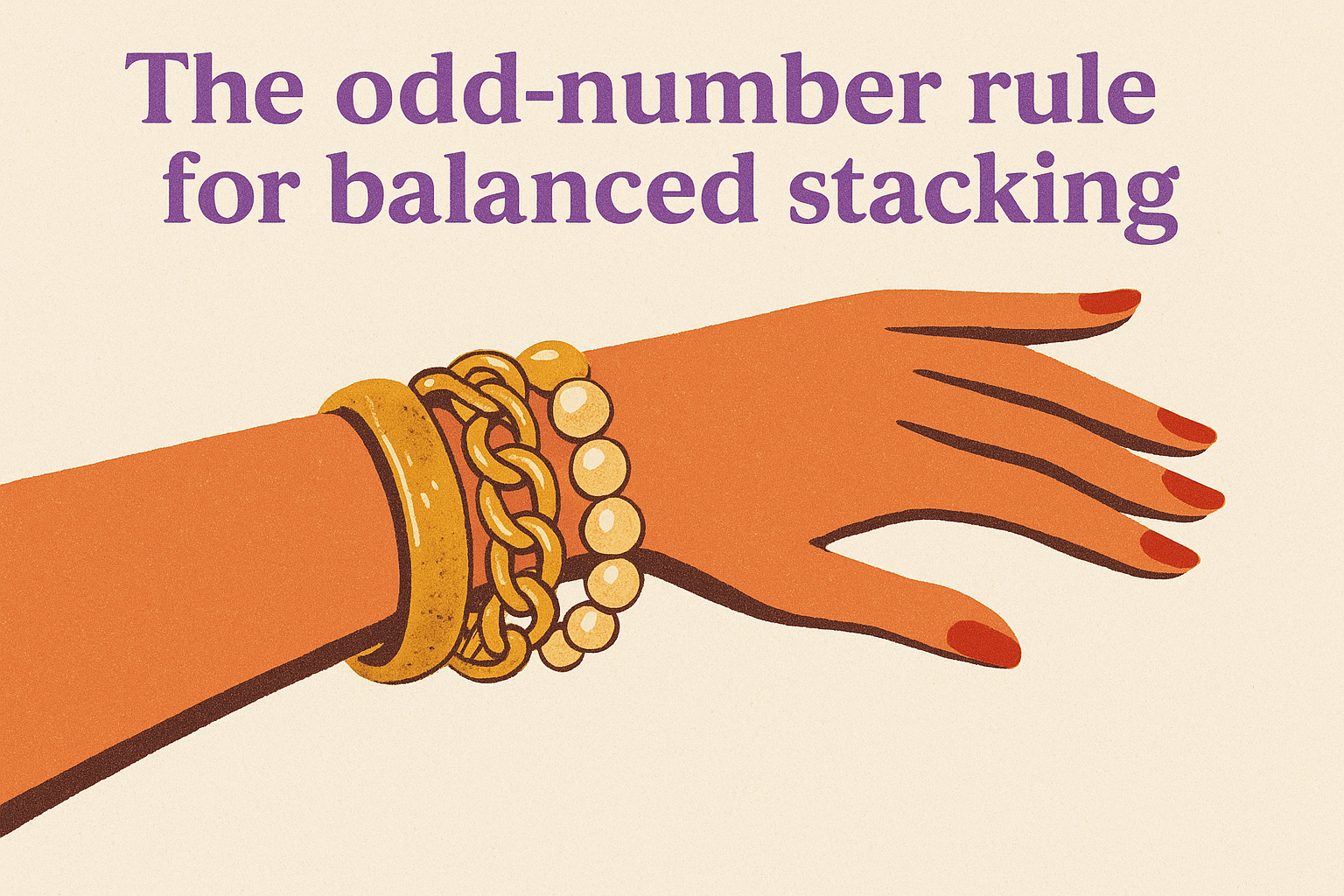
Start with one anchor piece that draws the most attention, then add complementary bracelets that enhance rather than compete with it. Your anchor might be a chunky chain, an embellished cuff, or a beaded design with distinctive colors. The supporting pieces should vary in width, keeping some delicate and others more substantial to create dimensional contrast.
Mixing metals and textures successfully
Combining gold, silver, and rose gold on the same wrist has become completely acceptable in modern styling. You create the most cohesive look by ensuring at least one element connects your different metals, whether that's similar chain styles or repeated design motifs. Mixing a smooth gold bangle with a textured silver chain and a beaded bracelet adds tactile variety that makes your stack more interesting.
The contrast between polished surfaces and matte finishes gives your stack depth that single-texture combinations lack.
Avoid matching everything perfectly. Your stack should include different materials and finishes that complement each other through contrast rather than identical repetition. Leather cords work beautifully alongside metal chains, while pearl-embellished bracelets soften the harder edges of metal cuffs.
Creating visual balance on both wrists
You can concentrate all your bracelets on one wrist for maximum impact, or distribute them across both arms for a more subtle effect. Single-wrist stacking creates a focal point that works well when you want your jewelry to make a statement. Wearing bracelets on both wrists keeps the attention distributed and feels less formal, particularly when you balance a watch on one side with stacked pieces on the other.
How to measure your wrist size accurately
Getting your bracelet size right means the difference between jewelry that slides off your hand or cuts into your skin. You need precise measurements to order pieces that fit comfortably and stay in place during movement. The measurement process takes less than two minutes and requires items you already have at home. Accurate sizing becomes particularly important when you buy bracelets online and can't try them on before purchasing.
The string or tape method
Wrap a flexible measuring tape around your wrist bone at the point where you normally wear bracelets, keeping the tape snug but not tight. You should slide one finger underneath the tape to ensure you're not measuring too tightly. Read the measurement in inches or centimeters where the tape meets, and write it down immediately since you'll use this number to determine your bracelet size.
If you don't own a measuring tape, use a piece of string or ribbon instead. Wrap it around your wrist the same way, mark where it overlaps with a pen, then lay it flat against a ruler to get your measurement. This method works just as accurately as using a tape measure and gives you the exact circumference of your wrist.
Adding the right amount of ease
Your actual wrist measurement differs from your ideal bracelet size because you need extra room for comfort and movement. Add half an inch to your wrist measurement for a snug fit that hugs your wrist, or add one full inch for a looser, more relaxed fit. Bangles and cuffs require different adjustments since they slide over your hand rather than clasping around your wrist.
Measure the widest part of your hand with your thumb tucked in to find the minimum diameter for bangles that slip on.
The amount of ease you add depends on personal preference and the bracelet style you're buying. Delicate chains look best when they fit closer to your skin, while chunky statement pieces need more room to move freely without feeling restrictive.
Converting measurements to bracelet sizes
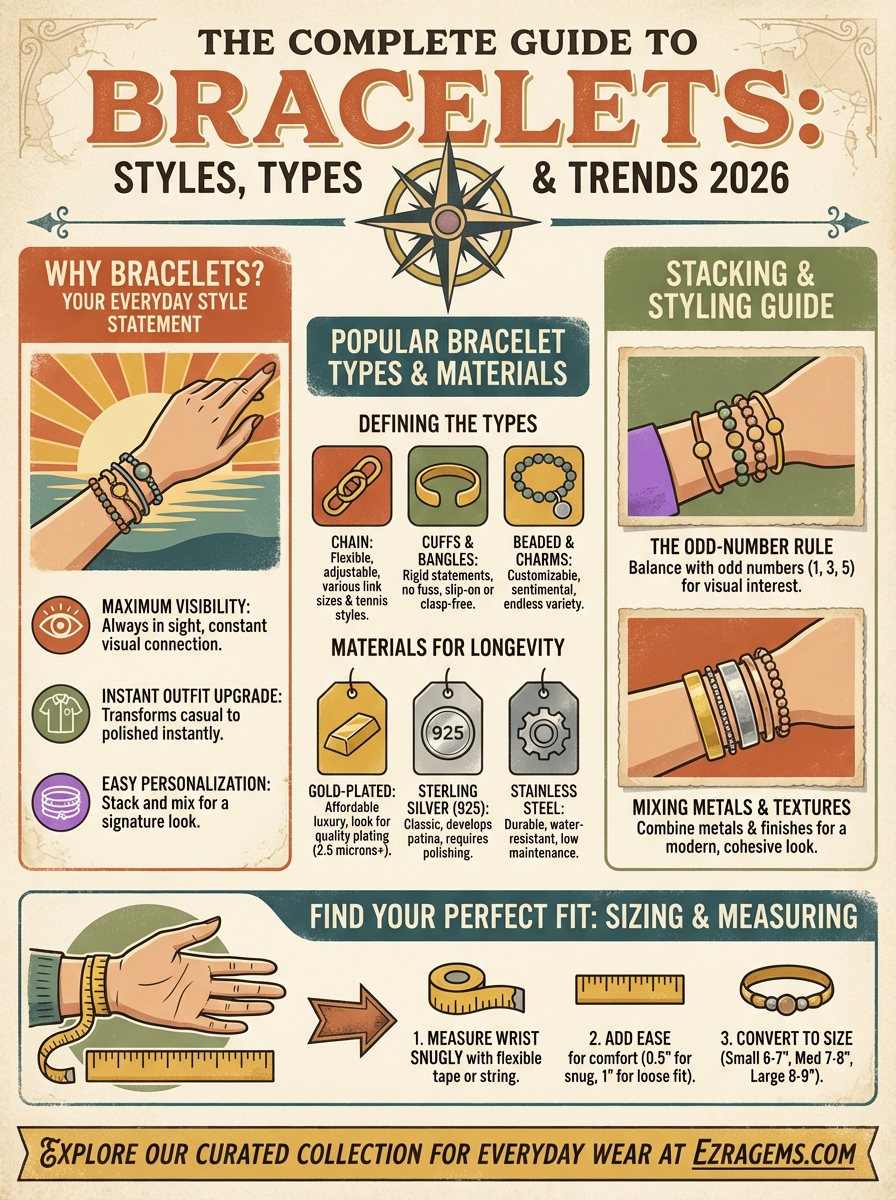
Most jewelry retailers use standard sizing categories like small (6-7 inches), medium (7-8 inches), and large (8-9 inches) based on total bracelet length. Your wrist measurement plus the ease amount equals your ideal bracelet size. Someone with a 6.5-inch wrist would typically order a 7 to 7.5-inch bracelet for comfortable everyday wear.
Upgrade your everyday jewelry collection
You now have the knowledge to select bracelets that match your style and withstand daily wear. Understanding different types, materials, and sizing helps you make confident purchasing decisions instead of guessing what might work. Your wrist deserves jewelry that complements your lifestyle rather than pieces that sit unworn in a drawer because they don't fit properly or tarnish after a few weeks.
Building a versatile collection doesn't require buying everything at once. Start with one quality piece that works for multiple occasions, then gradually add bracelets that let you experiment with stacking and mixing metals. Each new addition should fill a specific role in your collection, whether that's a delicate chain for subtle elegance or a bold cuff for statement-making moments.
Ready to find your next favorite bracelet? Browse our curated jewelry collection featuring waterproof pieces designed for everyday wear. Every piece ships fast and comes with our satisfaction guarantee, so you can shop confidently.
Leave a comment