


If you've ever shopped for pearl jewelry, you've probably run into the cultured vs natural pearls debate. Both are real pearls, that part often gets lost in the noise, but they differ in how they form, what they cost, and how rare they actually are. Understanding those differences matters whether you're investing in a high-end piece or choosing everyday jewelry you'll wear on repeat.
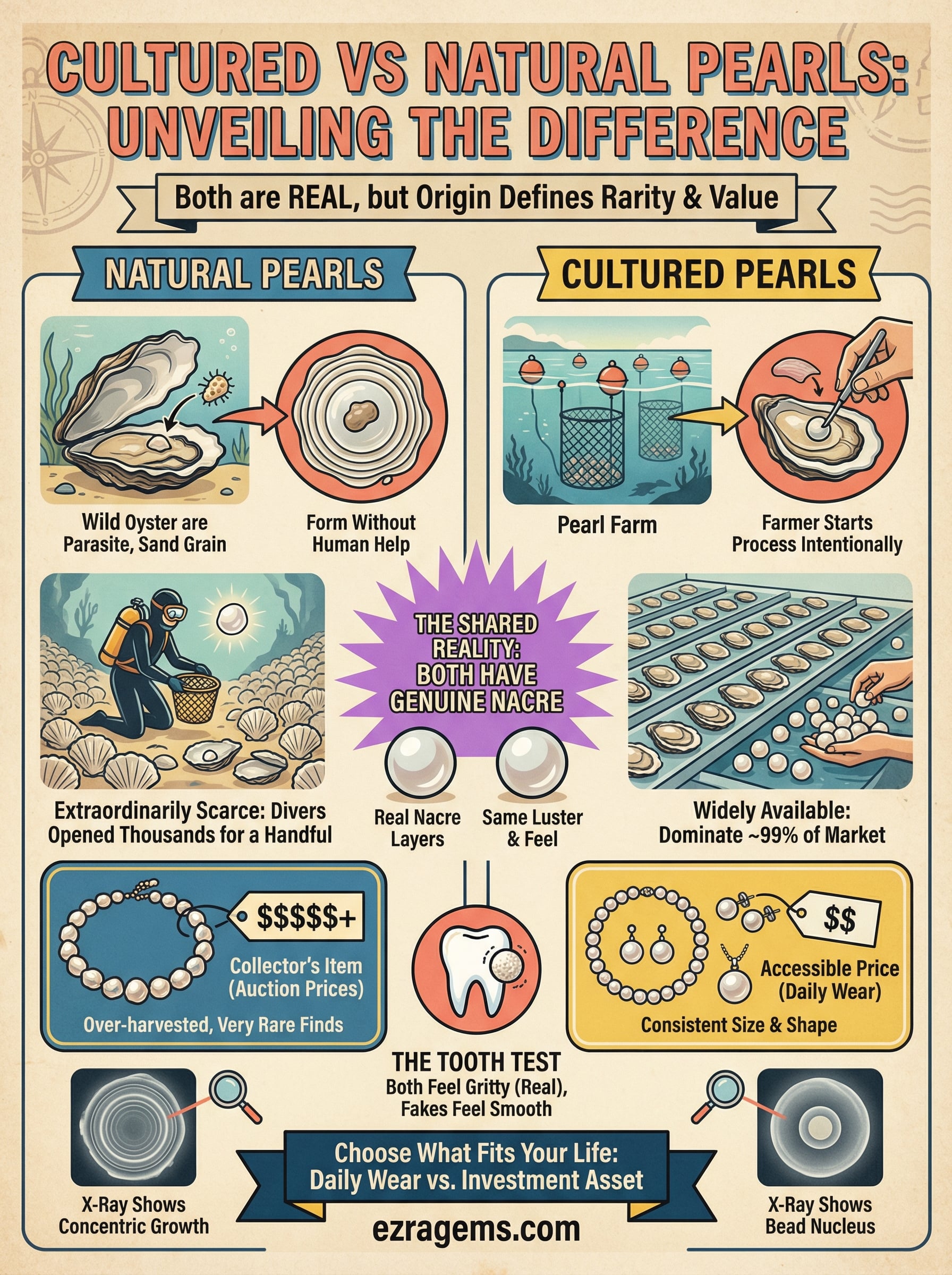
Natural pearls form without any human help, which makes them extraordinarily scarce. Cultured pearls, on the other hand, get a nudge from pearl farmers who start the process intentionally. That single distinction shapes everything from price tags to availability. It's also why cultured pearls dominate roughly 99% of today's pearl market.
Short answer: Almost every pearl sold today is cultured; natural pearls are rare and priced accordingly. Cultured freshwater pearls give the same look for everyday wear, like those in Pearl & Gold.
Every piece is 18K gold plated over surgical stainless steel: waterproof, tarnish free, hypoallergenic, and under $50.
Everyday favourites: freshwater pearl necklace and pearl earrings.
At Ezra Gems, our Pearl & Gold collection features pearl-accented pieces built for daily wear, designed to hold up through showers, workouts, and everything in between. This guide breaks down the real differences between cultured and natural pearls, covering their formation, physical characteristics, value, and rarity so you can shop with clarity and confidence.
Why the natural vs cultured distinction matters
When you're buying pearl jewelry, knowing the cultured vs natural pearls distinction saves you from overpaying or misunderstanding what you're actually getting. Most people assume "natural" automatically means "better," but the reality is more nuanced. Both types are genuine pearls, built from the same nacre layers inside a mollusk. The difference lies in how the process starts, and that difference carries serious weight when it comes to pricing, availability, and what you can realistically expect to find at retail.
The price gap is significant
Natural pearls are, for practical purposes, a collector's item. Because wild pearl-producing mollusks are rare and over-harvested populations have never fully recovered, a single strand of verified natural pearls can sell for tens of thousands of dollars at auction. That figure is not an exaggeration.
Natural pearl strands in good condition regularly fetch prices comparable to fine gemstone jewelry, making them more of an investment asset than a wearable purchase for most people.
Cultured pearls, by contrast, are widely available and far more accessible in price, which is exactly why they dominate the global pearl market. You can find high-quality cultured pearl pieces across a wide range of price points without sacrificing the look or feel of genuine pearl nacre.
What "real pearl" actually means
The word "real" trips people up constantly. A cultured pearl is a real pearl in every material sense. It contains the same layers of aragonite crystals, the same organic compounds, and the same visual properties as a natural pearl. What it lacks is the completely unassisted origin and extreme rarity that push natural pearl prices into luxury territory.
Imitation pearls, like glass or plastic beads coated with a pearlescent finish, belong to an entirely different category. These are not real pearls, and you can usually spot them by rubbing them gently against your teeth. Both natural and cultured pearls feel slightly gritty. Fakes feel smooth.
How the distinction shapes your shopping decisions
Understanding this distinction helps you set realistic expectations before you buy. Watch for these red flags when shopping for pearls:
- A strand labeled "natural pearls" priced under a few hundred dollars
- No certification or documentation for high-ticket pearl pieces
- Sellers who use "natural" and "real" interchangeably without clarification
Genuine natural pearls at accessible price points simply do not exist in today's market, so any listing making that claim deserves a hard look before you commit.
How natural and cultured pearls form
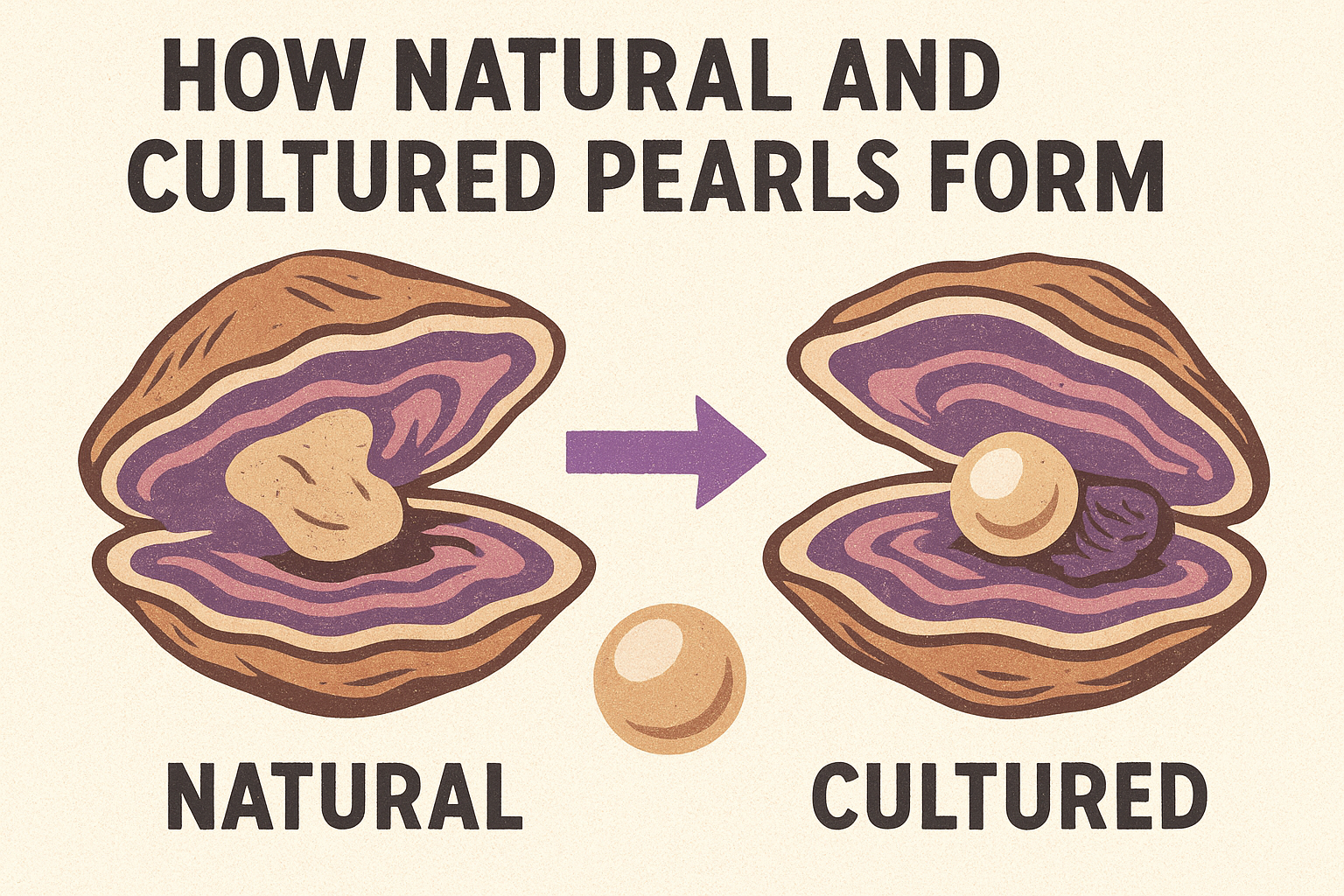
The formation process is what separates natural from cultured pearls at the most fundamental level. In both cases, the result is genuine nacre built layer by layer inside a living mollusk, but the trigger for that process is completely different.
Natural pearl formation
A natural pearl forms when an irritant, like a parasite or a grain of sand, enters a mollusk without any human involvement. The mollusk responds by coating that irritant with nacre, a combination of aragonite crystals and a protein called conchiolin. Over several years, those layers accumulate into what becomes a pearl. Because this happens entirely by chance in the wild, natural pearls are extraordinarily rare finds.
Historically, pearl divers had to open thousands of oysters to locate even a handful of natural pearls, which explains why they commanded the same prestige as precious gemstones for centuries.
Cultured pearl formation
Cultured pearls form through the same biological process, but pearl farmers initiate it deliberately. A technician inserts a nucleus, typically a polished shell bead, along with a small piece of donor mantle tissue into the mollusk. The mollusk then coats that nucleus with nacre, exactly as it would respond to a natural irritant.
When you compare cultured vs natural pearls at the biological level, the nacre itself is identical. The key difference is that a human hand set the process in motion, which also makes cultured pearls far more consistent in size and shape than pearls formed entirely by chance in the wild.
How to spot and verify the difference
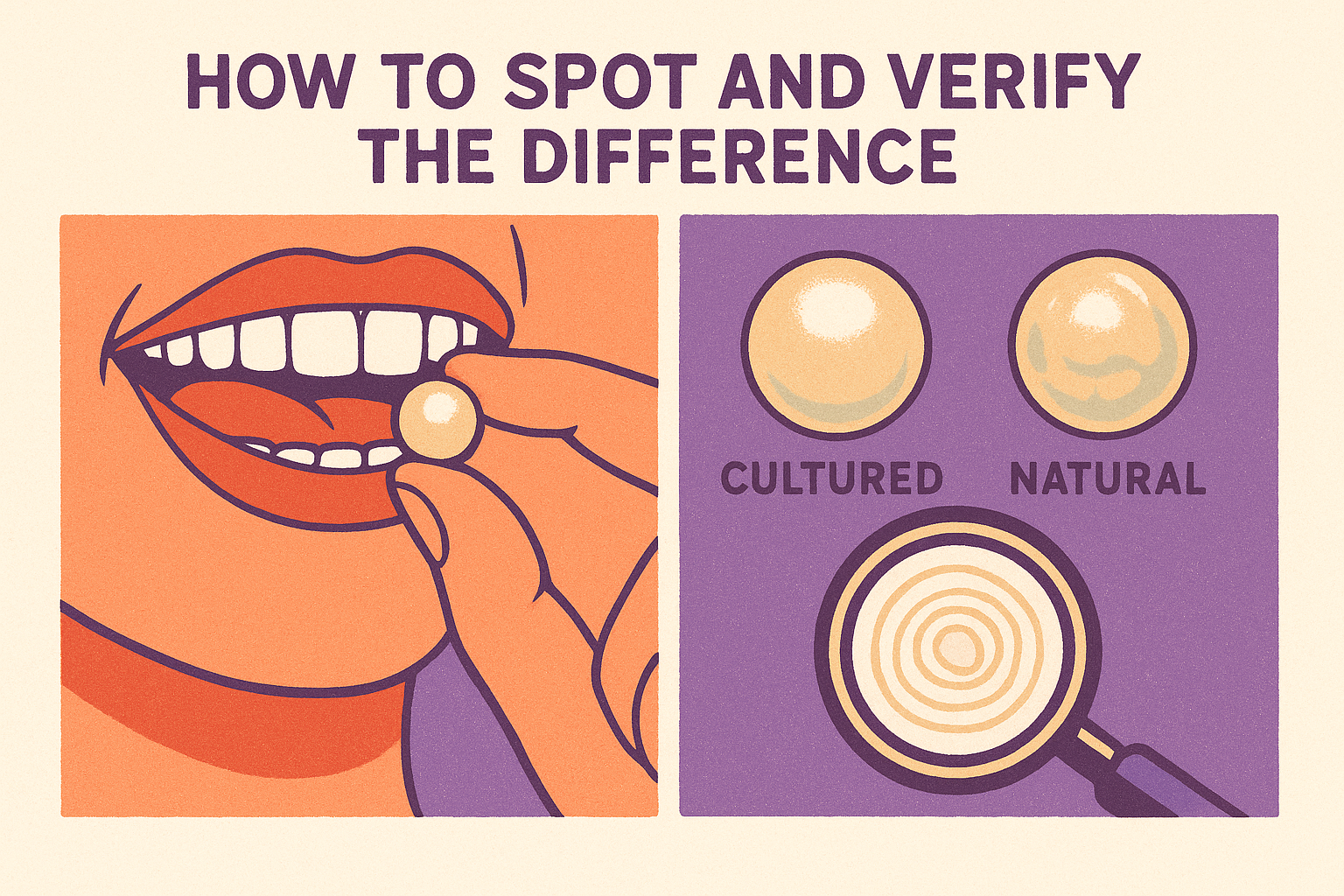
Telling cultured vs natural pearls apart at a glance is nearly impossible without testing, since both share the same nacre structure and visual characteristics. A few reliable methods exist, though, ranging from a quick at-home check to professional lab analysis.
The tooth test
The simplest way to check if a pearl is genuine is the tooth test. Rub the pearl lightly along the edge of your front teeth. Real pearls, both natural and cultured, feel slightly gritty or sandy because of the microscopic aragonite crystal layers in the nacre. Fake pearls made from glass or plastic feel completely smooth. This test tells you whether a pearl is real, but it does not distinguish a natural pearl from a cultured one on its own.
To separate natural from cultured pearls, you need to go beyond surface-level testing and bring in professional documentation or equipment.
Professional verification methods
Gemological labs use X-ray imaging to examine the internal structure of a pearl. A natural pearl shows concentric growth rings of nacre from the center outward, while a cultured pearl typically reveals a distinct shell bead nucleus near the core surrounded by a thinner nacre layer. Organizations like the Gemological Institute of America offer pearl identification services and provide written documentation confirming origin.
When you purchase any high-value pearl piece, always request a certificate of authenticity from a reputable lab. Without that paperwork, appearance alone gives you no reliable way to confirm whether a pearl formed naturally or with a farmer's help.
How value and rarity work for each type
When you compare cultured vs natural pearls on price and availability, the gap is enormous. Natural pearls are so scarce that most jewelry buyers will never encounter a verified one in a retail setting. Cultured pearls, in contrast, fill the global market and give you genuine nacre at prices that make regular wear practical.
Natural pearl rarity and pricing
Natural pearls are genuinely rare because wild pearl-producing mollusks face low survival rates and historically depleted populations. Finding a matched set for a necklace strand used to require sorting through tens of thousands of oysters, which is why natural pearl jewelry commanded prices reserved for royalty for centuries. Today, verified natural pearls appear almost exclusively at auction houses and through estate sales, where a single strand can sell for $50,000 or more depending on size, luster, and documentation.
The rarity of natural pearls puts them firmly in the investment category rather than the everyday jewelry category for nearly all buyers.
Cultured pearl pricing and accessibility
Cultured pearls carry real value too, but quality and type drive the price range rather than scarcity. Akoya pearls tend to sit at a mid-range price point, while South Sea and Tahitian cultured pearls command higher prices due to their larger size and distinctive coloration. You can find quality cultured pearl pieces from a few dozen dollars up into the thousands depending on the pearl variety, nacre thickness, and overall craftsmanship of the setting.
How to choose pearls for your budget and style
Knowing the cultured vs natural pearls distinction is useful, but what matters most is matching your choice to what you actually need from a piece of jewelry. Your budget, how often you plan to wear it, and the look you're going for should all factor into the decision before you buy anything.
Match your budget to the right pearl type
If you're working with a typical jewelry budget, cultured pearls are the practical and smart choice. They give you real nacre, genuine luster, and a wide selection of styles without requiring you to spend auction-house money. Natural pearls belong firmly in the investment category, so unless you're buying a documented estate piece with lab certification, cultured is what you'll find and what you should expect in any retail or online setting.
For most buyers, cultured pearl jewelry delivers the full visual appeal of pearl without the scarcity premium that makes natural pearls inaccessible.
Think about how you'll wear them
Your lifestyle should guide the type of setting and pearl size you choose. Smaller, more delicate pearl accents work well for everyday pieces you plan to wear through workouts and showers. Larger statement pearls in elaborate settings suit occasions where you want more visual impact but may not need the same durability every single day.
At Ezra Gems, the Pearl & Gold collection covers both ends of that spectrum, giving you pieces designed to hold up through daily wear without sacrificing style.
Final takeaway
The cultured vs natural pearls distinction comes down to one core fact: both are real pearls, but they sit in completely different categories when it comes to rarity and price. Natural pearls belong to the world of collectors, estate sales, and auction houses. Cultured pearls give you genuine nacre, real luster, and everyday wearability without requiring a six-figure budget or a lab certificate just to shop with confidence.
Your best move is to focus on what you'll actually wear and how each piece fits your life. A well-made cultured pearl piece delivers the full look and feel of pearl without compromise on quality or appearance. When you shop with that clarity, you stop chasing a distinction that rarely matters in daily life and start building a collection you'll reach for every single day.
Explore pearl-accented jewelry at Ezra Gems and find pieces built to hold up through real wear.
Leave a comment