


You want jewelry that looks like solid gold, holds up to daily wear, and doesn't cost a fortune. That's exactly where gold filled jewelry comes in. It's one of the most practical options on the market, offering real gold bonded to a base metal in a thick, lasting layer that outperforms standard gold plating by years.
But what does "gold filled" actually mean? How is it different from gold plated or solid gold? And is it really worth the investment? These are fair questions, especially when so many jewelry terms get thrown around loosely. The short answer: gold filled jewelry lasts significantly longer than plated pieces and resists tarnishing in ways that make it ideal for everyday wear, even through showers, workouts, and humid weather.
At Ezra Gems, we build our collections around pieces that hold up to real life. That means prioritizing materials like gold fill that won't turn your skin green or lose their shine after a few wears. In this guide, we'll break down exactly what gold filled jewelry is, how it's made, how long you can expect it to last, and why it's become a go-to choice for anyone who wants durability without the solid gold price tag.
What gold filled jewelry is
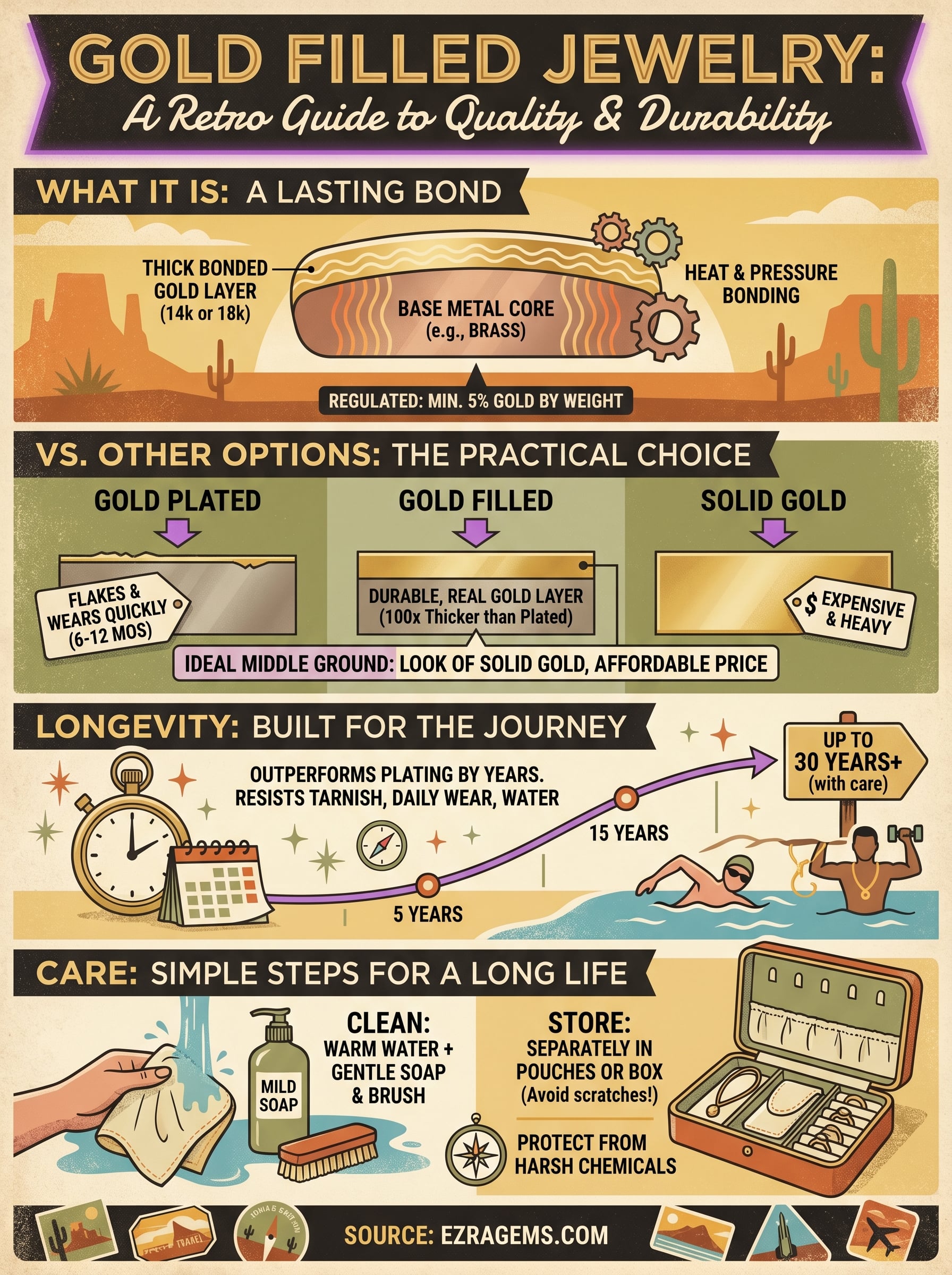
Gold filled jewelry is made by bonding a thick layer of real gold to a base metal core, typically brass, using heat and pressure. The result is a piece that looks and feels like solid gold but costs a fraction of the price. Under US regulations enforced by the Federal Trade Commission, a piece can only be called "gold filled" if it contains at least 5% gold by weight, which is a meaningful standard that separates it from lower-quality alternatives.
That regulated 5% gold-by-weight minimum is what makes "gold filled" a term you can actually trust when you're shopping, unlike loosely used phrases like "gold tone" or "gold finish."
How gold fill is made
The manufacturing process starts with a solid sheet of gold alloy bonded to a brass core under intense heat and high pressure. This creates a permanent mechanical bond, not a surface coating that can flake or peel. Because the gold layer is so much thicker than what you find on plated pieces, it doesn't wear off easily with daily contact, sweat, or water exposure.
You'll commonly see pieces stamped with "14/20 GF," which means the gold layer is 14-karat gold making up 1/20th of the item's total weight. Some pieces use 12-karat gold and are stamped "12/20 GF." Either way, the stamp tells you exactly what you're buying, so always look for it before you purchase.
How gold filled compares to gold plated and solid gold
Knowing where gold filled sits on the quality spectrum helps you make a smarter decision. Gold plated jewelry uses an electroplating process that deposits an extremely thin gold layer, often just 0.5 to 2.5 microns thick, onto a base metal. That layer wears away quickly with regular use. Gold filled pieces carry a gold layer that's roughly 100 times thicker than standard gold plating, which is why the difference in longevity is so dramatic.
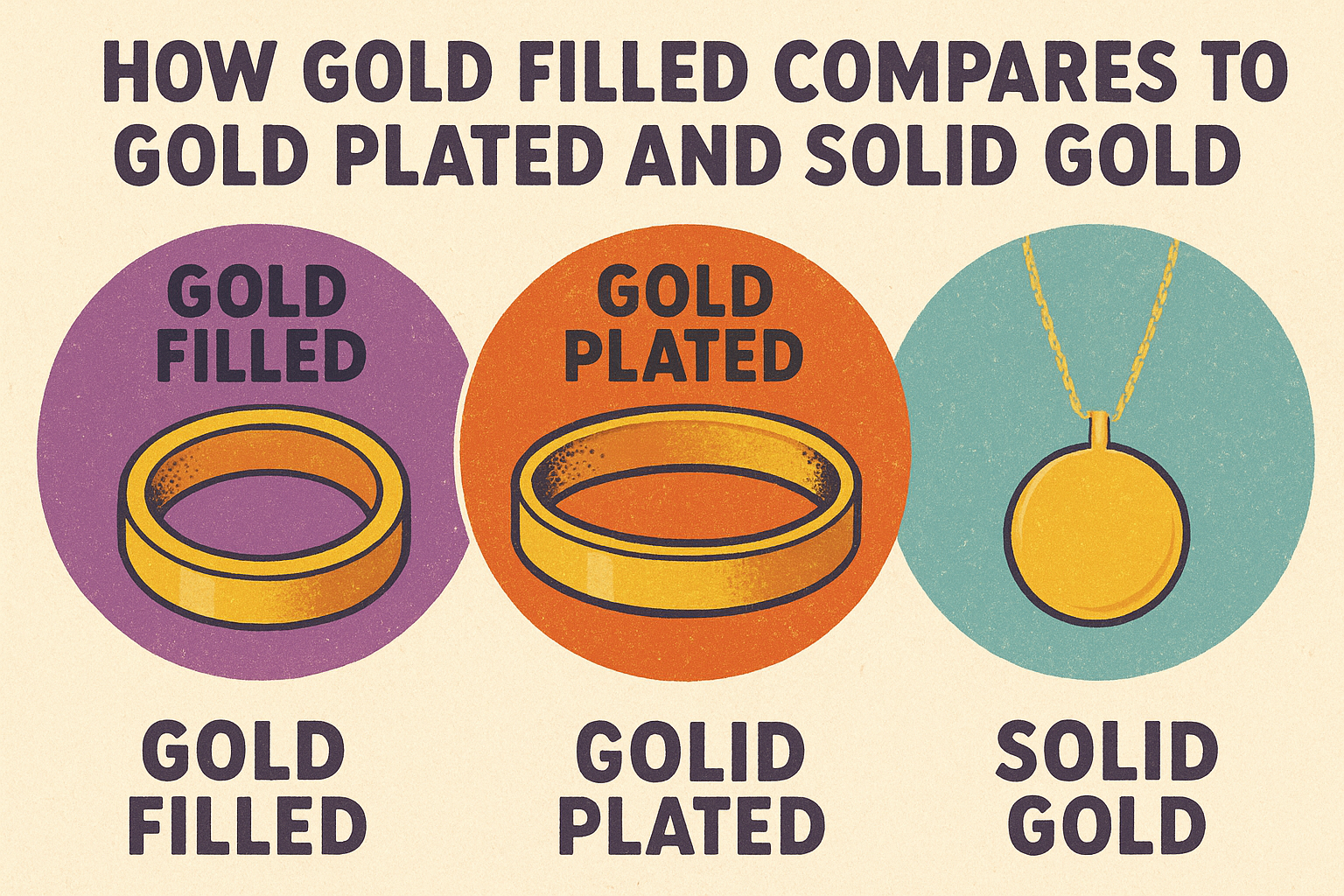
Solid gold sits at the top of the price range, with 14k or 18k pieces running into hundreds or thousands of dollars depending on weight and design. Gold filled jewelry gives you the same rich appearance and strong tarnish resistance as solid gold at a price point that fits a real-life budget. For most people, gold fill is the practical middle ground that delivers on both quality and value.
Why people choose gold filled jewelry
Most people who switch to gold filled jewelry don't go back to plated pieces. The reasons are practical: the material looks better for longer, causes fewer skin reactions, and costs less than solid gold while delivering a comparable quality experience. Once you wear a piece that doesn't fade after a few months, the difference becomes hard to ignore.
Gold filled jewelry delivers the look and durability of solid gold at a price point that makes everyday wear realistic for most budgets.
It's gentle on your skin
If you've ever worn a necklace that left a green mark on your neck, you've experienced what happens when low-quality base metals react with your skin. Gold filled pieces use a thick bonded gold layer that keeps your skin from making direct contact with brass, which means far less irritation, discoloration, or allergic reaction. For anyone with sensitive skin, this factor alone makes gold fill the smarter daily option.
Common signs a piece isn't skin-friendly:
- Green or black marks where the jewelry contacts skin
- Redness or itching around the contact area
- Visible dullness or discoloration on the piece itself
It holds up to real daily wear
Gold filled pieces stand up to the kind of use that destroys plated jewelry. You can wear them through workouts, showers, and humid summer days without worrying about the finish breaking down. The thick bonded layer doesn't chip or peel, so your jewelry looks as good months later as it did the day you bought it.
Knowing your pieces can keep up with your lifestyle removes the stress of treating jewelry like it's fragile. You don't have to take it off before every activity, which means you actually wear it and get real value from your purchase.
How long gold filled jewelry lasts
Gold filled jewelry typically lasts 5 to 30 years with regular wear, a range that depends on how well you care for it and what activities you expose it to. That's a significant improvement over gold plated pieces, which often start showing wear within 6 to 12 months. The thick bonded gold layer is what drives that difference, and understanding what affects the lifespan helps you get the most out of every piece you own.
With proper care, gold filled pieces can last decades, making them one of the strongest long-term values in affordable jewelry.
What affects the lifespan
Several factors determine how long your pieces hold up. Friction and chemical exposure are the two biggest ones. Pieces worn close to the skin, like bracelets and rings, experience more direct contact and wear faster than earrings or necklaces. Harsh chemicals found in cleaning products, chlorinated pools, and even some perfumes can break down the gold layer faster than normal daily wear.
Factors that shorten lifespan:
- Daily contact with cleaning products or bleach
- Frequent swimming in chlorinated water
- Applying perfume or lotion directly onto the piece
- Storing pieces loose where they scratch against each other
What to realistically expect
Necklaces and earrings worn daily tend to outlast rings and bracelets simply because they experience less physical friction throughout the day. Your storage habits and product exposure also play a bigger role than most people expect. If you treat pieces with basic care, avoiding heavy chemical exposure and keeping them stored separately, 10 to 20 years of wearable life is a realistic outcome for most gold filled pieces.
How to choose quality gold filled pieces
Gold filled jewelry varies in quality depending on the karat of gold used and whether the piece meets regulated manufacturing standards. Knowing what to look for before you buy prevents you from overpaying for something that performs like basic plating. Two markers tell you almost everything you need to know upfront: the stamp pressed into the metal and the karat value it references.
A missing or vague stamp is the clearest sign a piece doesn't meet any regulated gold fill standard.
Look for the stamp
Every quality piece should carry a clear stamp like "14/20 GF" or "12/20 GF" pressed directly into the metal itself. That stamp confirms the piece meets the legal gold-by-weight requirement and tells you exactly what you're buying before you commit. Avoid anything labeled "gold tone," "gold finish," or left completely unmarked.
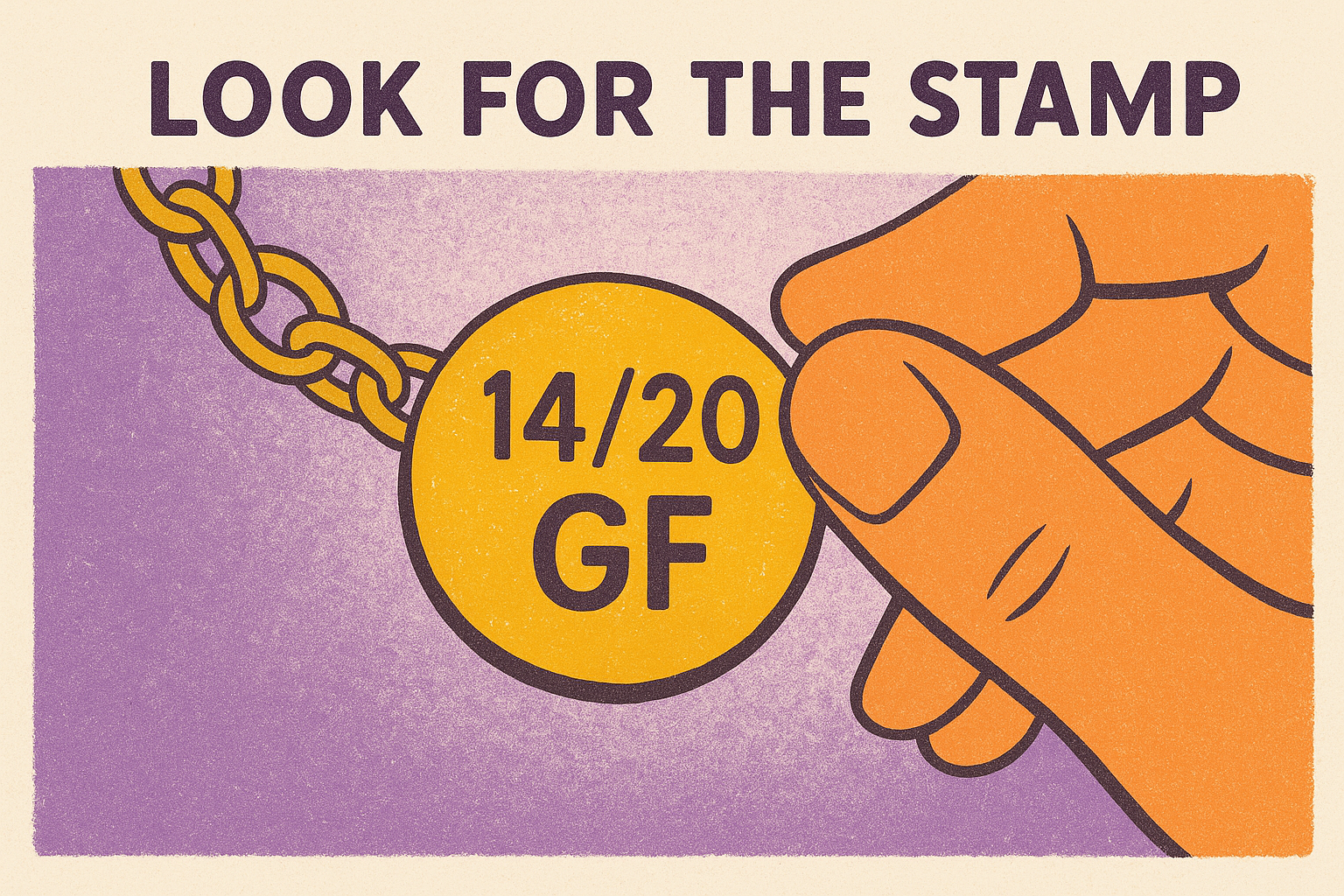
Signs a stamp is legitimate:
- It's pressed into the metal, not printed on a hang tag
- It includes a karat number and "GF" or "Gold Filled"
- The seller can clearly explain what the stamp means
Consider the karat
The karat number in the stamp indicates how pure the gold outer layer is. A 14-karat gold fill uses a harder alloy that resists scratching better than softer 18-karat gold, making it the stronger practical choice for rings and bracelets that take daily friction.
For necklaces and earrings, the difference matters less because those pieces experience far less contact throughout the day. Either karat holds up well in low-friction settings, so base your choice on how and where you plan to wear the piece most often.
How to care for gold filled jewelry
Caring for gold filled jewelry doesn't require special products or complicated routines. A few consistent habits protect the bonded gold layer and keep your pieces looking sharp for years without extra effort.
The biggest threat to gold filled pieces isn't daily wear, it's avoidable exposure to chemicals and abrasives that degrade the surface faster than normal use ever would.
Clean it the right way
Warm water and a few drops of mild dish soap are all you need to clean most pieces. Use a soft cloth or a gentle brush to remove oils, sweat, and residue from daily wear, then rinse thoroughly and pat completely dry before storing. Avoid ultrasonic cleaners and abrasive cloths, because both strip the surface faster than you'd expect.
Simple cleaning steps to follow:
- Use lukewarm water, never hot
- Choose a soft microfiber cloth or a baby toothbrush for detail work
- Dry completely before putting the piece away or storing it
Store it properly
Improper storage causes more damage than most people realize. Tossing pieces into a shared drawer lets them scratch against each other, which gradually wears down the surface even when you're not wearing them. Keep each piece in a separate pouch or a lined jewelry box to prevent contact between items.
Your pieces should also stay away from humidity and direct sunlight, since both conditions accelerate surface degradation over time. Bathrooms are a convenient but poor choice for storing jewelry long-term. A bedroom dresser or a cool, dry drawer protects your investment without requiring any extra cost or effort on your part.
Putting it all together
Gold filled jewelry sits in the right position on the quality spectrum for most people: real gold bonded to a base metal at a regulated standard, with a lifespan that can stretch 10 to 20 years when you treat it well. You now know how to read a stamp, what affects how long a piece lasts, and which habits protect the surface over time. That's enough to shop with confidence instead of guessing.
Every detail covered here points to the same conclusion: material quality and basic care determine how much value you actually get from your jewelry. Choosing pieces that meet the regulated gold fill standard, storing them separately, and keeping them away from harsh chemicals are the three habits that make the biggest difference over time.
If you're ready to put this knowledge to use, browse the gold filled necklaces and earrings at Ezra Gems and find pieces built to last.
Leave a comment