


You take off your coat and realize one stud earring is gone. Or you wake up with only one earring still in your ear. Maybe you've lost the same pair three times because the backs keep slipping off. Loose stud earrings are frustrating and expensive. Each lost earring means buying a new pair or living with a mismatched collection you'll never wear.
This guide shows you 10 practical ways to keep your stud earrings secure. You'll learn how to tighten loose backs, upgrade to safer options, and fix common problems that cause studs to fall out. We'll cover simple adjustments you can do right now and permanent solutions that work for daily wear. Whether your backs are too loose, your posts are bent, or you just want better security, these proven fixes will help you stop losing your favorite earrings.
Short answer: Studs fall out because of loose friction backs and worn posts. Switch to screw back or flat back studs with secure fittings, like the ones in the Ezra Gems stud collection.
Every piece is 18K gold plated over surgical stainless steel: waterproof, tarnish free, hypoallergenic, and under $50.
Try screw back pearl studs or browse all stud earrings.
1. Choose secure stud earrings from Ezra Gems
The best way to prevent lost earrings starts before you even put them on. High-quality stud earrings come with secure backing systems built into their design from the start. When you invest in well-made studs, you get posts that stay straight, backs that grip properly, and materials that resist bending under daily wear.
Why quality studs make a difference
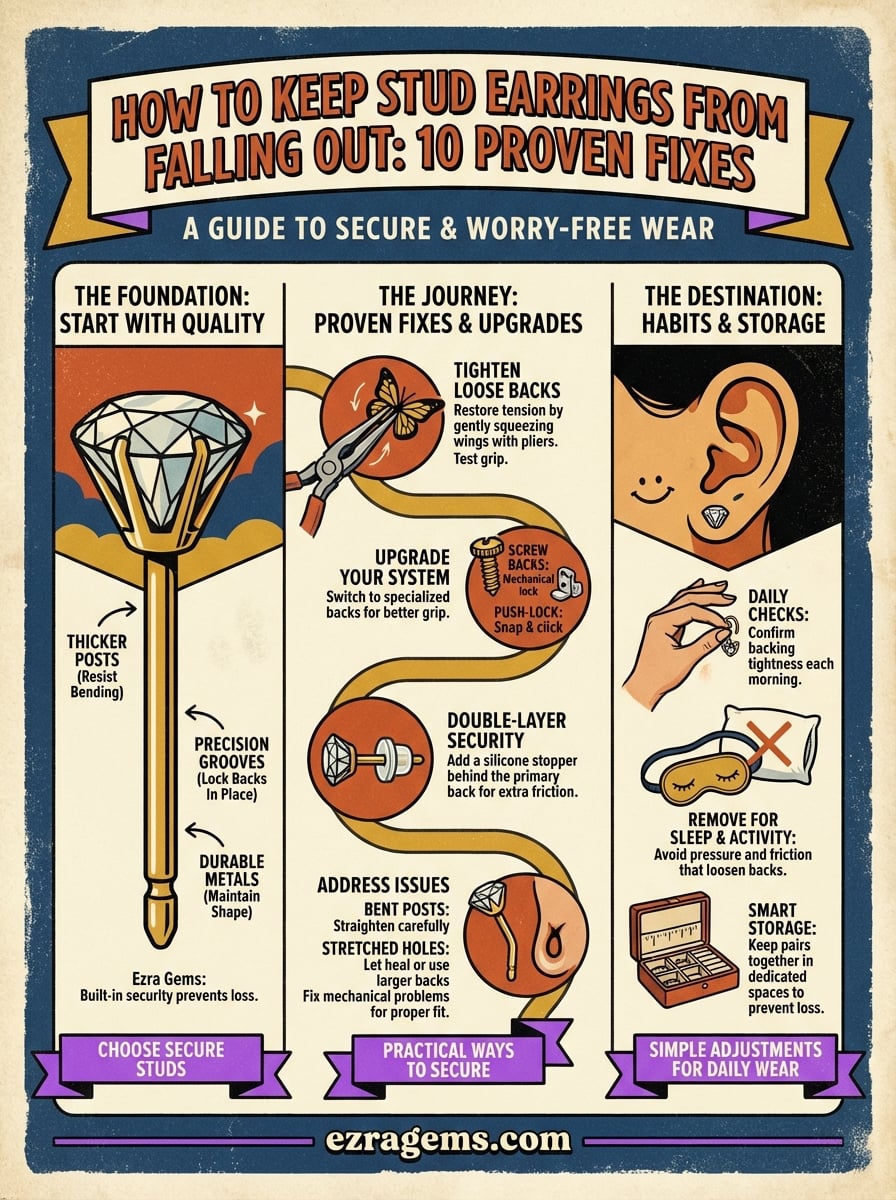
Cheap stud earrings use thin metal posts that bend easily and low-quality backs that lose tension quickly. These manufacturing shortcuts create the exact problems that cause earrings to fall out. Quality studs feature thicker posts that resist bending, precision-cut grooves that lock backs in place, and durable metals that maintain their shape through years of use.
Features to look for in secure stud earrings
You want studs with sturdy post thickness of at least 0.9mm and reliable backing mechanisms that click into position. Look for posts with notched grooves or ridges that prevent backs from sliding off. Gold-plated or solid metal construction resists the warping and bending that loosens your grip on the earring. Posts should be straight and perpendicular to the stud face so they sit flush against your earlobe without tilting.
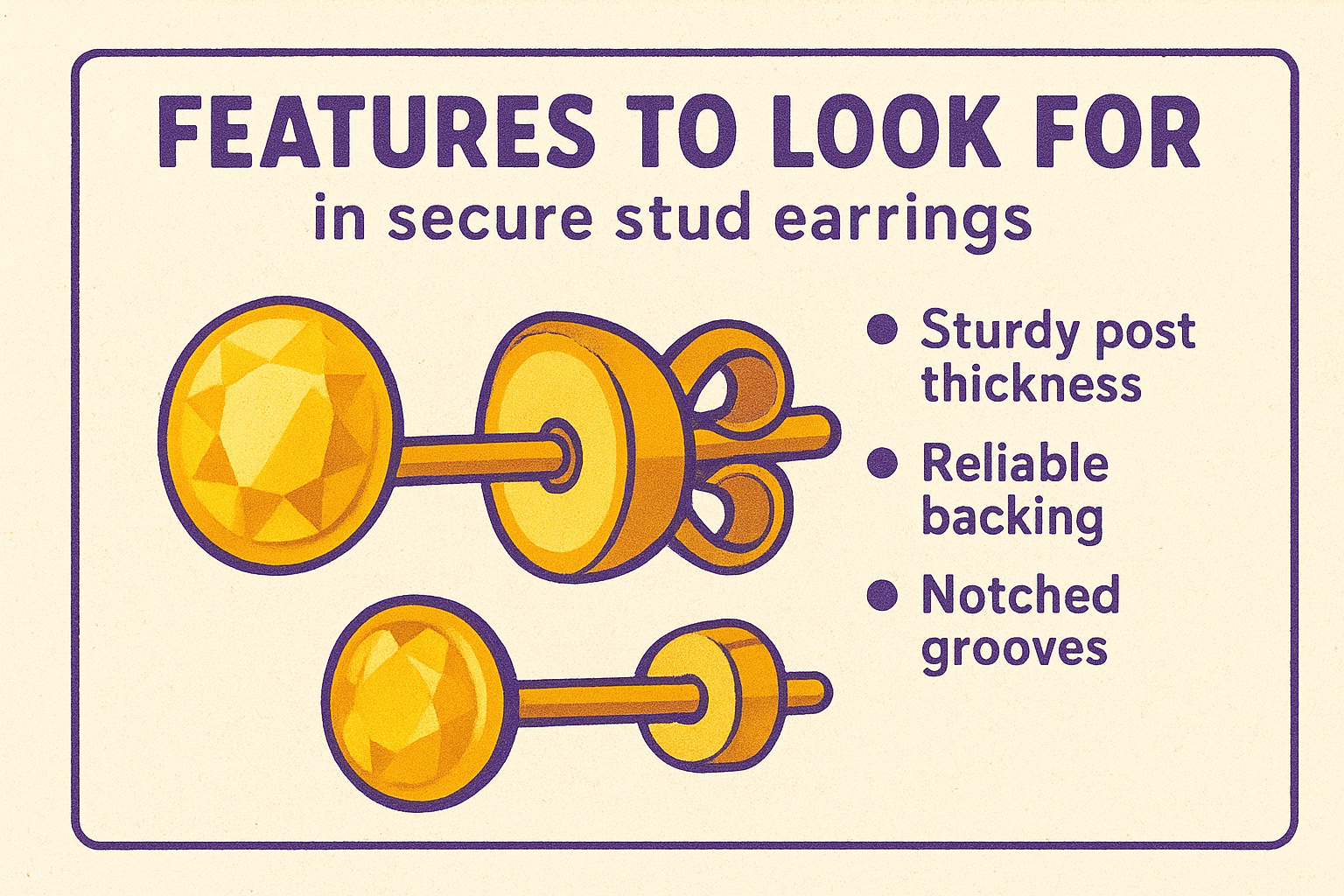
The right construction details make all the difference between studs that stay put and pairs you constantly replace.
How Ezra Gems studs help prevent losses
Ezra Gems designs every stud with security features that address common loss problems. Their waterproof construction means the metal won't weaken from moisture exposure during showers or workouts. The brand uses proper post gauges and quality backing systems across their collections, from the Just Gold line to the Pearl & Gold pieces. When you choose studs built with security in mind, you solve how to keep stud earrings from falling out before the problem starts.
2. Tighten loose butterfly or friction backs
Your stud earrings might fall out simply because the backs have lost their grip over time. Butterfly backs (also called friction backs) rely on metal tension to hold onto the post. After months or years of use, that tension weakens and the back slides off too easily. The good news is you can restore the grip in minutes using basic tools you already own.
How to tell your backs are too loose
You'll know your backs need tightening when you can pull them off the post with barely any resistance. Properly tensioned backs require a firm tug to remove. If your earring backs slip off when you brush your hair or adjust your collar, they're definitely too loose. Another sign is when your studs tilt forward instead of sitting flat against your earlobe. Backs should grip the post tightly enough that the earring doesn't move when you touch it.
Step-by-step way to tighten butterfly backs
Needle-nose pliers give you the precision you need to restore tension to loose backs. Hold the butterfly back with the curved metal wings facing up. Gently squeeze the two metal pieces closer together using the pliers. Apply light pressure because too much force will crack the metal. Test the back on your earring post after each small adjustment. You want enough resistance that the back takes deliberate effort to slide on and off, but not so much that you struggle to put your earrings in. Repeat the gentle squeeze-and-test process until you achieve the right grip.
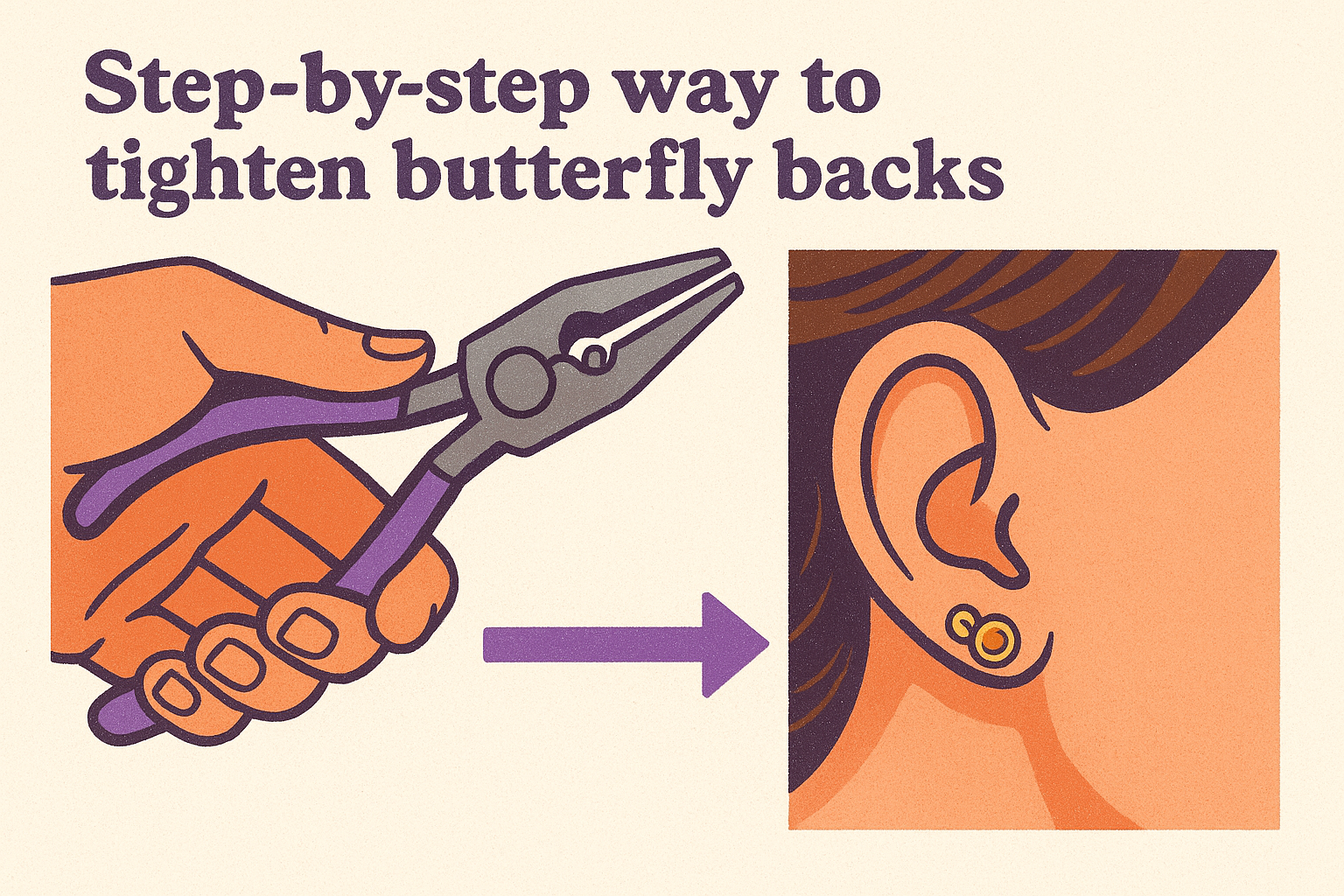
Proper tension means your backs stay secure without making daily wear uncomfortable or difficult.
When to replace a worn out back instead
Sometimes tightening won't solve how to keep stud earrings from falling out. Replace backs that show visible damage like cracks, bent wings, or metal fatigue. Backs that won't hold tension even after tightening have lost their structural integrity. You'll also need new backs if the center hole has stretched or become misshapen from repeated use. Quality replacement backs cost just a few dollars and give you fresh security that worn-out backs can't provide.
3. Upgrade to safer locking or screw backs
Your current friction backs might be working against you no matter how many times you tighten them. Upgrading to specialized backing systems gives you security features that standard butterfly backs simply can't match. These alternative designs use different mechanisms to grip the post, offering you reliable options that solve how to keep stud earrings from falling out through better engineering rather than hoping worn metal springs back into shape.
Common types of stud earring backs
Beyond the standard butterfly back, you have several secure backing options that use different locking methods. Screw backs feature a threaded post that you twist onto the earring, creating a mechanical lock that won't slide off accidentally. Push-lock backs (also called comfort backs or La Poussette) snap into a notched groove on the post, giving you an audible click when properly secured. Alpha backs use a spring-loaded mechanism that requires you to squeeze two sides simultaneously to remove them. Each type offers advantages for different situations and wearing styles.
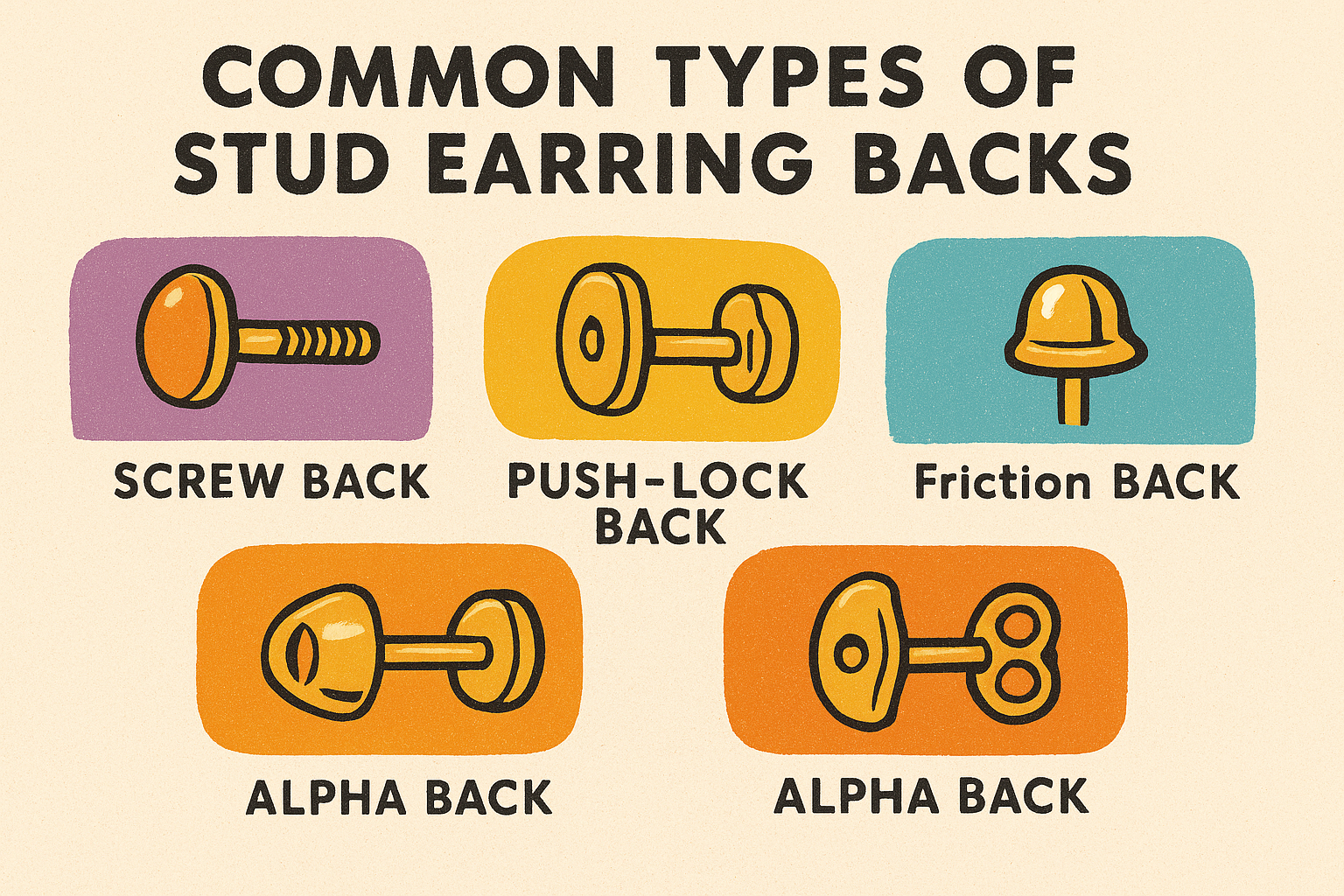
Pros and cons of locking, screw, and friction backs
Screw backs provide the most security against accidental loss because you must deliberately unscrew them to remove your earrings. However, they take longer to put on and take off, and the threading can wear down over time. Locking backs balance security with convenience by snapping into place quickly while still requiring intentional release. They work well for daily wear when you want protection without the hassle of screwing. Friction backs offer the fastest on-and-off experience but provide the least security since they rely only on spring tension that weakens with use.
The backing system you choose should match your lifestyle and how often you remove your earrings.
How to switch to a new back style
You'll need to verify your earring posts have the correct features for your chosen backing system. Screw backs require threaded posts, while locking backs need posts with notched grooves at specific positions. Most jewelry stores sell universal screw-on or push-lock backs that fit standard post gauges. Simply remove your current backs and slide on the new ones, testing the fit on both earrings to confirm they grip securely. Order replacement backs designed for your specific stud style if universal options don't provide the snug fit you need.
4. Add silicone stoppers or disc stabilizers
You can create a double-layer security system for your studs without replacing your existing backs. Silicone stoppers and disc stabilizers slide onto your earring post behind your regular backing, adding an extra barrier that prevents the primary back from sliding off. This simple addition works with any backing style you currently use and costs just a few dollars for a pack that lasts months.
What silicone stoppers and disc backs do
Silicone stoppers act as a physical barrier that keeps your main backing from moving down the post. These clear, flexible discs grip both the post and your primary back, creating friction that holds everything in place. The soft material won't irritate your skin and stays invisible behind your earlobe. Disc stabilizers perform the same function but use a slightly firmer plastic construction that some people find more secure for heavier studs.
How to add a second safety back
You'll slide the silicone stopper onto your earring post first, then add your regular backing on top of it. Push the stopper close to your earlobe but leave enough room for your primary back to grip the post properly. The stopper should sit snug against your backing without compressing your earlobe uncomfortably. Test the security by tugging gently on the stud face to confirm both layers hold firm.
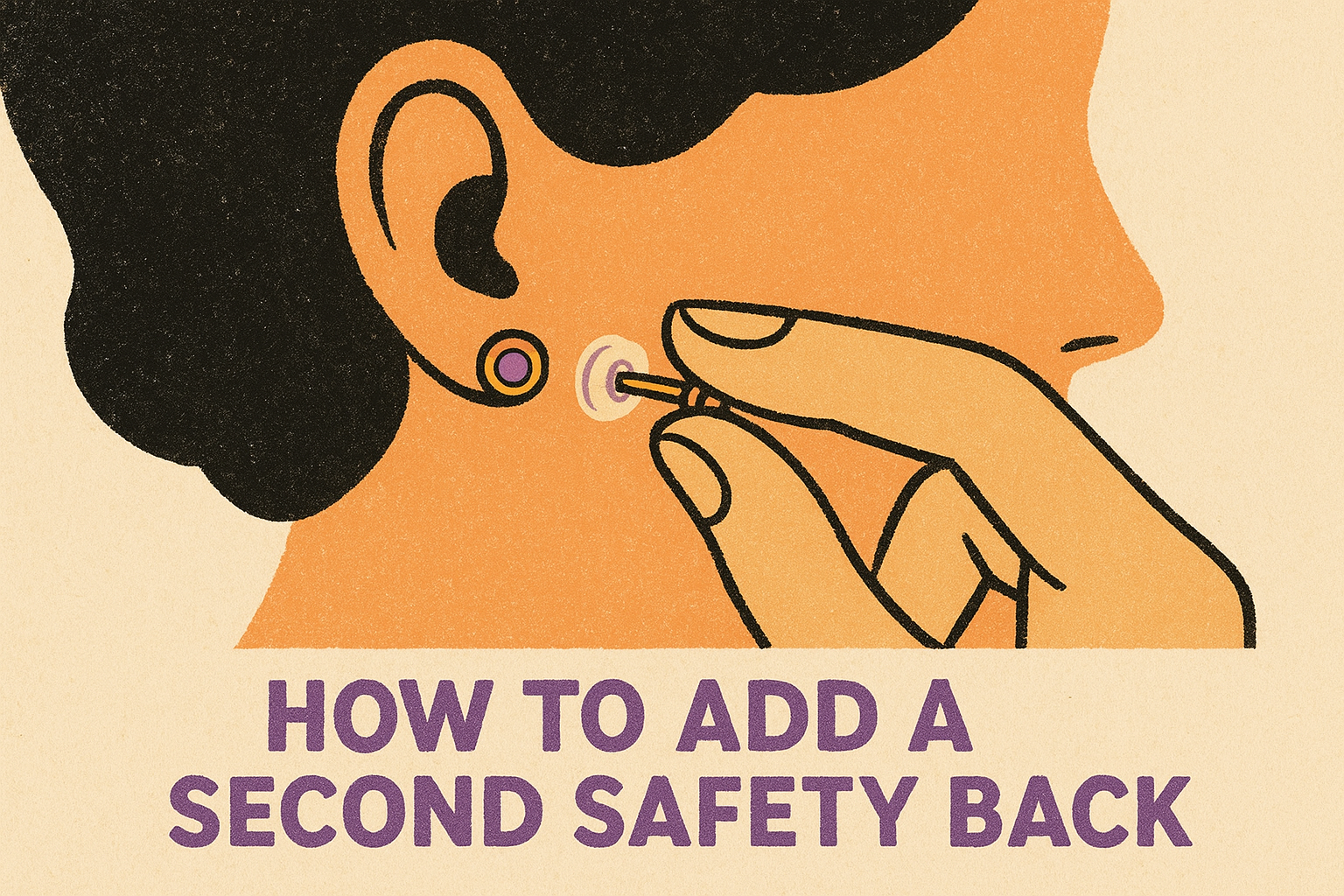
This double-backing method solves how to keep stud earrings from falling out without modifying your earrings or buying new hardware.
Best situations for this extra support
Stoppers work particularly well during physical activities like workouts, dancing, or sports when your earrings face more movement and impact. You'll appreciate the extra security during travel when you're handling luggage, changing clothes frequently, or sleeping in unfamiliar positions. Many people use stoppers as permanent protection for their most valuable or sentimental studs rather than risking loss during daily wear.
5. Use larger backs to lift droopy studs
Your stud earrings might stay attached to your ears but still look wrong when they tilt forward or hang at odd angles. Drooping studs create an awkward appearance and put extra strain on the backing, making them more likely to fall out eventually. Larger backs solve this problem by providing more surface area that distributes the earring's weight and keeps the post perpendicular to your lobe.
Why studs droop or tilt forward
Heavy stud designs with large stones or thick metal fronts create weight imbalance that standard small backs can't support. The backing sinks into your earlobe tissue while the heavier front pulls the earring forward. Thinner earlobes compound this problem because there's less tissue to support the earring's weight. Your studs tilt when the small contact point of a regular back can't counterbalance the mass on the front side.
How lifter and jumbo backs keep studs upright
Jumbo backs feature a wider disc surface that spreads pressure across more of your earlobe instead of concentrating weight on a tiny point. This larger footprint prevents the back from sinking into your tissue and keeps the post straight. Lifter backs add thickness that pushes the earring away from your lobe slightly, creating better balance for heavier pieces.
Proper backing size transforms droopy earrings into polished, secure accessories that maintain their position all day.
Tips for choosing the right size and material
Match your back size to your stud weight rather than choosing the largest option available. Start with medium jumbo backs for moderately heavy studs and upgrade to extra-large only if needed. Plastic or rubber backs work well for lifting because they're lightweight and won't add extra downward pull. Metal jumbo backs provide more durability but add weight you'll need to account for when solving how to keep stud earrings from falling out.
6. Fix bent posts and stretched piercings
Sometimes the problem isn't your backing at all. Bent earring posts and stretched piercing holes create mechanical issues that prevent proper fit no matter what backing system you use. A bent post won't sit perpendicular to your lobe, causing the backing to grip at an angle that eventually loosens. Stretched piercings allow posts to move around too much, creating gaps that let backings slip off more easily.
Problems caused by bent posts and stretched holes
Bent posts happen when you accidentally pull or snag your earrings, sleep on them wrong, or apply too much pressure while putting them on. The post curves slightly but enough to change how the backing grips it. Stretched piercing holes develop from wearing heavy earrings too often or from years of regular use that gradually enlarges the tissue opening. You'll notice your studs wiggle more than they should, tilt at odd angles, or feel loose even with new backings that should grip tightly.
When you can fix it at home and when to see a pro
You can straighten slightly bent posts at home using needle-nose pliers if you work carefully and slowly. Remove the earring and gently bend the post back to perpendicular alignment, checking your progress frequently to avoid over-correcting. This works only for minor bends in durable metals. Severely bent posts or posts made from soft metals like pure gold need professional jeweler attention because home repairs risk breaking them. Stretched piercings rarely respond to home treatment and require professional assessment to determine if the tissue can heal or if you need intervention.
Long term options like repiercing or lobe repair
Your best solution for stretched piercings involves letting the holes close completely over several months, then getting repierced in a slightly different location. This gives you fresh tissue that grips posts properly and solves how to keep stud earrings from falling out when the original hole has become too large. Severely stretched or torn lobes require professional repair through a minor surgical procedure that reconstructs the tissue.
Professional lobe repair restores both function and appearance, allowing you to wear studs securely again after tissue damage.
7. Change your daily earring habits
Your daily actions might be working against your earring security without you realizing it. The way you handle your studs throughout the day, how you sleep, and what activities you do while wearing them all affect how well they stay in place. Small adjustments to your routine can dramatically reduce the number of lost earrings without requiring new hardware or professional repairs.
Everyday habits that loosen stud earrings
You probably touch your earrings more than you think. Fidgeting with your studs, twisting them, or unconsciously tugging on them loosens the backing gradually throughout the day. Brushing your hair creates repeated friction against your earrings that pulls the backs down the post bit by bit. Pulling clothing over your head catches on studs and either removes them completely or weakens the backing's grip enough that they fall out hours later.
Simple routines to keep studs secure
Check your backing tightness each morning before you leave home by gently tugging on the stud front to confirm the back holds firm. Remove your earrings before putting on or taking off tight-fitting clothes like sweaters and turtlenecks to avoid accidental snagging. Keep your hair tied back or tucked behind your ears during activities where hair contact will repeatedly brush against your studs.
Small preventive checks throughout your day stop problems before they result in lost earrings.
Special tips for workouts, sleep, and travel
Take your studs out before intense exercise since sweat loosens backing grip and rapid movement increases the chance they'll fall out. Never sleep on your side while wearing studs because the pressure against your pillow bends posts and loosens backs. Learning how to keep stud earrings from falling out during travel means checking your backings before flights, keeping spares in your carry-on, and removing earrings before napping in transit.
8. Store your studs safely on the go
Proper storage protects your stud earrings from loss just as much as secure backings do. You need a dedicated system that keeps pairs together and prevents individual pieces from rolling away or getting buried in bags. The right storage habits mean you'll always find both earrings when you need them and avoid losing expensive pieces to preventable accidents.
Why storage matters for keeping pairs together
Your loose studs easily separate when tossed into purses, makeup bags, or pockets without protection. Individual earrings and their backings slip through small openings, fall between seat cushions, or get buried under other items where you'll never find them again. Storage that keeps each set together prevents the frustrating situation where you have one earring but its mate disappeared somewhere during your day.
Easy ways to store studs at home
Small compartment boxes with individual sections keep each pair organized and visible on your dresser or vanity. Ice cube trays or pill organizers work perfectly as budget storage that separates sets from each other. You can also use a jewelry board with small holes where you insert posts to display and store studs upright so you see everything at once.
Smart on the go storage ideas
Zippered jewelry pouches prevent studs from escaping your bag during travel and give you a dedicated spot to store pairs you remove temporarily. Small plastic containers with secure lids fit easily in purses and protect studs from impact that might loosen backings. Understanding how to keep stud earrings from falling out includes having portable storage ready when you need to remove earrings at the gym, pool, or during flights.
Dedicated storage transforms random loose pieces into organized pairs you can actually find and wear.
9. Try quick at home security hacks
You don't always need to buy specialized hardware when your stud earrings start feeling loose. Common household items provide temporary solutions that work surprisingly well until you can get proper replacement backs or professional help. These quick fixes use materials you likely have in your bathroom or kitchen right now, giving you immediate security when you need it most.
Fast fixes using items you already own
Pencil erasers work as makeshift backing when you've lost the original piece and need to secure your studs quickly. Cut a small piece from a clean eraser and push your earring post through it to create temporary grip. You can also use a small piece of tape wrapped around the post behind your earlobe, though this method feels less comfortable for all-day wear. These solutions help you keep wearing your favorite studs when proper backs aren't available.
How to use rubber or silicone as emergency backs
Rubber bands provide excellent emergency backing material because they create strong friction against metal posts. Cut a small segment about quarter-inch wide and loop it over the post several times until it grips firmly against your earlobe. Silicone ear plugs from drugstores work even better since you can poke the post through the soft material to create a custom-fitted stopper that won't slip off.
Emergency fixes give you hours of security but shouldn't replace purpose-built backing systems for regular use.
When to replace hacks with a permanent fix
Your temporary solutions solve how to keep stud earrings from falling out for a single day or emergency, but they aren't meant for extended wear. Replace makeshift backs with proper hardware within 24 to 48 hours since household materials can harbor bacteria or degrade quickly. Permanent backing systems cost just a few dollars and provide the reliable security your valuable studs deserve.
Final thoughts
You now have 10 practical solutions that address every common reason studs fall out. Start by checking your current backs for proper tension and upgrade to more secure options if tightening doesn't help. Add silicone stoppers for extra protection during activities, and invest in quality studs designed with security features from the beginning.
Learning how to keep stud earrings from falling out comes down to matching the right solution to your specific problem. Your bent posts need straightening or replacement, while stretched piercings might require professional attention. Small daily habits like checking your backings each morning and storing pairs properly prevent most losses before they happen.
Ready to wear studs you can trust? Browse secure, stylish stud earrings at Ezra Gems that combine quality construction with beautiful designs, so you can focus on looking great instead of worrying about lost jewelry.
Leave a comment