


18k gold plated jewelry gives you the rich, warm look of solid gold without the four-figure price tag. It's one of the most popular options for anyone who wants everyday luxury that actually fits a real budget, and for good reason. A quality 18k gold plated piece can hold up through daily wear, look nearly identical to solid gold, and leave you with enough left over to build an entire collection.
But not all gold plated jewelry is created equal. The thickness of the plating, the base metal underneath, and how you care for your pieces all determine whether your jewelry keeps its shine for months or starts fading after a few wears. That's exactly why understanding what you're buying matters, and why we built Ezra Gems around jewelry that's designed to last through showers, sweat, and everything in between without tarnishing or turning your skin green.
This article breaks down what 18k gold plated jewelry actually is, the styles worth investing in, how to judge quality before you buy, and the specific care tips that keep your pieces looking fresh long-term. Whether you're shopping for your first gold plated necklace or adding to a growing stack, you'll walk away with everything you need to make a confident purchase.
What 18k gold plated jewelry really means
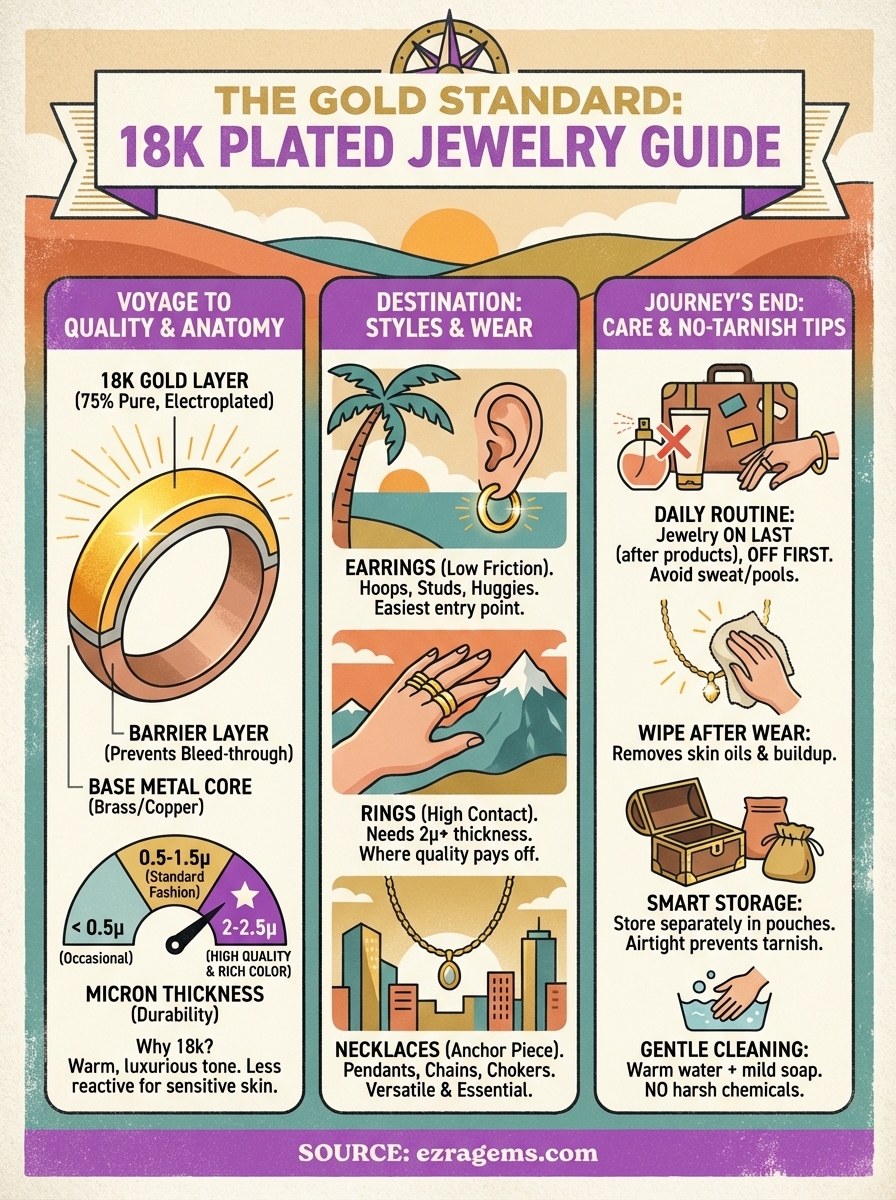
When you see "18k gold plated," you're looking at a piece with a base metal core covered by a thin layer of real gold. The base is typically brass, copper, or sterling silver, and the gold on top is actual 18-karat gold bonded to that surface through an electroplating process. This is not a coating of gold-colored paint or a chemical dip. It's genuine gold, just applied in a thin layer over the base rather than used solid throughout the entire piece.
The layers that make up a plated piece
A well-made piece of 18k gold plated jewelry has more going on beneath the surface than most people realize. Between the base metal and the gold layer, quality manufacturers often add a barrier layer (usually rhodium or a similar metal) to prevent the base from bleeding through over time. That barrier layer is one of the biggest differences between cheap plated pieces that fade after a few wears and well-built ones that hold up for years of daily use.
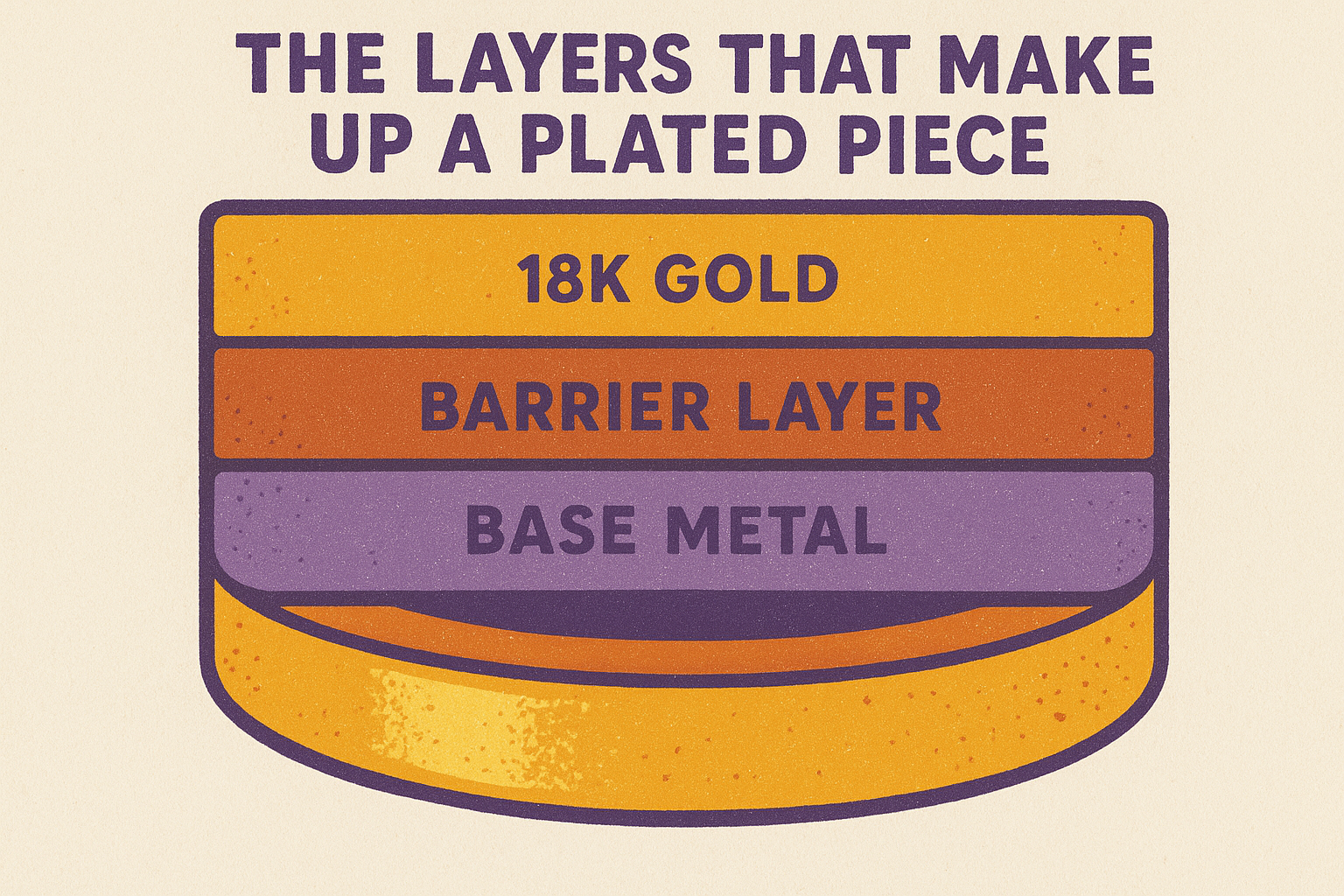
The thickness of the gold layer itself is measured in microns. Most fashion jewelry falls somewhere between 0.5 and 2.5 microns. Higher-quality pieces typically use 2 to 2.5 microns, which gives you noticeably better durability and a richer color. Anything under 0.5 microns tends to wear through quickly, especially on high-contact areas like ring shanks and bracelet clasps.
Here's a quick breakdown of what different plating thicknesses mean for you:
- Under 0.5 microns: Wears through quickly, best reserved for occasional or short-term wear
- 0.5 to 1.5 microns: Standard range for most mass-market fashion jewelry
- 2 to 2.5 microns: Heavier plating with longer wear life and a richer gold appearance
What "18k" actually tells you about the gold
The "18k" refers specifically to the purity of the gold used in the plating layer itself. Pure gold is 24 karats, so 18k gold is 75% pure gold mixed with other metals like silver or copper to add strength and color. That 75% purity level is what gives 18k gold its characteristic warm, rich yellow tone, which runs warmer than 14k but holds up better in daily wear compared to 24k.
When a brand uses 18k gold in its plating rather than 14k or lower, you get a deeper, more luxurious color that reads much closer to fine jewelry than standard fashion pieces.
Higher purity gold is also naturally less reactive against your skin, which is a significant reason why quality 18k gold plated pieces are far less likely to cause irritation or leave a green tint. That green discoloration people sometimes experience with cheaper jewelry usually comes from the base metal reacting with moisture and skin oils, not from the gold itself. A solid barrier layer and proper plating thickness keep that base metal from ever making contact with your skin in the first place.
Why plating quality matters for wear and value
Not all 18k gold plated jewelry holds up the same way, and the difference usually comes down to plating quality rather than price alone. A well-plated piece protects the base metal from contact with your skin, locks in color over repeated wear, and resists the kind of everyday stress that causes cheaper pieces to fade within weeks.
How base metal affects your skin
The base metal sitting beneath the gold layer is a bigger factor in jewelry performance than most shoppers realize. Brass and copper bases are common in fashion jewelry, and when the plating thins or chips, those metals come into direct contact with your skin. Moisture activates a chemical reaction that leaves behind that familiar green tint on your wrist or neck, which is not a sign of fake gold, but a sign of a thin or failed plating job.
The gold layer itself is not what irritates your skin. The base metal underneath is the real culprit, which is why plating thickness and barrier layers matter so much.
A quality piece uses a barrier layer between the base and the gold to prevent this entirely. That layer acts as a buffer so that even as the gold surface experiences normal wear, the reactive base metal stays sealed underneath and away from your skin.
What separates lasting pieces from disposable ones
The longevity gap between quality and budget plating comes down to two things: micron thickness and the consistency of the electroplating process. Pieces plated at 2 microns or above hold up through daily contact, hand washing, and light moisture far better than thinner alternatives. A consistent plating process also means the gold bonds evenly across the entire surface, including the edges and textured details that cheaper production often misses.
Investing in quality-plated jewelry saves you money over time because you replace pieces far less often. A single [well-made necklace](https://ezragems.com/blogs/blog-posts-by-ezra-gems/initial-gold-plated-necklace) that lasts two or three years costs less per wear than three cheap ones that each fade within a season.
How to choose 18k gold plated pieces that last
Picking a piece that holds up starts with asking the right questions before you buy. Most shoppers focus on style and price, but the details that determine longevity are usually found in the product description, not the product photo. Knowing what to look for protects your money and keeps you from cycling through pieces that fade every few months.
Check the plating thickness and base metal
The first thing to look for in any 18k gold plated jewelry listing is the plating thickness. A reputable brand states this clearly, usually in microns, because it's a direct indicator of how long the piece will hold up under daily wear. Anything at 2 microns or above gives you a meaningful advantage over standard fashion jewelry, especially on high-contact pieces like rings and bracelets.
The base metal matters just as much. Brass and copper bases are completely workable when paired with proper barrier layers and thick plating, but you want confirmation that the brand has addressed what sits between the base and your skin. If a listing says nothing about the base metal or barrier layer, that silence is worth paying attention to.
A brand that tells you exactly what's inside a piece is almost always a brand that stands behind the quality of what it's selling.
Look for care instructions and return policies
Detailed care instructions in a product listing signal that the brand has actually tested how the piece performs over time. Vague listings with no guidance on cleaning or storage often come from mass-produced lines where durability was not a design priority, so treat that absence of information as a red flag.
Your purchase is also better protected when a clear return policy is easy to find. A brand confident in its product makes returns straightforward. One that buries or limits return terms is signaling that it expects problems. Pair that with real customer reviews mentioning long-term wear, and you get a reliable picture of what you're actually buying before the package ever arrives.
Styles to shop: earrings, necklaces, rings
The right style makes all the difference in how often you actually reach for a piece. 18k gold plated jewelry covers a wide range of categories, and the best investments are the ones that fit your daily routine rather than sitting in a box waiting for the right occasion. Knowing which styles perform best in each category helps you build a collection that looks intentional and holds up over time.
Earrings: the easiest entry point
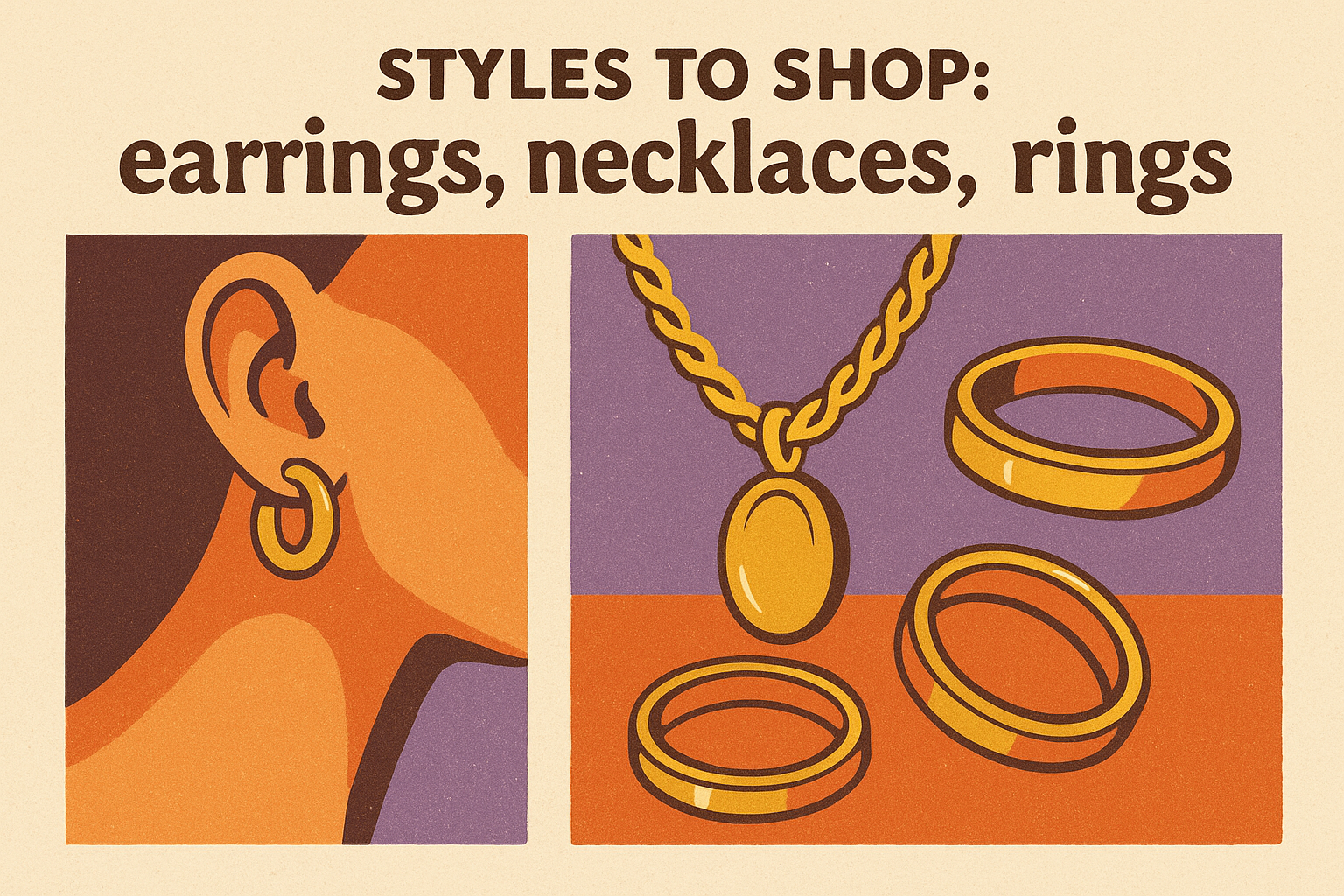
Earrings are one of the best places to start with gold plated jewelry because they experience far less friction and contact than rings or bracelets. Lower wear means the plating holds longer, and you get strong visual impact without the durability concerns that come with higher-contact pieces. Huggies, small hoops, and classic studs form the foundation of most collections because they work across every context, from a morning coffee run to a dinner out, without requiring any adjustment.
Earrings are also a low-risk way to test a new style or silhouette before committing to a matching necklace or ring in the same design.
Rings: where plating thickness earns its keep
Rings take more daily wear than almost any other jewelry category, which makes heavier plating at 2 microns or above worth prioritizing here more than anywhere else. High-contact areas like the inner shank wear faster, so look for pieces with smooth, consistent finishes inside the band. Thin stacking rings are particularly popular because they give you the flexibility to mix and layer without the stack feeling bulky or overdone, and the lower surface area means each individual piece holds its plating longer.
Necklaces: the anchor of any look
Necklaces are usually the piece that pulls the rest of your jewelry together and sets the tone for how everything else reads. Layering two or three chains at different lengths adds depth and dimension with minimal effort. Pendant styles, delicate chains, and choker-length pieces offer the most outfit versatility and work across the widest range of occasions, from everyday basics to eveningwear, which is why most people reach for a necklace first when building out a new collection.
How to keep gold plated jewelry shiny and no green
How long your jewelry holds its shine depends almost entirely on what you do with it daily, not just how expensive it was when you bought it. Even the highest-quality 18k gold plated jewelry will wear faster if you expose it to the wrong conditions repeatedly. The good news is that a few consistent habits make a measurable difference without adding much effort to your routine.
Daily habits that protect the plating
The single biggest threat to gold plating is prolonged exposure to moisture and chemicals. Putting your jewelry on as the last step when getting ready and taking it off first when you get home keeps it away from perfume, lotion, and hairspray, all of which break down the gold layer faster than almost anything else. Sweat and chlorine from pools are also significant accelerants of plating wear, so removing pieces before a workout or a swim extends their life considerably.
The order you put on your jewelry matters more than most people think: product first, jewelry last.
Your skin oils and the products you apply daily are constant low-level abrasives against the plating surface. Wiping each piece down with a soft, dry cloth after you wear it removes that buildup before it has a chance to work into the surface and dull the finish over time.
Cleaning and storing your pieces
When your jewelry needs a deeper clean, keep it simple. Warm water and a small amount of mild dish soap applied with a soft cloth or a baby toothbrush handles most buildup without stripping the plating. Skip ultrasonic cleaners, harsh chemical solutions, and abrasive cloths, all of which can damage the gold surface faster than normal daily wear.
Storage is just as important as cleaning. Keeping each piece in a separate pouch or compartment prevents the surface scratching that happens when jewelry tangles together in a shared drawer or box. Airtight storage also slows oxidation on the base metal, which helps barrier layers do their job longer and keeps your pieces looking polished between wears.
Final take
18k gold plated jewelry gives you real gold color, solid durability, and style flexibility at a price point that makes building a full collection realistic. The pieces that last longest share a few common traits: heavier plating at 2 microns or above, a quality barrier layer between the base metal and the gold, and a brand that tells you exactly what you're getting before you buy.
Your care habits matter just as much as the quality of what you purchase. Putting jewelry on last, keeping it away from harsh chemicals, and storing each piece separately adds months or years to its life without any complicated routine. Good jewelry rewards a little attention, and the basics covered here are genuinely enough to keep your pieces looking sharp long-term.
Ready to shop pieces built to hold up? Browse Ezra Gems bestsellers and find styles that fit your everyday look.
Leave a comment