


If you've ever shopped for gold jewelry without the solid-gold price tag, you've probably run into the gold plated vs vermeil debate. Both options look stunning, both cost a fraction of solid gold, and both promise that warm, luxurious finish. But they're not the same thing, and the differences matter more than most retailers will tell you. Understanding what separates these two can save you money and frustration down the road.
At Ezra Gems, we specialize in gold-plated jewelry built to handle real life, showers, workouts, everyday wear. That hands-on experience with plating quality and longevity gives us a clear perspective on what actually holds up and what doesn't. We're not here to sell you on one option over the other. We're here to give you the facts so you can decide for yourself.
This article breaks down the composition, gold layer thickness, durability, price differences, and overall value of gold plated and vermeil jewelry. By the end, you'll know exactly which type fits your style, your daily habits, and your budget, without second-guessing your purchase or overpaying for a label.
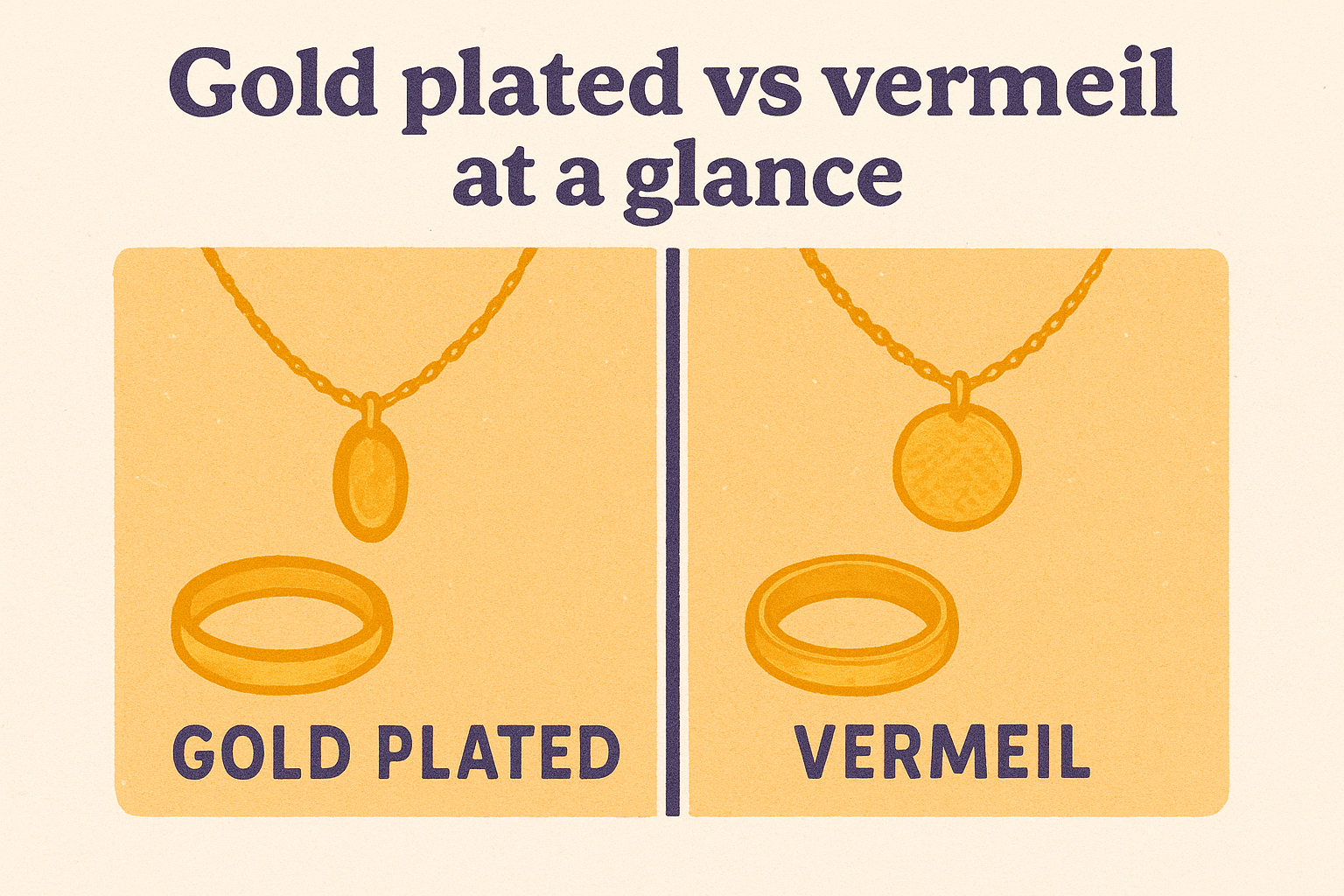
Gold plated vs vermeil at a glance
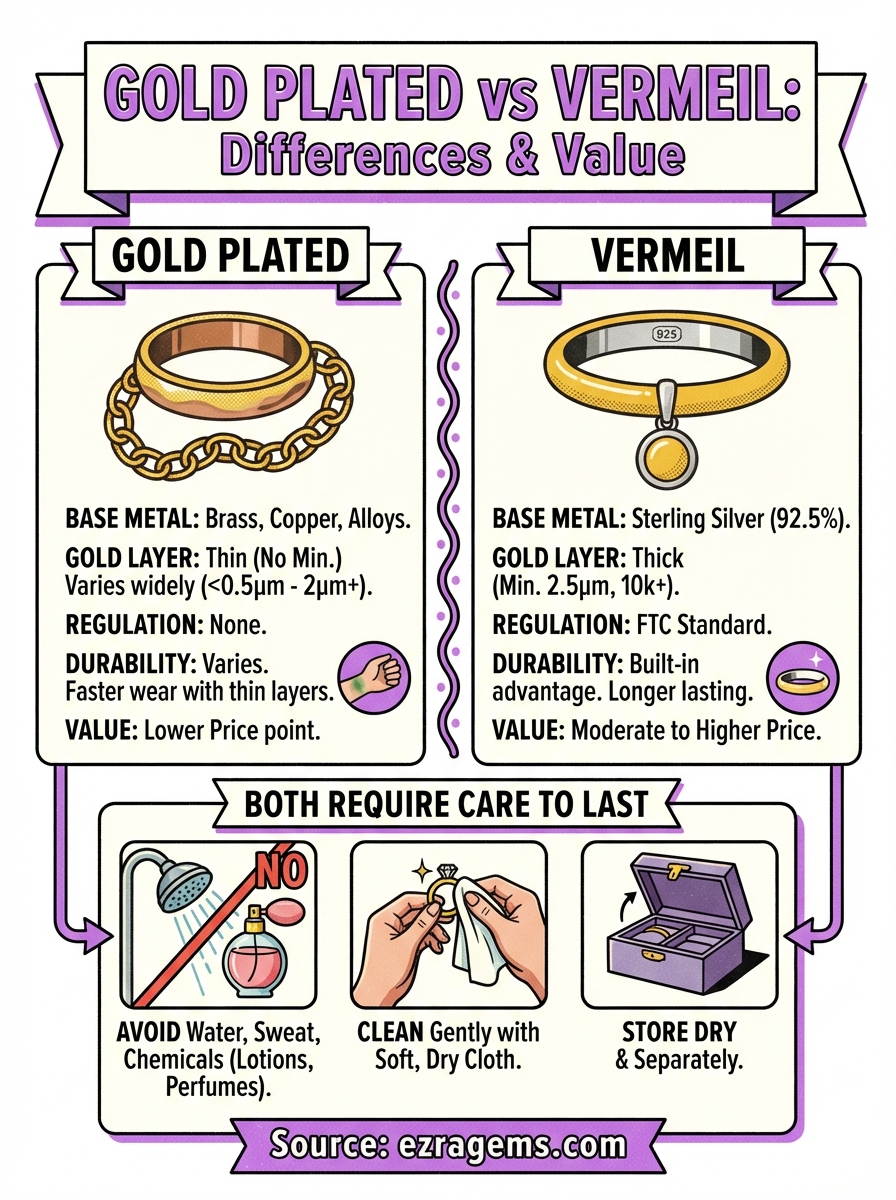
When you're comparing gold plated vs vermeil, the core difference comes down to two things: the base metal underneath the gold layer and how thick that layer actually is. Gold plated jewelry uses a base metal like brass or copper, with a thin coat of gold applied over it through electroplating. Vermeil (pronounced "ver-MAY") is a specific category of gold plating, but it follows stricter standards set by the FTC, requiring a sterling silver base and a minimum gold thickness of 2.5 microns.
| Feature | Gold Plated | Vermeil |
|---|---|---|
| Base metal | Brass, copper, or other alloys | Sterling silver (92.5% pure) |
| Minimum gold thickness | No regulated minimum | 2.5 microns |
| Gold karat | Varies (typically 10k-18k) | Minimum 10k |
| Price point | Lower | Moderate to higher |
| Regulated standard | No | Yes (FTC) |
What gold plated means
Gold plated jewelry starts with a base metal, most commonly brass or copper, and gets coated with gold through an electroplating process. The gold layer thickness can vary widely depending on the manufacturer, anywhere from less than 0.5 microns on cheaper pieces to around 2 microns on higher-quality options. Because no regulatory minimum exists for standard gold plating, quality shifts a lot from brand to brand. That means you can find genuinely durable pieces, but you need to pay attention to what the manufacturer actually specifies about thickness and base materials.
The thicker the gold layer, the longer the finish holds up before wear shows at edges and high-contact points like clasps and inner bands.
What vermeil means
Vermeil jewelry is still electroplated gold, but it meets a defined legal standard. The FTC Jewelry Guides require the base to be sterling silver (at least 92.5% pure) and the gold layer to be a minimum of 2.5 microns thick at no less than 10 karats. Because the base is sterling silver instead of a lower-cost alloy, vermeil typically carries a higher price. The regulated definition makes it easier for you to know exactly what you're purchasing before you commit.
Materials and standards that define each
The materials used in each type of jewelry determine everything from how it feels against your skin to how long it keeps its color. In the gold plated vs vermeil comparison, the base metal and plating standards are the two factors that explain why these pieces perform so differently over time. One follows a federally regulated definition; the other does not, and that gap affects quality in ways you'll notice with regular wear.
Base metals and what they mean for you
Gold plated jewelry typically uses brass or copper as the base metal. These materials are affordable and accept electroplating well, but they can react with moisture and skin chemistry over time. Vermeil requires a sterling silver base, meaning at minimum 92.5% pure silver. Sterling silver is more stable and higher in value than brass or copper, which is a key reason vermeil tends to cost more at the point of purchase.
Knowing your base metal matters especially if you have skin sensitivities, since brass and copper are more reactive than sterling silver.
Gold thickness and karat standards
Standard gold plating carries no federally regulated minimum for layer thickness, which gives manufacturers wide latitude. Some budget pieces have less than 0.5 microns of gold. Vermeil must meet the FTC's minimum of 2.5 microns at no less than 10 karats, which sets a quality floor you don't get with standard plating.
Checking a brand's stated plating thickness tells you a lot about long-term quality. Reputable manufacturers disclose this information clearly, and pieces with thicker plating consistently outlast those without published specs.
Durability, wear, and tarnish over time
When you wear any plated jewelry regularly, the gold layer gradually thins at friction points like ring bands, bracelet clasps, and necklace chains. Both gold plated and vermeil will eventually show wear, but how fast that happens depends on plating thickness, base metal, and how often the piece contacts water, sweat, or products like lotions and perfumes.
How gold plated jewelry holds up
Standard gold plated pieces vary widely in durability because there's no regulated thickness minimum. A piece with less than 1 micron of gold can start showing the base metal within a few months of daily wear. Higher-quality gold plated jewelry with thicker plating (closer to 2 microns or above) lasts significantly longer, especially when you keep it away from moisture and chemicals.
The single biggest factor in how long plated jewelry lasts is gold layer thickness, not the brand name on the tag.
Your care habits carry as much weight as the plating itself. Removing pieces before swimming, showering, or applying skincare noticeably extends the finish.
How vermeil holds up
Vermeil's regulated 2.5-micron minimum gives it a built-in durability advantage over budget gold plated options. Because the gold layer is thicker by definition, vermeil typically holds its finish longer under the same daily conditions. That said, vermeil is not indestructible, and it still tarnishes or fades with repeated moisture exposure. The sterling silver base also means that once the gold layer wears through, the silver underneath can oxidize and darken over time. In the gold plated vs vermeil comparison, vermeil generally wins on longevity when both pieces get similar treatment.
Skin sensitivity, green marks, and allergies
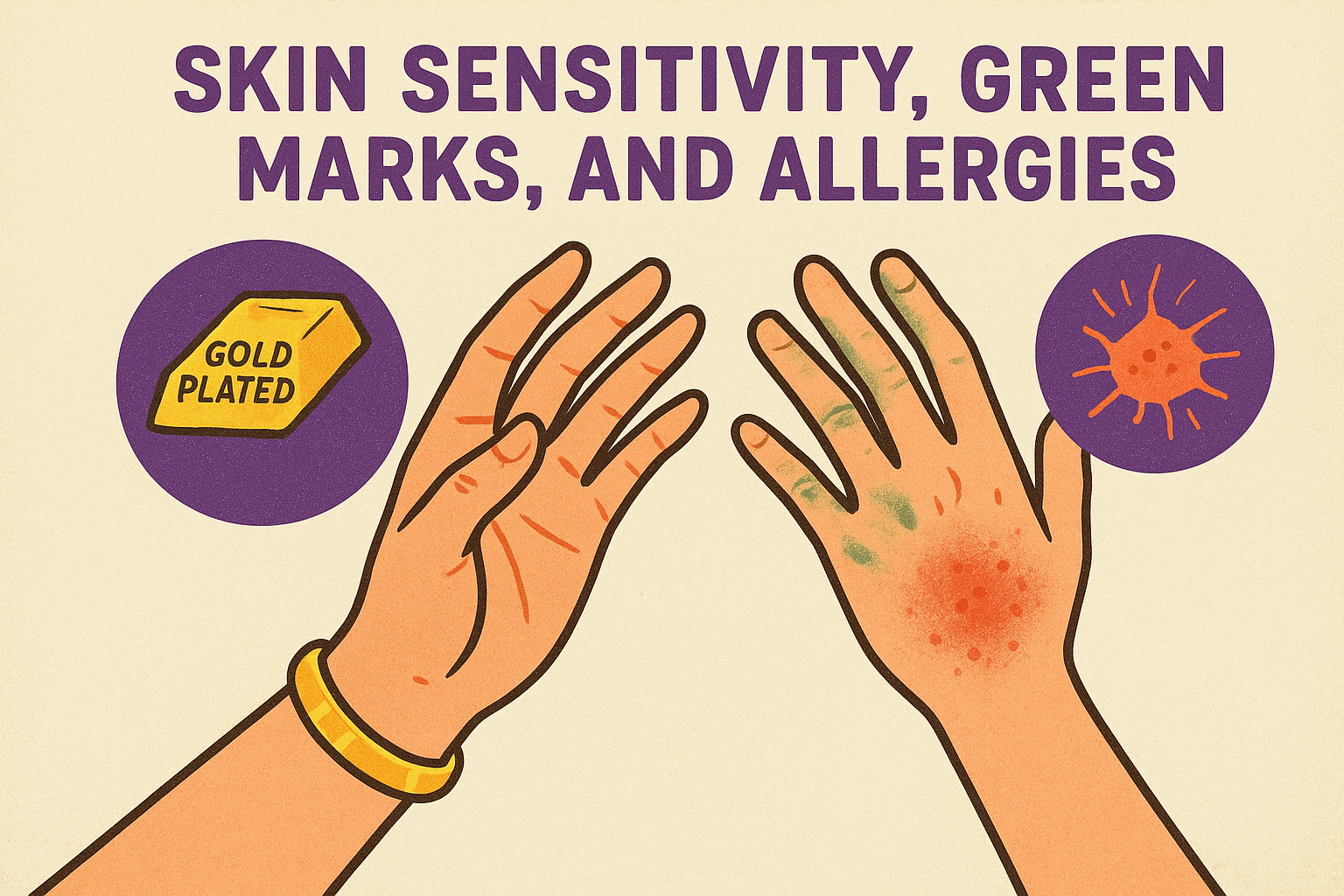
If your skin reacts to certain jewelry, the base metal is almost always the cause, not the gold layer. In the gold plated vs vermeil comparison, this distinction matters because the two options use different base materials, and your skin responds to what it actually contacts once the gold wears through. Knowing which metals sit under the gold helps you make a smarter choice before you buy.
Why base metals cause green marks
Brass and copper, the most common base metals in standard gold plated jewelry, react with moisture and acids in your skin to form copper salts. Those salts leave the characteristic green or dark discoloration on your wrist or finger. This isn't necessarily a sign of poor quality; it's a predictable chemical reaction. The thinner the gold layer, the faster that reaction starts, which is why lower-cost pieces can turn your skin green within weeks of daily wear.
Switching to a piece with a thicker gold layer delays direct skin contact with the base metal significantly.
Allergies and what to look for
Nickel is the most common jewelry allergen, and it shows up in some brass alloys used for standard gold plated pieces. Symptoms typically include redness, itching, or a rash at the contact point. Vermeil uses a sterling silver base, which contains no nickel by standard composition, making it a safer option if you know you react to nickel-containing metals. Always check what the base metal contains before purchasing, regardless of how thick the gold layer is.
Care tips and what to avoid, including showering
In the gold plated vs vermeil comparison, care habits make a bigger difference than most people expect. Both types of plated jewelry have a finite gold layer, and certain everyday exposures accelerate wear faster than anything else. The habits you build around wearing and storing your pieces directly determine how long the finish holds.
What to avoid with plated jewelry
Water, sweat, and chemical products are the main threats to any plated finish. Take pieces off before showering, swimming, or exercising, since repeated moisture exposure breaks down the gold layer faster at contact points. Avoid applying perfume, lotion, or hairspray while wearing your jewelry. These products contain compounds that react with the plating and dull the finish over time.
Putting jewelry on last, after all sprays and lotions have dried, is one of the simplest ways to extend the life of any plated piece.
Cleaning and storage habits that extend wear
Clean gold plated and vermeil pieces with a soft, dry cloth after each wear to remove skin oils and residue. If deeper cleaning is needed, use a slightly damp cloth and dry the piece immediately. Avoid ultrasonic cleaners or abrasive polishing cloths, which strip the gold layer faster than normal wear.
Store pieces individually in a soft pouch or a lined jewelry box to prevent scratching. Keeping moisture out of your storage area by avoiding bathrooms matters too. Small habits like these add up to noticeably longer-lasting pieces.
Final takeaways for choosing the right finish
The gold plated vs vermeil decision comes down to your priorities. If you want regulated quality with a thicker gold layer and a sterling silver base, vermeil delivers a clear standard. If you care more about price flexibility and variety, high-quality gold plated jewelry with a disclosed plating thickness gives you excellent value without a premium markup.
Both options look great and require the same basic care habits to last. Your skin sensitivity, budget, and daily habits should guide your final choice more than any label. Thicker plating and honest base metal disclosures are what actually determine longevity. Whether you're buying vermeil or standard gold plated jewelry, the care routine stays the same: keep it dry, store it separately, and clean it gently after each wear.
Ready to find pieces built to handle real life? Browse Ezra Gems' bestsellers for gold-plated jewelry designed for daily wear without tarnish, green marks, or fading fast.
Part of our complete guide to gold vermeil jewelry.
Want the gold look without the tarnish problem? Gold vermeil is real gold over sterling silver — beautiful, but once the gold layer thins, the silver underneath tarnishes. Ezra Gems takes a different approach: 18K gold over surgical stainless steel, a base that does not react with water, sweat, or salt. That is why our pieces stay waterproof and tarnish-free with no polishing routine at all.
Leave a comment