


You just got a gorgeous pearl necklace, and now you're standing in front of the shower wondering: are pearls waterproof? It's a fair question, and the answer matters more than you might think. Pearls are organic gems, formed inside living mollusks, and that origin makes them react to moisture differently than metals or synthetic stones.
The short answer: pearls can survive brief contact with water, but they're not truly waterproof. Repeated exposure to chlorine, saltwater, soap, and even tap water can dull their luster over time and weaken the silk thread that holds them together. That's exactly why we designed our pearl jewelry at Ezra Gems with waterproof gold-plated settings, so you get the look without the constant worry.
This article breaks down what actually happens when pearls meet water, whether it's safe to shower or swim with them, and how to keep your pearl pieces looking their best for years. We'll also cover practical care tips so you can wear your jewelry with confidence, every single day.
Why people ask if pearls are waterproof
Most people don't think twice about wearing rings or gold chains in the shower, but pearl jewelry is a different story. The question are pearls waterproof comes up constantly because pearls sit in a strange middle ground: they look delicate, they cost real money, and nobody gives you a clear answer when you buy them. You want to know if your necklace will survive daily life without babying it every single day, and that's a completely reasonable thing to ask.
Pearls are one of the few gems formed by a living organism, which means they behave more like a natural material than a cut stone.
Pearls are not like other jewelry materials
Unlike diamonds, gold, or cubic zirconia, pearls are organic and porous. They form when a mollusk coats an irritant with layers of nacre, the same iridescent material you see on the pearl's surface. Because nacre is a biological substance, it responds to its environment in ways that metal and synthetic stones simply do not. Water, chemicals, and even your own skin oils can change how a pearl looks and feels over time, which is why the waterproof question matters so much more for pearls than for most other jewelry materials.
Everyday habits put pearls at risk
Your daily routine involves more water than you probably realize. Showers, hand washing, swimming, and even heavy sweating all expose your jewelry to moisture on a regular basis. Many people wear their pieces non-stop without thinking about it, and pearl jewelry demands a little more attention than your average metal bracelet. The silk thread commonly used to string pearl necklaces is especially vulnerable, because once it gets wet repeatedly, it weakens and stretches, causing the strand to sag or snap at the worst possible moment. Knowing where the real risks come from puts you in a much better position to protect what you own.
What counts as waterproof for pearl jewelry
"Waterproof" gets used loosely in jewelry marketing, but it doesn't mean the same thing for every material. For metals and synthetic stones, waterproof typically means the piece handles regular water exposure without rusting, tarnishing, or losing its finish. Pearls operate by a completely different set of rules, so understanding what the label actually covers helps you make smarter choices about how and when you wear your jewelry.
What jewelers actually mean by waterproof
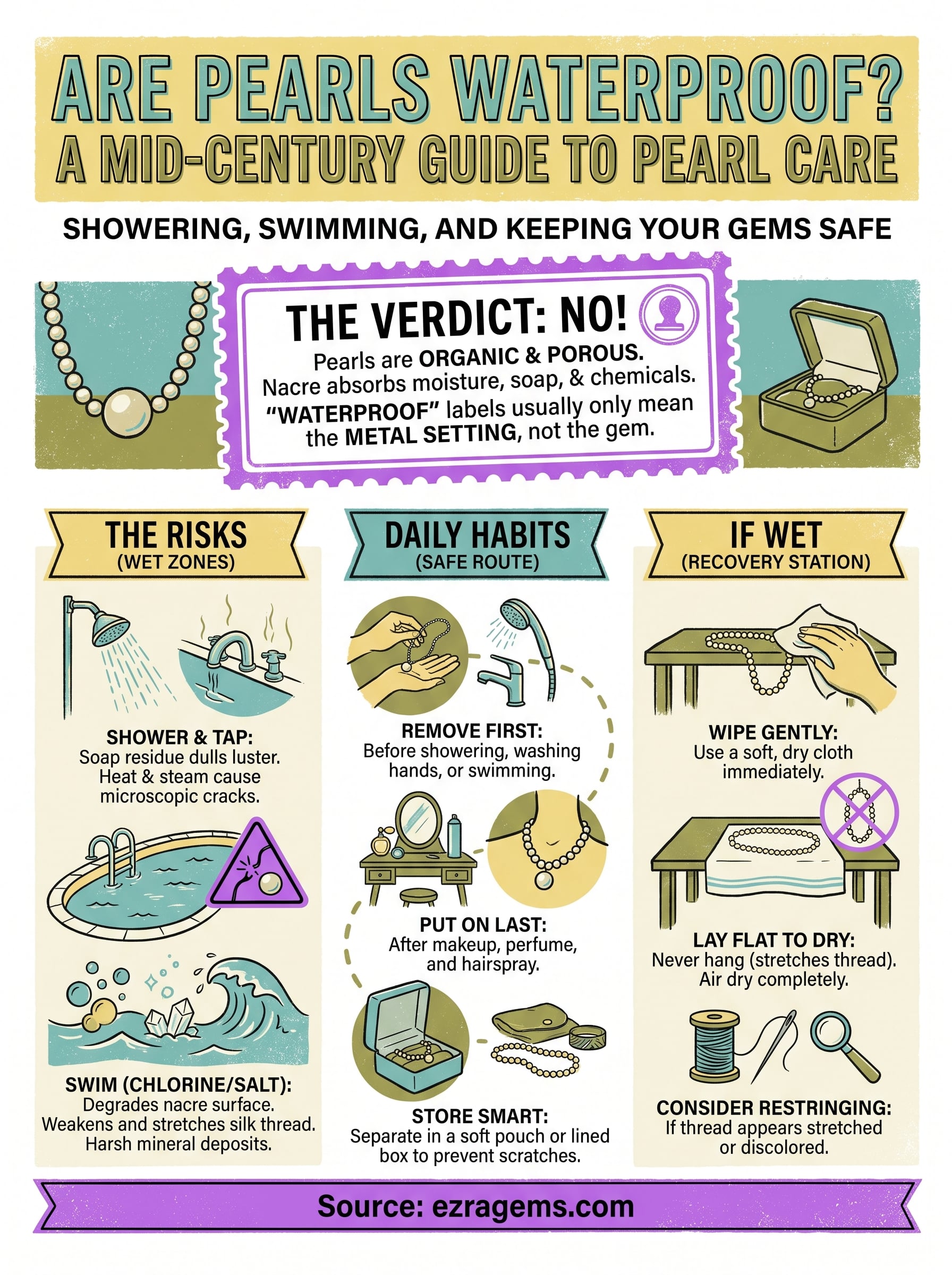
When a jeweler calls a piece "waterproof," they're usually talking about the metal setting and plating, not the pearl itself. Gold-plated settings, stainless steel bases, and sealed finishes resist moisture well. The pearl, however, is a natural organic material that sits inside that setting, and no coating or treatment makes the nacre immune to water damage over time. A pearl piece with a waterproof setting gives you solid protection for the metal components, but the gem still requires care.
The metal setting and the pearl are two separate things, and waterproofing only addresses one of them.
So when you ask are pearls waterproof, the most accurate answer is that true waterproofing applies to the setting, not the pearl itself. Knowing this difference shapes every care decision you'll make going forward.
Real vs imitation pearls in water
Not all pearls react to water the same way. Whether your jewelry uses natural pearls, cultured pearls, or imitation pearls changes how much you need to worry about moisture. Understanding the difference between these types helps you answer the question are pearls waterproof more accurately for the specific piece sitting in your jewelry box.
Natural and cultured pearls
Natural and cultured pearls are both real nacre, which makes them equally vulnerable to water damage. Natural pearls form entirely without human intervention, while cultured pearls grow inside farmed mollusks with a small implanted nucleus. Both types share the same porous nacre surface that absorbs chemicals, soap residue, and minerals from tap water over time.
Even brief repeated exposure to harsh water can dull real nacre faster than most wearers expect.
Repeated wetting also breaks down the silk thread used to string classic pearl strands, causing the necklace to stretch, fray, or snap over time.
Imitation pearls
Imitation pearls are typically glass, plastic, or resin beads coated with a pearlescent finish. They handle moisture better in the short term because there is no organic material to absorb water. However, that surface coating can peel or flake when exposed to chlorine or salt water repeatedly, which makes them far from damage-proof in the long run.
Showering, swimming, and other wet scenarios
Knowing the general risks is useful, but most people want specific answers for real-life situations. Whether or not pearls are waterproof shifts based on the type of water exposure, because a brief splash affects nacre very differently than repeated contact with chemicals or salt.
Showering with pearls
Showering exposes your pearl jewelry to warm water, soap, shampoo, and conditioner on a daily basis. Soap residue settles into the pores of the nacre and gradually dulls the surface finish without you noticing until the damage is done.

Daily showers seem harmless, but the cumulative effect on nacre builds up quickly over weeks.
Your shower also produces steam and heat, which dries out nacre faster than room-temperature water. Over time, this creates tiny surface cracks that permanently diminish the pearl's luster and cannot be repaired at home.
Swimming with pearls
Pool water and ocean water are far more damaging than shower water. Chlorine degrades the nacre surface and breaks down the silk thread on stranded pieces, making snapping a real risk. Saltwater leaves harsh mineral deposits that dull the finish and corrode exposed metal in the setting. Remove your pearls before any of these:
- Swimming pools and hot tubs
- Oceans, lakes, and rivers
- Water parks and splash pads
How to protect pearls and fix a wet strand
Protecting your pearls starts with a few simple daily habits that take almost no extra time. Since the answer to are pearls waterproof is essentially "not fully," the more consistently you follow these steps, the longer your pieces keep their original luster and strength.
Small, consistent care habits matter far more than expensive repairs down the road.
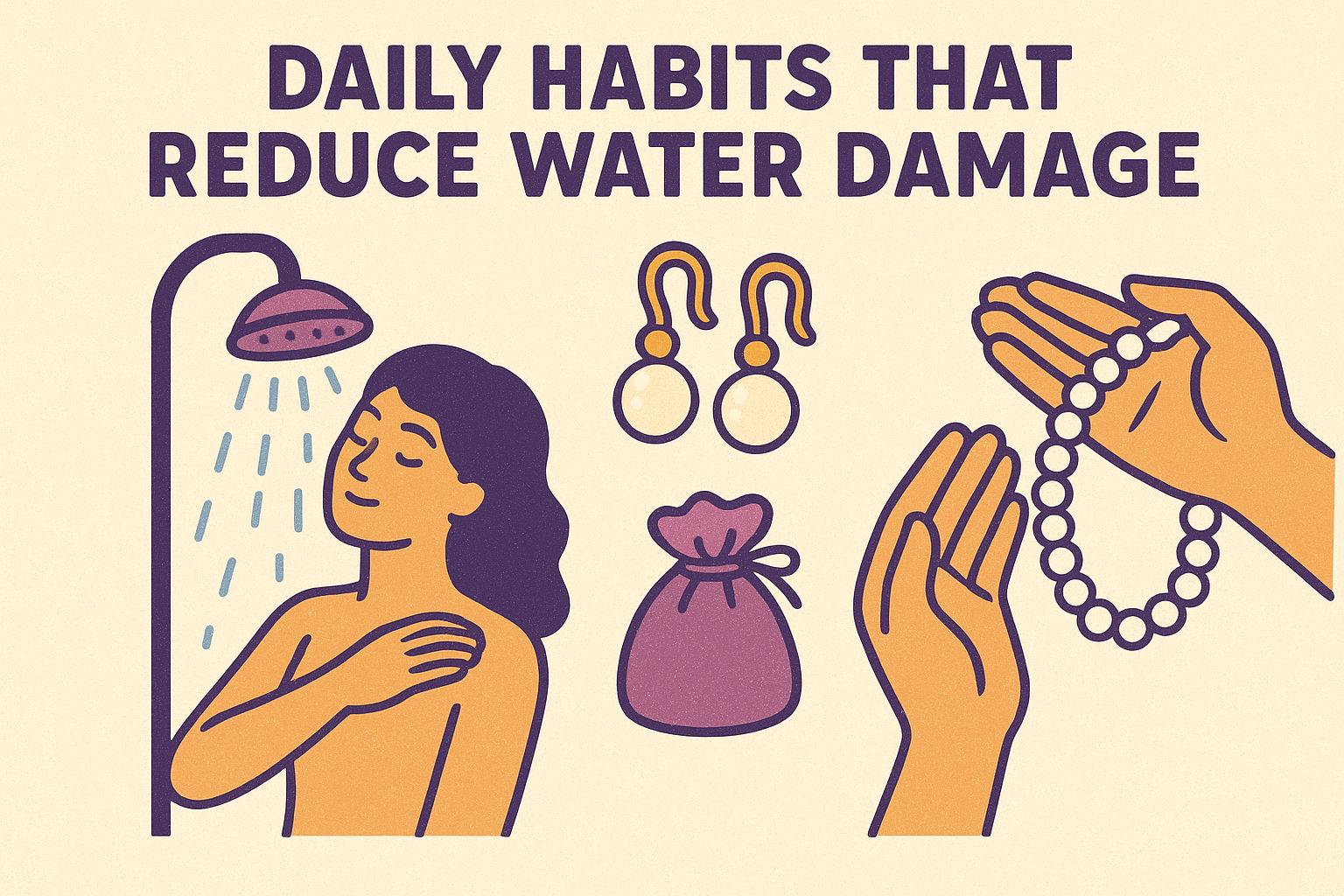
Daily habits that reduce water damage
Remove your pearl jewelry before showering, washing your hands, or jumping into any body of water. Store pearls separately from other jewelry in a soft pouch or lined box to prevent scratching, and put them on last after applying makeup, perfume, and hairspray, since chemicals in these products degrade nacre over time.
What to do after pearls get wet
If your pearls get wet, act quickly. Wipe them gently with a soft, dry cloth and lay the strand flat on a clean towel rather than hanging it, which pulls weight through a wet silk thread and causes stretching. Let the piece air dry completely at room temperature before storing it. If the silk thread looks stretched or discolored after drying, take the strand to a professional jeweler for restringing before wearing it again.
Key takeaways and what to do next
The answer to are pearls waterproof is clear: pearl nacre is a porous organic material that absorbs water, soap, and chemicals over time. Even when a metal setting resists moisture, the pearl itself does not. Repeated exposure from showers, pools, and oceans gradually dulls the luster and weakens silk thread until the damage becomes permanent and very visible.
Your best defense is a set of simple daily habits: remove pearl jewelry before any water contact, dry pieces gently with a soft cloth if they do get wet, and lay stranded necklaces flat to dry rather than hanging them. Keeping pearls stored separately from other jewelry in a soft pouch also prevents surface scratches and keeps them away from perfume and hairspray.
Ready to find pieces that hold up to real daily wear? Explore the Ezra Gems bestseller collection and discover gold-plated jewelry built to handle everyday life without the worry.
Leave a comment