


Not all pearls are created equal. The types of pearls used in jewelry range from creamy white Akoya classics to dark, dramatic Tahitian beauties, and each one brings something completely different to the table. Whether you're shopping for your first pearl piece or adding to a growing collection, knowing what sets these varieties apart saves you from overpaying or ending up with something that doesn't match your style.
Pearls differ in origin, size, shape, color, and luster, and those differences directly affect how they look on you and what you'll pay for them. A tiny Freshwater pearl and a large South Sea pearl might both be "real," but they're worlds apart in terms of rarity and price. Understanding these distinctions helps you make smarter choices, whether you're investing in fine jewelry or picking up everyday pieces.
At Ezra Gems, we design pearl-forward jewelry that's built for daily wear, no babying required. This guide breaks down nine pearl types you'll encounter while shopping, from the most common to the most coveted, so you can figure out exactly which one belongs in your jewelry rotation.
1. Akoya Pearls
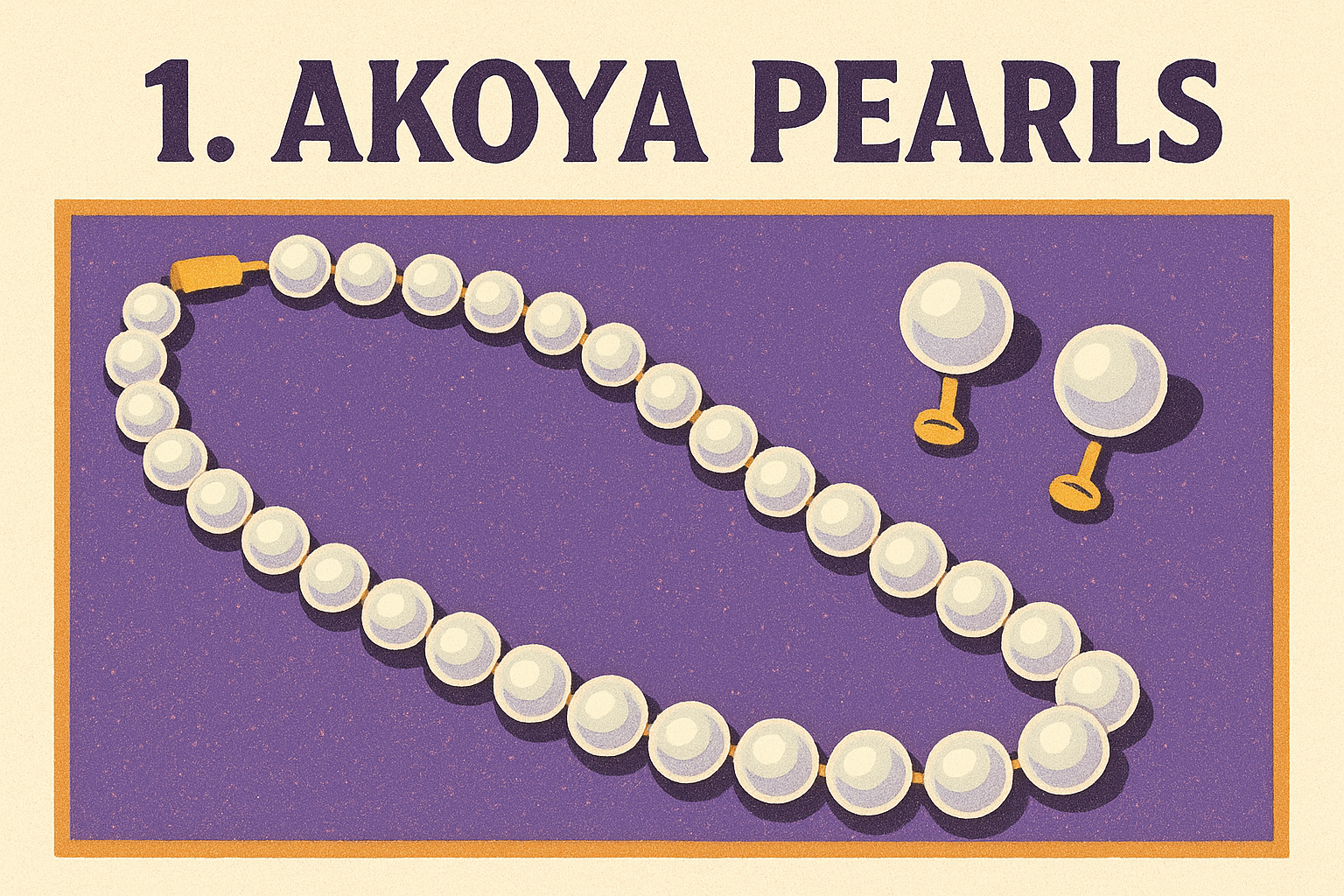
Akoya pearls are what most people picture when they hear the word "pearl": round, white, and brilliantly lustrous. They're saltwater cultured pearls and sit at the foundation of many fine jewelry collections. If you've admired a classic pearl strand or a simple pair of pearl studs, there's a strong chance those were Akoya pearls.
What it is and how it forms
Akoya pearls form inside the Pinctada fucata martensii oyster, a relatively small saltwater species. Farmers implant a round nucleus bead alongside a small piece of mantle tissue into each oyster. The oyster then deposits layers of nacre around that nucleus over one to three years. That slow, deliberate coating process produces the sharp, mirror-like luster Akoya pearls are known for.
Where it's cultured or found
Japan produces the most highly regarded Akoya pearls, with farming concentrated in the coastal waters of Mie, Ehime, and Nagasaki Prefectures. China also cultivates Akoya pearls in large volumes, generally at a lower price point. Japanese Akoyas have a long-standing reputation for tighter quality control and more consistent nacre thickness, so origin plays a real role when you're comparing options.
Signature look and typical sizes
Akoya pearls are almost always white or cream in body color, with overtones that range from rose to silver to ivory. Their shape is reliably round, which sets them apart from many other types of pearls used in jewelry, where irregular shapes are common. Standard sizes fall between 5mm and 9mm, with anything above 8mm jumping noticeably in price.
What affects price and value
Luster drives Akoya pearl pricing more than any other single factor. A pearl with a crisp, reflective surface commands a far higher price than one that looks dull or chalky. Beyond luster, graders evaluate:
- Nacre thickness: thicker nacre lasts longer and reflects more light
- Surface cleanliness: fewer blemishes mean a higher grade
- Roundness: perfectly spherical pearls sit at the top of the price range
- Size: each millimeter increase adds meaningful cost
The thicker the nacre on an Akoya pearl, the longer it holds its luster and the more it's worth.
Best jewelry styles and care notes
Akoya pearls work best in classic, clean jewelry settings: strand necklaces, stud earrings, and single-pearl pendants. After you wear them, wipe each pearl with a soft, damp cloth, since perfume, hairspray, and skin oils degrade nacre over time. Store them away from harder stones to prevent surface scratches.
2. Freshwater Pearls
Freshwater pearls are the most widely available of all the types of pearls used in jewelry, which makes them an excellent starting point if you're new to pearl shopping or want something you can wear daily without worrying. They grow in mussels rather than oysters, and that biological difference shapes everything about their appearance and price.
What it is and how it forms
Freshwater pearls develop inside freshwater mussels, most commonly the Hyriopsis cumingii species. Farmers implant only a small piece of mantle tissue with no bead nucleus, so the entire pearl is built from nacre. That solid nacre structure makes Freshwater pearls notably more resistant to chipping compared to nucleated saltwater varieties.
Where it's cultured or found
China dominates global Freshwater pearl production, farming them across lakes, rivers, and ponds in Zhejiang, Jiangsu, and Anhui provinces. One mussel can yield up to 30 pearls simultaneously, which keeps supply high and prices accessible relative to saltwater alternatives.
Signature look and typical sizes
Your options with Freshwater pearls range from near-round to baroque, button, oval, and rice shapes. Body color covers white, pink, peach, and lavender, with sizes typically falling between 3mm and 12mm. Improved farming techniques have made high-quality near-round examples increasingly easy to find.
The all-nacre composition of Freshwater pearls gives them better chip resistance than most nucleated pearl types.
What affects price and value
Shape and luster are the two biggest price drivers for Freshwater pearls. Near-round, high-luster examples cost significantly more than baroque or matte ones. Size adds cost quickly, with pearls above 10mm jumping into premium territory.
Best jewelry styles and care notes
Freshwater pearls work beautifully in layered necklaces, stacked bracelets, and drop earrings. After each wear, wipe them with a soft damp cloth and store them away from direct sunlight and hard gemstones to preserve their surface and color.
3. Tahitian Pearls
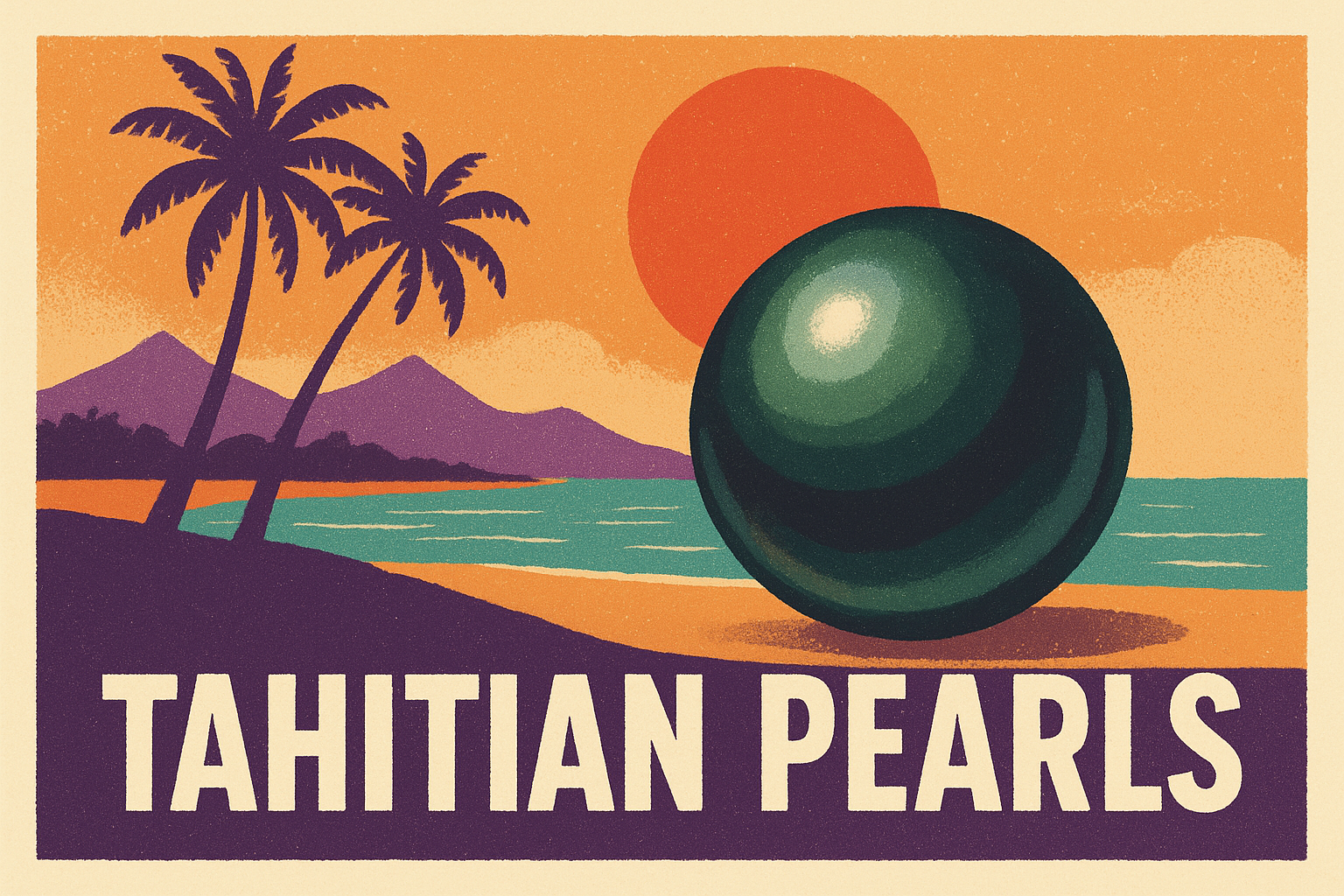
Tahitian pearls stand apart from nearly every other type of pearl used in jewelry because of their naturally dark colors. They're saltwater cultured pearls and carry a dramatic visual weight that lighter varieties simply can't replicate.
What it is and how it forms
These pearls grow inside the Pinctada margaritifera oyster, also called the black-lipped oyster. Farmers implant a bead nucleus alongside mantle tissue, and the oyster deposits dark, richly pigmented nacre over two to four years.
Where it's cultured or found
French Polynesia is the primary source for Tahitian pearls, with farming concentrated around the atolls of the Tuamotu Archipelago. The name "Tahitian" refers to the broader region, not the island of Tahiti itself.
Signature look and typical sizes
Color is the defining feature here, ranging from charcoal black to green, blue, purple, and peacock, a mix of green with rose or blue overtones. Sizes typically fall between 8mm and 16mm, making them noticeably larger than Akoya pearls.
Peacock is the most prized Tahitian overtone because it shifts between green and rose depending on the light.
What affects price and value
Overtone quality and surface cleanliness drive Tahitian pearl pricing more than anything else. Peacock-toned pearls with high luster and minimal blemishes sit at the top of the market. Size also matters significantly, with pearls above 12mm climbing sharply in cost.
Best jewelry styles and care notes
Tahitian pearls suit bold statement pieces like drop earrings, pendants, and single-strand necklaces where you can appreciate the full depth of their color. Wipe them after each wear and keep them away from chlorine and acidic products to protect the nacre surface.
4. White South Sea Pearls
White South Sea pearls are among the largest and most valuable types of pearls used in jewelry. They carry a soft, satiny luster that differs noticeably from the sharp brilliance of Akoya pearls, giving them a look that's quietly luxurious rather than flashy.
What it is and how it forms
These pearls grow inside the Pinctada maxima oyster, specifically the silver-lipped variety. Farmers implant a large bead nucleus, and the oyster deposits nacre slowly over two to six years, producing thick nacre walls and the signature silky sheen these pearls are known for.
Where it's cultured or found
Australia leads global production of White South Sea pearls, with farming also occurring in Indonesia and the Philippines. Australian waters provide ideal conditions for the large Pinctada maxima oyster, and Australian farms have built a strong reputation for strict quality standards and consistent output.
Signature look and typical sizes
Body color ranges from white to silver, with overtones that lean toward rose, silver, or cream. Sizes run from 9mm to 20mm, making these some of the largest pearls you'll encounter while shopping. That generous size is a significant part of what makes them so striking in person.
White South Sea pearls above 15mm are genuinely rare, and prices reflect that scarcity directly.
What affects price and value
Luster and nacre thickness matter most here. Because nacre builds slowly, top-grade examples develop exceptional depth. Size and roundness also drive cost significantly, with perfectly spherical pearls above 13mm commanding premium prices.
Best jewelry styles and care notes
These pearls suit statement necklaces, drop earrings, and high-end pendants where their size can take center stage. Wipe them with a soft damp cloth after each wear and store them separately from harder jewelry to avoid surface scratches.
5. Golden South Sea Pearls
Golden South Sea pearls are one of the most distinctive types of pearls used in jewelry, recognized instantly by their warm, honey-to-deep-gold body color. That color is entirely natural, and it makes them some of the most sought-after pearls in the world.
What it is and how it forms
These pearls grow inside the Pinctada maxima oyster, specifically the gold-lipped variety. Farmers insert a large bead nucleus, and the oyster builds up thick layers of nacre over two to six years. The golden pigmentation comes directly from the mantle tissue of the gold-lipped oyster, not from any treatment or dye.
Where it's cultured or found
The Philippines is the dominant producer of Golden South Sea pearls, with significant farming operations also running in Indonesia. The warm, nutrient-rich waters of the Sulu Sea and surrounding regions provide ideal growing conditions for the gold-lipped Pinctada maxima oyster.
Deep golden pearls with minimal surface blemishes are rare enough that they rival fine colored gemstones in price per carat.
Signature look and typical sizes
Body color runs from pale champagne to deep, saturated gold, with the richest shades commanding the highest prices. Sizes generally fall between 9mm and 16mm, putting them on par with White South Sea pearls in scale.
What affects price and value
Color saturation and nacre thickness are the two biggest drivers of price. Rich gold examples with clean surfaces and thick nacre sit at the top of the market. Size and roundness both add cost, with large round specimens being genuinely difficult to source.
Best jewelry styles and care notes
Golden South Sea pearls look exceptional in pendants, drop earrings, and statement necklaces that show off their warm tone against metal settings. Wipe them with a soft damp cloth after each wear and store them away from direct sunlight, which can cause color fading over time.
6. Keshi Pearls
Unlike intentionally cultivated pearls, Keshi pearls are accidental byproducts of the culturing process, which makes them one of the more unusual types of pearls used in jewelry. No farmer plans for them, yet the results are often visually striking and highly sought after by collectors and independent jewelry designers.
What it is and how it forms
Keshi pearls form when an oyster rejects its implanted nucleus but continues producing nacre around the remaining mantle tissue. Because there's no bead at the center, the pearl is composed entirely of nacre, giving it exceptional surface brilliance and a naturally freeform shape that no two pieces replicate exactly.
Where it's cultured or found
You'll find Keshi pearls produced as secondary yields in both saltwater and freshwater pearl farms across Japan, French Polynesia, Indonesia, and China. Since they're a byproduct rather than an intentional harvest, supply is unpredictable and quantities stay limited regardless of demand.
Signature look and typical sizes
Keshi pearls are almost never round. They form in flat, petal-like, or freeform baroque shapes with a strong, almost metallic luster. Sizes range from 2mm to 10mm, though larger examples are rare and particularly prized by designers working with statement pieces.
The all-nacre structure of Keshi pearls produces a luster intensity that rivals even the finest nucleated saltwater pearls.
What affects price and value
Luster and size are the primary pricing factors for Keshi pearls. High-luster examples with interesting shapes attract buyers willing to pay a premium. Origin also matters, with saltwater Keshi pearls from Japan or Tahiti generally commanding more than freshwater versions from China.
Best jewelry styles and care notes
Keshi pearls suit asymmetric and artisan jewelry designs like irregular pendants, freeform drop earrings, and mixed-metal settings that highlight their organic silhouette. Wipe them with a soft damp cloth after each wear and store them away from harder stones to prevent surface abrasion.
7. Mabé Pearls
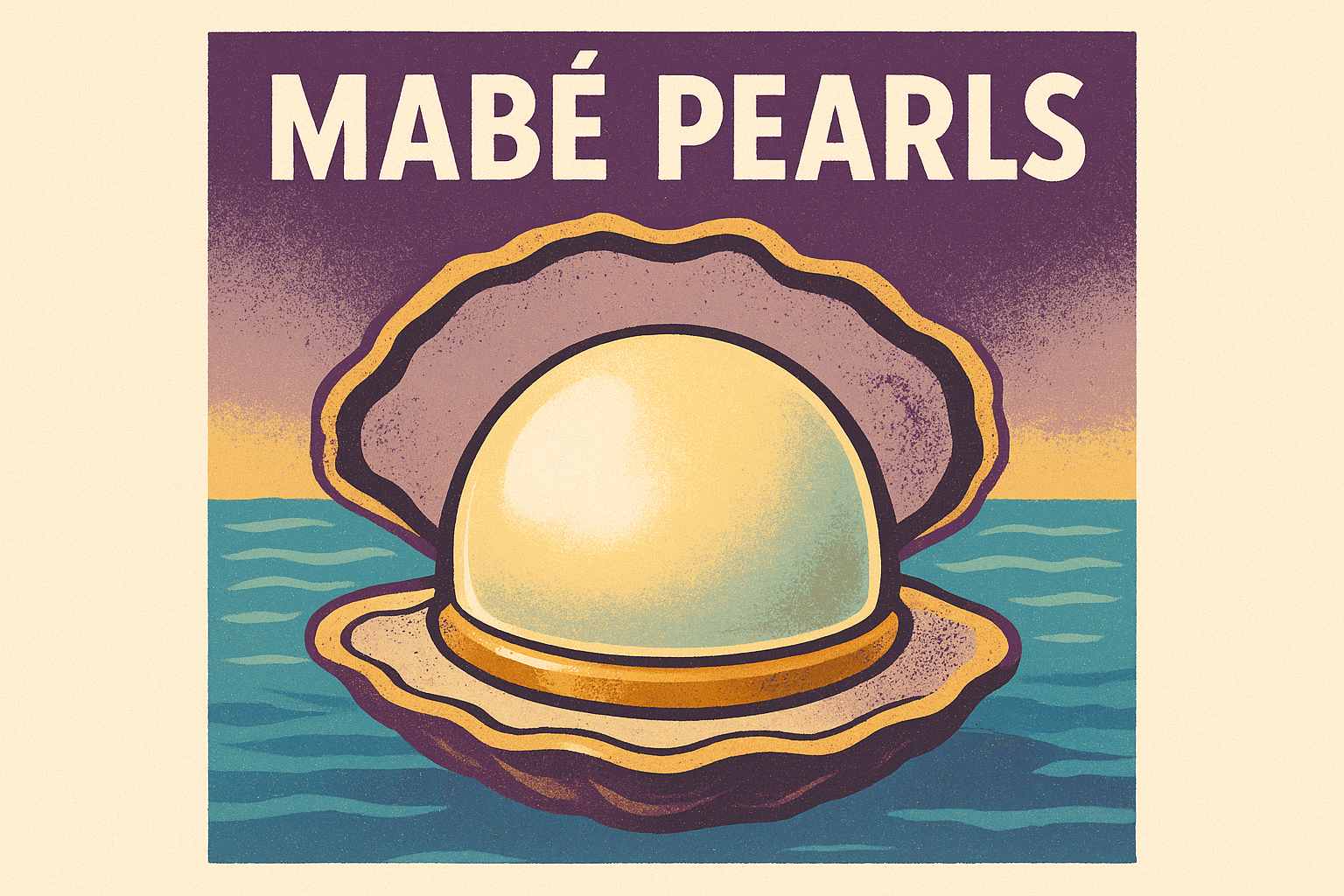
Mabé pearls are one of the more structurally unique types of pearls used in jewelry. Unlike round pearls that form freely inside an oyster, Mabé pearls grow against the inner shell wall, producing a flat back and a domed face that makes them ideal for specific jewelry applications.
What it is and how it forms
A Mabé pearl starts when a farmer glues a dome-shaped nucleus directly onto the inner shell of an oyster. The oyster coats that nucleus with nacre over one to two years. Farmers then cut the dome out of the shell, remove the nucleus, and fill the cavity with resin before adding a mother-of-pearl backing to complete the pearl.
Where it's cultured or found
Japan and Indonesia are the leading producers of Mabé pearls, with smaller operations running throughout the Pacific Islands. The Pteria penguin oyster is the most common host species used in Mabé pearl cultivation across these regions.
Signature look and typical sizes
Mabé pearls have a broad, flat-bottomed profile with a domed surface that catches light evenly across its face. Colors range from white and pink to silvery blue. Sizes typically run from 12mm to 20mm, making them large relative to many other pearl types.
Because of their flat back, Mabé pearls suit surface-set jewelry far better than prong or wire settings.
What affects price and value
Nacre quality and dome symmetry are the primary factors. Thicker nacre produces deeper luster, while a well-centered, even dome adds visual appeal. Surface blemishes reduce value significantly given how much of the face is visible in typical settings.
Best jewelry styles and care notes
Mabé pearls work best in rings, brooches, and earrings where the flat back sits flush against a bezel setting. Wipe them with a soft dry cloth rather than a damp one, since the resin fill and backing are sensitive to prolonged moisture exposure.
8. Sea of Cortez Pearls
Sea of Cortez pearls are among the rarest types of pearls used in jewelry, produced by a single species in a single location on Earth. Their natural iridescence and genuinely limited supply make them stand out from every other variety covered in this guide.
What it is and how it forms
These pearls grow inside the Pteria sterna oyster, also called the rainbow-lipped oyster. Farmers implant a bead nucleus alongside a piece of mantle tissue, and the oyster deposits nacre over roughly two years. The multi-colored iridescence that results is a direct product of the oyster's unique pigmentation biology, not any treatment applied after harvest.
Where it's cultured or found
Production is almost entirely concentrated at Guaymas, Sonora, Mexico, where one farm runs the only commercial culturing program for this species. You won't find this pearl cultivated anywhere else, because the waters of the Sea of Cortez provide the specific environment the rainbow-lipped oyster requires, and no other region replicates those conditions.
Because a single farm controls nearly all production, Sea of Cortez pearls remain genuinely scarce regardless of market demand.
Signature look and typical sizes
The defining feature is their natural iridescence, which shifts through green, blue, purple, and rose depending on the angle of light. Body colors include gray, bronze, and dark blue. Sizes typically run from 8mm to 14mm.
What affects price and value
Iridescence intensity and surface cleanliness drive pricing more than any other factor. Strong color play with minimal blemishes commands significant premiums. Limited supply also pushes prices higher than comparable pearls from more established farming regions.
Best jewelry styles and care notes
Sea of Cortez pearls suit pendants and drop earrings where their color shift shows best in natural light. Wipe them with a soft damp cloth after each wear and keep them away from chemicals and prolonged direct sunlight to preserve their nacre surface.
9. Conch Pearls
Conch pearls are the rarest naturally occurring types of pearls used in jewelry, and they come from a creature that isn't an oyster at all. Their signature pink flame pattern and near-complete absence of nacre make them unlike anything else in this guide, and their scarcity pushes prices to levels that rival precious gemstones.
What it is and how it forms
Conch pearls form inside the queen conch mollusk (Strombus gigas), a large sea snail native to Caribbean waters. The mollusk produces a calcareous concretion rather than true nacre, which means the pearl lacks the layered luster of oyster pearls. Instead, its surface carries a silky, porcelain-like sheen with a flame structure visible under magnification.
Where it's cultured or found
Conch pearls are almost entirely natural, not cultured. Scientists have not developed a reliable commercial culturing method for the queen conch, so every conch pearl reaching the jewelry market comes from a wild-caught mollusk. The Bahamas, the Dominican Republic, and the Florida Keys are the primary source regions.
Because no viable farming exists for conch pearls, supply depends entirely on wild harvests, keeping quantities extremely limited year after year.
Signature look and typical sizes
Pink is the most prized body color, ranging from pale blush to deep salmon. White and brown examples exist but attract far less buyer interest. Sizes typically fall between 3mm and 15mm, with larger specimens being exceptionally rare.
What affects price and value
Color saturation and the presence of a strong flame pattern drive pricing above almost everything else. Deep pink pearls with a well-defined flame structure command the highest premiums. Surface evenness and symmetry add meaningful value on top of color and pattern quality.
Best jewelry styles and care notes
Conch pearls work best in rings and pendants where the face sits fully visible. Because they contain no nacre, they're more sensitive to acids and abrasive surfaces than oyster pearls. Wipe them with a dry soft cloth and store them separately from other jewelry pieces.
Quick Buying Checklist
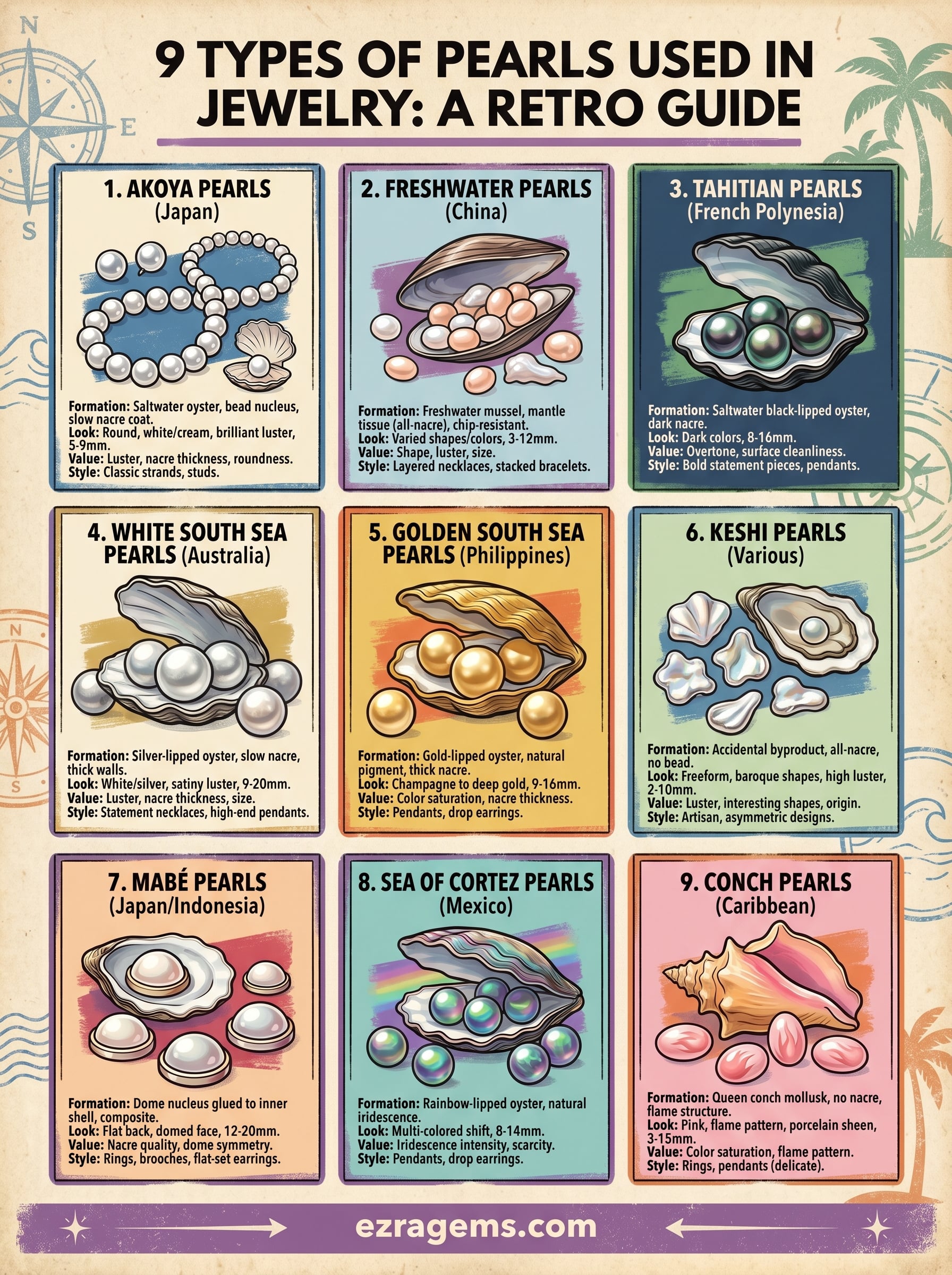
Now that you've worked through all nine types of pearls used in jewelry, use these points before you buy. First, confirm the pearl type and origin, since saltwater varieties generally command higher prices than freshwater ones. Second, prioritize luster over size. A smaller pearl with a sharp, reflective surface looks better on you than a large, dull one. Third, check surface quality under direct light. A few minor blemishes are normal, but heavy spotting or cracks drop both value and longevity. Fourth, match the pearl shape to the jewelry style. Round pearls suit classic settings; baroque and Keshi shapes work better in artisan or modern designs. Fifth, ask about treatments. Bleaching and coating are common, and knowing what you're buying protects you from surprises later.
Ready to wear pearls every day without overthinking care or cost? Browse the Pearl & Gold jewelry collection at Ezra Gems and find a piece built for real life.
Leave a comment