


You found a gold vermeil piece you love, but now you're second-guessing the purchase because your skin breaks out at the mere mention of nickel. Fair enough. So, is gold vermeil hypoallergenic? The short answer: yes, it generally is, but the details matter, and that's exactly what we'll break down here. The base metal, the gold layer thickness, and the manufacturer's standards all play a role in whether a piece will leave your skin clear or irritated.
At Ezra Gems, we focus on jewelry that holds up to real life, showering, sweating, daily wear, without turning your skin green or triggering reactions. That means we pay close attention to material quality and how each piece is constructed. It's a topic we take seriously because our customers shouldn't have to choose between style and comfort. If you've got sensitive skin or a known metal allergy, this guide will help you understand what makes gold vermeil a safer option, what to watch out for, and how to shop smarter.
This article covers the composition of gold vermeil, how it compares to gold-plated and solid gold jewelry, the role nickel plays in allergic reactions, and practical tips for wearing vermeil confidently. Whether you're buying for yourself or picking out a gift, you'll walk away knowing exactly what to look for, and what to avoid, so your jewelry works with your skin, not against it.
Why hypoallergenic claims matter for jewelry
When a brand puts "hypoallergenic" on a piece of jewelry, it sounds reassuring. But that word has no legal or regulated definition in the United States. No government body enforces what a manufacturer can or cannot label as hypoallergenic, which means the term is often used loosely. For anyone with sensitive skin or a documented metal allergy, understanding what that label actually means, and what it doesn't, is the difference between comfortable wear and a rash that lingers for days.
What "hypoallergenic" actually means
In general use, hypoallergenic means a product is less likely to cause an allergic reaction compared to similar products. It does not mean allergy-proof or zero risk. When applied to jewelry, it typically signals that the piece is free from the most common skin irritants, particularly nickel, cobalt, and certain alloys used in cheap base metals. Knowing that distinction helps you shop with realistic expectations rather than blind trust in a marketing label.
A label that says "hypoallergenic" without specifying the base metal and plating thickness tells you very little about how that piece will actually behave against your skin.
Skin reactions to jewelry range from mild redness to full contact dermatitis, a condition where repeated exposure to an irritant causes itching, blistering, and inflammation. The American Academy of Dermatology identifies nickel as the leading cause of contact dermatitis from jewelry in the United States, affecting an estimated 18% of the general population. Your immune system flags certain metals as threats and responds accordingly, even at trace exposure levels.
Why the base metal matters most
The gold layer on a piece of jewelry sits between your skin and whatever metal lives underneath it. If that base metal contains nickel or other reactive alloys, wear and friction will eventually expose it. Gold plating wears thin over time, especially on high-contact areas like ring bands and bracelet clasps. Once the base metal reaches your skin, your risk of an allergic reaction increases significantly, regardless of how the piece looked when you first bought it.
This is precisely why the base metal in gold vermeil changes the conversation. Sterling silver, the required base for true vermeil, behaves very differently against skin than the brass or copper bases common in standard gold-plated jewelry. That composition is what we'll dig into next.
What gold vermeil is made of and what it is not
Gold vermeil has a specific definition, and that definition is what makes it more relevant to the question of whether gold vermeil is hypoallergenic than most other types of plated jewelry. In the United States, the Federal Trade Commission requires that a piece labeled vermeil must have a sterling silver base covered by a gold layer that is at least 10 karats and at least 2.5 microns thick. That's not a marketing standard; it's a material requirement with real implications for your skin.
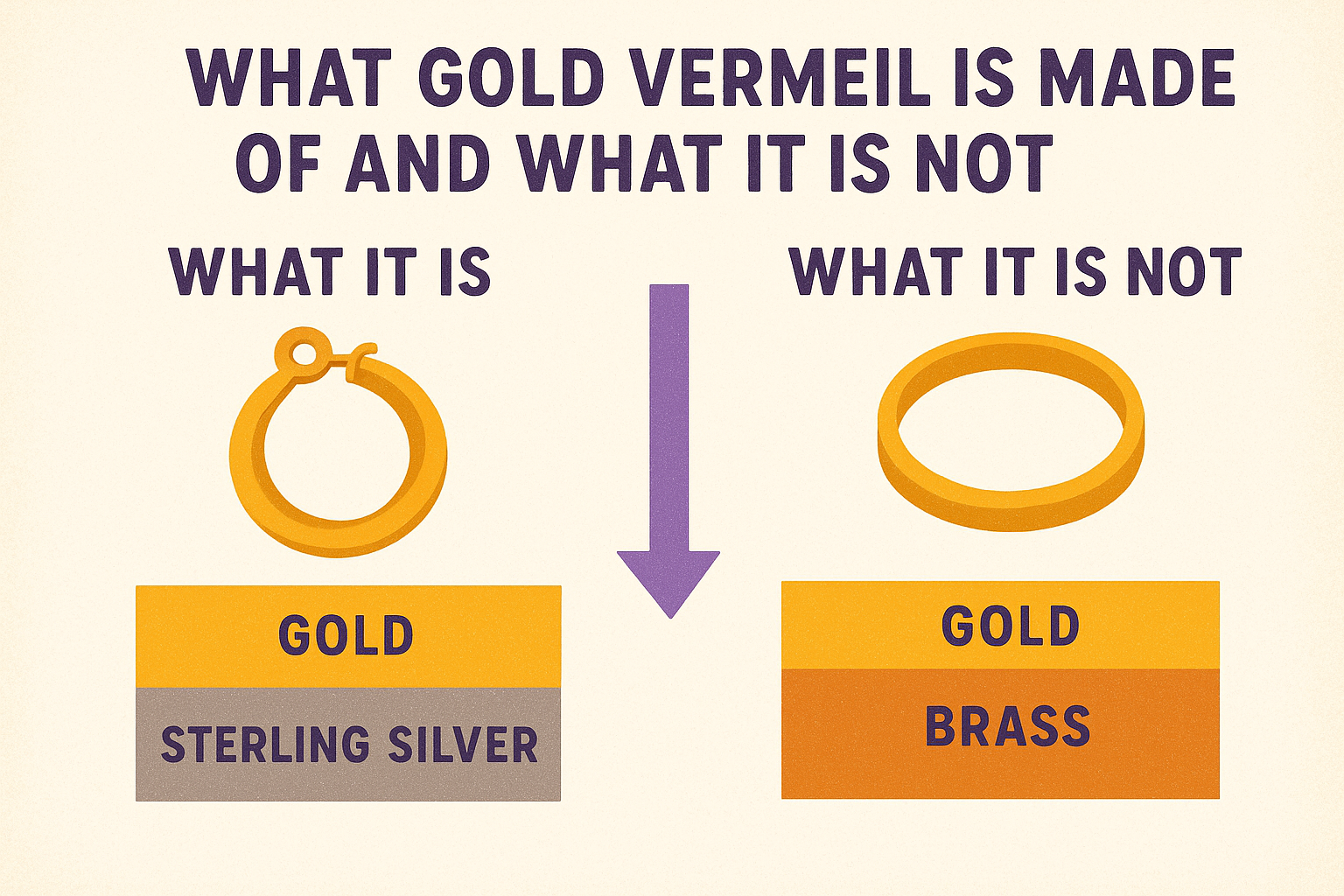
The two components that define vermeil
The base is 925 sterling silver, meaning it's 92.5% pure silver with a small amount of copper or zinc. Sterling silver sits on the lower end of the reactivity scale for most people. The gold layer on top adds another barrier between that base metal and your skin, and because it must meet a minimum thickness requirement, it holds up considerably better than the ultra-thin plating found in budget gold-plated pieces.
The 2.5-micron gold thickness requirement is what separates genuine vermeil from thin-plated jewelry that can expose base metals within weeks of regular wear.
What gold vermeil is not
Vermeil is not solid gold, so the gold layer will eventually thin out with heavy daily use. It's also not the same as gold-filled jewelry, which bonds a much thicker gold layer to a brass core through heat and pressure. Most importantly, vermeil is not standard gold-plated jewelry, which commonly uses brass, copper, or nickel-containing alloys as base metals. That last distinction is the one that matters most if your skin reacts easily to common metals.
Is gold vermeil hypoallergenic for most people
For most people, gold vermeil is hypoallergenic in the practical sense. The sterling silver base avoids the nickel-heavy alloys that trigger the majority of contact reactions, and the thick gold layer adds a durable barrier on top. If your skin reacts to cheap fashion jewelry but tolerates higher-quality metals, vermeil sits in a much safer category than standard gold-plated pieces built on brass or mystery alloys.
The sterling silver base in true vermeil is one of the most skin-friendly base metals used in jewelry, which is why asking "is gold vermeil hypoallergenic" usually gets a confident yes for most wearers.
Who tolerates vermeil well
People who react specifically to nickel or base-metal alloys in inexpensive jewelry tend to wear vermeil without any issues. That includes a large portion of those who've written off fashion jewelry entirely after repeated reactions. If you've had success with sterling silver rings or earrings on their own, adding a gold layer on top only reduces your exposure further.
Most people with mild to moderate metal sensitivity fall into this group. That covers the majority of people who describe themselves as having sensitive skin when it comes to jewelry, and vermeil gives them a realistic path back to wearing pieces they actually like.
When vermeil may still cause a reaction
A small percentage of people react to silver itself, a condition separate from nickel allergy. If you've put on sterling silver earrings and experienced redness or itching directly from the silver, vermeil's base metal won't solve that problem. Similarly, if the gold layer wears through over time on a high-friction piece, the underlying silver can come into contact with your skin, which matters significantly if you already know you're silver-sensitive.
How to shop for gold vermeil with sensitive skin
Shopping for jewelry when your skin reacts easily requires more than trusting a label. If you're asking is gold vermeil hypoallergenic, the next step is knowing what specific information to look for before buying. You want to confirm the base metal, gold karat, and plating thickness before any piece goes near your wrist or ears.
A piece labeled "vermeil" without documentation of its sterling silver base and gold thickness is worth scrutinizing closely before you buy.
Check the specs, not just the name
Not every seller uses the term vermeil correctly. Look for listings that explicitly state 925 sterling silver as the base metal and a gold layer of at least 2.5 microns. The gold karat matters too: higher karat gold (18k or above) contains fewer alloy metals, which reduces the chance of additional irritants making contact with your skin if the layer thins over time.
A few questions worth asking directly before purchasing:
- Is the base metal certified 925 sterling silver?
- What is the gold plating thickness in microns?
- What karat is the gold layer?
Prioritize brands that are transparent about materials
Brands that publish their material specifications clearly are generally more reliable than those that use vague language like "gold-tone" or "gold finish." Look for companies that back their claims with specifics on their product pages, not just broad marketing copy.
If a product description doesn't list the base metal or plating thickness, that's a real warning sign. Reputable brands welcome material questions and provide straightforward answers rather than deflecting with general assurances about quality.
How to wear and care for vermeil to avoid reactions
Even if you've confirmed that your piece meets the standards that make gold vermeil hypoallergenic for most wearers, how you wear and care for it still affects your skin. The gold layer is durable relative to thin-plated jewelry, but it's not impervious to damage. Everyday habits can either extend its life significantly or accelerate the thinning that exposes the base metal beneath.
Protect the gold layer during wear
The biggest threat to vermeil's integrity is chemical exposure. Lotions, perfumes, sunscreen, and cleaning products break down gold plating faster than physical friction alone. Apply any product to your skin and let it dry fully before putting on your jewelry. Take pieces off before swimming, whether in a pool or the ocean, since chlorine and salt water are particularly harsh on plated surfaces.
Removing your vermeil before applying body products and before swimming is the single most effective habit for keeping the gold layer intact long-term.
Your ring bands and bracelet clasps take the most friction during daily wear, so those are the first areas to show wear. If you notice any discoloration or dullness on a high-contact area, give your skin a break from that piece and let it rest.
Clean and store it properly
Gentle cleaning extends the life of your vermeil considerably. Use a soft cloth to wipe pieces down after wearing them, which removes sweat and oils before they sit on the surface. Avoid ultrasonic cleaners and abrasive materials entirely. Store each piece separately in a pouch or lined box to prevent scratching, since surface damage thins the gold layer unevenly and speeds up skin exposure.
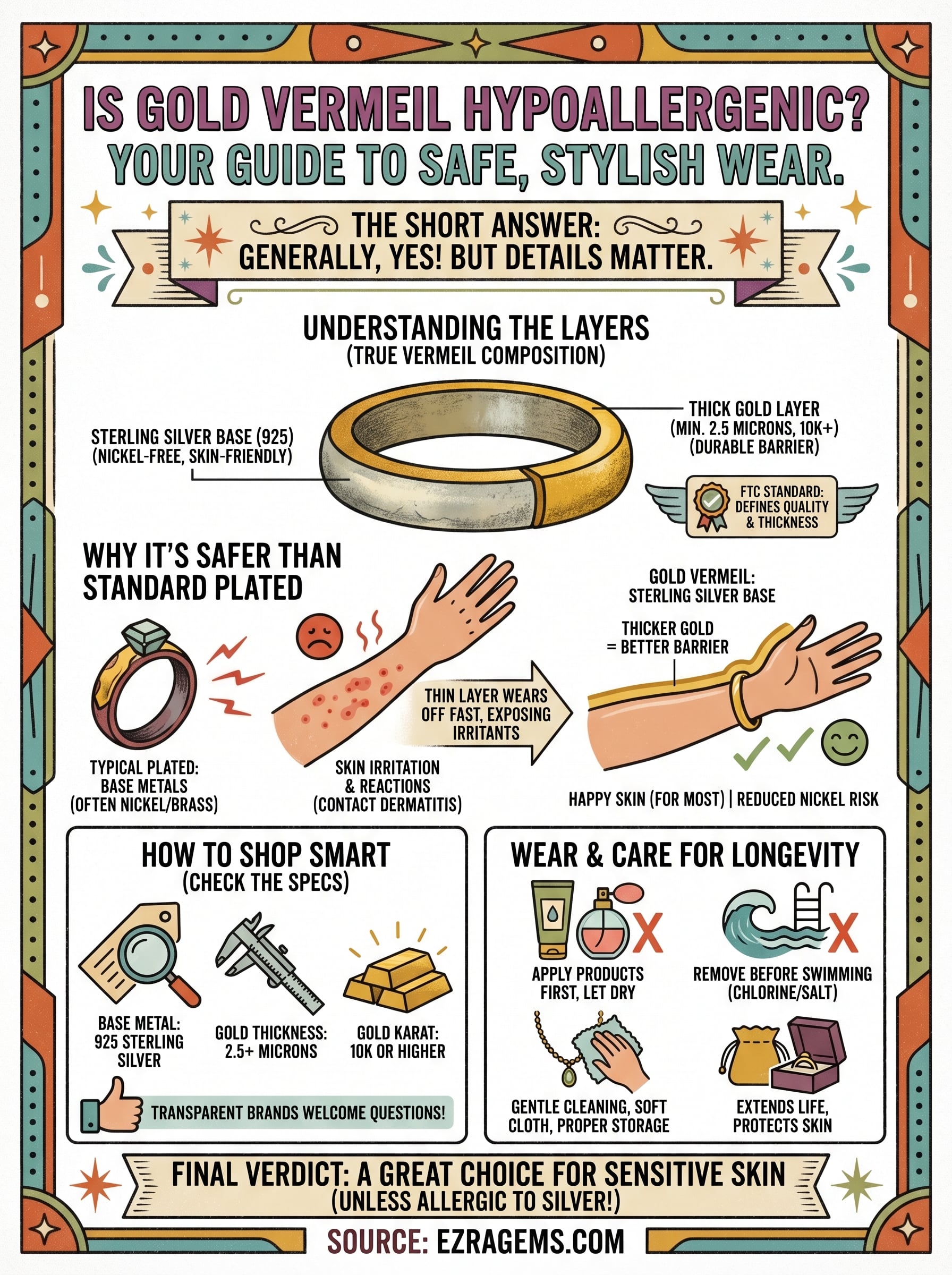
Final take: should you wear gold vermeil
If you've been asking is gold vermeil hypoallergenic, the answer holds up under scrutiny. A true vermeil piece, built on a 925 sterling silver base with a gold layer thick enough to meet FTC standards, avoids the nickel-heavy alloys responsible for most skin reactions. For the vast majority of people with sensitive skin or mild metal allergies, vermeil is a practical, stylish choice that doesn't require compromising comfort.
Your main job is to verify what you're actually buying. Confirm the base metal, the gold karat, and the plating thickness before you purchase. Treat the piece well, keep it away from chemicals, and store it properly, and it will stay intact and skin-safe far longer than cheap plated alternatives. If you already know you're specifically allergic to silver, that's the one scenario where vermeil won't serve you. For everyone else, it's a solid option worth wearing with confidence. Browse our bestsellers at Ezra Gems to find pieces built to that standard.
Part of our complete guide to gold vermeil jewelry.
Want the gold look without the tarnish problem? Gold vermeil is real gold over sterling silver — beautiful, but once the gold layer thins, the silver underneath tarnishes. Ezra Gems takes a different approach: 18K gold over surgical stainless steel, a base that does not react with water, sweat, or salt. That is why our pieces stay waterproof and tarnish-free with no polishing routine at all.
Leave a comment