


You just invested in a beautiful gold vermeil piece, and now you're standing outside the shower wondering, should I take this off? If you've ever asked yourself "is gold vermeil waterproof," you're not alone. It's one of the most common questions jewelry buyers have, and the answer isn't as simple as yes or no. Gold vermeil sits in a unique spot between solid gold and basic gold plating, which means its reaction to water depends on several factors worth understanding before you jump in the pool.
At Ezra Gems, we design jewelry specifically for people who don't want to think twice about wearing their pieces every single day. That's exactly why we get this question so often, our customers want jewelry that keeps up with real life. In this guide, we'll break down how water actually affects gold vermeil, what activities are safe, and practical tips to keep your pieces looking fresh whether you're showering, sweating, or swimming.
What gold vermeil is and what waterproof means
Gold vermeil (pronounced "ver-may") is a specific type of gold-layered jewelry with strict composition standards that separate it from regular gold plating. To qualify as true gold vermeil in the United States, a piece must have a sterling silver base (at least 92.5% silver) covered with a layer of gold that is at least 10 karats and at least 2.5 microns thick. That thickness requirement is what makes vermeil significantly more durable than standard gold-plated jewelry, which often uses a much thinner gold layer applied over base metals like brass or copper.
The layers that make up gold vermeil
Understanding the structure helps you see why the question "is gold vermeil waterproof" comes up so often. The outer gold layer is what you see and touch, but it's the sterling silver underneath that determines how the piece reacts to moisture, chemicals, and daily wear. When water or harsh chemicals gradually work through the gold layer, they reach the silver, and silver is reactive. It tarnishes when exposed to oxygen and moisture over time, which is exactly why the thickness and quality of the gold layer matters so much for how long your piece holds up.
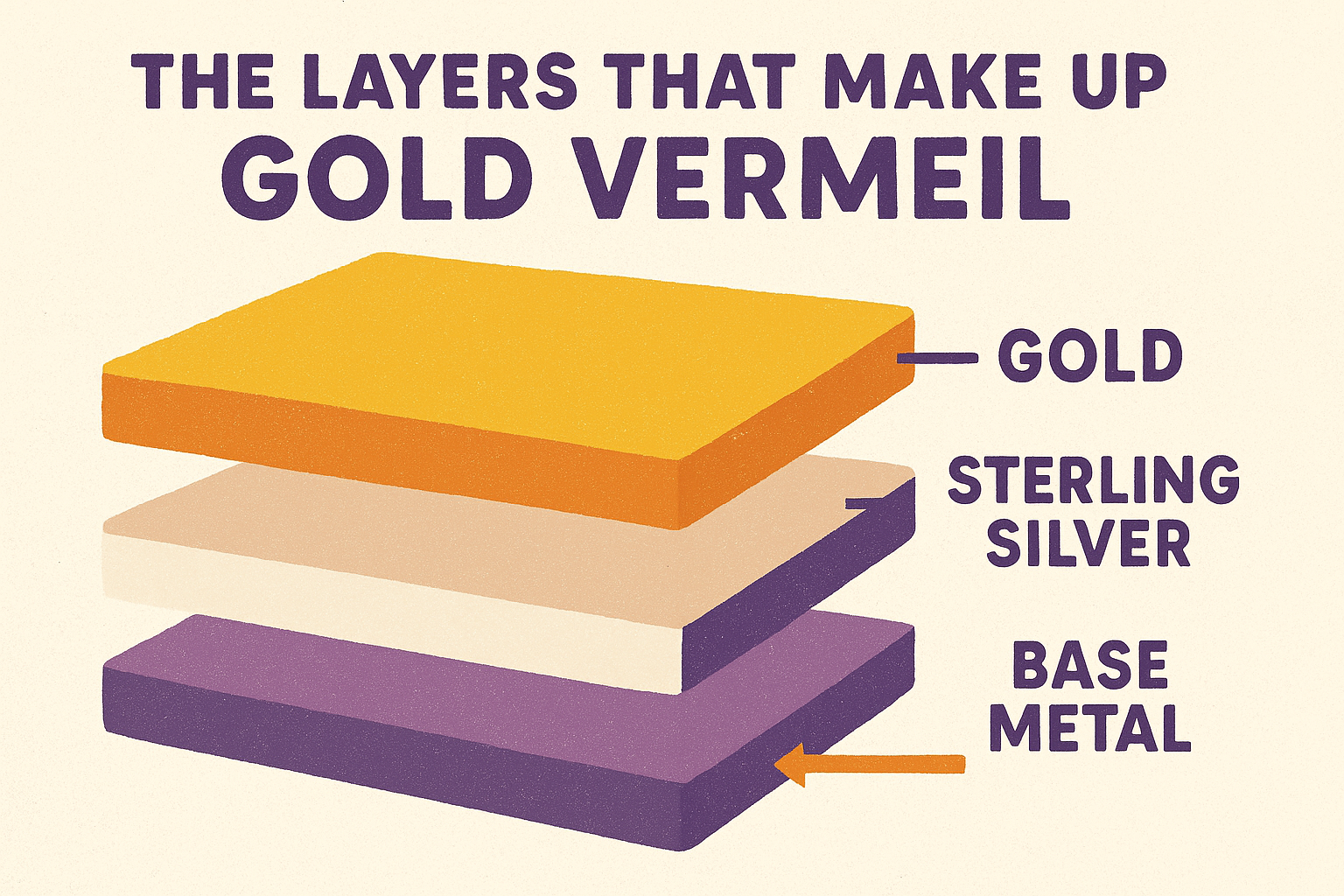
The thicker the gold layer, the longer it takes for moisture or chemicals to work through to the silver base underneath.
What "waterproof" actually means for jewelry
The word "waterproof" gets used loosely in the jewelry world, and that creates real confusion for buyers. True waterproofing means a material completely resists water penetration under any condition. For jewelry, no gold-layered piece meets that standard permanently, because repeated water exposure, soap, chlorine, and saltwater all gradually break down even a quality gold layer over time. What most jewelers mean when they describe a piece as water-resistant is that it can handle occasional or brief contact with water without immediate, visible damage.
Here's a quick breakdown of how gold vermeil compares to other common gold jewelry types in terms of water resistance:
| Jewelry Type | Base Metal | Gold Thickness | Water Resistance |
|---|---|---|---|
| Gold vermeil | Sterling silver | 2.5+ microns | Moderate |
| Gold-plated | Brass or copper | Under 0.5 microns | Low |
| Gold-filled | Brass | 50+ microns | High |
| Solid gold | Gold alloy | N/A | Very high |
How water affects gold vermeil over time
Water doesn't destroy gold vermeil instantly, but repeated exposure adds up. Each time your piece gets wet, a small amount of moisture works its way into microscopic gaps in the gold layer. When people ask is gold vermeil waterproof, the honest answer is that water resistance depends on the type and frequency of exposure. The minerals, chemicals, and salts found in most water sources gradually weaken the bond between the gold layer and the sterling silver base, leading to dulling, discoloration, and eventually flaking.
The difference between water types
Not all water is equally damaging to your jewelry. Tap water contains chlorine and other minerals that are mildly abrasive to gold layers with repeated exposure. Saltwater is more aggressive because salt actively draws moisture into the metal and speeds up corrosion of the silver underneath. Chlorinated pool water sits somewhere in between, but the chemical concentration in pools is often higher than tap water, which makes it particularly harsh on any gold-layered piece.
Saltwater and chlorinated pool water are the two biggest threats to gold vermeil, and even a single prolonged exposure can cause visible damage.
How tarnish starts
Once moisture reaches the sterling silver base, oxidation begins. You'll first notice a slight darkening or dullness on the surface of your piece, which is the silver reacting with oxygen and sulfur in the air and water. Once that process starts, regular cleaning can slow it down, but it won't fully reverse it if the gold layer is already compromised.
Can you shower with gold vermeil jewelry?
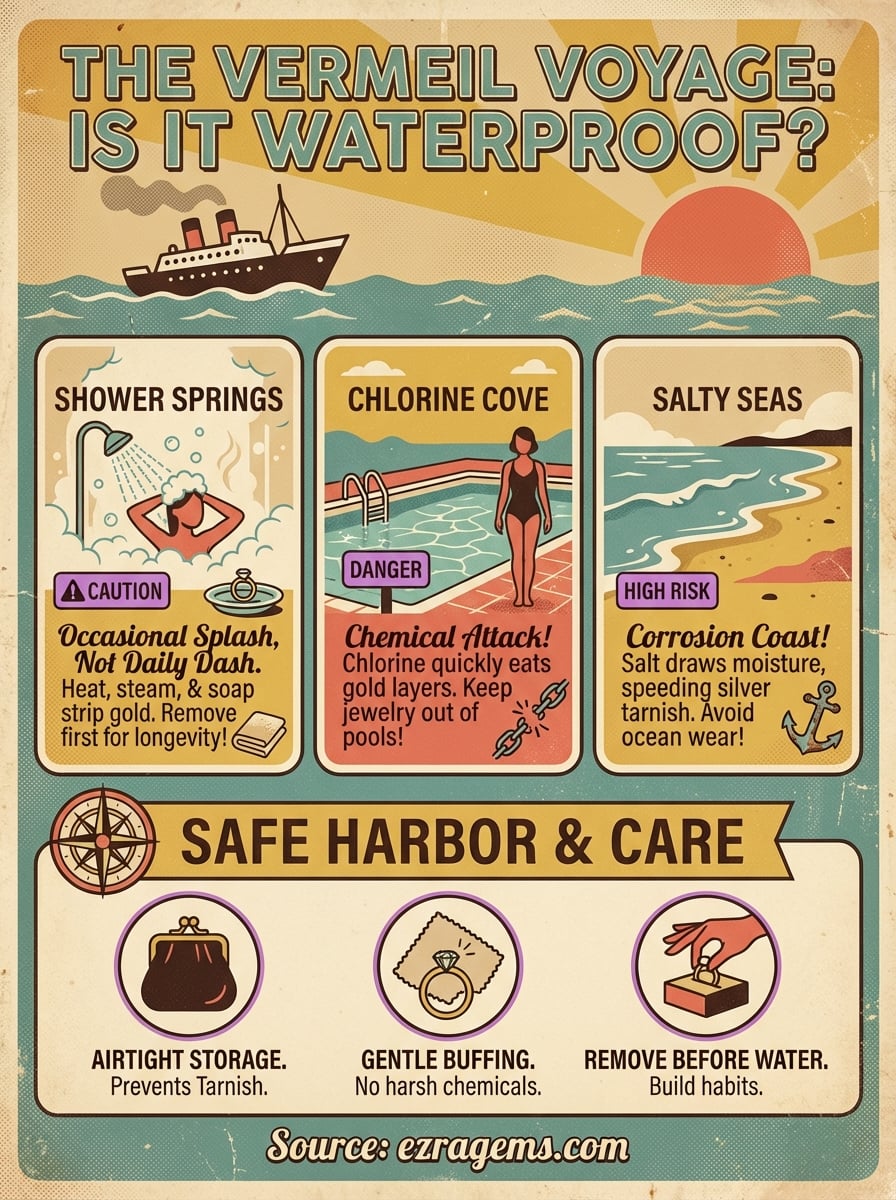
Showering with gold vermeil is something many people do without thinking, but it carries real risk over time. The short answer is that occasional exposure won't destroy your piece overnight, but making it a daily habit will noticeably shorten how long your jewelry keeps its gold finish. Hot water, steam, and the soap or shampoo you use all work together to break down the gold layer faster than water alone would.
The biggest risk in the shower isn't the water itself, it's the combination of heat, steam, and chemical products working on the gold layer at the same time.
What shower products do to your jewelry
Soaps, shampoos, conditioners, and body washes all contain surfactants and chemicals that strip away the thin protective finish on gold vermeil over time. These products aren't designed with jewelry in mind, and many of them are mildly abrasive to metal surfaces. If you're asking is gold vermeil waterproof specifically because you want to leave your jewelry on in the shower, the honest answer is that your piece will last significantly longer if you take it off first.
Taking an extra ten seconds to remove your jewelry before showering is one of the simplest and most effective habits you can build to protect your pieces. Keep a small dish or tray near your sink so you always have a spot to place them, and put them back on only after your skin is fully dry to avoid trapping moisture against the metal.
Can you swim with gold vermeil?
Swimming with gold vermeil is a much bigger risk than showering with it. Pool water contains concentrated chlorine that directly attacks the gold layer, and ocean water carries salt and minerals that accelerate corrosion of the sterling silver base underneath. If you're still asking is gold vermeil waterproof when it comes to swimming, the answer leans firmly toward no. A single swim session can cause visible dulling or discoloration, especially if you stay in the water for an extended period.
Swimming is the one activity where the damage to gold vermeil can happen fast enough to notice after just one exposure.
Why pools and oceans are especially damaging
Pool chemicals are designed to kill bacteria, and those same chemicals react with metal surfaces in ways that strip gold layers far faster than plain water would. You'll often see a dull, slightly orange or brassy tint appear on pieces that have been exposed to chlorine repeatedly, which is the silver base starting to show through. Ocean water carries a different problem: salt draws moisture deep into microscopic cracks in the gold layer, which speeds up the oxidation of the silver underneath and leads to tarnish that's hard to reverse.
Your best move is to remove your jewelry before getting in any body of water, whether that's a pool, ocean, lake, or hot tub. A hot tub combines heat, chemicals, and moisture, making it one of the harshest environments for gold vermeil of all.
How to make gold vermeil last longer
The single most important thing you can do for your gold vermeil is build simple habits around how you wear and store it. Water is just one part of the equation. Sweat, perfume, lotions, and everyday friction all contribute to wearing down the gold layer over time. Whether or not you're still asking is gold vermeil waterproof, the answer matters less when you take steps that extend the life of your pieces significantly.
Store it the right way
Storage has a bigger impact on gold vermeil than most people realize. Exposure to air and humidity causes the sterling silver base to oxidize faster, so keeping your pieces in an airtight pouch or jewelry box slows that process down. Store each piece separately to prevent scratching, since even light contact between jewelry can scuff the gold layer over time.
The way you store your jewelry between wears matters just as much as what you expose it to while you're wearing it.
Clean it with care
When your gold vermeil needs cleaning, use a soft, lint-free cloth to gently buff the surface. Avoid abrasive materials, ultrasonic cleaners, or harsh chemical solutions, since all of these strip the gold layer faster than everyday wear would. If you need a deeper clean, a small amount of mild soap diluted in lukewarm water applied with a soft cloth works well. Always dry your piece completely before storing it.
Key takeaways
So, is gold vermeil waterproof? Not truly. Gold vermeil is more durable than standard gold plating thanks to its thick gold layer and sterling silver base, but repeated exposure to water, chlorine, saltwater, and chemical products gradually breaks that layer down. The damage is cumulative, which means one shower won't ruin your piece, but daily exposure will shorten its life noticeably over time.
Your best habits are simple: take your jewelry off before showering, swimming, or applying products, store each piece in an airtight pouch away from humidity, and clean it gently with a soft cloth when needed. These small steps add up to a big difference in how long your gold vermeil stays looking sharp.
If you're ready to invest in pieces built for real daily wear, browse the Ezra Gems bestsellers collection to find gold-plated jewelry designed to keep up with your life.
Part of our complete guide to gold vermeil jewelry.
Want the gold look without the tarnish problem? Gold vermeil is real gold over sterling silver — beautiful, but once the gold layer thins, the silver underneath tarnishes. Ezra Gems takes a different approach: 18K gold over surgical stainless steel, a base that does not react with water, sweat, or salt. That is why our pieces stay waterproof and tarnish-free with no polishing routine at all.
Leave a comment