


You just treated yourself to a gorgeous gold-plated necklace and want to wear it everywhere, but can gold plated jewelry get wet? It's a question every jewelry lover asks before stepping into the shower or heading to the pool. The short answer: traditional gold-plated pieces and water don't mix well, but that doesn't mean you're stuck choosing between your favorite accessories and your active lifestyle.
In this guide, we'll break down exactly what happens when gold-plated jewelry meets water, why some pieces hold up better than others, and the practical care tips that actually work. At Ezra Gems, we design our jewelry to handle real life, showers, workouts, and everything in between, so we know a thing or two about what separates jewelry that lasts from jewelry that tarnishes after a few wears. Whether you're worried about daily exposure or occasional splashes, you'll find clear answers here.
Why water damages gold plated jewelry
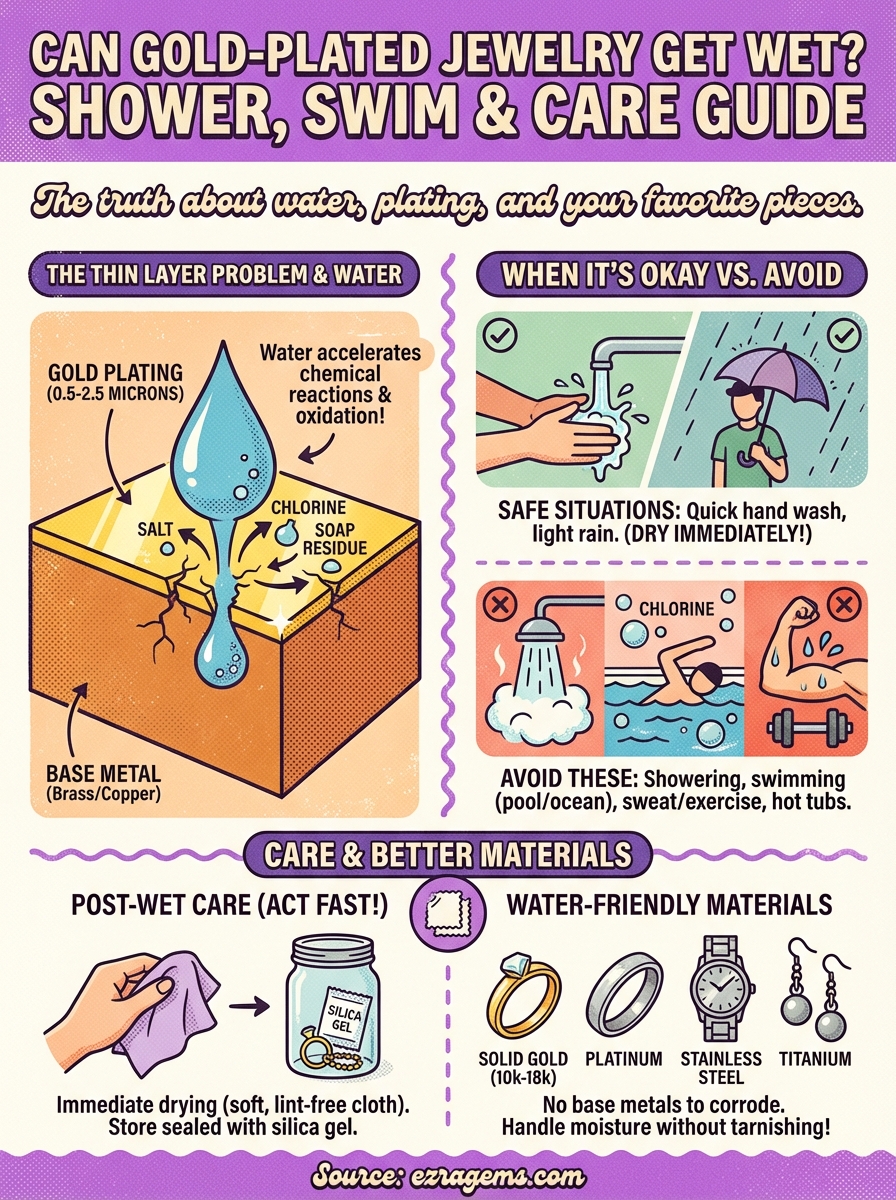
Gold plating involves bonding a thin layer of gold (typically 0.5 to 2.5 microns) onto a base metal like brass, copper, or sterling silver. When you wonder can gold plated jewelry get wet, you're really asking whether that microscopic gold coating can withstand repeated moisture exposure. The answer lies in understanding what water actually does to this delicate structure. Water itself doesn't destroy gold, but it acts as a catalyst for chemical reactions between the base metal and elements in your environment, like chlorine, salt, and soap residue.
The thin layer problem
Your gold-plated piece looks solid, but that golden finish is incredibly thin, thinner than a human hair in most cases. This minimal thickness means even minor abrasions or chemical exposure can wear through to the base metal underneath. Water accelerates this process by seeping into microscopic cracks or weak spots in the plating. Once moisture reaches the underlying metal, oxidation begins, which causes discoloration, tarnishing, and eventually peeling of the gold layer itself.
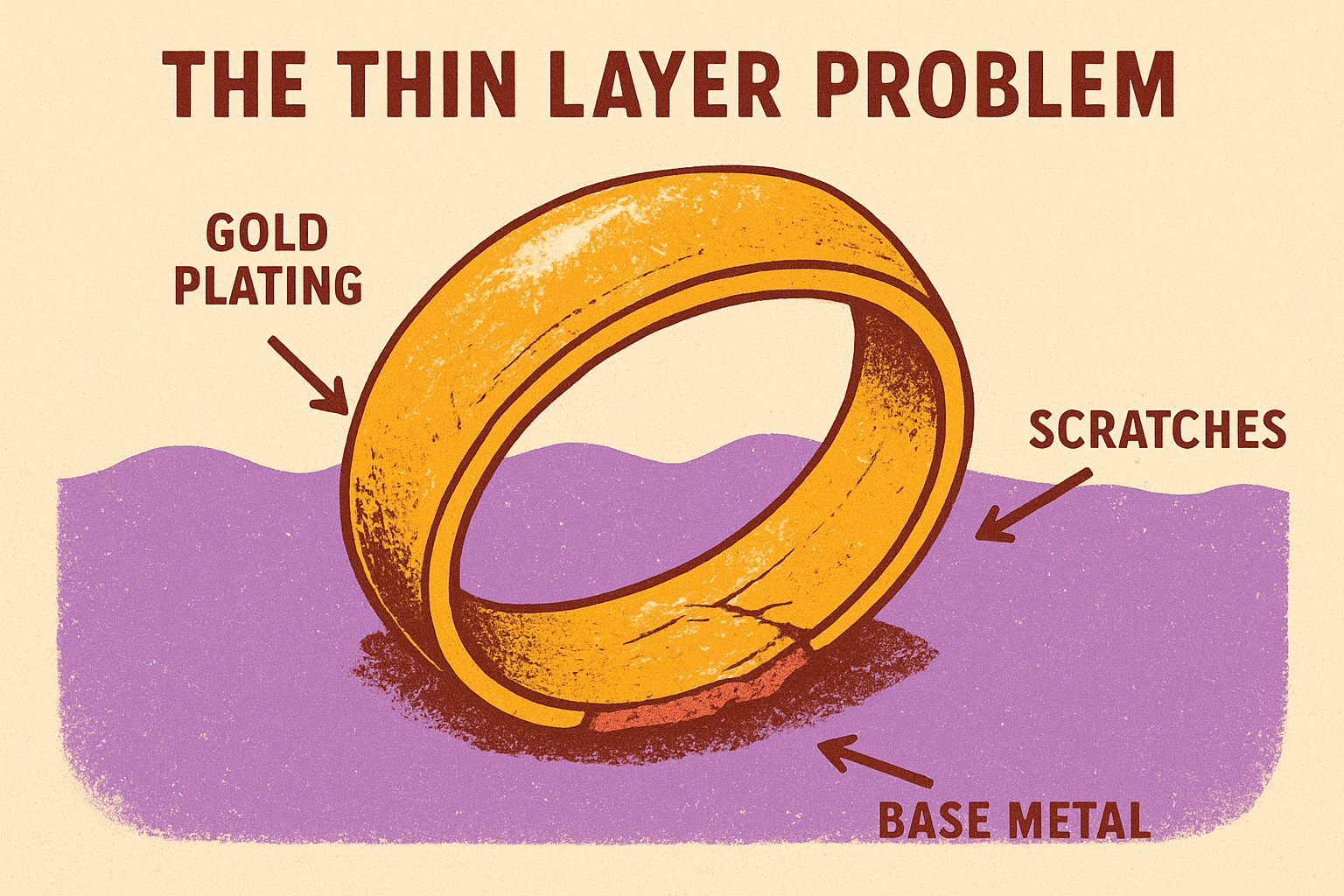
The thinner the gold plating, the faster water exposure will compromise your jewelry's appearance and structural integrity.
Chemical reactions at play
Water creates an electrochemical reaction between the gold layer and the base metal below, especially when combined with substances you encounter daily. Chlorine in tap water and pools, salt from sweat or ocean water, and sulfates in soaps all speed up the breakdown process. These chemicals interact with the base metals (particularly copper and brass), causing them to oxidize and corrode. This corrosion pushes against the gold layer from underneath, creating bubbles, discoloration, or complete separation of the plating from your jewelry's surface.
What happens when gold plated jewelry gets wet
When you expose gold-plated jewelry to water, a series of visible and invisible changes begin immediately. The first thing you'll notice is water trapped in crevices and settings, which sits against the metal for extended periods. This prolonged contact gives moisture time to penetrate weak points in the plating. You might also see cloudy residue or spots develop on the surface, especially if you've showered with soap or shampoo still on the piece.
Immediate effects
Your jewelry won't fall apart after one exposure, but changes start faster than you think. Water causes the gold layer to soften slightly and become more vulnerable to scratches. If you're wondering can gold plated jewelry get wet without consequences, even a single shower can leave microscopic damage that compounds over time. The base metal underneath begins absorbing moisture through tiny imperfections in the plating. You might notice your piece feels slightly different in texture or loses some of its original shine right after drying.
A single water exposure creates microscopic pathways for future damage to accelerate.
Long-term damage
Repeated water contact leads to visible discoloration and peeling. The gold layer lifts away from the base metal in patches, revealing greenish or blackish spots underneath. Your jewelry develops an uneven, patchy appearance that no amount of polishing can fix. Eventually, the plating wears completely through in high-wear areas like clasps and chain links, exposing the base metal permanently.
When it is okay vs when to avoid water
Not all water exposure carries the same risk for your gold-plated pieces. Understanding the difference between safe situations and damaging scenarios helps you make smart decisions about when to wear your jewelry. The question can gold plated jewelry get wet has nuanced answers depending on factors like water quality, duration of exposure, and what else contacts your jewelry during that time.
Safe water situations
Quick hand washing with plain water poses minimal risk to your gold-plated jewelry. Brief splashes that you dry immediately don't give moisture enough time to penetrate the plating or trigger chemical reactions. Light rain exposure also falls into this category, provided you wipe your pieces dry within minutes. These momentary contacts with clean, pure water won't cause immediate damage, especially if your jewelry features a thicker plating or quality base metals.
Brief exposure to clean water with immediate drying minimizes damage to your gold-plated pieces.
When to remove your jewelry
Always take off gold-plated pieces before showering, swimming, or exercising. Hot shower water opens up pores in the plating and accelerates corrosion, while chlorinated pool water attacks both the gold layer and base metal aggressively. Ocean swimming exposes your jewelry to corrosive salt, and sweat during workouts creates an acidic environment that breaks down plating. Professional cleaning with harsh chemicals, dishwashing, and hot tub soaking all demand removing your jewelry first.
How to care for gold plated jewelry after water
If your gold-plated piece accidentally gets wet, quick action prevents lasting damage. The steps you take in the first few minutes after exposure determine whether your jewelry survives intact or develops permanent marks. When you ask yourself can gold plated jewelry get wet and recover, the answer depends entirely on your immediate response. Water sitting on metal accelerates corrosion exponentially, so every second counts.
Immediate drying steps
Pat your jewelry dry with a soft, lint-free cloth the moment you remove it from water. Avoid rubbing harshly, which scratches the gold layer and creates new entry points for moisture. Instead, use gentle pressing motions to absorb water from the surface and crevices. Pay special attention to clasps, chain links, and any areas where gemstones meet metal, as these spots trap moisture longest. Air drying alone isn't enough because water droplets remain in small spaces and continue causing damage.
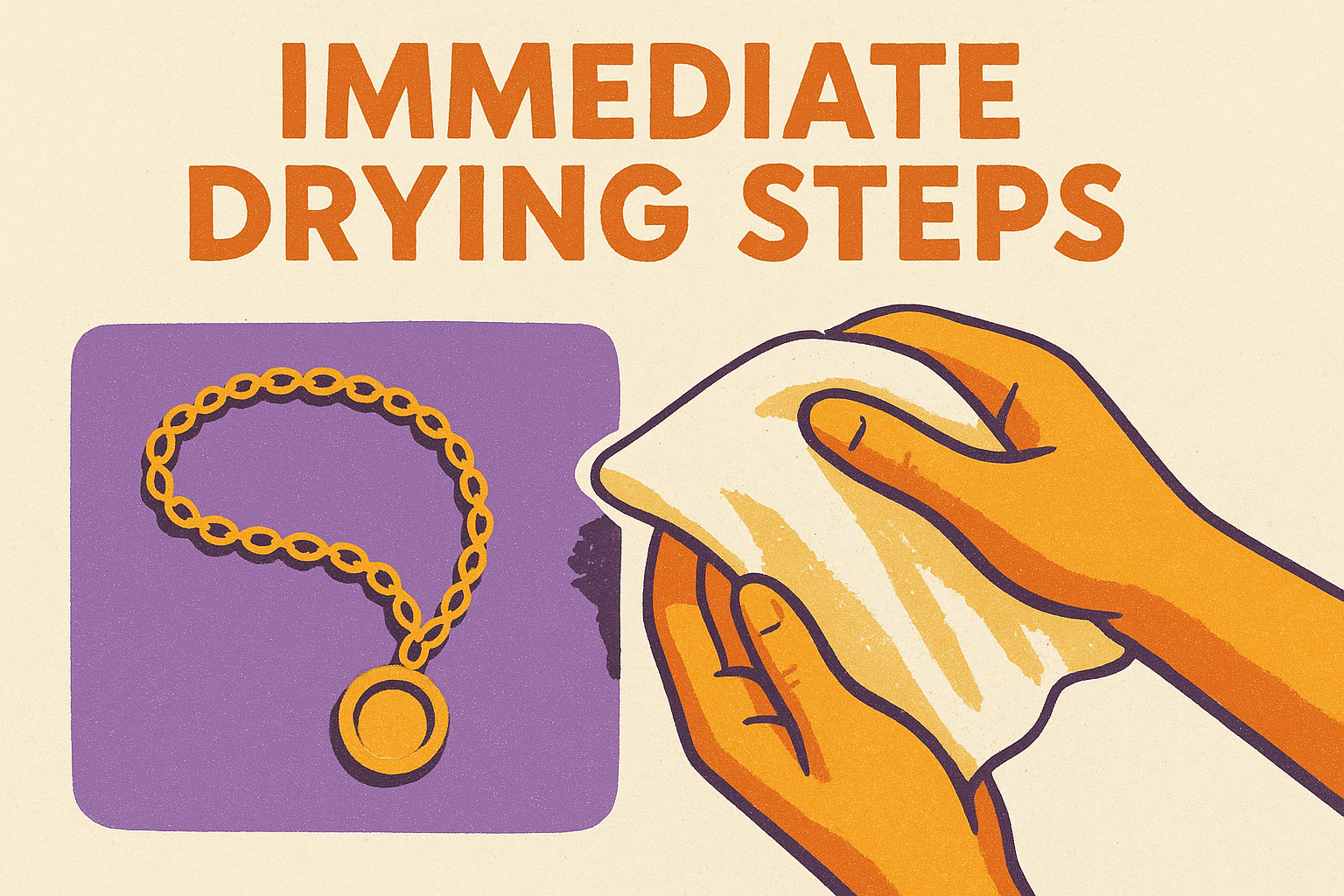
Immediate, gentle drying with a soft cloth stops water damage before it becomes permanent.
Storage after exposure
Once completely dry, store your jewelry in a sealed container with silica gel packets to absorb any remaining moisture. Keep pieces separated using individual soft pouches to prevent scratching during storage. Never return damp jewelry to a jewelry box, as trapped humidity corrodes the plating from within.
Best materials for swimming and showering
If you constantly worry can gold plated jewelry get wet, switching to water-friendly materials eliminates that stress entirely. Certain metals handle moisture exposure without tarnishing, corroding, or losing their appearance, making them ideal for active lifestyles that involve swimming, showering, and sweating. These durable alternatives give you the look you love without the constant maintenance or risk of damage that comes with traditional gold-plated pieces.
Solid gold and platinum options
Solid gold (10k, 14k, or 18k) and platinum jewelry resist water damage completely because they contain no base metals that oxidize or corrode. These pieces maintain their color and shine through repeated water exposure without any special care beyond basic cleaning. The higher price point reflects their durability, as you're paying for metal that goes all the way through rather than just a surface coating.
Solid precious metals eliminate water damage concerns entirely, making them worth the investment for frequently worn pieces.
Stainless steel and titanium
Stainless steel offers exceptional water resistance at a fraction of gold's cost, making it perfect for everyday wear. This metal doesn't tarnish, rust, or corrode, even in chlorinated pools or salt water. Titanium provides similar benefits with an even lighter weight, ideal for those who forget they're wearing jewelry. Both materials work beautifully in modern designs and require minimal maintenance beyond occasional cleaning with mild soap.
Quick recap and what to do next
So, can gold plated jewelry get wet? Traditional pieces can't handle regular water exposure without tarnishing, peeling, or corroding over time. Water penetrates the thin gold layer, triggering chemical reactions with base metals that cause visible damage. Remove your gold-plated jewelry before showering, swimming, or exercising to prevent irreversible harm. If your pieces do get wet accidentally, dry them immediately with a soft cloth and store them in sealed containers with silica gel packets.
Your best solution involves choosing water-resistant materials from the start rather than worrying about every splash. Solid gold, platinum, stainless steel, and titanium handle moisture without maintenance headaches. At Ezra Gems, we design our pieces with real life in mind, so you can shower, sweat, and swim without removing your favorite accessories. Browse our waterproof jewelry collection to find durable pieces that maintain their beauty through everything your day throws at them.
Leave a comment