


Your favorite gold pieces lose their sparkle over time. Oils from your skin, lotions, and everyday wear create a dull film that hides the natural shine. You might notice your rings looking cloudy, your necklaces losing their luster, or your earrings appearing less vibrant than when you first wore them.
You can restore that brilliance at home with simple supplies you probably already have. Most gold jewelry needs only warm water, mild dish soap, and a soft brush to look brand new again. The right cleaning technique takes just a few minutes and brings back the shine you love without a trip to the jeweler.
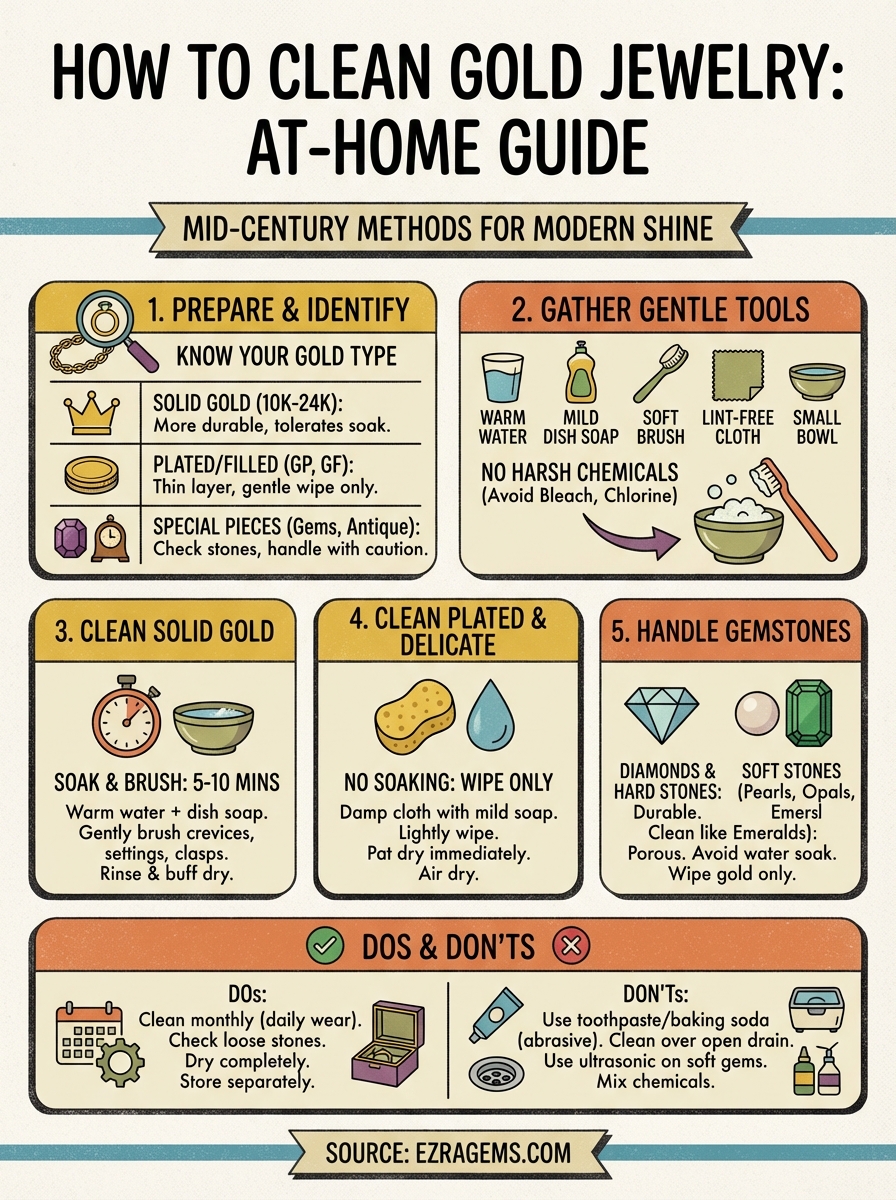
This guide walks you through five straightforward steps to clean your gold jewelry safely and effectively. You'll learn which methods work best for solid gold versus plated pieces, how to properly handle jewelry with gemstones, and which common household products to avoid at all costs. We'll cover everything from gathering the right supplies to applying the final polish that makes your pieces gleam.
What to know before you start
You need to identify what type of gold jewelry you own before you begin cleaning. Different gold compositions require different care levels, and using the wrong method can damage your pieces permanently. Solid gold jewelry (marked 10k, 14k, 18k, or 24k) tolerates more vigorous cleaning than gold-plated items, which have only a thin layer of gold over another metal.
Check your gold type
Look for karat stamps inside rings, on clasp areas of necklaces, or on the backs of earrings to determine what you're working with. Pure 24k gold is soft and rarely used in jewelry, so you'll most likely find 14k or 18k markings on solid pieces. Gold-plated or gold-filled jewelry typically shows stamps like "GP," "GF," or "HGE" (heavy gold electroplate), which tells you the gold coating is thin and requires gentler handling.
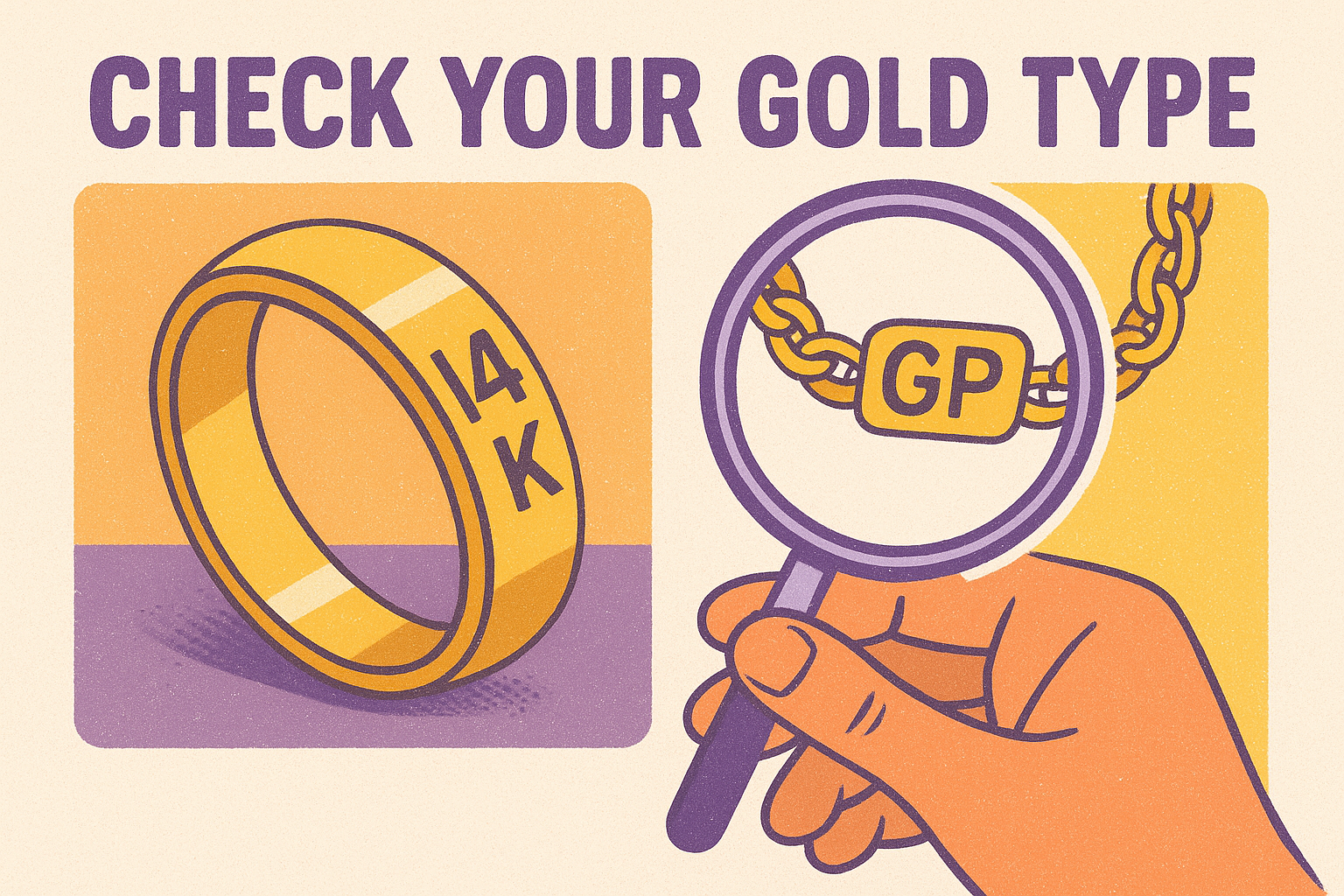
Missing stamps don't always mean fake jewelry, but they do signal extra caution when cleaning. Vintage pieces often lack clear markings, and some manufacturers skip stamping on delicate items. Solid gold won't tarnish the way plated pieces can, so if your jewelry has greenish discoloration or obvious wear on edges, you're likely dealing with plated metal that needs the gentlest cleaning approach.
The karat marking tells you both the gold purity and how durable your piece will be during cleaning.
Identify special considerations
Gemstones change everything about how to clean gold jewelry safely. Soft stones like pearls, opals, emeralds, and turquoise can crack or lose their luster from water exposure or soap residue. Diamond-studded pieces handle regular cleaning well, but you still need to check the stone settings for any looseness before you start.
Antique and vintage jewelry requires extra care regardless of gold type. Older pieces often have weakened settings, fragile prongs, or delicate metalwork that modern jewelry doesn't. Any piece showing visible damage, loose stones, or broken clasps needs professional repair before you attempt cleaning at home.
Step 1. Gather gentle cleaning tools
You need the right supplies before you learn how to clean gold jewelry properly. Harsh chemicals and abrasive materials damage gold surfaces and wear away gold plating faster than daily wear ever could. The tools for effective cleaning cost almost nothing and probably sit in your kitchen right now. Setting up your cleaning station with gentle materials protects your jewelry while removing the buildup that dulls its shine.
What you'll need for basic cleaning
Your essential cleaning kit requires only five simple items that work safely on most gold jewelry. Warm water forms the base of your cleaning solution, while mild dish soap (like Dawn) cuts through oils and residue without harsh chemicals. You'll use these core supplies for nearly every gold piece you clean:
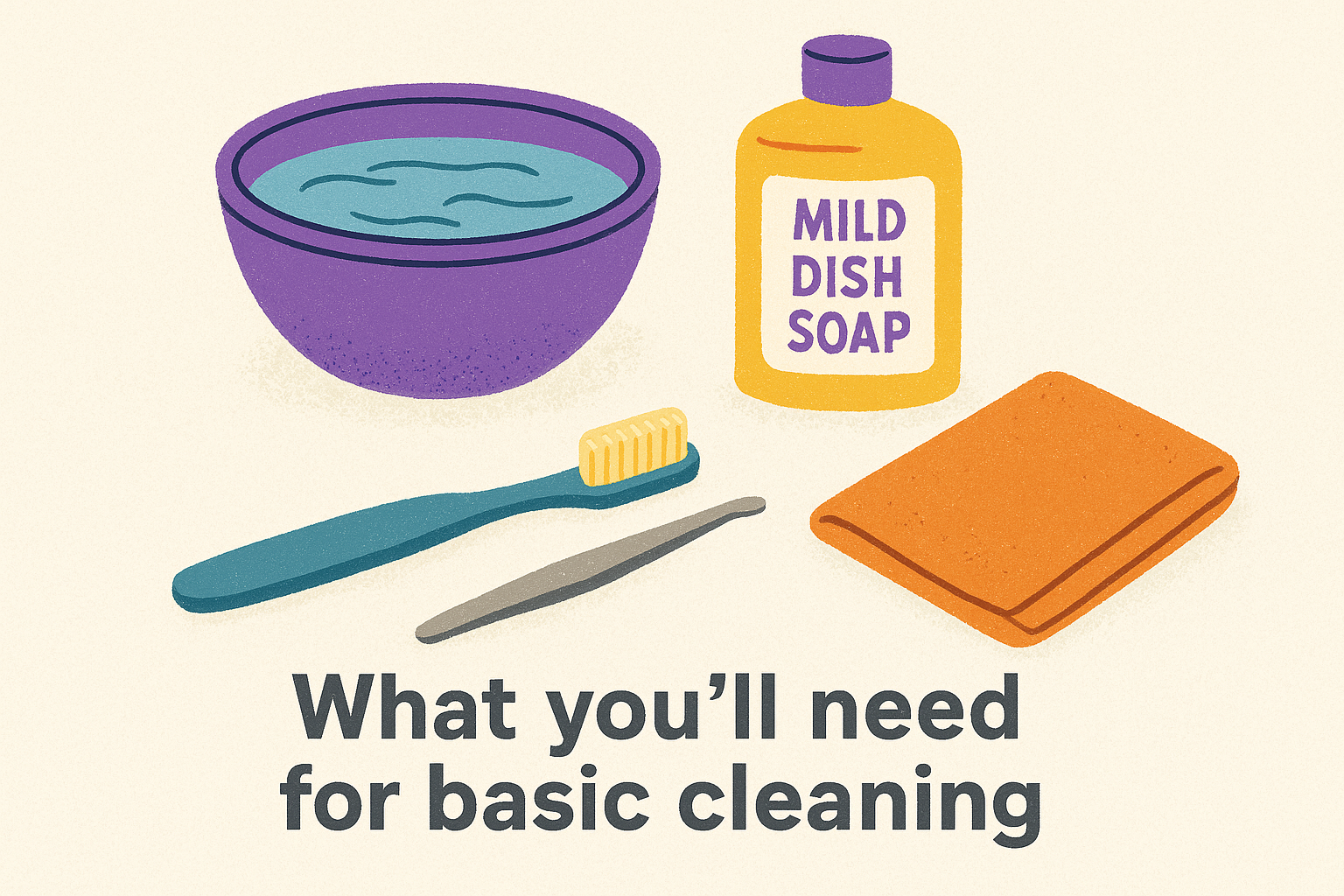
- Small bowl (glass or ceramic, not metal)
- Mild dish soap (fragrance-free and dye-free works best)
- Soft-bristled toothbrush (new baby toothbrush or extra-soft adult brush)
- Lint-free cloth (microfiber or soft cotton flannel)
- Tweezers (optional, for handling small pieces)
Always choose a new toothbrush rather than one that's been used, since residual toothpaste can scratch gold surfaces.
Optional additions for stubborn residue
Household ammonia boosts your cleaning power for pieces with heavy buildup or stuck-on grime. Add just 2-3 drops to your soap and water mixture for solid gold jewelry that hasn't been cleaned in months. Skip the ammonia entirely for gold-plated items or any jewelry with pearls, opals, or other porous gemstones, as it strips away protective coatings and damages delicate materials.
Paper towels help with initial drying, but finish with a microfiber cloth to avoid scratches and lint. Keep these supplies together in one place so you can quickly clean your jewelry whenever you notice it losing shine.
Step 2. Clean plain solid gold jewelry
Plain solid gold pieces (without gemstones or plating) handle the most straightforward cleaning method. These rings, chains, bracelets, and earrings stamped 10k, 14k, or 18k tolerate water and mild soap without damage because the gold content makes them durable. This step works perfectly for wedding bands, gold chains, simple hoop earrings, and other jewelry with no decorative stones or delicate settings that need extra caution.
Prepare your cleaning solution
Fill your small bowl with warm water (not hot, which can be uncomfortable to handle and isn't necessary). Add 2-3 drops of mild dish soap and swirl the water gently to create light suds. The water temperature should feel comfortable on your skin, roughly the same warmth you'd use to wash your hands. Dish soap like Dawn works exceptionally well because it cuts through body oils and lotions without harsh chemicals that damage gold.
Optional boost for heavily tarnished pieces: Add 2 drops of household ammonia to this mixture if your solid gold jewelry hasn't been cleaned in months or shows significant buildup. Skip this addition if you have any concerns about your jewelry's composition or if you're not certain it's solid gold all the way through.
Soak and brush the jewelry
Place your solid gold pieces into the cleaning solution and let them soak for 5-10 minutes. This soaking time loosens dirt, oils, and residue that have built up in crevices and textured areas. Longer soaking (up to 15 minutes) helps with stubborn buildup, but you don't need to leave jewelry submerged for hours to see results when learning how to clean gold jewelry effectively.
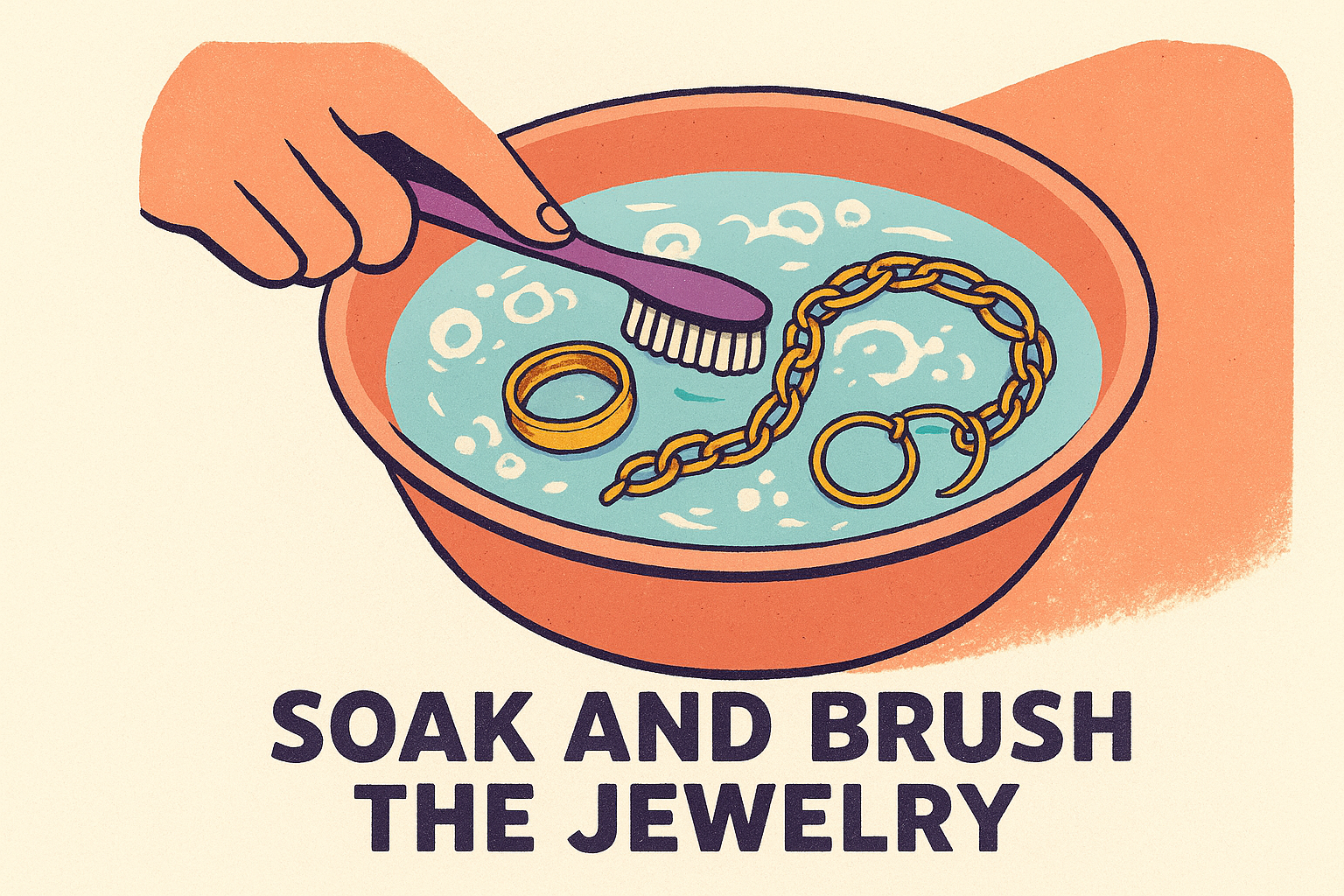
After soaking, take your soft-bristled toothbrush and gently brush each piece while it's still wet. Focus on these specific areas where grime accumulates most:
- Behind stone settings and around prongs (even if no stones are present, check any decorative elements)
- Inside ring bands and bracelet links
- Chain links and clasps
- Textured or engraved surfaces
- Areas where two metal pieces join
Use light pressure and circular motions rather than harsh scrubbing. Gold is a soft metal that scratches easily, so gentle brushing removes buildup without creating surface damage. The soap and water do most of the work during the soak, meaning you just need to dislodge what's loosened rather than scrub aggressively.
Gentle, consistent brushing with a soft toothbrush removes more buildup than aggressive scrubbing with harsh tools.
Rinse and dry properly
Hold each piece under lukewarm running water to rinse away all soap residue. Make sure you've closed your drain or placed a small strainer over it, because wet jewelry slips easily from your fingers. Rinse thoroughly for at least 15-20 seconds per piece, checking that no soap film remains in crevices or chain links.
Pat each piece gently with a lint-free cloth or paper towel to remove excess water, then finish by buffing with a clean microfiber cloth using small circular motions. This final buffing step brings back the natural shine and removes any remaining water spots. Let pieces air dry completely for 10-15 minutes before wearing or storing them, which prevents moisture from getting trapped against your skin or inside storage pouches.
Step 3. Clean gold plated and delicate pieces
Gold-plated jewelry requires a completely different approach than solid gold because the gold layer measures only a few microns thick. Extended water exposure, scrubbing, or harsh soaps wear through this thin coating and expose the base metal underneath, which causes discoloration and permanent damage. You'll see the underlying metal (usually brass or copper) showing through if you clean plated pieces too aggressively, and once that gold layer is gone, professional replating costs more than most fashion jewelry is worth.
Use minimal water exposure
Skip the soaking step entirely when you clean gold-plated pieces. Instead, dampen your soft cloth with the mildest possible soap and water mixture (1 drop of dish soap in 1/4 cup of warm water). Wring out the cloth thoroughly so it's barely damp rather than wet, which prevents excess moisture from seeping into decorative elements or breaking down the adhesive in costume jewelry components.
Wipe each piece gently with the damp cloth, working quickly and avoiding prolonged contact with water. Pay attention to areas where body oils accumulate, like the inside of rings and the backs of earrings, but don't press hard or scrub. Pat dry immediately with a separate clean, dry cloth after wiping, then let pieces air dry completely for at least 30 minutes before wearing or storing them.
Gold plating wears away gradually with every cleaning, so less frequent maintenance with gentler methods extends your jewelry's lifespan.
Apply the gentle cleaning method
Follow this specific process when learning how to clean gold jewelry that's plated or features delicate construction like filigree work or thin chains. Mix your solution in a small bowl using barely warm water (almost room temperature) and a single drop of fragrance-free dish soap. Never add ammonia to solutions for plated jewelry because it strips the gold coating in seconds.
Dip your soft toothbrush in the solution, tap off excess liquid, and gently brush only the areas that need attention. Focus on these specific cleaning steps:
- Brush lightly in one direction rather than circular scrubbing
- Work on one small section at a time (a few chain links, one side of a ring)
- Rinse your brush frequently and remove soap buildup
- Pat the cleaned area dry immediately before moving to the next section
- Finish by buffing gently with a dry microfiber cloth
Limit cleaning sessions to once every 2-3 months for gold-plated pieces rather than the monthly cleaning solid gold can handle. This reduced frequency helps preserve the gold layer while still keeping your jewelry presentable. Between deep cleans, simply wipe pieces with a dry microfiber cloth after wearing to remove oils and prevent buildup.
Step 4. Clean gold with diamonds or gemstones
Gemstones completely change how to clean gold jewelry safely because each stone type has different hardness levels and chemical sensitivities. Diamonds tolerate water and mild soap without problems, but softer stones like pearls, emeralds, opals, and turquoise crack or lose their luster from the same cleaning methods that work perfectly on plain gold. You need to identify every stone in your piece before you start cleaning, and when in doubt, choose the most conservative approach that protects the most delicate component.
Check stone security first
Test each stone's setting by gently trying to wiggle it with your fingertip before any cleaning begins. Loose stones fall out easily when wet, and even slightly compromised prongs weaken further from water exposure and brushing. Hold the piece up to light and examine prongs from multiple angles to spot any that are bent, thin, or missing entirely. Any movement at all means you need professional repair before attempting home cleaning.
Look for these warning signs that indicate you should skip home cleaning entirely:
- Visible gaps between the stone and its setting
- Prongs that appear thin, worn, or damaged
- Stones that move or rattle when you shake the piece
- Cracked or chipped gemstones
- Antique pieces with original settings
Clean diamond jewelry safely
Diamonds rank as the hardest natural substance, which makes them extremely durable during cleaning compared to other gemstones. Your diamond-studded gold pieces handle the same warm water and dish soap method from Step 2 without any special modifications. Soak diamond jewelry for 5-10 minutes, then use your soft toothbrush to clean around and behind each stone where oils and lotions accumulate most.
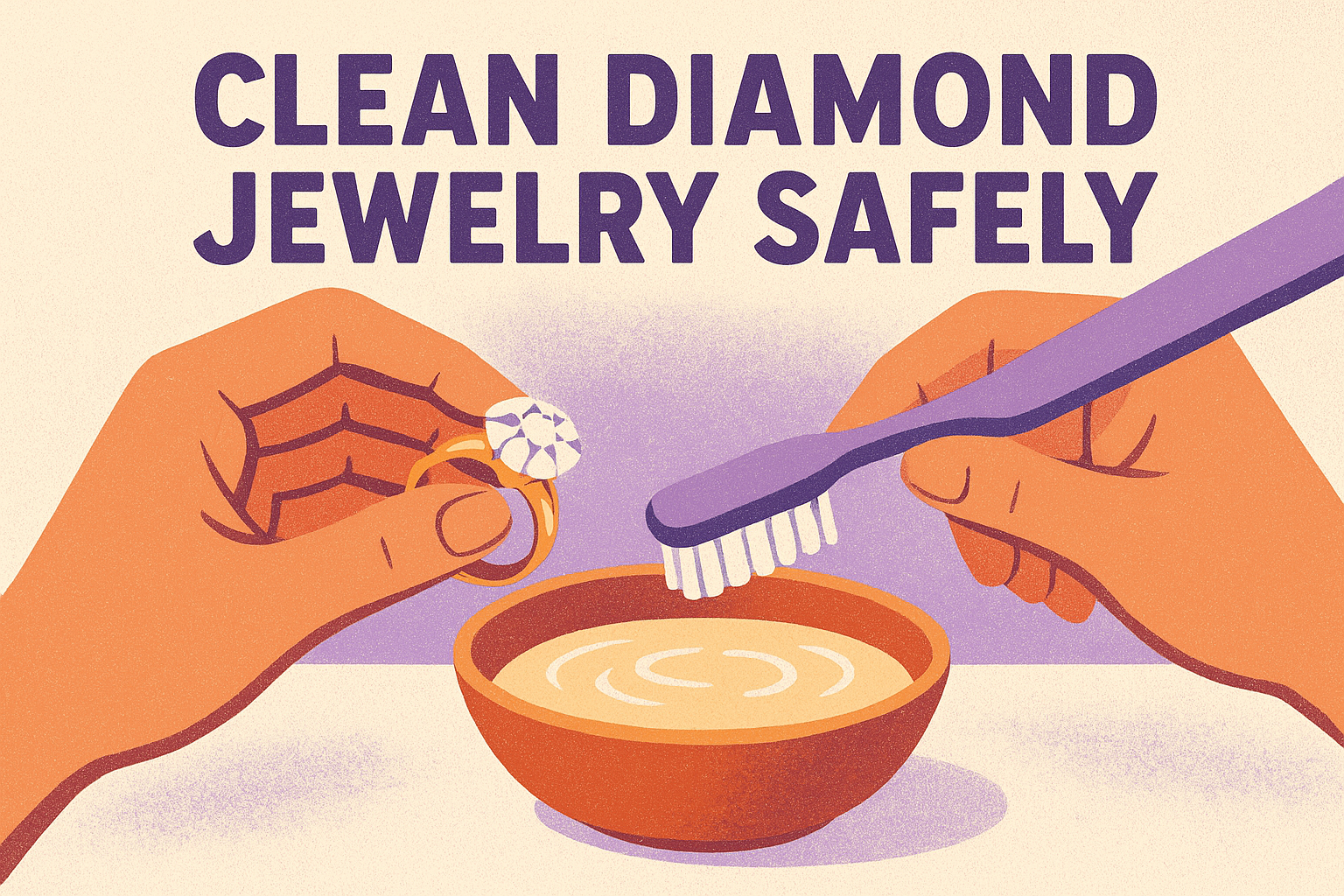
Pay special attention to the underside of diamond settings where dirt builds up and blocks light from entering the stone. This buildup makes diamonds look cloudy or dull even when the gold is clean. Brush gently under each stone if the setting allows access, which restores the brilliance that proper light reflection creates.
Diamond durability means you can clean these pieces monthly without damage, maintaining their sparkle between professional inspections.
Handle colored gemstones with caution
Soft and porous gemstones require the minimal water approach from Step 3 rather than soaking. Pearls, opals, emeralds, turquoise, coral, and lapis lazuli all absorb water that damages their internal structure or removes protective coatings. Use only a barely damp cloth to wipe the gold portions of these pieces, and avoid getting the stones wet entirely if possible.
Sapphires and rubies (both corundum family stones) tolerate water well like diamonds do, but check if they've been treated or enhanced before cleaning. Many colored stones undergo treatments that water damages permanently. When you're unsure about a specific gemstone's durability, wipe only the visible gold with a damp cloth and take the piece to a jeweler for professional cleaning rather than risk permanent damage from incorrect home care.
Step 5. Follow key dos and don'ts
Certain cleaning habits protect your jewelry while others cause irreversible damage you won't notice until it's too late. The difference between maintaining your gold's beauty and destroying it permanently often comes down to avoiding common household products that seem harmless but contain chemicals that corrode gold or strip away protective finishes. Following these specific guidelines ensures your jewelry stays beautiful for decades rather than months when you learn how to clean gold jewelry properly.
Essential dos for safe cleaning
Remove your jewelry before swimming, showering, or using household cleaners that contain chlorine or ammonia. Chlorine bleach and pool chemicals permanently discolor gold and weaken the metal structure over time, which causes prongs to break and chains to snap unexpectedly. Store pieces in their original pouches or a fabric-lined jewelry box where they won't scratch against each other or tangle together.
Follow these specific practices that extend your jewelry's lifespan:
- Clean monthly for pieces you wear daily (rings, bracelets, watches)
- Clean quarterly for occasional-wear items (necklaces, statement earrings)
- Dry completely before storing to prevent moisture damage
- Check settings every time you clean to catch loose stones early
- Visit a jeweler annually for professional inspection and deep cleaning
Professional jewelers spot structural problems during cleaning that you can't see at home, which prevents expensive repairs or lost stones.
Critical don'ts to avoid damage
Never use toothpaste despite internet advice claiming it cleans gold effectively. Toothpaste contains abrasive particles that scratch gold surfaces and wear away gold plating faster than years of normal wear. Baking soda creates the same scratching problem when applied as a paste, and vinegar's acidity damages certain gemstones and gold finishes permanently.
Avoid these common mistakes that damage jewelry:
- Don't use ultrasonic cleaners at home without confirming your stones tolerate the vibrations (pearls, emeralds, and opals crack from ultrasonic cleaning)
- Don't scrub with paper towels or tissues that contain wood fibers that scratch metal surfaces
- Don't clean over an open drain without a strainer or stopper in place
- Don't mix different cleaning chemicals together, as reactions create harmful fumes and unpredictable results on metal
- Don't clean damaged jewelry at home, since water weakens compromised settings further
Skip the "boiling water method" you'll find in online tutorials, because rapid temperature changes crack stones and loosen adhesives in vintage pieces. Extreme heat also warps delicate gold work and damages the tempering in gold alloys. Gentle room-temperature or warm water cleaning accomplishes everything you need without these risks.
Keep your gold shining
Regular maintenance keeps your gold jewelry looking brilliant for years without expensive professional services. The simple cleaning methods you've learned here protect your investment while restoring the sparkle that daily wear gradually dulls. Most pieces need attention only once per month for daily-wear items or quarterly for occasional pieces, which means you spend just minutes maintaining jewelry that lasts decades.
Store your cleaned pieces properly in fabric pouches or lined boxes where they won't scratch each other between wears. Remove jewelry before swimming, showering with harsh soaps, or handling cleaning products that contain chlorine or bleach. These small habits prevent the damage that forces you to replace pieces prematurely.
Now that you know how to clean gold jewelry safely at home, you can keep every piece in your collection looking new. Ready to add more stunning pieces that shine as bright as your newly cleaned favorites? Explore our bestselling gold jewelry collection for waterproof designs that resist tarnish and maintain their brilliance through daily wear.
Leave a comment