


You've probably seen it everywhere, on rings, chains, earrings, bracelets, but what is stainless steel jewelry, exactly? It's one of the most popular materials in fashion jewelry right now, and for good reason. Stainless steel offers a combination of durability and affordability that precious metals struggle to match at the same price point.
Still, popularity doesn't always equal understanding. Many shoppers wonder whether stainless steel tarnishes, if it's safe for sensitive skin, or how it actually compares to options like sterling silver or gold. These are fair questions, especially when you're spending money on pieces you plan to wear every single day, through workouts, showers, and everything in between.
At Ezra Gems, we build our jewelry collections around that exact idea: pieces that look great and hold up to real life. That's why we think understanding your materials matters before you buy. In this guide, we'll break down what stainless steel jewelry is made of, its key benefits, how to care for it, and the facts that separate it from the marketing hype. By the end, you'll know exactly whether stainless steel deserves a spot in your jewelry rotation.
What stainless steel jewelry is made of
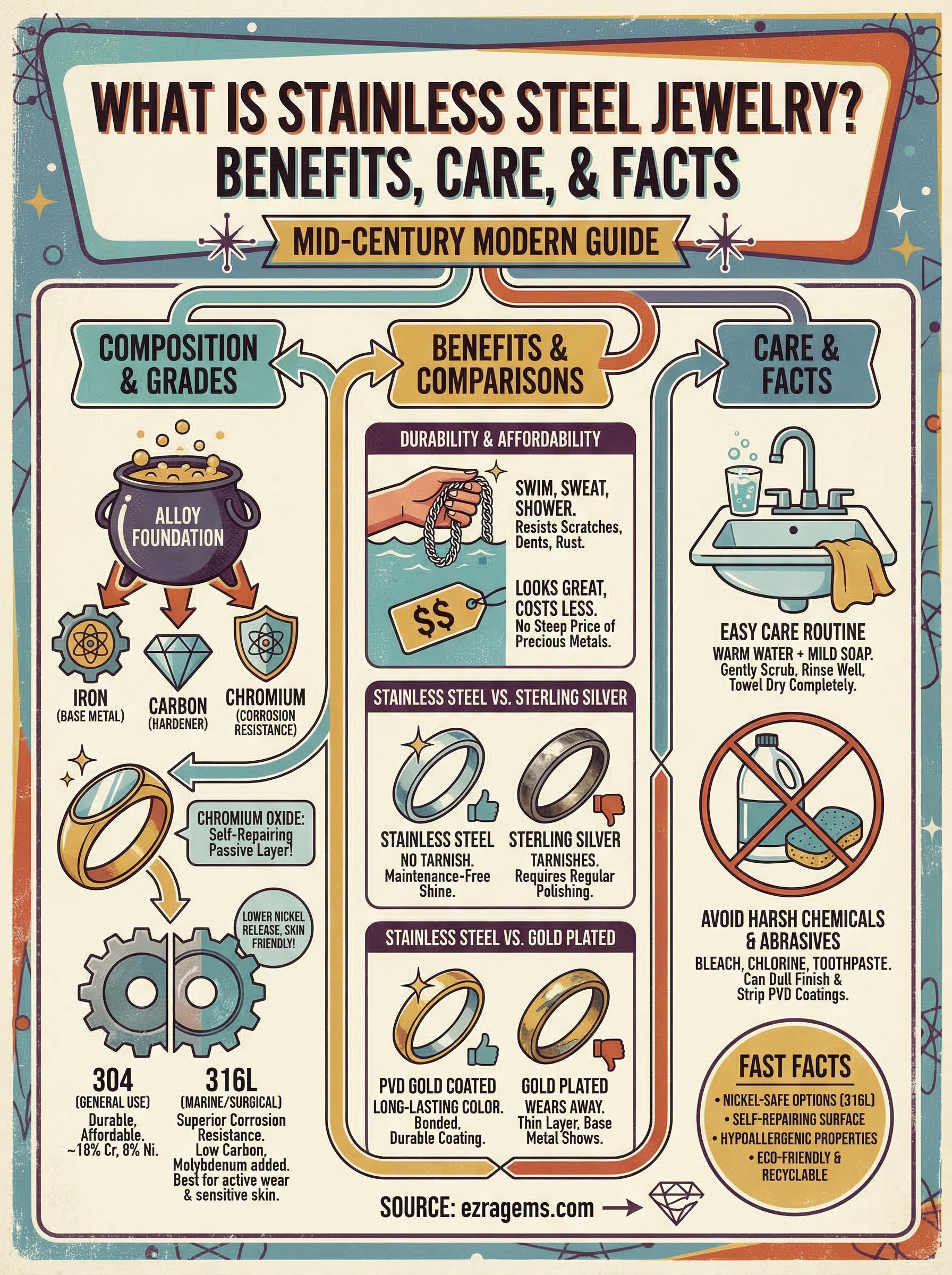
Stainless steel is not a single metal. It's an alloy, which means manufacturers combine multiple metals to create properties that none of them could achieve on their own. When you ask what is stainless steel jewelry made of, the short answer is: iron, carbon, and chromium at its core, with other elements sometimes added depending on the intended use and grade.
The base metals in the alloy
The foundation of stainless steel starts with iron, the most abundant structural metal on earth. On its own, iron is prone to rust and corrosion, which makes it a poor choice for jewelry. To fix that, manufacturers blend in carbon to harden the iron, and chromium to make it resistant to oxidation. The result is a material far stronger and more stable than iron alone.
Most stainless steel used in jewelry contains at least 10.5% chromium by weight, which is the minimum required for the material to qualify as "stainless." Some formulations go higher, reaching 18% or more. The higher the chromium content, the better the steel resists staining, pitting, and surface damage over time.
The chromium percentage is what separates stainless steel from regular steel. Without it, you'd end up with a ring that rusts within weeks.
How chromium creates corrosion resistance
When chromium contacts oxygen, it forms a thin, invisible layer on the surface of the metal called a chromium oxide passive layer. This layer acts as a barrier between the steel underneath and the environment around it, blocking moisture, air, and other corrosive elements from reaching the iron below.
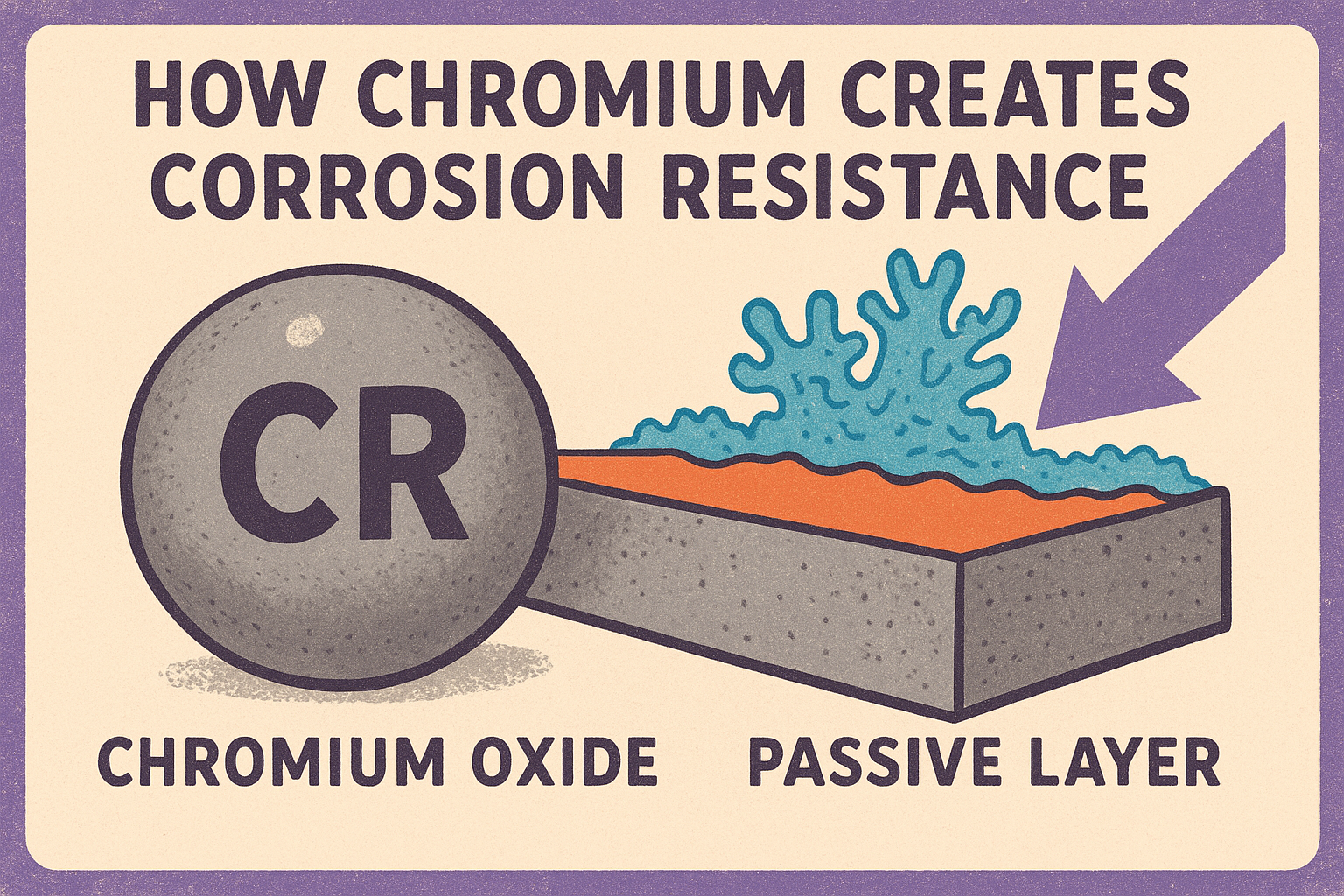
What makes this layer especially useful is that it's self-repairing. If you scratch the surface of a stainless steel ring, the chromium reacts with oxygen again and rebuilds the protective coating on its own. You don't need to do anything special. This is why stainless steel holds up so well through daily wear, sweat, water exposure, and contact with lotions or cleaning products.
What nickel does, and why it matters for your skin
Many stainless steel alloys also contain nickel, typically between 8% and 10%. Nickel improves the ductility of the alloy, making it easier to shape into intricate jewelry designs without cracking. It also contributes to the bright, smooth finish that makes stainless steel look polished rather than industrial.
For some wearers, nickel presents a concern. Nickel allergies affect a notable portion of the population, often causing contact dermatitis, which shows up as redness, itching, or irritation where the metal touches your skin. If you have sensitive skin, knowing the nickel content before you buy is genuinely important.
Fortunately, jewelry-grade stainless steel, particularly the 316L grade, contains a lower percentage of nickel compared to cheaper industrial steel, and its dense molecular structure means nickel ions leach out much more slowly. Many people with mild nickel sensitivity wear 316L stainless steel without any reaction at all. For those with a more serious allergy, nickel-free stainless steel options exist and are increasingly easy to find in the fashion jewelry market.
Understanding the composition of the metal gives you a much clearer picture of what you're actually putting on your body. The combination of iron, chromium, and controlled amounts of other elements is what makes stainless steel one of the most practical and reliable materials in modern jewelry making.
Grades and finishes used in stainless steel jewelry
Not all stainless steel is the same, and the grade used in your jewelry makes a real difference in how it performs over time. Manufacturers work with different formulations of the alloy, each with a specific composition and set of properties. For anyone asking what is stainless steel jewelry actually worth buying, the grade is one of the first details worth understanding before you spend anything.
304 vs 316L: the two most common grades
These two grades show up in the vast majority of stainless steel jewelry on the market. 304 stainless steel contains roughly 18% chromium and 8% nickel, making it durable and corrosion-resistant for general use. It's a cost-effective option you'll find in many budget pieces, and it holds up reasonably well under normal, everyday conditions.
316L stainless steel takes things further. The "L" stands for low carbon, and this grade also contains molybdenum, a metallic element added to improve resistance to chlorides and saltwater. That makes it significantly more resistant to pitting and corrosion than 304, which is why it's widely used in medical instruments and high-quality fashion jewelry. If you spend time swimming, sweating, or working with your hands regularly, 316L is the grade worth choosing.
316L stainless steel is sometimes called "surgical steel," but that term isn't regulated, so always look for the actual grade number when you shop.
Finishes and how they change the look
The grade determines durability, but the finish determines how your jewelry looks against your skin. Manufacturers apply different surface treatments to stainless steel that completely change its visual character without altering the core properties of the alloy underneath.
A polished finish gives stainless steel its classic mirror-like shine, clean and reflective, which works well for minimalist rings and chains. A brushed or matte finish uses fine abrasion to create a softer, more textured surface that hides light scratches better over time. Jewelry makers also apply PVD coating (Physical Vapor Deposition) to achieve colors like gold, rose gold, or black, bonding a thin metallic layer to the surface through a vacuum process. PVD-coated stainless steel offers better color longevity than traditional electroplating, though the coating can still wear through with very heavy use over time.
Why people choose stainless steel jewelry
When you look at what is stainless steel jewelry all about from a practical standpoint, the reasons people gravitate toward it come down to three consistent factors: it lasts, it doesn't irritate skin, and it gives you solid quality without a steep price. Each one of those factors addresses a real frustration people have experienced with cheaper fashion jewelry or overly expensive precious metals.
It holds up without special treatment
Most fashion jewelry demands something from you, special storage, avoiding water, skipping the gym, or applying a protective coating every few months. Stainless steel doesn't work that way. You can shower, sweat, and swim in it without worrying about the surface breaking down. The chromium oxide layer that protects the alloy rebuilds itself when damaged, which means the metal actively resists the conditions that ruin other pieces.
Durability also shows up in how stainless steel resists scratches and dents. It's a harder material than gold or silver, which means everyday contact with hard surfaces does less visible damage over time. For rings and bracelets especially, that hardness makes a noticeable difference in how the piece looks after a year of regular wear.
If you want jewelry you can put on and forget about, stainless steel is genuinely low-maintenance in a way that most materials aren't.
It works for sensitive skin
Nickel allergies are common, and cheap fashion jewelry often uses high-nickel alloys that cause redness and itching within hours of wearing. Jewelry-grade stainless steel, particularly 316L, has a dense structure that prevents nickel ions from leaching into your skin at meaningful levels. Many people with mild sensitivity wear it comfortably every day.
For anyone who has avoided fashion jewelry entirely because of past skin reactions, 316L stainless steel is often the first material they can actually wear without issues. That's a significant reason it has grown so popular in the fashion jewelry market over the past decade.
The cost stays reasonable
Precious metals like gold and platinum carry costs that reflect their scarcity, which means paying a premium even for simple everyday pieces. Stainless steel gives you a comparable look, strong durability, and skin-safe properties at a fraction of the price. You're not sacrificing quality by choosing it; you're simply choosing a material that fits daily life without requiring a big financial commitment.
Stainless steel vs silver and gold plated jewelry
When shoppers research what is stainless steel jewelry, they almost always want to know how it stacks up against the two most familiar alternatives: sterling silver and gold plated pieces. Each material has real strengths, but they also come with trade-offs that matter a lot depending on how and where you wear your jewelry.
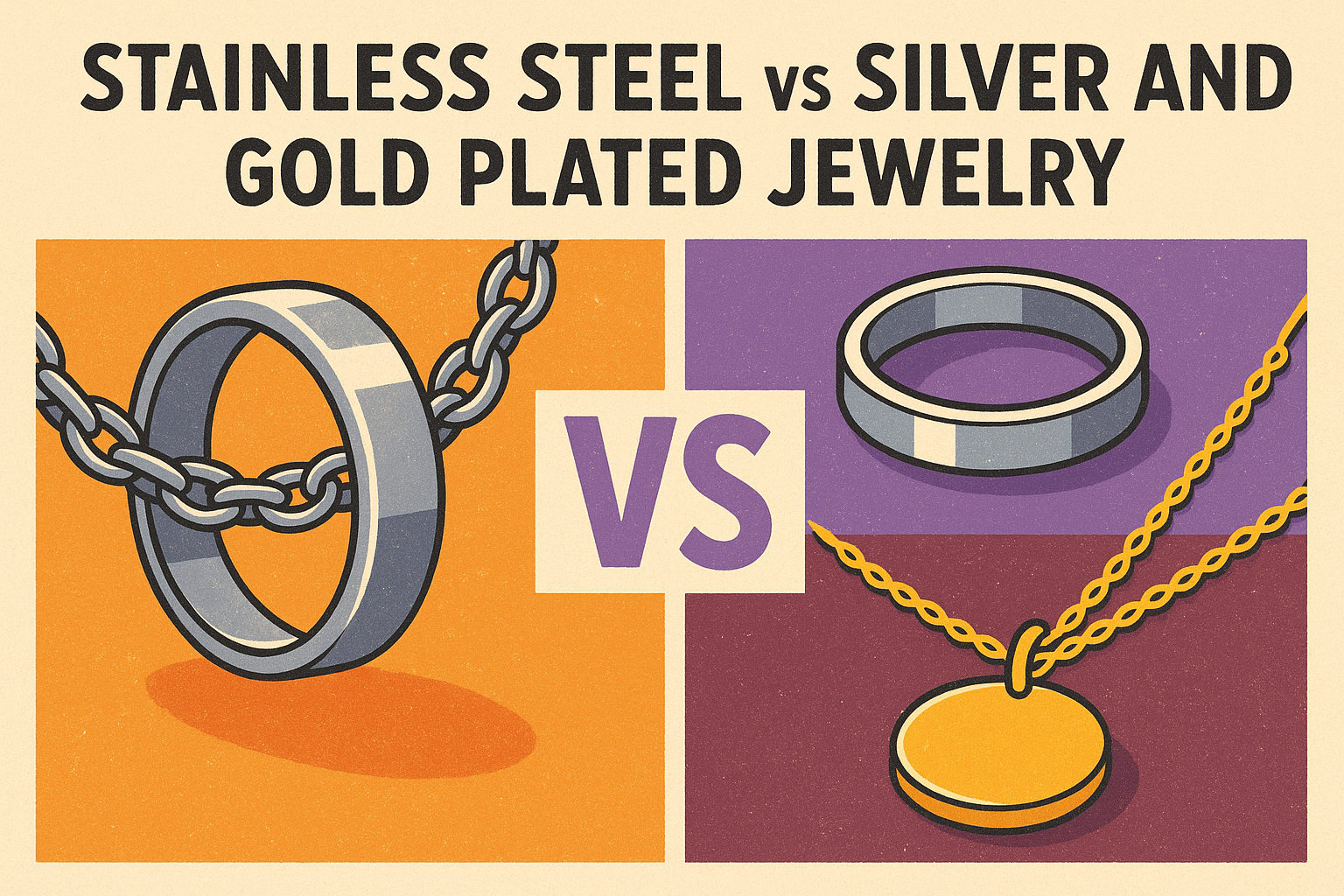
How stainless steel compares to sterling silver
Sterling silver is 92.5% pure silver mixed with other metals, usually copper, to add strength. It's a genuine precious metal with a well-earned reputation for looking beautiful, but that reputation comes with a catch: sterling silver tarnishes. Exposure to air, moisture, and sulfur compounds causes silver to darken and lose its brightness, which means regular polishing is part of owning it.
Stainless steel doesn't tarnish at all, which means you get a consistent, maintenance-free shine that sterling silver simply can't match without ongoing effort.
Stainless steel is also harder than sterling silver, making it more resistant to scratches and surface damage from daily wear. Silver wins on prestige and resale value, but for anyone who wants a piece they can wear every day without extra maintenance, stainless steel is the more practical choice.
How stainless steel compares to gold plated jewelry
Gold plated jewelry starts with a base metal, often brass or copper, covered with a thin layer of actual gold applied through electroplating. The gold layer gives the piece its color and initial shine, but that layer is thin, typically between 0.5 and 2.5 microns, and it wears away over time through friction, sweat, and regular contact.
Once the gold layer thins, the base metal underneath starts to show, which can lead to discoloration and skin irritation from the copper or brass below. Stainless steel with a PVD gold coating holds its color significantly longer because PVD bonds the coating at a molecular level, creating a harder and more adhesive surface than traditional electroplating can achieve.
The practical difference comes down to longevity. Gold plated pieces require replating or replacement to stay looking fresh, while stainless steel jewelry stays consistent with minimal care. If you want the gold look without the ongoing upkeep cost, stainless steel with PVD coating is the stronger long-term investment for everyday wear.
How to care for stainless steel jewelry
One of the biggest selling points of stainless steel is how little maintenance it actually needs. But low-maintenance doesn't mean zero maintenance. Knowing a few basic care habits keeps your pieces looking sharp for years, and if you've ever wondered what is stainless steel jewelry like to own long-term, the honest answer is that it's about as easy to maintain as any material in fashion jewelry gets.
Cleaning stainless steel at home
Cleaning stainless steel jewelry at home takes less than five minutes and requires nothing special. Warm water and a small drop of mild dish soap is all you need for routine cleaning. Dip a soft cloth or a soft-bristle toothbrush into the soapy water, gently scrub the piece, and rinse it thoroughly under clean water. Dry it completely with a lint-free cloth before storing or wearing it again.
Leaving water to air-dry on the surface can leave mineral deposits, especially in hard water areas, so always towel-dry your pieces after rinsing.
For deeper cleaning or pieces with intricate textures, an ultrasonic cleaner works well on plain stainless steel, though you should avoid using one on pieces with PVD coatings or gemstone settings, since the vibration can loosen adhesive or degrade soft stones over time.
What to avoid
Even though stainless steel handles daily wear remarkably well, a few specific things do cause damage over time. Harsh chemicals like bleach, chlorine, and acetone are the main culprits. They won't rust the steel, but they can dull the surface finish and strip PVD coatings faster than normal wear would. Take your jewelry off before swimming in heavily chlorinated pools and before using cleaning products that contain strong acids or solvents.
Abrasive materials are also worth avoiding. Steel wool, rough scrubbing pads, and toothpaste all scratch the polished surface of stainless steel, especially on mirror-finished pieces. Once you introduce fine scratches, a matte or dull appearance can develop that's difficult to reverse without professional polishing. Storing your pieces in a soft pouch or a lined jewelry box helps prevent scratches from contact with harder materials when you're not wearing them.
Final thoughts
Now you have a complete picture of what is stainless steel jewelry and why it has become such a reliable choice for everyday wear. The material holds up through water, sweat, and friction without demanding much in return. It works for sensitive skin, resists tarnish, and stays looking clean with a simple wipe-down, which is more than most fashion jewelry can honestly claim.
Whether you're comparing it to sterling silver, gold plated pieces, or deciding on a grade, the key is knowing what you're buying and matching the material to how you actually live. Stainless steel earns its spot in your collection not because of hype, but because it consistently delivers where other materials fall short.
If you're ready to find pieces built for daily wear that look great and last, browse the bestsellers at Ezra Gems and find something worth reaching for every morning.
Leave a comment