


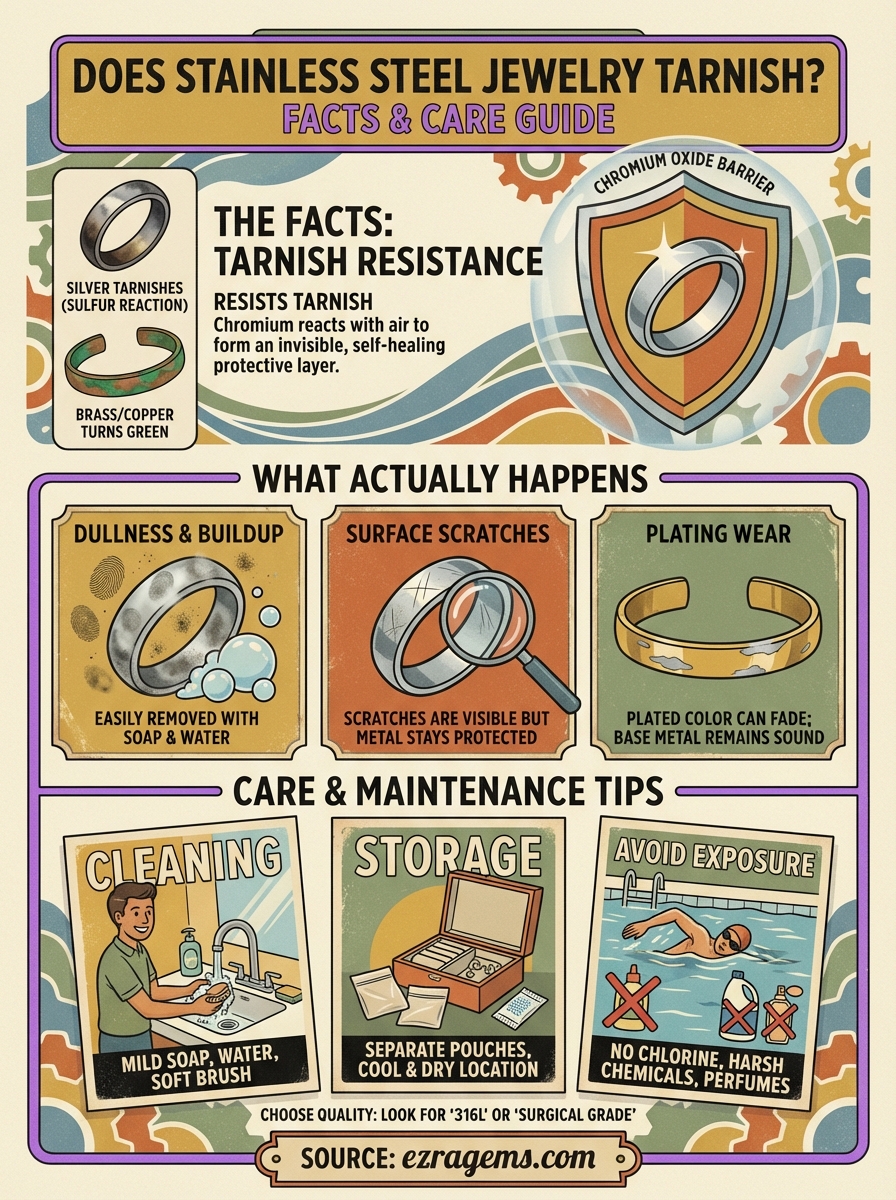
Tarnish happens when metal reacts with air, moisture, or chemicals and develops a dull film or discoloration on its surface. You've probably seen this with silver rings that turn dark or brass that gets a greenish tint. Stainless steel jewelry resists tarnishing because it contains chromium, which forms an invisible protective barrier on the metal's surface. This barrier stops oxygen and moisture from breaking down the material underneath. While stainless steel won't tarnish like silver or turn your skin green like copper, it can lose some shine over time if exposed to harsh conditions.
This guide breaks down what really happens to stainless steel jewelry over time and when you might see changes. You'll learn why people still worry about tarnish with this metal, how to keep your pieces looking new, and what conditions can cause discoloration. We'll also compare stainless steel to sterling silver and explain what makes some pieces last longer than others. By the end, you'll know exactly how to care for your stainless steel jewelry and what to look for when you buy new pieces.
Why stainless steel tarnish myths persist
Many people assume all jewelry eventually tarnishes because they've seen it happen with other metals they own. You might have watched your silver necklace darken or noticed a brass bracelet turn green on your wrist. These common experiences create a mental shortcut where all affordable jewelry gets lumped into the same category. When someone asks "does stainless steel jewelry tarnish," they're often drawing from these past disappointments with other materials rather than understanding what makes stainless steel different.
The confusion with other jewelry metals
You probably own jewelry made from several different metals, and distinguishing between them at a glance takes practice. Sterling silver, brass, copper, and stainless steel can all have similar colors and weights. When you see one piece tarnish, your brain assumes the others will follow the same pattern. This confusion intensifies when retailers don't clearly label what metal they use. Shopping experiences where salespeople push "tarnish-free" silver or brass treatments reinforce the belief that all metal jewelry needs special protection.
Most jewelry wearers never learn the chemical differences between metals, so they expect similar behavior from all their pieces.
Experience with plated pieces
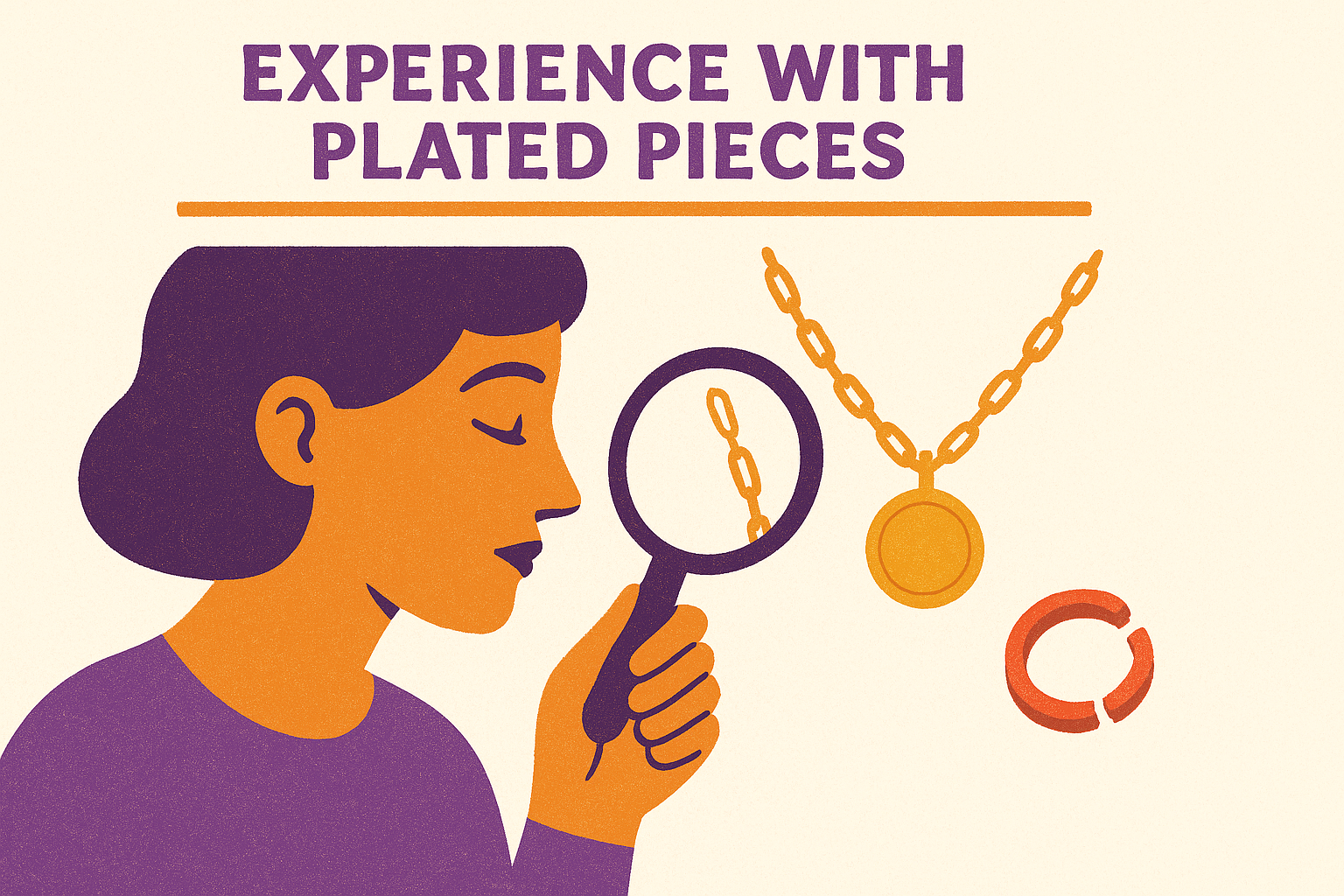
Your past with plated jewelry shapes your expectations more than you realize. Gold-plated or silver-plated items use a thin coating over a base metal, and this coating wears off within months of regular use. You've probably seen the base metal peek through on a plated ring or watched a necklace lose its shine after a few wears. When you hear about stainless steel jewelry, these memories surface automatically. The jewelry industry hasn't helped either, since many brands sell "stainless steel" pieces that actually have plating on top. These plated versions do fade and discolor, which confirms your suspicion that all affordable jewelry eventually fails.
How to care for stainless steel jewelry
Your stainless steel pieces stay looking new with minimal effort compared to other metals. Basic cleaning with soap and water removes oils and buildup that dull the surface, and storing pieces separately prevents scratches from other jewelry. While you don't need to worry about whether does stainless steel jewelry tarnish the way silver does, regular maintenance keeps the protective chromium layer intact and your jewelry shining.
Daily cleaning routine
Wipe your stainless steel jewelry with a soft cloth after each wear to remove skin oils, sweat, and cosmetic residue. This quick habit takes five seconds but prevents buildup that makes jewelry look dull. For a deeper clean once a week, mix warm water with a few drops of mild dish soap and use a soft toothbrush to gently scrub the piece. Rinse under running water and dry completely with a lint-free cloth before putting it away.
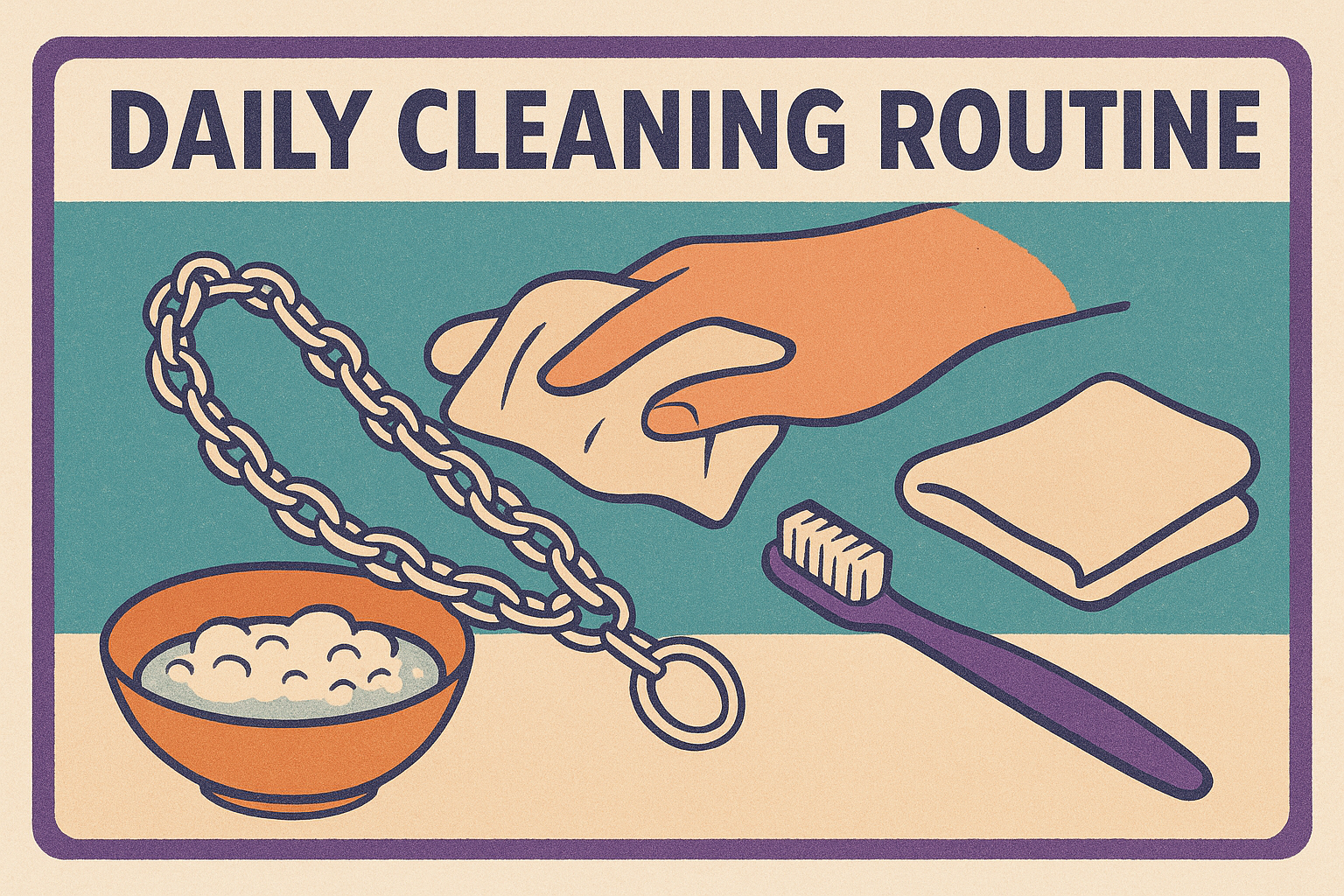
Regular cleaning maintains the chromium layer that protects stainless steel from corrosion and keeps your jewelry looking brand new.
You can create a cleaning solution that works just as well as expensive jewelry cleaners. Combine equal parts water and white vinegar in a bowl, soak your stainless steel pieces for 15 minutes, then scrub gently with a soft brush. This method removes stubborn residue without scratching the metal surface or damaging any stones. Never use abrasive materials like paper towels, rough sponges, or toothpaste that contain micro-scrubbing particles.
Storage and protection
Store each piece in a separate compartment or soft pouch to prevent surface scratches from metal-on-metal contact. Your jewelry box should stay in a cool, dry location away from bathroom humidity. Moisture doesn't cause tarnish on stainless steel, but excessive humidity can weaken the protective layer over years of exposure. Silica gel packets in your storage area absorb excess moisture and provide extra protection.
Keep your stainless steel jewelry away from direct sunlight and extreme temperature changes. Remove pieces before swimming in chlorinated pools or entering hot tubs, since chlorine breaks down the chromium layer faster than normal wear. Take off your jewelry before applying hairspray, perfume, or lotion, which contain chemicals that can react with the metal surface.
What to avoid
Never expose your stainless steel jewelry to bleach, ammonia, or harsh cleaning products that strip away the protective chromium layer. These chemicals cause permanent damage that makes the metal vulnerable to corrosion and discoloration. You should also avoid wearing jewelry during intense workouts where it contacts gym equipment coated in cleaning solutions. Remove rings and bracelets before doing dishes or using household cleaners, even though stainless steel handles water well.
Abrasive polishing compounds and jewelry cleaning machines designed for gold scratch stainless steel rather than improve its appearance. Skip ultrasonic cleaners unless the manufacturer specifically recommends them for your piece. Your stainless steel jewelry maintains its finish best with gentle hand cleaning and proper storage rather than aggressive treatments meant for other metals.
What actually happens to stainless steel
Your stainless steel jewelry contains at least 10.5% chromium mixed with iron and other elements, which fundamentally changes how the metal behaves. The chromium reacts with oxygen in the air immediately after manufacturing and creates a thin, invisible layer of chromium oxide across the entire surface. This layer acts like a shield that prevents oxygen and moisture from reaching the iron underneath. When you wonder does stainless steel jewelry tarnish, you're really asking if this protective barrier fails, and under normal conditions, it doesn't.
The self-healing property
Chromium oxide automatically repairs itself whenever you scratch or damage the surface of your stainless steel jewelry. The moment you create a new surface by scratching through the protective layer, fresh chromium underneath reacts with oxygen and forms a new barrier within seconds. You won't see this happen since the process occurs at a molecular level, but this constant regeneration explains why your stainless steel pieces resist corrosion year after year. Other metals don't have this ability, which is why silver tarnishes and copper turns green when their surfaces get damaged.
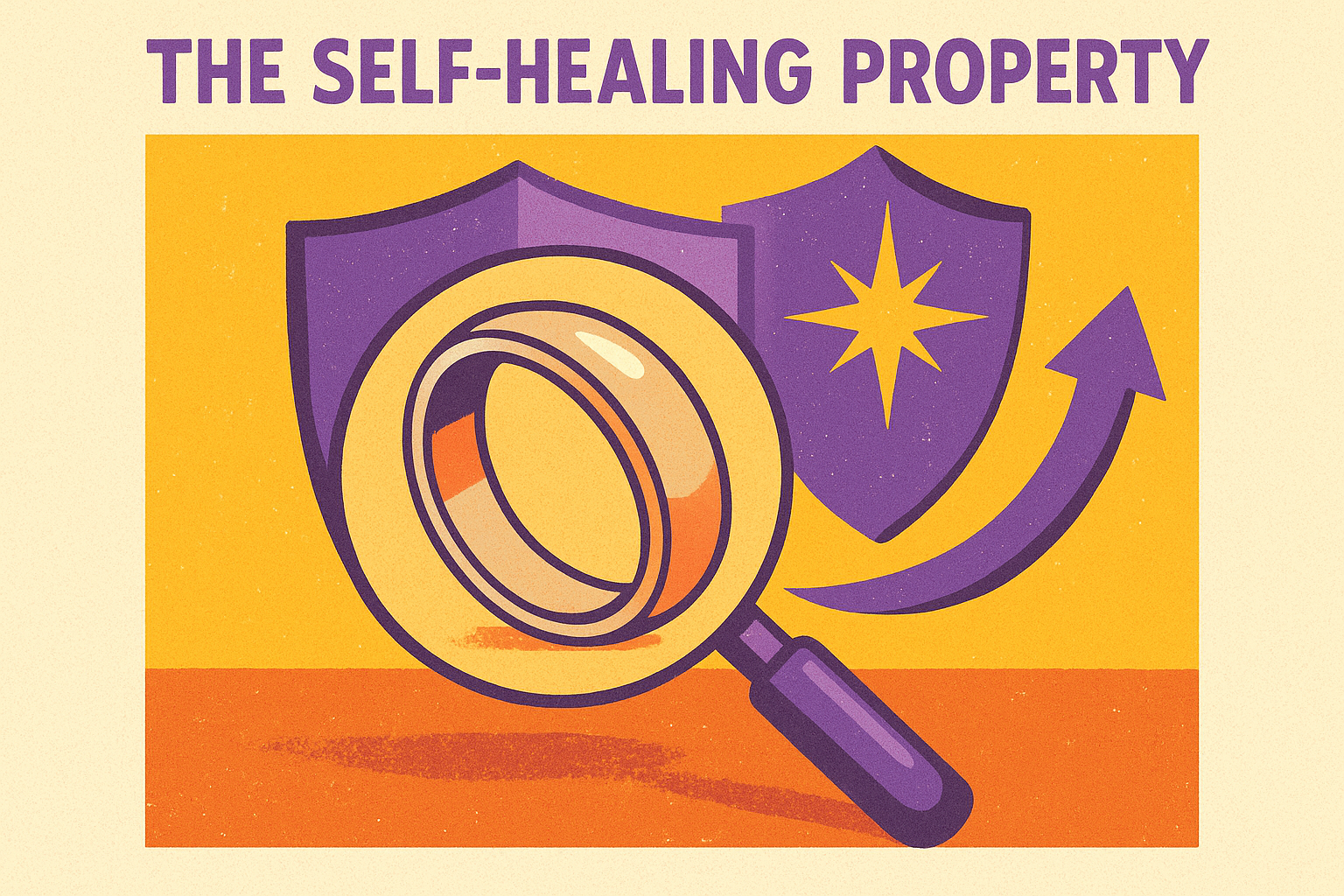
The self-repairing chromium oxide layer makes stainless steel fundamentally different from other jewelry metals that permanently degrade when their protective coatings wear off.
Your jewelry maintains this protective quality as long as enough chromium remains in the alloy. Regular wear actually helps maintain the barrier because friction from your skin and clothing exposes fresh chromium that bonds with oxygen. This differs completely from plated jewelry, where wear removes the protective layer rather than strengthening it.
What you see instead of tarnish
Stainless steel develops a dull appearance over time from accumulated oils, dead skin cells, and cosmetic residue rather than chemical tarnish. You might notice your ring looks less shiny after a few weeks of wear, but a simple cleaning removes this buildup and reveals the original finish underneath. The metal itself hasn't changed or corroded like tarnished silver. Think of it like a window that needs washing rather than wood that's rotting.
Surface scratches become more visible as your jewelry ages, which can make pieces appear worn even when the metal remains perfectly sound. These scratches don't compromise the protective chromium oxide layer since it reforms immediately. You can polish out minor scratches with a jewelry polishing cloth designed for stainless steel, though deep scratches require professional buffing. The metal underneath stays protected regardless of visible surface wear.
When stainless steel can discolor or fade
Stainless steel jewelry maintains its appearance through normal wear, but specific conditions can break down the protective chromium layer and cause discoloration. You need to understand these situations so you can avoid them and keep your pieces looking new. While the question "does stainless steel jewelry tarnish" has a no answer for pure metal, certain exposures create permanent damage that resembles tarnishing in other metals.
Chemical exposure damage
Chlorine attacks the chromium oxide layer faster than any other common chemical you encounter. Swimming pools, hot tubs, and bleach-based cleaning products all contain chlorine that breaks down the protective barrier on your stainless steel. You'll notice a dull, grayish appearance or dark spots where the chlorine made contact. This damage doesn't reverse itself like minor scratches do, since the chemical reaction changes the metal's surface permanently.
Salt water creates a similar problem through extended exposure. Your beach vacation won't ruin your jewelry after one swim, but repeated contact with ocean water can cause pitting and discoloration over weeks or months. The salt accelerates oxidation beyond what the chromium layer can repair. Rinse your stainless steel pieces with fresh water immediately after any saltwater exposure to minimize damage.
Harsh chemicals permanently damage stainless steel jewelry by breaking down the protective chromium oxide layer faster than it can regenerate.
Plated stainless steel pieces
Jewelry advertised as "gold stainless steel" or "rose gold stainless steel" uses a thin plating over the base metal, and this coating wears off like any plated jewelry. You bought stainless steel partly because it resists tarnish, but the gold or colored plating fades within months of regular wear. The base stainless steel underneath remains fine, but your jewelry looks worn and two-toned where the plating has rubbed away. This creates confusion about whether stainless steel itself fades.
Low-quality alloy problems
Some manufacturers use less chromium than the 10.5% minimum needed for proper corrosion resistance, which creates jewelry that looks like stainless steel but behaves differently. These pieces can develop rust spots, turn your skin green, or show discoloration after a few wears. You won't know the alloy quality by looking at jewelry in most cases, which makes buying from reputable sources critical. Budget jewelry that seems too affordable often uses substandard alloys that can't maintain the protective chromium layer properly.
Stainless steel vs silver and other metals
Your choice between stainless steel and other jewelry metals depends on understanding how each material behaves over time and what maintenance they require. Stainless steel outlasts most affordable metals in durability while sterling silver offers a traditional precious metal appeal with higher maintenance needs. When you compare does stainless steel jewelry tarnish against how other metals age, you discover trade-offs between cost, appearance, and care requirements that affect your daily wear experience.
Silver's tarnishing problem
Sterling silver contains 92.5% pure silver mixed with copper, and this copper reacts with sulfur compounds in the air to create black tarnish within weeks. You need to polish your silver jewelry regularly to maintain its shine, and even stored pieces develop tarnish from humidity and air exposure. Silver turns your skin black or green when the copper oxidizes against your body chemistry, which never happens with stainless steel. Your silver rings require removal before showering, swimming, or applying cosmetics, while stainless steel handles all these activities without damage.
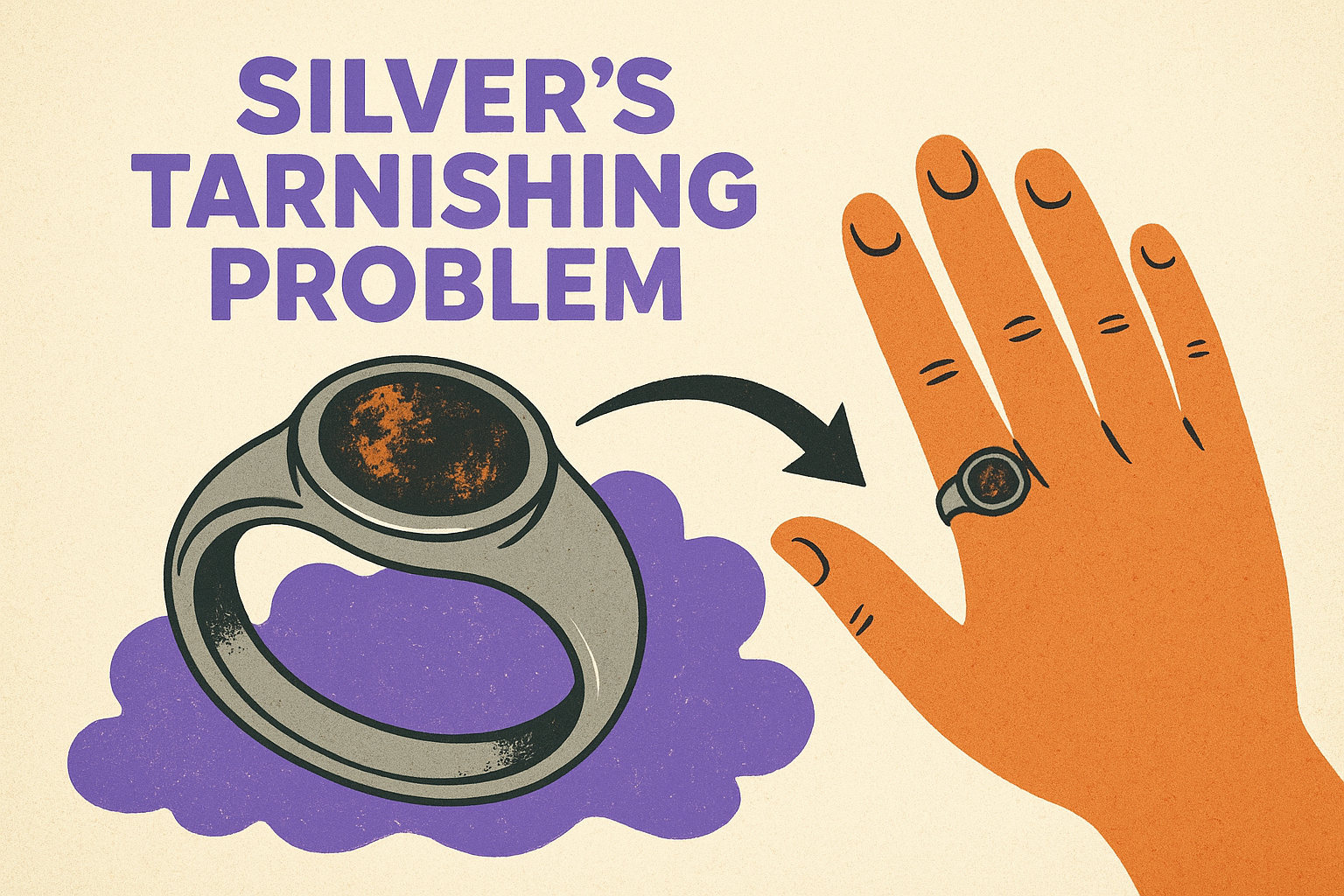
Sterling silver demands constant maintenance and careful handling that stainless steel eliminates, making it impractical for everyday pieces you want to wear continuously.
Gold plated base metals
Brass and copper base metals with gold plating give you a gold appearance at a fraction of solid gold prices, but the thin plating wears off within months of regular contact with skin and clothing. You'll see green discoloration on your skin where copper oxidizes, and the jewelry itself shows dark spots where the base metal breaks through. These pieces cost less than stainless steel initially but need replacement after brief wear. Gold-plated stainless steel solves some problems by using a non-reactive base, though the plating still fades faster than solid stainless steel maintains its finish.
Pure gold and platinum
14k and 18k gold jewelry contains alloys that make the pure gold harder, but these pieces still scratch easily and dent from impacts that stainless steel shrugs off. Gold never tarnishes or reacts with your skin, giving you similar hypoallergenic properties to stainless steel at ten times the cost. Platinum resists scratches better than gold but costs even more and develops a patina that dulls its shine over years. Both precious metals require professional polishing to restore their original luster, while you can clean stainless steel pieces at home with soap and water. Your budget determines whether the prestige of precious metals justifies their expense and maintenance needs compared to stainless steel's practical performance.
How to choose high quality stainless pieces
Your jewelry shopping requires attention to specific details that separate quality stainless steel from inferior products. Knowing what to look for prevents disappointment with pieces that discolor or irritate your skin after a few wears. When you ask yourself does stainless steel jewelry tarnish and then shop accordingly, you avoid low-grade alloys that behave more like cheap costume jewelry than true stainless steel.
Check the grade marking
Look for "316L" or "surgical grade stainless steel" stamped on the piece or listed in the product description. This specific alloy contains higher chromium and nickel content that resists corrosion better than lower grades. Grade 304 stainless steel works fine for most jewelry, though 316L performs better against chlorine and salt exposure. You won't find these markings on cheap fashion jewelry since manufacturers skip proper alloy standards. Reputable brands state the exact grade they use, while vague terms like "stainless steel alloy" signal potential quality issues.
High-quality stainless steel jewelry clearly identifies its grade, giving you confidence in the metal's composition and performance over time.
Examine the finish quality
Run your finger along the surface to feel for rough spots or uneven areas that indicate poor manufacturing. Quality stainless steel pieces have smooth, consistent finishes without visible pitting or color variations across the metal. The weight should feel substantial for the size, since manufacturers sometimes plate thin base metals and market them as stainless steel. Check any stones or decorative elements for secure settings that won't fall out with regular wear. Professional jewelers inspect pieces under magnification, but your careful visual inspection catches most quality problems before you buy.
Read seller guarantees
Companies confident in their stainless steel quality offer warranties or satisfaction guarantees that cover manufacturing defects and premature wear. You want sellers who accept returns without requiring proof that you followed specific care instructions. Read customer reviews specifically mentioning how pieces held up over months of wear rather than initial impressions. Complaints about skin reactions, discoloration, or breakage reveal quality issues that product descriptions hide. Brands specializing in stainless steel jewelry typically provide better quality than general fashion retailers adding a few stainless pieces to their inventory.
Final thoughts
You now know that does stainless steel jewelry tarnish remains a no for properly made pieces with adequate chromium content. Your stainless steel jewelry maintains its appearance through years of daily wear without the tarnishing issues that plague silver or the fading problems of plated metals. Basic cleaning with soap and water keeps pieces looking new, and proper storage prevents the few problems stainless steel can develop from harsh chemicals or low-quality alloys. Your investment in quality stainless steel jewelry pays off through minimal maintenance and lasting beauty that other affordable metals can't match. Browse our collection of bestselling pieces that combine fashion-forward designs with the durability you need for everyday wear.
Leave a comment