


You bought a stainless steel ring or necklace, and now you're wondering: how long does stainless steel jewelry last before it starts looking rough? It's a fair question, especially when you've been burned by cheap pieces that turned green or flaked apart within a few weeks.
Here's the short answer: solid stainless steel jewelry can last decades with minimal care. But that timeline shifts depending on the grade of steel, whether it's plated, and how you treat it day to day. A piece you shower in daily won't age the same as one that sits in a jewelry box.
At Ezra Gems, we build our collections around jewelry that holds up to real life, sweat, showers, and all. That's why we get this question a lot. Below, we'll break down exactly what affects stainless steel's lifespan, how gold-plated stainless steel compares to solid versions, and the simple care steps that keep your pieces looking fresh for years instead of months.
What stainless steel jewelry is and why it lasts
Stainless steel is a metal alloy built from iron, carbon, and a minimum of 10.5% chromium. That chromium content is what separates it from regular steel. When chromium meets oxygen in the air, it forms a thin, invisible layer on the surface called a passive film. This layer shields the metal from rust, stains, and corrosion, and it rebuilds itself automatically if the surface gets scratched or scuffed during normal wear.
The steel grade that makes the difference
Not all stainless steel is equal. Jewelry is typically made from 316L or 304 grade stainless steel. 316L is the higher standard, often called "surgical steel" or "marine grade." It contains molybdenum, an element that adds significant resistance to chloride corrosion from saltwater, sweat, and pool water. If you're researching how long does stainless steel jewelry last, the grade of steel in the piece is one of the first things worth checking.
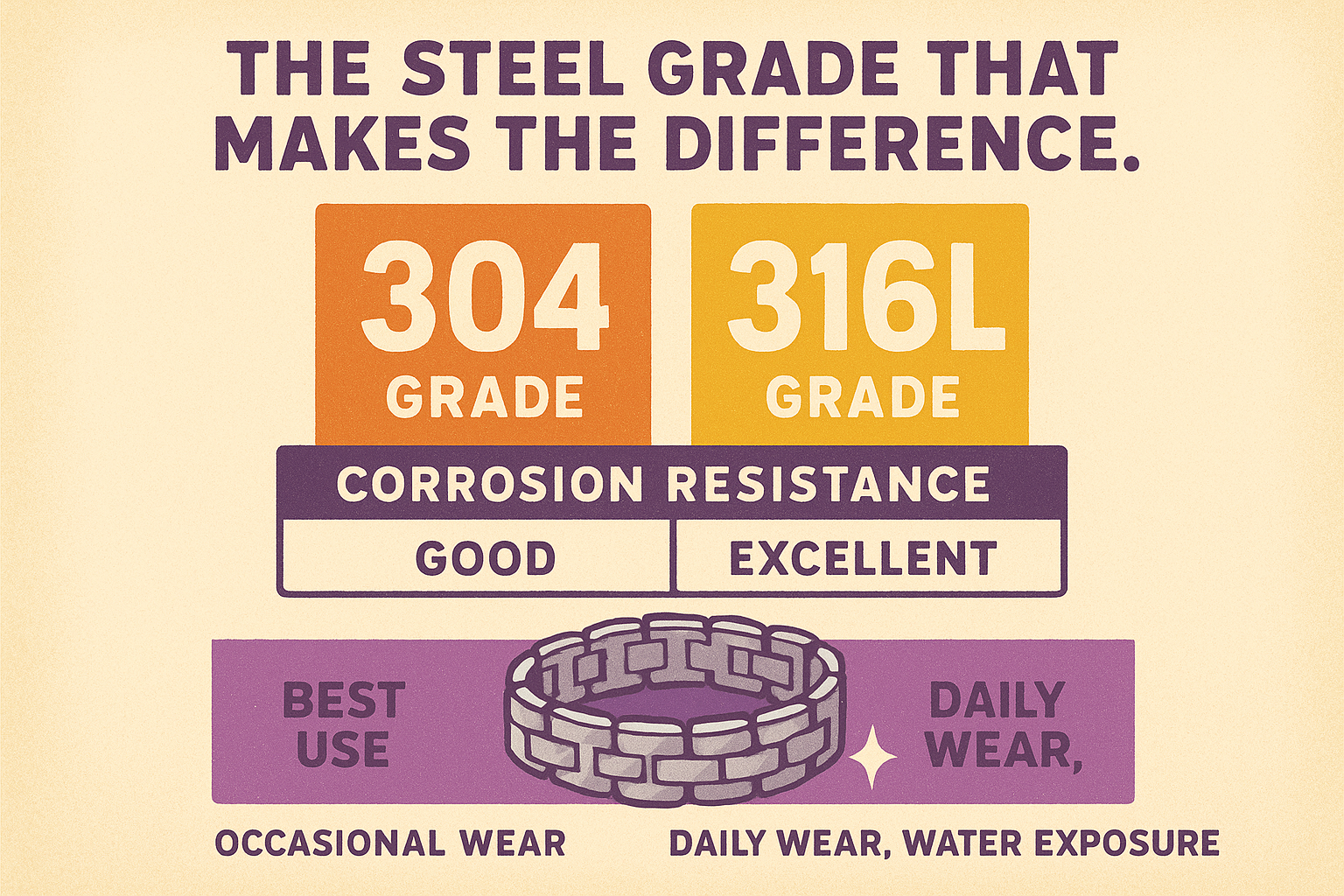
316L stainless steel is the benchmark for jewelry designed to handle daily wear, water exposure, and direct skin contact.
| Feature | 304 Grade | 316L Grade |
|---|---|---|
| Molybdenum | No | Yes (~2-3%) |
| Corrosion resistance | Good | Excellent |
| Best use | Occasional wear | Daily wear, water exposure |
| Skin sensitivity risk | Low | Very low |
Why stainless steel resists corrosion
The passive chromium oxide layer is the core reason stainless steel outlasts most other affordable metals. Unlike brass or copper, which react visibly with moisture and skin oils, stainless steel's surface is largely chemically inert. That means it doesn't oxidize the way other metals do, which is why you won't see the green skin marks or flaking finish that show up with lower-quality pieces over time.
Your body chemistry plays a real role in jewelry lifespan. Sweat contains salt and acids that degrade metals consistently with regular contact. Stainless steel handles this far better than gold-filled or brass-based alternatives, which is exactly why it's become a go-to base metal for everyday jewelry that people actually wear instead of treat like something fragile.
How long stainless steel jewelry lasts by type
The type of stainless steel piece you own matters as much as how you care for it. Solid stainless steel and gold-plated stainless steel have very different lifespans, and knowing the difference helps you set realistic expectations before you buy.
Solid stainless steel
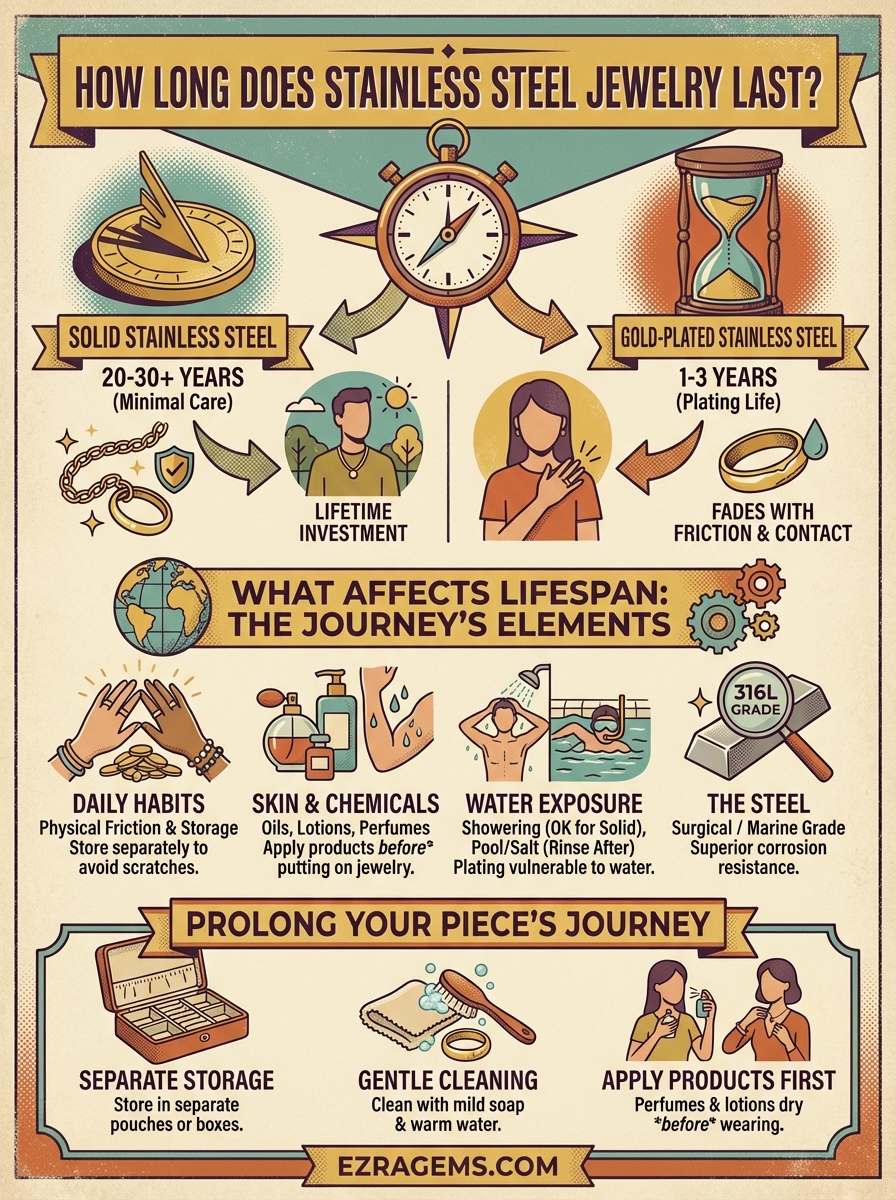
Solid stainless steel jewelry is the most durable option available for everyday wear. With basic care, pieces made from 316L grade steel can last 20 to 30 years or more without significant signs of wear. The metal itself won't corrode, flake, or tarnish under normal conditions, which makes it a strong long-term investment for rings, necklaces, and bracelets you plan to wear regularly.
Solid 316L stainless steel jewelry is genuinely built to last a lifetime with minimal upkeep.
Gold-plated stainless steel
Gold-plated stainless steel uses a solid steel base with a thin layer of gold applied over the surface through an electroplating process. The base will not corrode, but the gold layer itself wears down over time from friction, moisture, and skin contact. A quality plating can last 1 to 3 years with regular wear before it starts to fade or thin out in high-contact areas like ring bands and bracelet clasps.
| Type | Expected Lifespan | Tarnish Risk |
|---|---|---|
| Solid stainless steel | 20+ years | Very low |
| Gold-plated stainless steel | 1 to 3 years (plating) | Low to moderate |
How long does stainless steel jewelry last ultimately depends on which version you own and your daily habits. Both types outlast most fashion metals, but solid steel delivers the longest lifespan by a wide margin.
What affects lifespan the most
Even the highest-grade stainless steel won't perform at its best if you expose it to the wrong conditions repeatedly. How long does stainless steel jewelry last comes down to a few controllable factors you deal with every single day, and understanding them puts you in control of the timeline.
Your daily habits
Physical friction is one of the biggest factors shortening the life of any jewelry, especially plated pieces. Rings and bracelets take the most abuse because they make constant contact with surfaces, fabrics, and other jewelry. Storing pieces together in a pile causes micro-scratches that dull the finish and wear down plating faster than regular wear alone.
Keeping each piece in a separate pouch or compartment is the single easiest way to extend its lifespan.
Chemicals and your skin
Skin oils, lotions, and perfumes break down the surface of jewelry gradually, with plated finishes suffering the most visible damage. Applying products directly to your jewelry, even accidentally, speeds up the degradation of any gold layer. Your natural sweat acidity also matters here since everyone's body chemistry differs slightly, and people with higher acid levels in their sweat will notice faster wear on plated pieces over time.
The products you use most often around your jewelry have a direct impact on the finish. Avoiding contact with the items below when possible keeps both solid and plated pieces looking sharp for longer:
- Perfume and body spray
- Sunscreen and lotions
- Cleaning products and bleach
- Chlorinated pool water
Can you shower or swim with stainless steel jewelry
Solid stainless steel handles water exposure better than almost any other jewelry metal at its price point. Showering, sweating, and light water contact won't damage the base metal itself, which means 316L stainless steel pieces can stay on your wrist or around your neck through a daily shower without corroding or losing their finish over time.
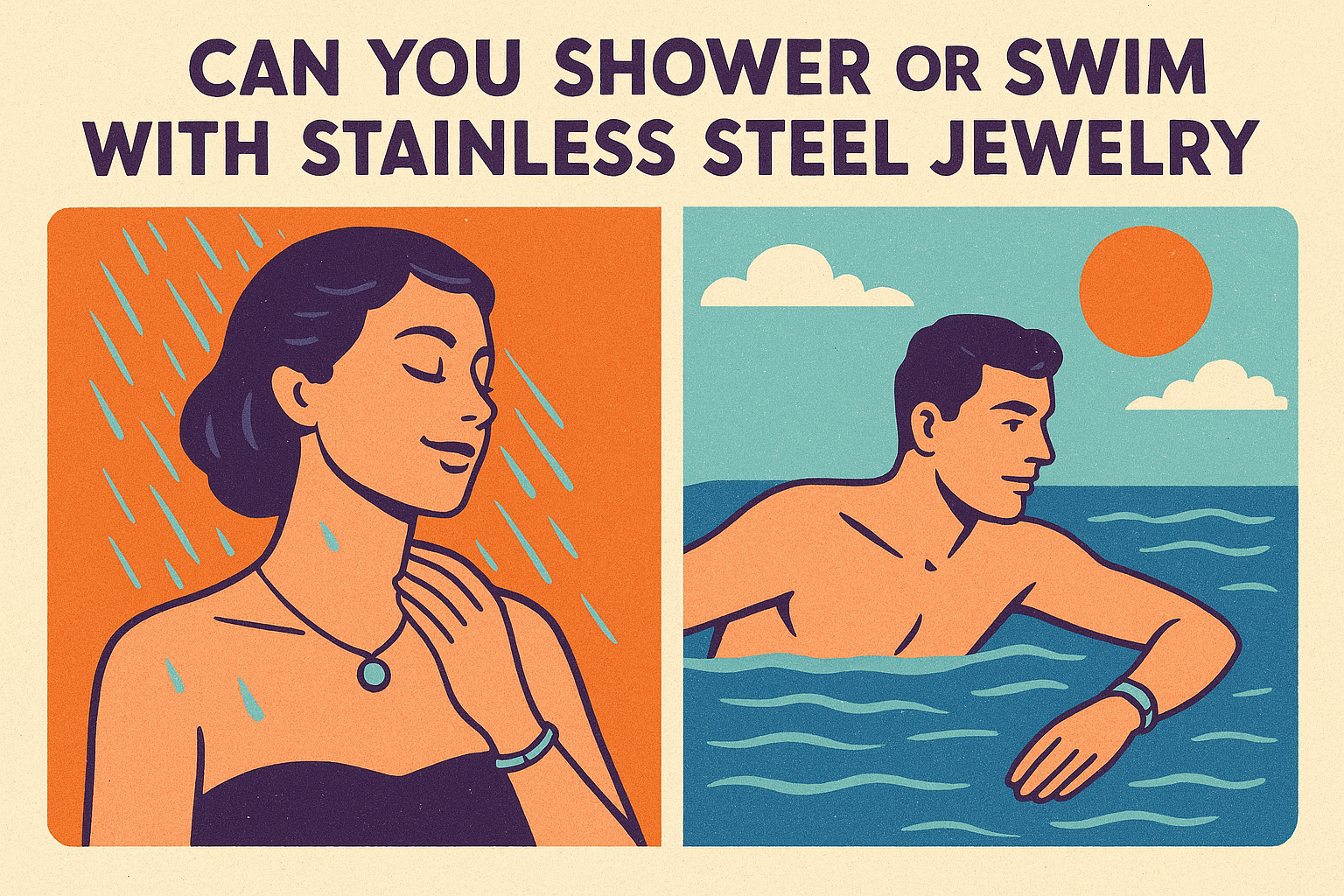
Showering with stainless steel
For solid stainless steel, showering is not a problem. The chromium oxide layer that protects the metal holds up fine against warm water and standard soap. Gold-plated stainless steel, however, is a different situation. Regular shower exposure softens the adhesion of the gold layer gradually, speeding up the point where the plating starts to thin noticeably. If you want to understand how long does stainless steel jewelry last through daily showers, solid steel gives you decades while plated pieces may show visible wear within a year or two of that routine.
Removing gold-plated pieces before showering is the single most effective habit for preserving the finish.
Swimming with stainless steel
Chlorinated pool water and saltwater are more aggressive than plain tap water. Solid 316L steel resists both reasonably well, but repeated and prolonged exposure to pool chemicals can dull the surface over time, especially on pieces with a high-polish finish. Saltwater creates similar abrasion. Rinsing your jewelry with fresh water immediately after swimming removes the chemical residue before it has time to work into the surface and cause lasting dullness.
How to make stainless steel jewelry last longer
Caring for stainless steel jewelry doesn't require expensive products or a complicated routine. A few consistent habits make a real difference in how long does stainless steel jewelry last, especially for gold-plated pieces where the finish shows wear before the base metal ever does.
Store it properly
Separate storage is the most overlooked step in jewelry care. When pieces sit together in a drawer or bag, they scratch each other constantly, dulling finishes and accelerating the breakdown of plating on high-contact areas like ring bands and bracelet clasps.
Storing your jewelry separately costs nothing and is the easiest way to preserve the finish long-term.
Fabric-lined pouches or individual compartments in a jewelry box protect each piece between wears. Keeping your jewelry away from humidity and direct sunlight also slows down surface degradation, particularly on plated finishes that are more sensitive to environmental conditions than solid steel.
Clean it the right way
Mild soap and warm water is all you need to clean stainless steel jewelry effectively. Use a soft cloth or soft-bristled brush to work gently around settings and links, then rinse thoroughly and dry completely before storing. Leaving moisture trapped against the metal speeds up wear on plated surfaces over time.
Avoid harsh chemical cleaners and abrasive cloths that strip finishes. These products are too aggressive for everyday jewelry and cause more damage than the residue they're meant to remove.
Apply products before you put jewelry on
Perfumes, lotions, and sunscreen break down gold plating faster than almost anything else. Getting into the habit of applying all products first and letting them dry completely before putting your jewelry on removes most of that chemical exposure from the daily equation.
This single routine change protects the plating from gradual chemical breakdown that causes premature fading. Chlorine, bleach, and cleaning sprays fall into the same category, so removing your jewelry before any cleaning tasks keeps the finish intact significantly longer.
Key takeaways and what to buy next
Here's the bottom line: solid 316L stainless steel lasts decades with minimal care, while gold-plated stainless steel gives you 1 to 3 years on the plating before visible wear starts in high-contact areas. Both types outperform most fashion metals, and the difference between a piece that fades fast and one that holds up comes down to daily habits more than the metal itself.
Your routine drives how long does stainless steel jewelry last more than anything else. Storing pieces separately, applying lotions and perfume before putting jewelry on, and rinsing after water exposure are the three habits that protect your finish long-term. None of them cost anything or take more than a few seconds.
Ready to shop pieces built for daily wear? Browse the bestsellers at Ezra Gems and find gold-plated stainless steel jewelry designed to handle real life without demanding constant upkeep.
Leave a comment