


You just found a stainless steel piece you love, and the first question that pops into your head is: can you shower with stainless steel jewelry without ruining it? It's a fair concern, nobody wants to take off their favorite necklace or rings every time they step into the bathroom. The short answer is yes, but there are a few important details that determine how well your jewelry holds up over time.
Water exposure alone isn't the biggest threat. Things like soap residue, hard water minerals, and chlorine can quietly wear down the finish on certain pieces, especially those with gold plating or gemstone settings. The type of stainless steel matters too, and not all jewelry is made equal in that department.
At Ezra Gems, we design our jewelry to handle real life, showers, sweat, workouts, and everything in between, without tarnishing or turning your skin green. That said, we believe informed customers make the happiest customers. This guide breaks down exactly what happens when stainless steel jewelry meets water, how different factors affect its longevity, and what simple habits will keep your pieces looking fresh for years.
Why stainless steel handles water well
Stainless steel is one of the most water-resistant metals used in everyday jewelry. Its durability comes down to chromium, a key element in the alloy that creates a protective barrier keeping moisture from doing damage. That's why you can shower with stainless steel jewelry regularly without seeing rust spots or discoloration the way you would with brass or copper-based pieces.
The role of chromium in corrosion resistance
Chromium is what makes stainless steel genuinely resistant to water, humidity, and oxidation. When stainless steel contacts oxygen, the chromium reacts to form a thin, invisible layer called a passive oxide film. This film sits on the surface and acts as a shield against moisture, chemicals, and mild acids. What makes it especially valuable for jewelry is that this layer self-repairs when scratched or disturbed, regenerating as soon as it contacts oxygen again.
This self-healing property is one of the main reasons stainless steel outlasts most other common jewelry metals in wet environments.
Unlike silver, which tarnishes quickly when it contacts water or sulfur compounds, or brass, which corrodes and leaves green marks on your skin, stainless steel maintains its appearance under daily water exposure. The oxide layer holds up against moisture from showers, gym sessions, and light swimming.
How 316L surgical-grade steel compares
Not all stainless steel jewelry is the same grade. The number you want to look for is 316L, often called surgical-grade or marine-grade stainless steel. It contains molybdenum in addition to chromium and nickel, which significantly boosts its resistance to chlorides found in both saltwater and pool water.
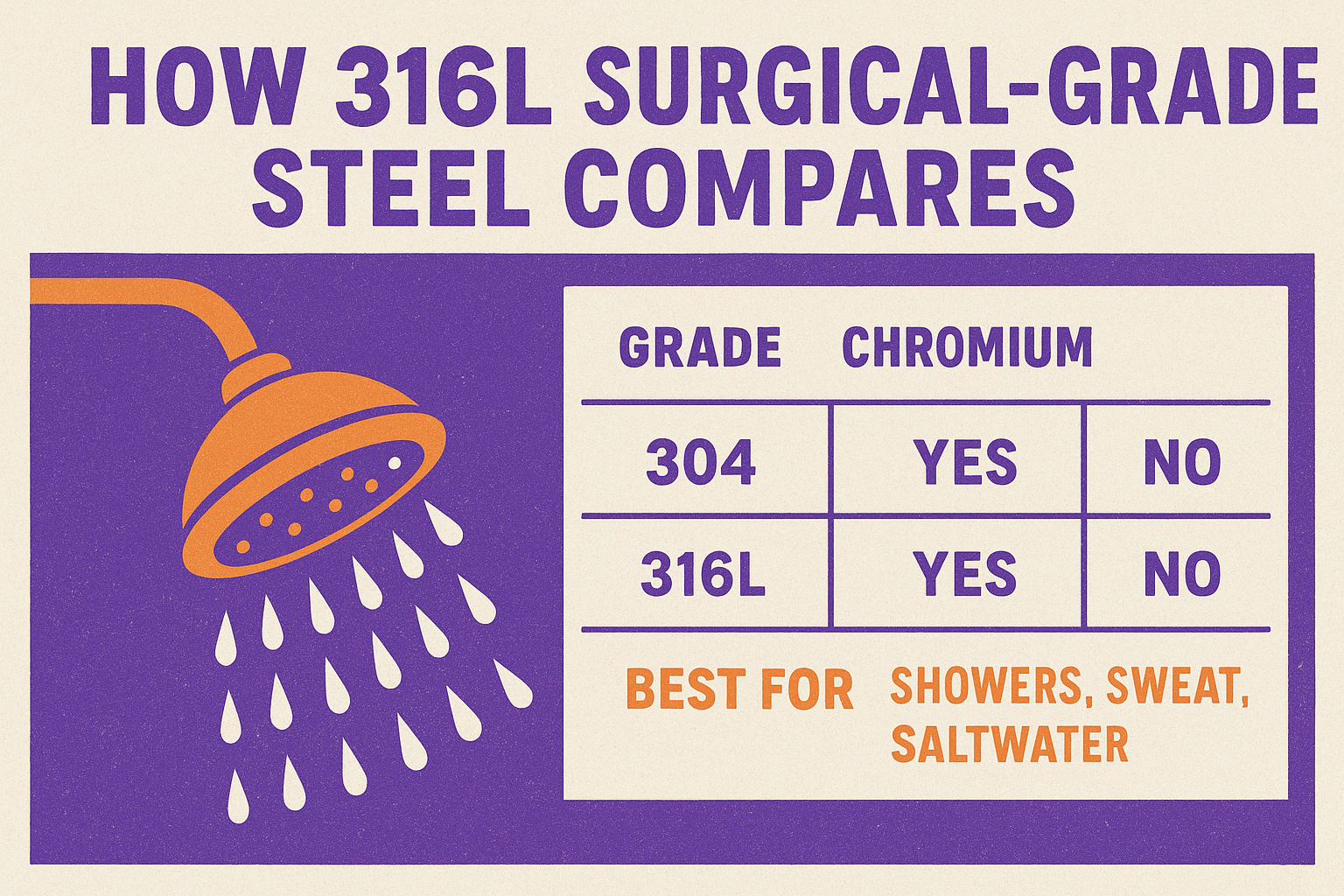
Standard 304 stainless steel resists water well too, but it can develop surface corrosion over time with repeated chlorine exposure. 316L handles that stress much better, making it the preferred choice for jewelry worn all day, every day.
| Grade | Chromium | Molybdenum | Best For |
|---|---|---|---|
| 304 | Yes | No | Light daily wear |
| 316L | Yes | Yes | Showers, sweat, saltwater |
Picking a piece made from 316L stainless steel gives you a real advantage in terms of long-term appearance and skin safety, especially if you plan to keep your jewelry on through your full daily routine.
When showering can still damage your jewelry
Stainless steel holds up well against plain water, but your shower involves more than just water. Soaps, shampoos, conditioners, and body washes all contain chemicals and surfactants that can leave a thin film on your jewelry over time. Even if you can shower with stainless steel jewelry without immediate damage, repeated exposure to these products gradually dulls the finish and traps grime in small crevices or around settings.
Soap and product buildup
Body wash and shampoo leave a residue layer on metal surfaces that builds up with each shower. This film doesn't corrode the steel itself, but it traps dirt and bacteria, making your pieces look cloudy and dull rather than bright. Pieces with textured surfaces, chains, or detailed settings collect this residue faster than simple flat bands.
Rinsing your jewelry thoroughly after every shower significantly slows down buildup and keeps the finish looking sharp.
Hard water mineral deposits
If your home has hard water, the minerals in it, primarily calcium and magnesium, can leave white, chalky deposits on your jewelry. These deposits aren't chemically damaging to stainless steel, but they cling to the surface and become stubborn to remove if you let them accumulate over weeks or months. You'll notice the buildup most on chains and around clasps where water tends to pool. Running your jewelry under clean water after showering or doing a quick wipe-down with a soft cloth removes most of these minerals before they settle in and dull your piece's appearance.
Stainless steel vs gold-plated and coated pieces
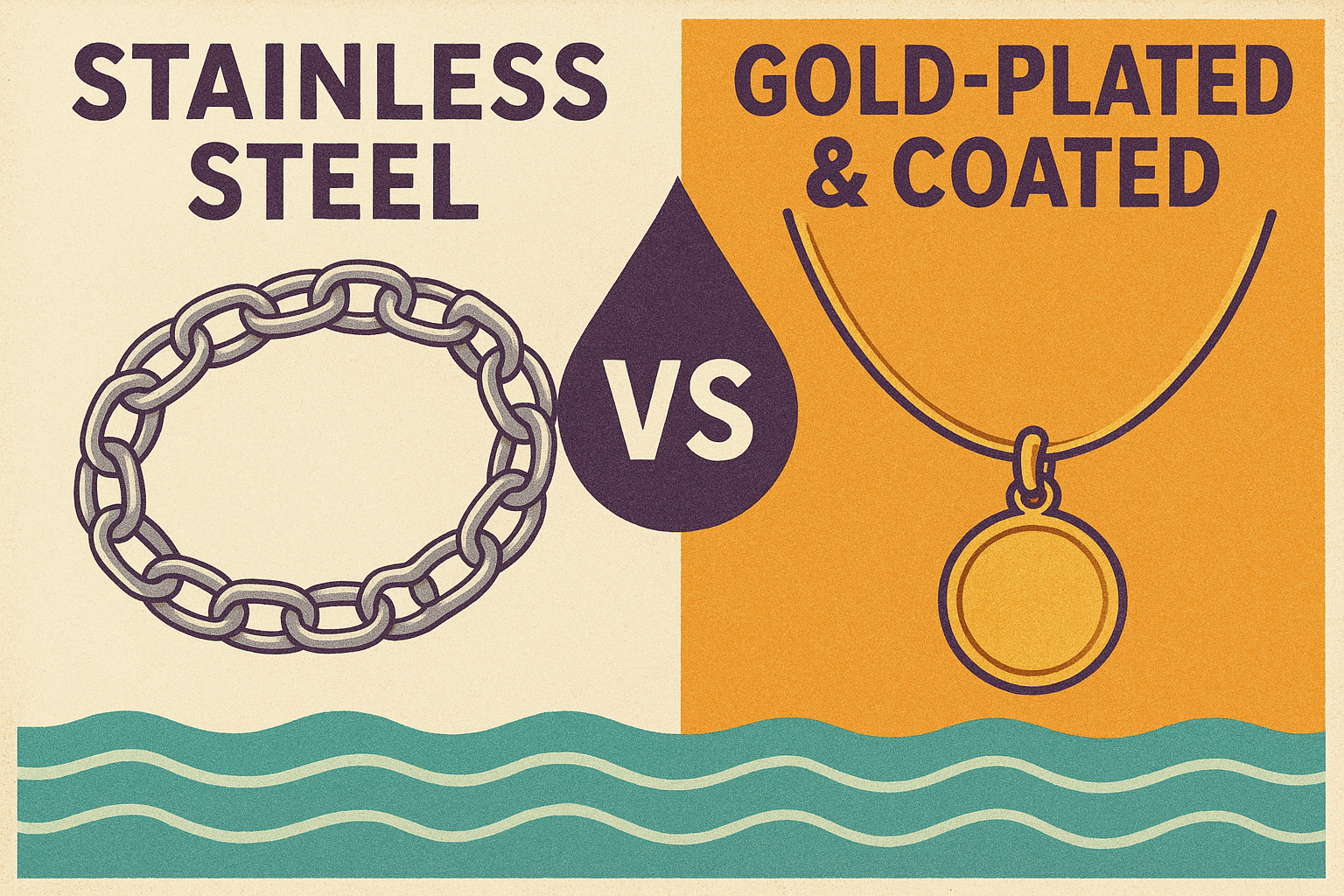
Understanding the difference between solid stainless steel and gold-plated or coated pieces matters before you decide whether to keep your jewelry on in the shower. Both types can look nearly identical at first glance, but they behave very differently under daily water exposure.
What happens to gold plating in the shower
Gold-plated jewelry uses a thin layer of gold bonded over a base metal, often stainless steel or brass. That layer typically measures just a few microns thick, which means repeated exposure to water, soap, and steam gradually wears it away. The friction from towel-drying alone accelerates that process. Once the plating wears through, the base metal underneath becomes exposed and can oxidize, dull, or cause skin irritation depending on what's underneath.
If you can shower with stainless steel jewelry but your piece is gold-plated, the base steel may survive just fine while the gold finish fades over time.
How quickly this happens depends on plating thickness and quality. Thicker PVD (physical vapor deposition) coatings last significantly longer than standard electroplated gold finishes, sometimes by years. Still, no coating lasts forever under daily wet conditions.
What pure stainless steel does differently
Solid stainless steel has no outer layer to lose. The corrosion resistance is built into the metal itself through its alloy composition, not applied to the surface. That means the piece looks the same after thousands of showers as it did on day one, assuming you give it basic routine care like rinsing and drying.
Here is how the three main types compare:
| Type | Water Resistance | Finish Longevity |
|---|---|---|
| Solid stainless steel | Excellent | Permanent |
| PVD-coated stainless steel | Good | Several years |
| Standard gold-plated | Moderate | Months to 1-2 years |
Best practices if you shower with it
Yes, you can shower with stainless steel jewelry safely, but a few consistent habits make a real difference in how long your pieces stay sharp-looking. Water on its own rarely causes problems, but soap residue, mineral buildup, and trapped moisture around clasps and settings accumulate fast when you skip basic aftercare.
Rinse and dry after each shower
After stepping out, run your jewelry under clean, lukewarm water for a few seconds. This flushes away soap and shampoo residue before it settles into chains or textured surfaces. Then pat the piece dry with a soft, lint-free cloth, giving extra attention to joints, clasps, and anywhere water tends to pool.
Skipping the dry-off step is one of the fastest ways to invite mineral deposits and dull your finish over time.
Avoid rubbing aggressively with a towel, because that creates micro-scratches on the surface and speeds up wear on any protective coating your piece carries.
When to take your jewelry off
Some situations call for removing your pieces even though the base metal handles water well. Taking jewelry off protects both the steel and the settings holding any stones in place from unnecessary stress.
Here are the scenarios where removal makes sense:
- Using bleach-based cleaners or harsh chemical products near your jewelry
- Soaking in a heavily chlorinated hot tub for long stretches
- Wearing pieces with delicate prong-set stones that loosen through repeated wet-dry cycles
- Applying chemical hair treatments like perms or color services
Store your pieces in a dry, enclosed space after removing them to prevent humidity from causing slow, cumulative buildup between wears.
Common questions about pools, oceans, and 24/7 wear
People who ask can you shower with stainless steel jewelry often follow up with questions about pools, salt water, and wearing pieces non-stop. These situations push the metal harder than a daily shower does, so they deserve straight answers.
Is pool or ocean water safe for stainless steel?
Pool water contains chlorine, and the ocean carries salt and sand, both of which are harder on jewelry than plain tap water. Solid 316L stainless steel handles occasional pool or ocean exposure well without rusting or corroding, but repeated, extended sessions in heavily chlorinated water do degrade standard coatings and plating over time. If your piece is solid stainless with no coating, brief swims are generally fine. If it carries a gold finish or PVD layer, frequent pool use shortens how long that finish lasts.
Rinsing your jewelry with fresh water immediately after leaving the pool or ocean removes chlorine and salt before they have time to settle on the surface.
Sand is a separate concern because the abrasive particles scratch metal finishes when pieces rub against skin or fabric in the water. Removing rings and bracelets before beach trips prevents that type of surface damage.
Can you wear stainless steel jewelry all day and night?
24/7 wear is one of the reasons stainless steel attracts buyers who want low-maintenance pieces. The metal itself handles constant contact with sweat, humidity, and skin oils without breaking down the way plated brass or silver does. The main consideration for round-the-clock wear is that clasps and prong settings experience more mechanical stress over time when never removed, so checking them every few weeks keeps stones secure and closures functioning properly.
Key takeaways
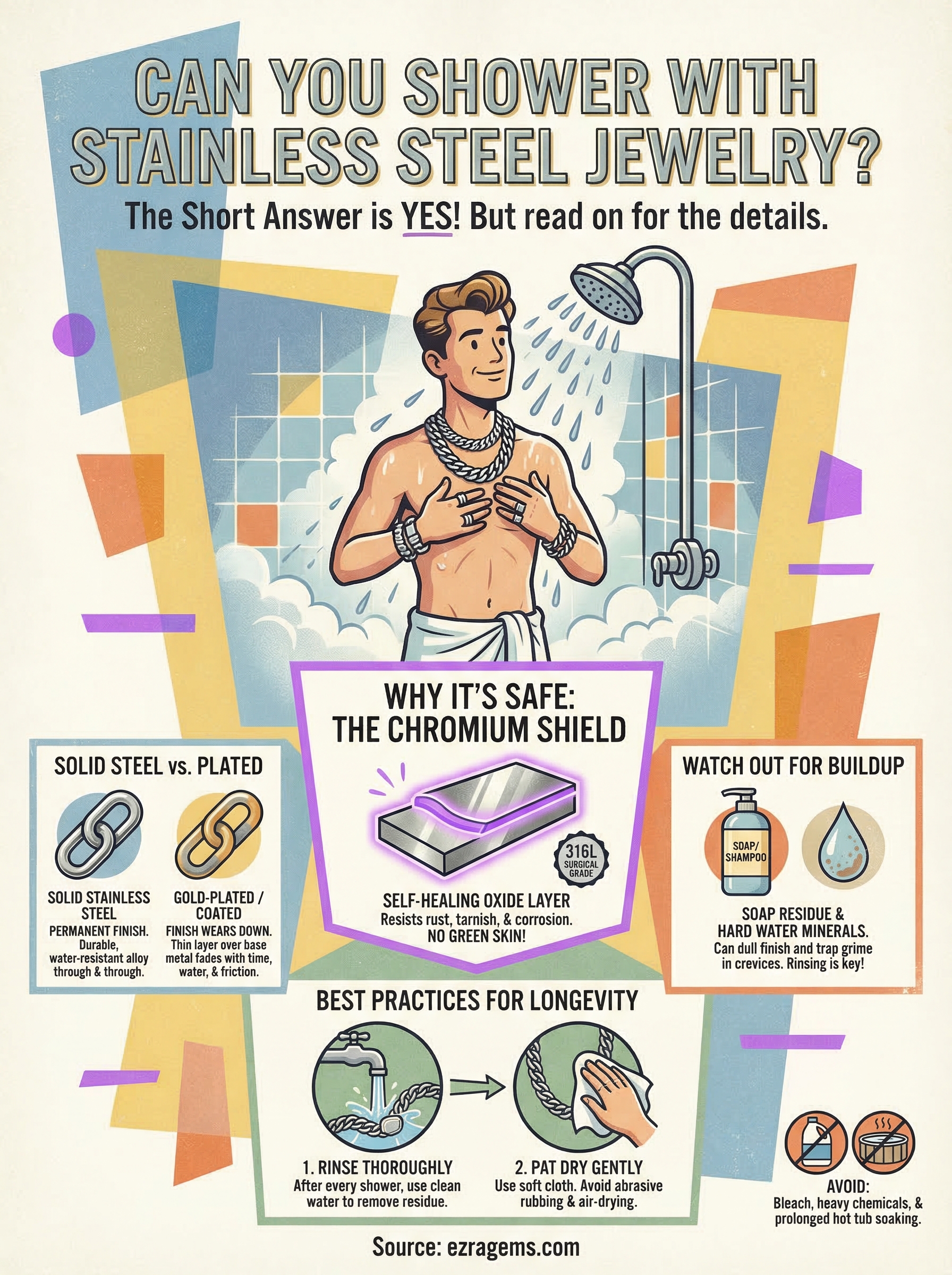
Yes, you can shower with stainless steel jewelry without worrying about rust or tarnish, as long as you give your pieces basic routine care after each wash. Solid 316L stainless steel resists water, soap, and sweat because of the chromium-based oxide layer built into the alloy itself, not applied on top of it. Gold-plated and coated pieces wear down faster under daily water exposure, so plating thickness and coating quality directly determine how long the finish lasts before the base metal shows through.
Rinsing your jewelry after every shower and patting it dry with a soft cloth removes mineral deposits and soap buildup before they dull your pieces over time. Skip bleach-based cleaners and prolonged hot-tub sessions regardless of the metal type, and check clasps and settings every few weeks if you wear your pieces around the clock. If you want low-maintenance jewelry built for daily wear, browse the bestselling pieces at Ezra Gems and find something that keeps up with your routine.
Leave a comment