


You bought a gold vermeil piece, or you're about to, and one question keeps nagging: how long does gold vermeil last before it fades, chips, or loses its shine? It's a fair concern. Gold vermeil sits in a sweet spot between solid gold and basic gold plating, but that doesn't mean it's invincible. The short answer: most gold vermeil jewelry lasts anywhere from one to five years, depending on the thickness of the gold layer, the quality of the base metal, and how you treat it day to day.
At Ezra Gems, we get this question constantly. Our customers want jewelry that looks expensive, holds up through real life, and doesn't turn their skin green after a week. That's exactly why we focus on durable, waterproof pieces designed for daily wear, and why we think it's worth breaking down what gold vermeil actually is, how it compares to other gold options, and what you can do to stretch its lifespan as far as possible.
This guide covers everything from the basics of gold vermeil construction to practical care tips that keep your pieces looking fresh. Whether you're deciding on your first purchase or trying to maintain a collection you already love, you'll walk away knowing exactly what to expect, and how to get the most out of every piece you own.
What gold vermeil is and what qualifies as vermeil
Gold vermeil (pronounced "ver-may") is a specific type of gold jewelry that uses sterling silver as the base metal, coated with a layer of real gold. It's not just any gold-plated piece. The word "vermeil" actually carries legal weight in the United States, which means not every shiny gold piece you see can use that label. Understanding what separates vermeil from basic gold plating helps you shop smarter and set realistic expectations for how any piece you buy will perform over time.
The US legal standard for gold vermeil
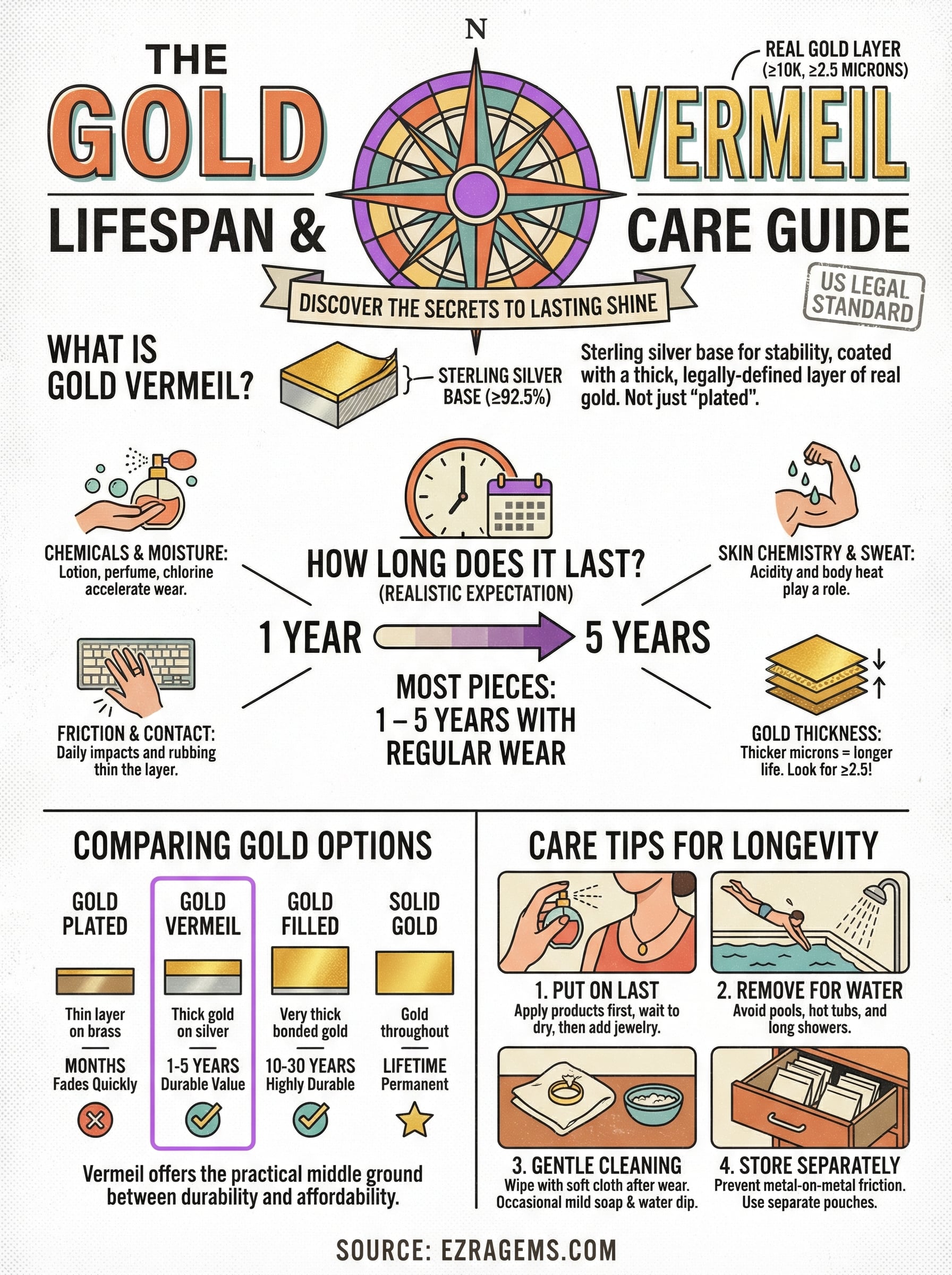
The Federal Trade Commission sets three clear requirements a piece must meet before it can be called gold vermeil. First, the base metal must be sterling silver (at least 92.5% pure silver). Second, the gold layer must be at least 10 karats in purity. Third, and perhaps the most important factor for longevity, the gold plating must be at least 2.5 microns thick. Standard gold-plated pieces often have a gold layer as thin as 0.5 microns, which wears away quickly. Vermeil's thicker coating is a big part of why it outperforms basic plating.
The 2.5-micron minimum thickness requirement is what separates true vermeil from basic gold plating, and it directly affects how long the gold layer survives daily wear.
All three criteria matter because they guarantee a consistent baseline of quality across every piece that earns the vermeil label. If a brand markets something as "vermeil" but skips the sterling silver base or uses a thinner coat, that piece simply won't hold up the way you'd expect, and you deserve to know the difference before spending your money.
How the construction affects durability
The combination of a sterling silver base and a thick gold layer gives vermeil its real advantage over cheaper alternatives. Sterling silver is a stable, non-reactive metal, which means it doesn't corrode quickly underneath the gold coating the way base metals like brass or copper can. When lower-quality metals react with moisture and skin oils, they push through the gold layer and cause it to peel or discolor at a much faster rate.
How long does gold vermeil last also depends directly on how thick that gold layer actually is. A thicker layer gives everyday friction more gold to work through before visible wear sets in. Some high-quality pieces use layers of 3 to 5 microns or more, which can extend the lifespan well beyond what the legal minimum alone provides, especially if you wear the piece regularly.
Finally, the karat of the gold plays a role too. Higher karat gold, like 18k or 22k, is purer and delivers a richer, deeper color, but it's also softer. Lower karat gold, like 14k, contains more alloy metals, which makes the coating slightly harder and more resistant to everyday scratching. The right balance between karat purity and hardness depends on how often you wear the piece and how much physical contact it gets throughout your day.
How long gold vermeil lasts in real life
Most gold vermeil jewelry holds up for one to five years with regular wear. That range is wide on purpose because the actual number depends heavily on factors like how often you wear the piece, what it contacts throughout the day, and how thick the gold layer is. A minimum-standard vermeil piece worn daily without any special care will lean toward the lower end of that range, while a well-made piece with a thicker coating worn occasionally and stored properly can push past five years without visible wear.
What the average lifespan looks like
For most people wearing vermeil jewelry several days a week, two to three years is a realistic expectation before you notice the gold layer thinning in high-friction areas like ring shanks, bracelet edges, or necklace clasps. These are the spots that rub against skin, fabric, and surfaces constantly, so they tend to show wear first while the rest of the piece still looks sharp.
Knowing how long does gold vermeil last also depends on recognizing that not all vermeil is made the same. A 2.5-micron layer performs differently than a 4-micron layer, even when both qualify as vermeil.
Pieces with gold layers of 3 microns or more consistently outperform the minimum standard in real-world conditions. If you're buying from a brand that discloses the exact micron thickness, that number tells you far more about actual longevity than the vermeil label alone.
When vermeil wears faster than expected
Some habits accelerate wear in ways that surprise people. Applying lotion, perfume, or sunscreen while wearing your jewelry introduces chemicals that break down the gold layer faster than physical friction alone. Similarly, wearing rings while doing dishes or bracelets during workouts means consistent exposure to water, sweat, and impact that shortens the lifespan significantly.
People who layer multiple pieces together also see faster wear on contact points where metal rubs against metal. The gold layer at those friction points thins out quickly. Separating your pieces during storage and being mindful of what they touch during wear makes a measurable difference in how long each piece actually lasts.
What affects gold vermeil lifespan day to day
Several factors work against your gold vermeil every single day, and most of them have nothing to do with carelessness. Your habits, environment, and even your body chemistry all play a role in how quickly that gold layer breaks down. Understanding these variables puts you in control of the answer to how long does gold vermeil last for your specific pieces, and gives you a realistic picture before you commit to a piece you plan to wear regularly.
Your skin chemistry and body heat
Your skin produces oils, salts, and acids that interact with the gold layer constantly. People with higher skin acidity tend to see faster wear on plated pieces because the acidic environment erodes the gold coating from the surface. Body heat also plays a role. Warmer skin accelerates the chemical reactions between sweat and the gold layer, which is why pieces worn in humid climates or during physical activity often show visible wear sooner than pieces worn in cooler, drier conditions. If you've ever noticed one person's jewelry fading faster than another person's identical piece, skin chemistry is usually the explanation.
Your individual skin chemistry can shorten or extend your jewelry's lifespan more than almost any other single factor.
Physical contact and friction
Rings take the most abuse of any jewelry type because your hands contact surfaces constantly throughout the day. Typing, gripping, and cleaning all grind the gold layer against hard materials over time. Bracelets face similar friction from desk surfaces, bag straps, and clothing fabrics, especially at the edges and clasp areas where metal meets resistance most often. Necklaces tend to last longer by comparison since they mostly contact skin and soft fabric rather than harder surfaces, which is worth factoring in when you're deciding how much care to prioritize.
Chemicals and moisture exposure
Perfume, hairspray, lotion, and cleaning products all contain compounds that break down gold plating faster than water alone. Chlorine from pools and hot tubs is particularly damaging and can degrade a gold layer in a fraction of the time that normal friction-based wear would. Even regular tap water accelerates wear when it sits on the surface, which means drying your jewelry immediately after any exposure matters more than most people expect.
Gold vermeil vs gold plated vs gold filled vs solid gold
When you're shopping for gold jewelry, gold vermeil, gold plated, gold filled, and solid gold all look similar at first glance but behave very differently over time. Knowing where each option stands helps you set accurate expectations for how long does gold vermeil last compared to the alternatives, and choose the right piece for your budget and lifestyle.
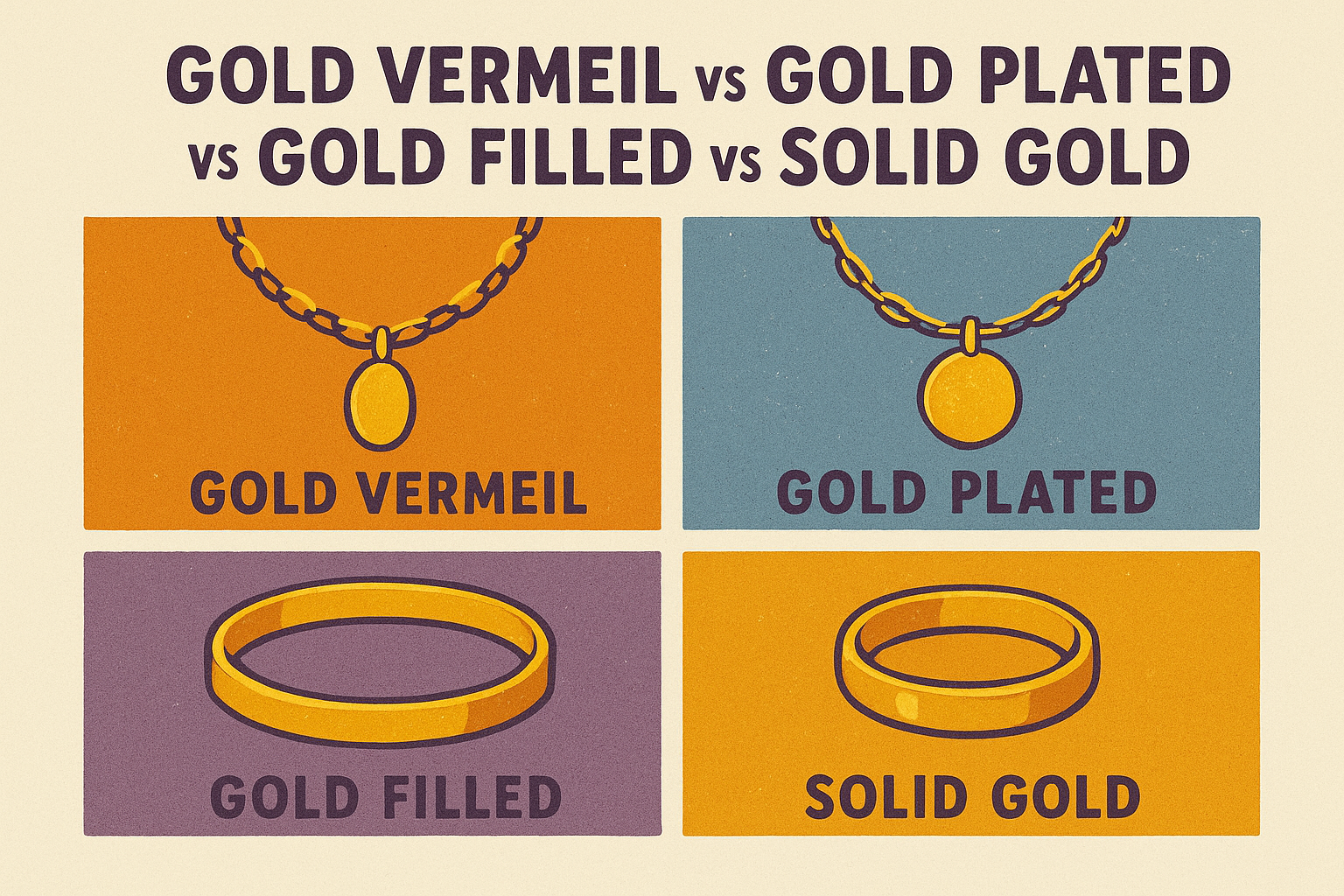
Gold plated vs gold vermeil
Gold-plated jewelry uses a base metal like brass or copper coated with a thin gold layer, often as little as 0.5 microns. That's roughly one-fifth of the legal minimum for vermeil, which is why plated pieces often fade and discolor within months of regular wear rather than years.
Vermeil's sterling silver base also resists corrosion better than brass or copper, so the foundation stays stable longer even as the gold surface gradually thins. That combination of a thicker gold layer and a more stable base metal is exactly what gives vermeil a clear advantage.
If you're choosing between the two at similar price points, vermeil consistently delivers more value for your money than basic gold plating.
Gold filled vs gold vermeil
Gold-filled jewelry contains a much thicker gold layer bonded under heat and pressure to a base metal core, typically brass. The gold layer must make up at least 5% of the total piece weight, which translates to a coating that can last 10 to 30 years with proper care.
Gold filled outperforms vermeil for raw durability, but it typically costs more and comes in fewer design options. Vermeil remains the stronger choice when you want current, fashion-forward styles at a more accessible price point without sacrificing the look of real gold.
Solid gold vs gold vermeil
Solid gold jewelry contains gold all the way through the entire piece, not just as a surface coating. A 14k solid gold piece is 58.3% pure gold throughout, which means no plating ever wears away and no base metal corrodes beneath the surface.
Solid gold lasts a lifetime and can be resized and refinished indefinitely, but it costs significantly more than vermeil. For anyone who wants the genuine look and feel of gold without the price tag of fine jewelry, vermeil offers the most practical middle ground between durability and affordability.
Signs your gold vermeil is wearing out and next steps
Knowing how long does gold vermeil last is useful, but recognizing the actual signs of wear in real time is what lets you act before a piece is beyond saving. Wear doesn't usually happen all at once. It starts in specific, predictable spots and works outward gradually, which gives you a window to respond if you're paying attention.
What wearing out actually looks like
The first sign is almost always a color shift in high-friction areas. Ring shanks, bracelet clasps, and the back of pendant bails start showing a slightly different tone, often a cooler silver or brassy hue depending on the base metal beneath. This happens because the gold layer thins there first before it disappears elsewhere.
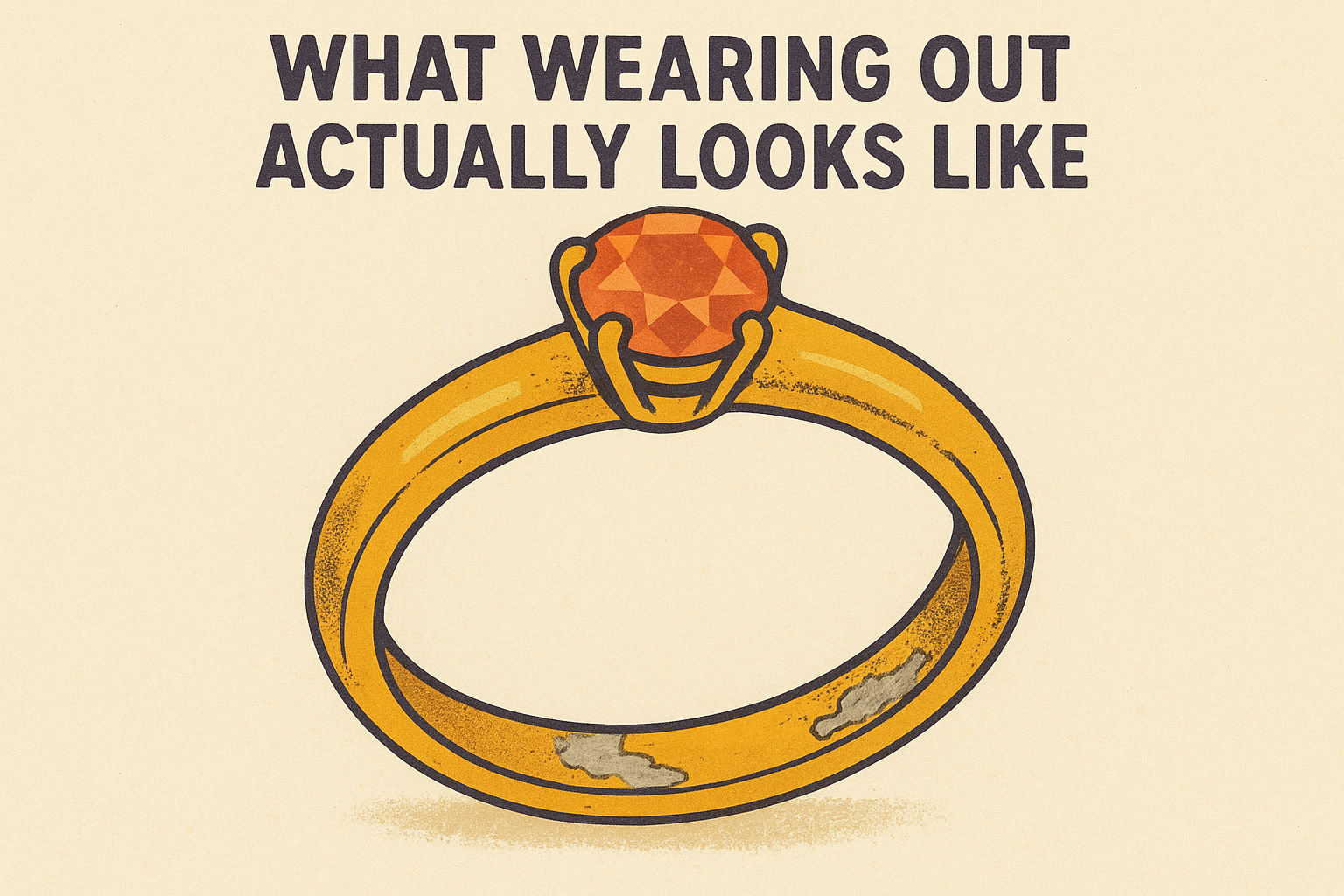
Once you spot discoloration in a specific spot, the rest of the piece is still intact, so acting quickly preserves the majority of what you have.
Other signs follow a clear pattern as wear progresses:
- Dullness that doesn't polish away with a soft cloth, which suggests the gold layer is thinning rather than just dirty
- Greenish or grayish tinting on skin where the piece makes contact, which means the base metal is now close enough to the surface to react
- Peeling or flaking at the edges or textured areas where friction is highest
- Uneven color across the piece, with some sections looking rich and others noticeably lighter
What to do when you notice wear
When you catch early signs, give that piece a break from daily wear and rotate it less frequently. This slows down ongoing friction damage and lets you enjoy the piece for longer before it needs attention. For pieces with significant sentimental or monetary value, a local jeweler can replate gold vermeil using the same base metal, restoring the surface back to its original look.
If a piece has reached the point where the base metal is fully exposed across multiple areas, replating is still an option but becomes less cost-effective unless the piece matters to you beyond its price. At that stage, replacing it with a higher-micron piece makes more practical sense for everyday wear.
How to care for gold vermeil so it lasts longer
The single biggest factor you control in how long does gold vermeil last is how consistently you follow a few simple habits. You don't need special equipment or expensive products. Basic routines around cleaning, storage, and wear order extend the life of your pieces more reliably than anything else you could do.
How to clean and store your pieces
Cleaning gold vermeil correctly removes the oils, sweat, and product residue that slowly degrade the gold layer if left sitting on the surface. Use a soft, lint-free cloth to gently wipe down each piece after you wear it. For deeper cleaning, a small bowl of lukewarm water with a drop of mild dish soap works well. Dip the piece briefly, use a soft cloth or a very soft toothbrush on textured areas, then rinse and dry it completely before putting it away.
Never let gold vermeil air dry with water sitting on the surface, since prolonged moisture contact speeds up the wear process significantly.
Storage matters just as much as cleaning. Keep each piece in a separate soft pouch or lined compartment to prevent metal-on-metal friction that scratches the gold layer during storage. Avoid tossing multiple pieces into the same drawer or jewelry box where they knock against each other.
Daily habits that protect the gold layer
Putting your jewelry on last is one of the most effective habits you can build. Apply perfume, lotion, sunscreen, and hairspray first, then wait a moment for products to absorb or settle before you put on any vermeil pieces. This keeps chemical residue off the gold surface during that critical first contact window when concentrations are highest.
Taking your pieces off before swimming, showering, or working out removes the three biggest sources of accelerated wear: chlorine, prolonged water exposure, and sweat. When you do take pieces off, wipe them down immediately rather than setting them aside and handling it later. Building that two-second wipe into your routine removes residue before it sits overnight and starts breaking down the surface.
Key takeaways
How long does gold vermeil last comes down to a few consistent factors: the thickness of the gold layer, the quality of the sterling silver base, and the daily habits you build around wearing and storing your pieces. Most vermeil jewelry holds up for one to five years, with well-made pieces lasting longer when you keep them away from chemicals, moisture, and constant friction. The legal standard gives you a baseline to trust, but micron thickness tells you more about real-world performance than the label alone.
You don't need to baby your jewelry to make it last. A quick wipe after wearing, separate storage, and a smart wear order go a long way toward preserving that gold surface. If you want pieces built to hold up through real daily life, browse the Ezra Gems bestsellers collection for durable, fashion-forward options that are designed to stay looking sharp well beyond the first few wears.
Part of our complete guide to gold vermeil jewelry.
Want the gold look without the tarnish problem? Gold vermeil is real gold over sterling silver — beautiful, but once the gold layer thins, the silver underneath tarnishes. Ezra Gems takes a different approach: 18K gold over surgical stainless steel, a base that does not react with water, sweat, or salt. That is why our pieces stay waterproof and tarnish-free with no polishing routine at all.
Leave a comment