


Gold plated jewelry is everywhere, from the pieces filling your favorite boutiques to the rings and necklaces you scroll past on Instagram. But what does "gold plated" actually mean, and how does it compare to solid gold, gold-filled, or vermeil? These are fair questions, especially when you're spending your money and want something that looks great without falling apart in a month.
At Ezra Gems, we sell gold plated jewelry designed to handle real life, showers, workouts, everyday wear. So we know this category inside and out, including where it shines and where cheaper versions fall short. That hands-on experience is exactly why we put this guide together: to give you a straight answer on the process, the materials, and what affects how long a piece actually lasts.
Below, you'll find a clear breakdown of how gold plating works, what makes one piece more durable than another, and how to decide if it's the right choice for your budget and style. No fluff, no confusing jargon, just the details that help you buy smarter.
Why gold-plated jewelry matters
Gold plated jewelry sits at the intersection of style and affordability, making it the most accessible way to wear real gold on your skin without paying thousands of dollars. Understanding what is gold plated jewelry helps you make smarter buying decisions, whether you're shopping for yourself or picking out a gift.
The price difference is real
A solid gold necklace can cost anywhere from $500 to several thousand dollars, depending on the karat and weight. A well-made gold plated version of the same design might run $20 to $100. That gap means you can build an entire jewelry collection for the price of a single solid gold chain, and still have money left over.
The real value of gold plated jewelry isn't just the lower price. It's that you can rotate styles, follow trends, and wear something beautiful every day without financial stress.
You get the look without locking in
Fashion trends shift fast. With gold plated jewelry, you can update your style regularly without feeling like you're throwing money away. You're not committing to one piece for a decade the way you might with solid gold, which gives you real flexibility.
Gifting is another area where this matters. When you want to give someone a meaningful piece that looks luxurious, gold plated jewelry delivers the visual impact at a price point that doesn't require a special occasion to justify.
Quality has improved significantly
Gold plated jewelry used to carry a reputation for turning green or flaking quickly. Modern production methods and higher-quality base metals like brass and sterling silver have changed that picture. Brands that combine a strong base with a thicker gold layer now produce pieces that hold up through daily wear, water exposure, and sweat far better than older versions ever did.
How gold plating works
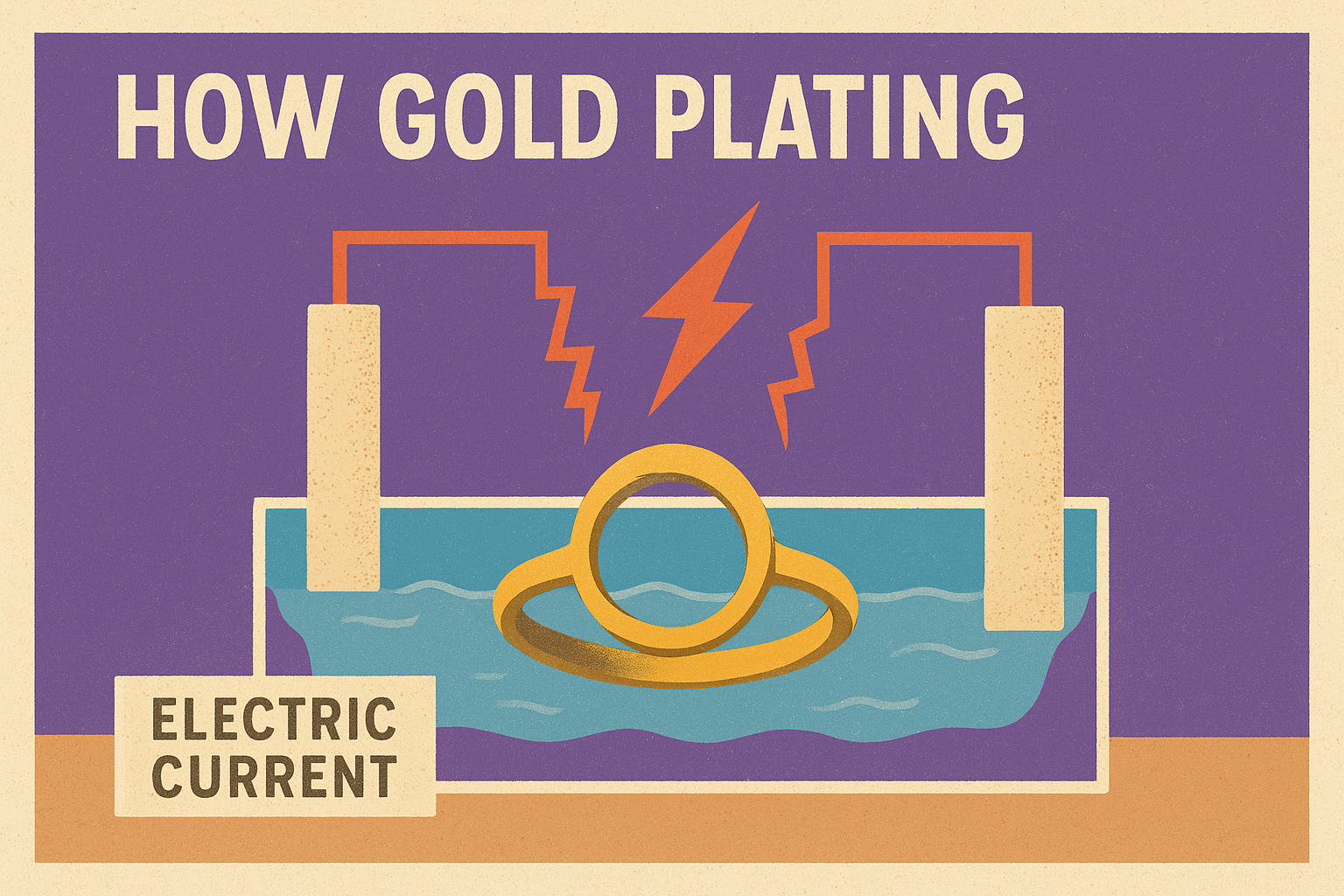
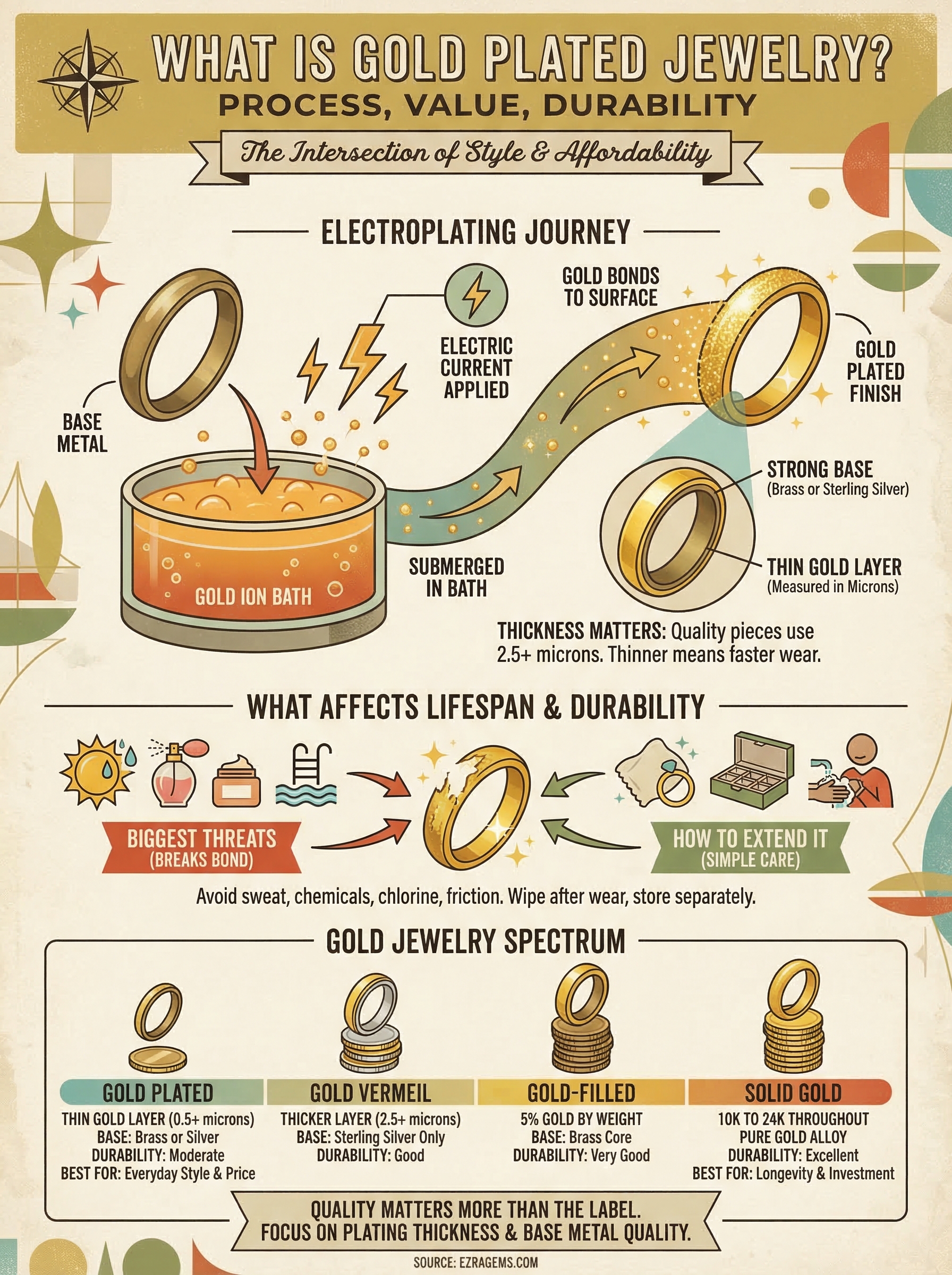
Gold plating relies on electroplating, a process where an electric current bonds a thin gold layer to a base metal. The piece gets submerged in a bath of dissolved gold ions, and the current causes those ions to deposit directly onto the metal surface.
The steps in the process
Every stage of electroplating affects how the finished piece performs over time. A poorly cleaned surface leads to weak adhesion, which means the gold flakes off faster. Here is how the process runs:
- Cleaning: Chemical baths remove oils, dirt, and oxidation from the base metal.
- Rinsing: All residue is cleared before the piece enters the plating bath.
- Plating: An electric current deposits gold ions onto the surface.
- Finishing: The piece is polished and quality-checked.
The gold layer thickness, measured in microns, determines durability more than almost any other factor. Thicker means longer-lasting.
Why this matters when you shop
Knowing how gold plating works helps you ask better questions before buying. If a brand tells you the micron thickness of their plating, that's a signal they control their process carefully. If they can't give you that number, that's worth noting too.
Understanding what is gold plated jewelry at this production level also helps you spot the difference between brands that price on quality and those that price on marketing.
What gold-plated jewelry is made of
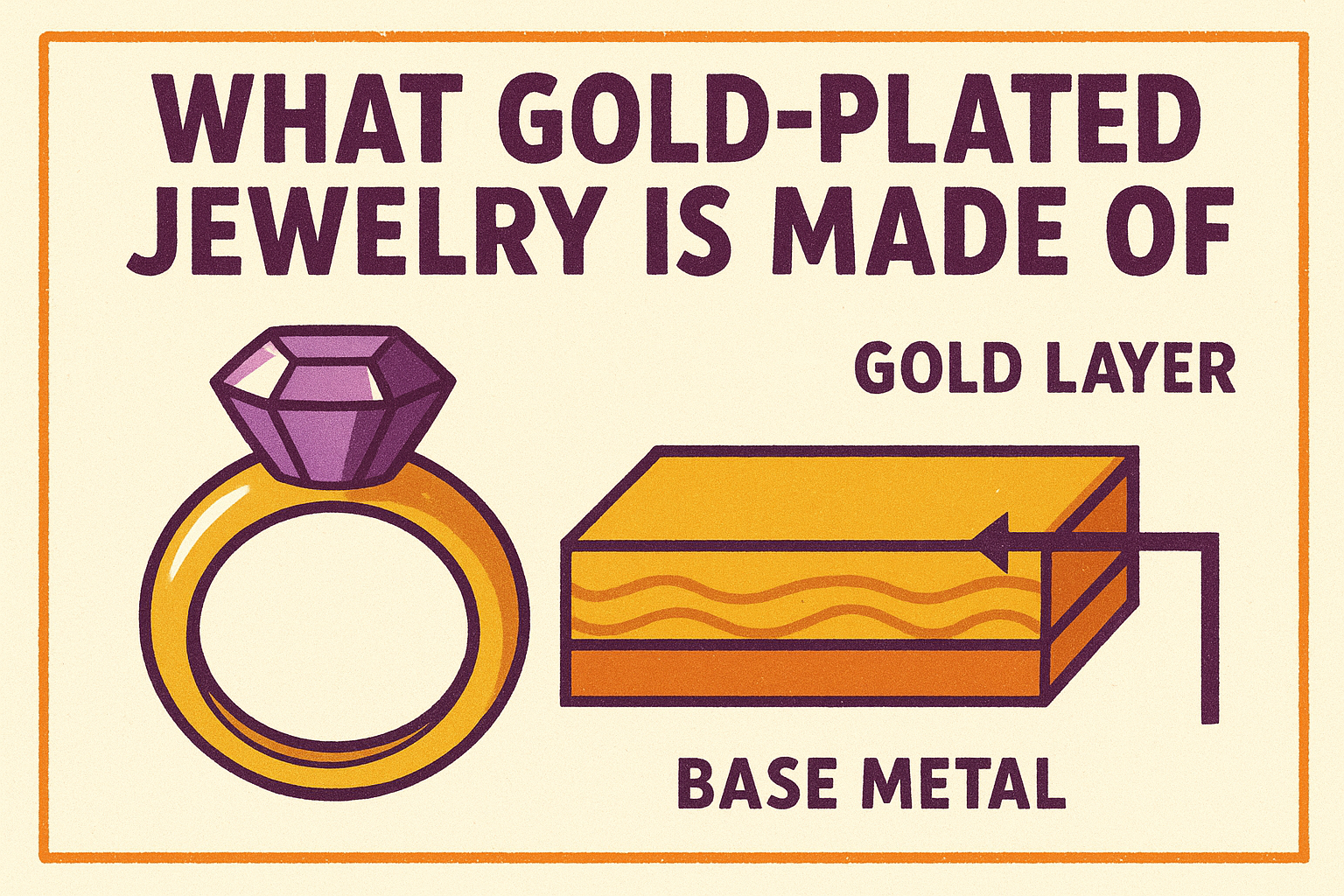
When you understand what is gold plated jewelry at a material level, you see it has two distinct parts working together: a base metal that forms the structure and a thin layer of gold bonded to its surface. The quality of both components determines how a piece looks, wears, and holds up over time.
The base metal
The base metal carries the piece's shape and overall weight. Brass is the most common choice because it's affordable, easy to form, and holds plating well. Sterling silver is a step up, giving you a non-reactive, skin-friendly foundation that pairs with higher-quality plating. Copper and zinc alloys appear in cheaper pieces, but they're more prone to causing skin reactions and they shorten how long the plating lasts.
Choosing jewelry built on brass or sterling silver gives you a far stronger foundation than pieces built on unspecified alloys.
The gold layer
The gold layer is measured in karats and microns. Karat tells you the gold's purity: 18K contains more gold than 14K, which gives it a richer color and slightly better tarnish resistance. Micron thickness tells you how much gold was actually deposited onto the surface. Most quality pieces use at least 2.5 microns, while budget options often fall below 0.5 microns, which means the gold wears off much faster with regular use.
How long gold-plated jewelry lasts
Gold plated jewelry typically lasts anywhere from a few months to several years, depending on how it's made and how you treat it. When people ask what is gold plated jewelry and how long it holds up, the honest answer is: it varies widely based on plating thickness, base metal quality, and your daily habits.
What shortens the lifespan
Sweat, perfume, lotion, and harsh chemicals are the biggest threats to your gold plating. These substances break down the bond between the gold layer and the base metal, causing the finish to fade or flake faster than you'd expect.
- Friction from rings and bracelets wears down plating faster than earrings or necklaces
- Chlorine in pools strips gold plating quickly
- Applying perfume or lotion directly onto jewelry accelerates surface wear
The thinner the gold layer, the faster it disappears. Pieces plated below 0.5 microns often show visible wear within weeks of regular use.
How to extend it
You can significantly extend the life of your pieces by following a few straightforward habits. Remove jewelry before swimming, showering, or applying lotion, and store each piece separately to prevent surface scratching. Wiping pieces down with a soft dry cloth after wearing removes oils and sweat before they damage the finish.
With proper care, high-quality gold plated jewelry built on a solid brass or sterling silver base can stay looking sharp for two years or more.
Gold plated vs solid gold, filled, and vermeil
When you're trying to figure out what is gold plated jewelry relative to its alternatives, the differences come down to how much gold is present and where it sits in the piece. Each type has a different price point, durability level, and use case, so knowing the distinctions helps you pick the right option.
The key differences at a glance
The four main types of gold jewelry sit on a clear spectrum from least to most gold content. Here is how they compare:
| Type | Gold Content | Base Metal | Durability |
|---|---|---|---|
| Gold plated | Thin layer (0.5+ microns) | Brass or silver | Moderate |
| Gold vermeil | Thick layer (2.5+ microns) | Sterling silver only | Good |
| Gold-filled | 5% gold by weight | Brass core | Very good |
| Solid gold | 10K to 24K throughout | Pure gold alloy | Excellent |
Where gold-plated fits for most buyers
Solid gold delivers the best longevity but costs far more than most people want to spend on everyday pieces. Vermeil is essentially a premium version of gold plating, requiring sterling silver as the base and a thicker gold layer, while gold-filled offers better durability at a mid-range price.
For everyday fashion jewelry, gold plated pieces on a quality base give you the best balance of appearance and price.
Your choice ultimately comes down to how long you want the piece to last and what you're comfortable spending.
Final takeaways
Now you know what is gold plated jewelry from every angle: the electroplating process, the materials involved, how long it lasts, and how it compares to solid gold, vermeil, and gold-filled options. The core takeaway is that quality matters more than the category label itself. A well-made piece built on a solid brass or sterling silver base with thick plating will outperform a cheap vermeil piece every time, because the foundation and plating thickness drive durability far more than the type of jewelry you buy.
Your two biggest factors to watch are plating thickness and base metal quality. Pieces plated to at least 2.5 microns on a strong base give you real durability for everyday wear without the price tag of solid gold. Add a few simple care habits, and those pieces stay sharp for years.
Ready to put this knowledge to use? Browse the Ezra Gems bestsellers and find high-quality gold plated pieces built for real daily wear.
Leave a comment