


Valentine's Day is a holiday celebrated every February 14 when people express love and affection through cards, gifts, flowers, and special time together. What started as a Christian feast day honoring Saint Valentine evolved into one of the most popular celebrations for romance and connection. The modern holiday blends ancient Roman traditions with medieval customs and commercial influences that shaped how we celebrate today.
This guide walks you through everything about Valentine's Day. You'll discover the holiday's surprising origins and how it transformed over centuries. We'll explore traditions practiced around the world, decode the symbolism behind hearts and roses, and share practical ways to celebrate whether you're planning a romantic evening or showing appreciation to friends and family. You'll also find gift inspiration that goes beyond the expected chocolates and flowers. By the end, you'll understand not just when Valentine's Day happens, but why it matters and how to make it meaningful for the people you care about.
Why Valentine's Day matters
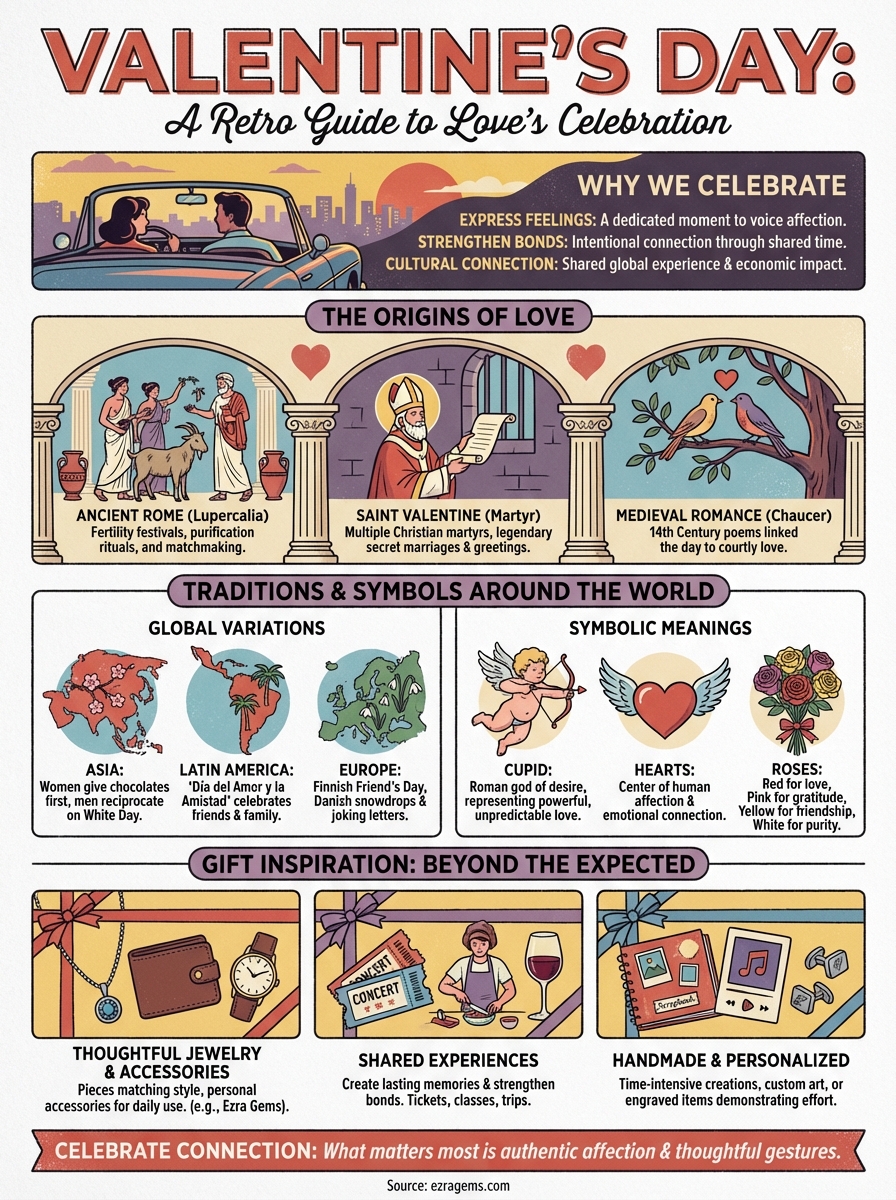
Valentine's Day gives you a dedicated moment to pause and express feelings you might not voice regularly. While you can show love any day of the year, having a specific date creates intention and removes the excuse of being too busy. The holiday reminds you to prioritize relationships in a world filled with distractions and competing demands.
Strengthening relationships through intentional connection
You build stronger bonds when you deliberately set aside time for the people who matter most. Valentine's Day creates that built-in reminder to communicate affection through words, gestures, or quality time together. Research shows that couples who celebrate occasions together report higher relationship satisfaction than those who skip them entirely. The holiday doesn't require grand gestures, but it does encourage you to be thoughtful about how you show care.
The act of recognizing someone's importance through a card, gift, or planned experience strengthens emotional bonds and builds lasting memories.
Your relationships thrive on consistent acknowledgment, and Valentine's Day provides a culturally supported opportunity to deliver that recognition. When you participate, you're not just following tradition; you're actively choosing to nurture connections that sustain you throughout the year.
Creating economic and cultural impact
Valentine's Day matters beyond personal relationships because it drives significant economic activity worldwide. You're part of a collective spending billions on flowers, cards, jewelry, dining experiences, and gifts each February. This economic impact supports countless businesses, from local florists to jewelry designers like Ezra Gems who create pieces specifically for this celebration. The holiday creates jobs and sustains entire industries built around helping you express affection.
The cultural significance runs deeper than commerce. Valentine's Day has become a shared reference point across generations and geographies, creating common experiences that connect people globally. Whether you celebrate romantically or platonically, the holiday gives you permission to be vulnerable and express feelings that might otherwise stay hidden. That cultural framework makes it easier to take emotional risks and strengthen the social fabric that holds communities together.
How to celebrate Valentine's Day
You can celebrate Valentine's Day in countless ways depending on your relationship status, budget, and personal preferences. The holiday works for romantic partners, close friends, family members, or even yourself. What matters most is choosing celebration methods that feel authentic to you and meaningful to the people you want to honor. You don't need expensive reservations or elaborate plans to make the day special.
Planning romantic celebrations
You create memorable experiences when you personalize your approach based on what your partner actually enjoys. Skip the generic dinner-and-movie routine if your partner prefers adventure or quiet intimacy. Consider activities like cooking a favorite meal together, taking a scenic hike, visiting a museum, or recreating your first date. The effort you put into thoughtful planning matters more than the price tag.

Physical gifts work best when they reflect genuine knowledge of your partner's tastes. Instead of defaulting to roses and chocolates, choose items that connect to shared memories or inside jokes. A book by their favorite author, jewelry that matches their style, or tickets to see their preferred band shows you pay attention. You strengthen your connection by demonstrating that you truly see who they are.
Celebrating with friends and family
Valentine's Day extends beyond romantic love to include platonic appreciation for the people who support you. You can organize a group dinner, host a movie night, or exchange small gifts with friends who matter to you. Many people celebrate "Galentine's Day" on February 13 by gathering with close female friends for activities that build community and joy.
Acknowledging non-romantic relationships on Valentine's Day helps you maintain the social connections that contribute to overall wellbeing and happiness.
Family celebrations work especially well for young children who enjoy the excitement of cards and treats. You can help kids make handmade valentines, bake heart-shaped cookies, or create a special breakfast. These activities teach children to express affection and think about others in developmentally appropriate ways.
Making Valentine's Day work on any budget
You don't need significant spending to make Valentine's Day meaningful and memorable. Handwritten letters expressing specific reasons you value someone cost nothing but create lasting impact. You can also give gifts of time through activities like offering to babysit for busy friends, doing a partner's least favorite chore, or planning a no-cost date like stargazing or exploring a new neighborhood together.
Budget-friendly physical gifts include homemade treats, framed photos of cherished moments, or curated playlists that capture your relationship. You demonstrate care through creativity and effort rather than expense. Even simple gestures like leaving encouraging notes around the house or making someone's favorite breakfast show that you prioritized them on valentine's day.
History of Valentine's Day
Valentine's Day traces back thousands of years to ancient Roman festivals and Christian martyrdom, evolving through centuries into the modern celebration you recognize today. The holiday's journey from pagan ritual to romantic tradition involves multiple historical threads that intertwine to create February 14's unique significance. You can better appreciate the holiday when you understand how these distinct origins merged into one cultural phenomenon.
Ancient Roman roots in Lupercalia
The earliest origins connect to Lupercalia, a fertility festival ancient Romans celebrated in mid-February. You would have witnessed Romans performing purification rituals and honoring Faunus, their god of agriculture, during this raucous celebration that included animal sacrifices and matchmaking lottery systems. Men drew women's names from a jar, pairing couples for the festival's duration or sometimes longer. Pope Gelasius I abolished Lupercalia around 496 CE, possibly replacing it with a Christian celebration honoring Saint Valentine on February 14.
Historical evidence suggests the connection between Lupercalia and Valentine's Day might be more coincidental than causal. Many scholars argue that the romantic associations came much later, and the February 14 date simply aligned with existing Christian martyrology rather than deliberately replacing pagan festivals. You should recognize that history rarely offers clean narratives, and Valentine's Day emerges from complex cultural evolution rather than a single origin story.
The Saint Valentine connection
You encounter multiple Saint Valentines when examining historical records, making it difficult to identify one definitive figure behind the holiday. The Catholic Church recognizes at least two different martyrs named Valentine or Valentinus who died on February 14 in different years during the third century. One popular legend describes a priest who secretly married young couples after Emperor Claudius II banned marriage for young men, believing single soldiers fought better than married ones.
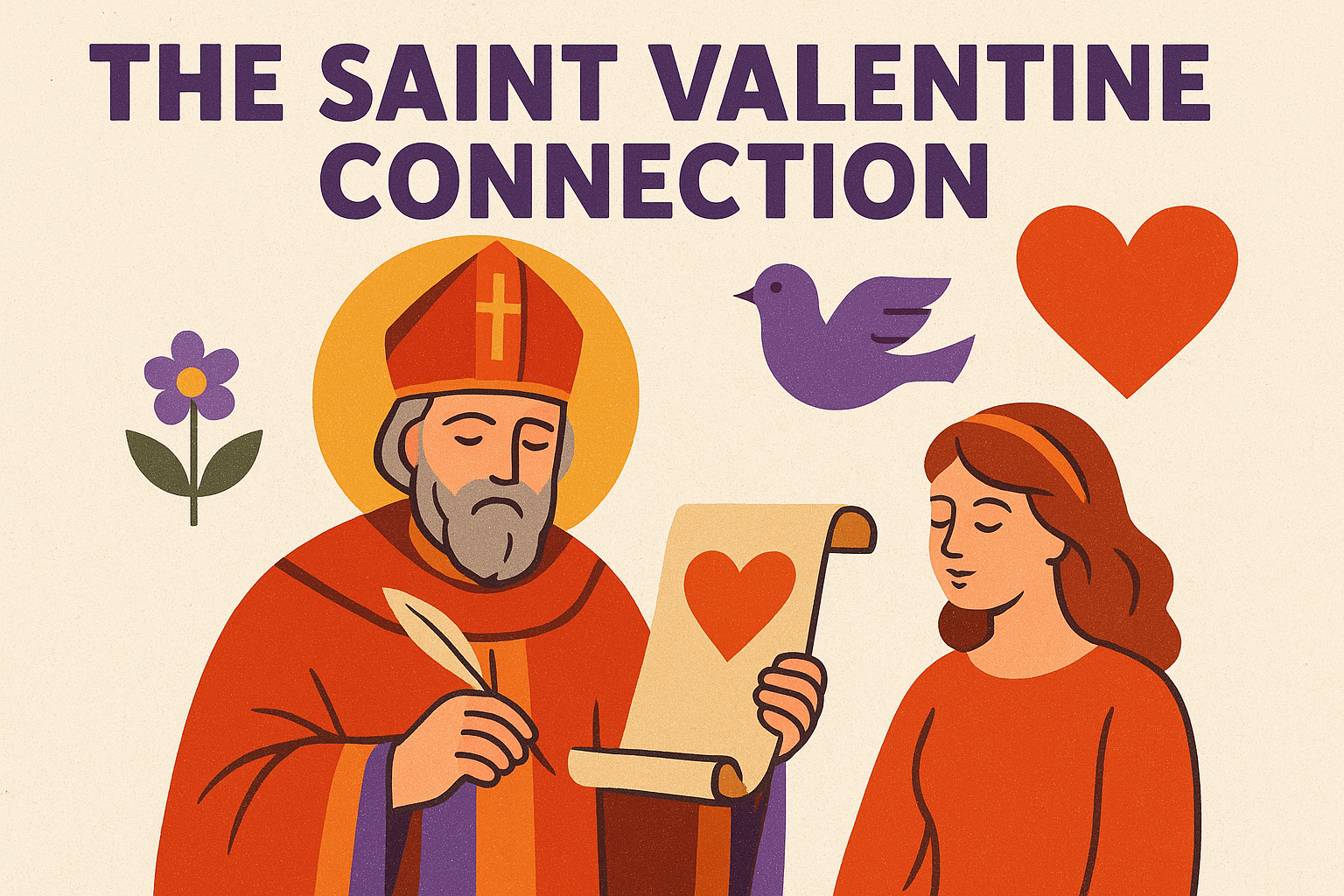
Historical accounts suggest Saint Valentine sent the first valentine greeting from prison, signing his letter to his jailer's daughter with the phrase "from your Valentine" before his execution.
Another version credits Saint Valentine of Terni, a bishop, with performing miraculous healings and facing martyrdom for his Christian faith. These stories gained romantic embellishment over centuries, transforming a religious martyr into a patron saint of love. You benefit from understanding that much of what people believe about Saint Valentine comes from medieval legend rather than verified historical fact.
Medieval transformation into romance
Valentine's Day gained its romantic associations during the Middle Ages, particularly through Geoffrey Chaucer's 1382 poem "Parlement of Foules." Chaucer wrote about birds choosing their mates on "Seynt Valentynes day," creating the first recorded connection between Valentine's Day and romantic love. His contemporary influence spread this idea throughout European courts, where courtly love traditions already flourished.
Handwritten valentines appeared by the 1400s, with the oldest known example dating to 1415 when Charles, Duke of Orleans, wrote love letters to his wife from prison. Commercially printed cards emerged in Britain during the 1700s, and by the mid-1800s, American entrepreneurs like Esther Howland began mass-producing elaborate valentine cards with lace and ribbons. This commercial expansion transformed valentine's day from a religious observance into the consumer-driven holiday you experience today.
Valentine's Day traditions around the world
You discover fascinating variations when you explore how different cultures celebrate valentine's day beyond the American model of roses and dinner dates. Countries around the globe have adapted the holiday to reflect local customs, social values, and cultural priorities that shape their unique approaches to expressing affection. Some nations expand the celebration beyond romantic love to include friendships and family, while others create multi-day festivals with distinct gift-giving rituals. Understanding these global traditions shows you how a single holiday transforms across borders while maintaining its core purpose of strengthening human connections.
Asia's chocolate-driven celebrations
Japan created a distinctive tradition where women give chocolate to men on February 14, reversing typical Western gender dynamics around gift-giving. You would participate in "giri-choco" (obligation chocolate) by giving inexpensive treats to male colleagues and acquaintances, while reserving "honmei-choco" (true feeling chocolate) for romantic interests. Men reciprocate exactly one month later on White Day (March 14) by giving gifts typically worth two or three times the value of what they received.

South Korea extends this pattern even further with multiple romantic holidays throughout the year. You celebrate Valentine's Day and White Day, but also Black Day on April 14, when single people eat black noodles together to commiserate about their relationship status. The country's commercialized approach creates monthly opportunities for couples to exchange gifts and reinforce their bonds through ritual participation.
Latin America's friendship emphasis
Many Latin American countries transform Valentine's Day into "Día del Amor y la Amistad" (Day of Love and Friendship), expanding the celebration beyond romantic partnerships. You acknowledge friends, family members, and romantic partners equally on this day, distributing cards and small gifts throughout your social circle. Colombia celebrates in September rather than February, while Mexico maintains the February 14 date but includes friend exchanges alongside romantic gestures.
This broader interpretation removes the pressure single people often feel on Valentine's Day by making the holiday about all meaningful relationships rather than exclusively romantic ones.
European approaches and variations
Britain and France follow traditions similar to American celebrations, but smaller European nations add unique customs that reflect their cultural identity. Finnish people celebrate "Ystävänpäivä" (Friend's Day), exchanging cards anonymously and focusing on platonic appreciation rather than romance. Denmark introduced the holiday relatively recently in the 1990s, where you give pressed white flowers called snowdrops and send "gaekkebrev" (joking letters) signed only with dots representing the sender's name.
Brazil shifts Valentine's Day entirely to June 12, the eve of Saint Anthony's Day, their patron saint of marriage. You celebrate "Dia dos Namorados" (Lovers' Day) during this time because February falls during Brazilian Carnival season, when the country focuses on different celebrations. This scheduling shows how cultural calendars shape when and how you express romantic affection within different societies.
Valentine's Day symbols and their meanings
You encounter specific symbols repeatedly during valentine's day that carry deeper meanings than their surface appearance suggests. These icons developed over centuries through mythology, religious tradition, and cultural evolution to represent different aspects of love and affection. Understanding what these symbols communicate helps you choose decorations, cards, and gifts that express your intended message more precisely. Each symbol offers you a visual shorthand for emotions that might otherwise require lengthy explanations.
Hearts and Cupid representations
The heart shape you recognize today doesn't actually resemble a biological heart but may have originated from medieval drawings of ivy leaves or the silphium plant seed, both associated with love and fertility. You see hearts everywhere on Valentine's Day because the symbol represents emotional connection and the belief that the heart serves as the center of human affection. Ancient cultures believed the heart controlled emotions rather than the brain, giving the organ romantic significance that persists today.
Cupid appears as a winged infant carrying a bow and arrows in most Valentine's Day imagery. This figure comes from Roman mythology, where Cupid (or Eros in Greek tradition) served as the god of desire whose arrows made people fall in love. You find Cupid depicted as playful and mischievous because ancient myths portrayed him as unpredictable and powerful, capable of making anyone fall for anyone regardless of logic or reason.
Roses and symbolic colors
Red roses dominate Valentine's Day because ancient Romans associated the flower with Venus, their goddess of love. You communicate different messages through rose colors, with red expressing deep romantic love, pink conveying admiration or gratitude, white representing purity and new beginnings, and yellow signifying friendship and joy. The number of roses you give also carries meaning in some traditions, with a dozen roses representing complete devotion.
Different rose colors let you tailor your message beyond generic romance, making your gesture more personal and thoughtful.
Lace, ribbons, and doves round out traditional valentine's day symbols you encounter on cards and decorations. Lace emerged during Victorian times when elaborate valentines became popular, representing luxury and delicate beauty. Doves symbolize lasting love and fidelity because these birds mate for life in nature.
Valentine's Day gift ideas and inspiration
You face endless options when shopping for valentine's day gifts, but the best choices reflect genuine understanding of your recipient's personality and preferences. Moving beyond generic presents requires you to consider what brings them authentic joy rather than what advertisements suggest you should buy. The most memorable gifts connect to shared experiences, inside jokes, or interests they've mentioned but haven't pursued. You create lasting impact when your gift demonstrates that you pay attention to the details of their life.
Jewelry and personal accessories
Jewelry works as a valentine's day gift when you select pieces that match their existing style rather than imposing your taste. You should observe what metals they wear (gold, silver, rose gold), whether they prefer delicate or statement pieces, and what types of jewelry they actually use daily. A necklace from Ezra Gems featuring their birthstone or a design that connects to a meaningful conversation you shared shows more thought than expensive items chosen randomly.
Accessories beyond jewelry offer practical options that recipients use regularly. You might choose a quality leather wallet, a silk scarf in their favorite color, a watch that fits their lifestyle, or personalized items like monogrammed cufflinks or a custom phone case featuring a photo from your relationship. These gifts work well because they integrate into daily routines, reminding your recipient of your connection each time they use them.
Experience-based gifts
You create lasting memories through experiences you share together rather than physical objects that eventually collect dust. Concert tickets, cooking classes, wine tasting tours, spa days, or weekend getaways provide quality time that strengthens your bond. Experience gifts work especially well for people who already own everything they need or who value minimalism over material accumulation.
Shared experiences build relationship satisfaction more effectively than material gifts because you create stories and memories that continue providing value long after Valentine's Day ends.
Subscription services offer ongoing experiences that extend beyond February 14. You might give monthly deliveries of specialty coffee, wine clubs, streaming service memberships, audiobook subscriptions, or meal kit services. These gifts show you considered their interests while providing regular reminders of your thoughtfulness throughout the year.
Handmade and personalized options
Creating something yourself demonstrates time investment and personal effort that manufactured gifts cannot match. You might compile a scrapbook of relationship memories, write and illustrate a short story featuring your recipient, paint or draw their portrait, or record a playlist of songs that capture your connection. These gifts require planning and skill but cost little beyond materials and time.
Personalized gifts from artisans or small businesses split the difference between handmade and purchased options. You can commission custom artwork, order personalized books where your recipient becomes the main character, create photo albums through online services, or request engraved items with meaningful dates or phrases. Digital gifts like professionally edited video montages or custom digital art provide modern alternatives to traditional physical presents while maintaining the personal touch that makes valentine's day gifts meaningful.
Final thoughts
Valentine's Day gives you countless opportunities to show affection whether you celebrate romantically, platonically, or solo. You now understand the holiday's evolution from ancient festivals through Christian martyrdom to modern commercial celebration. The traditions you choose matter less than the genuine intention behind them. Whether you send handwritten notes, plan elaborate dates, or simply spend quality time together, your effort to acknowledge someone's importance creates the meaning that makes February 14 special.
Your valentine's day celebration works best when it reflects authentic understanding of the people you care about. Skip the pressure to match social media perfection or spend beyond your means. Instead, focus on thoughtful gestures that demonstrate you pay attention to what brings joy to others. Beautiful jewelry pieces offer one way to express lasting appreciation through gifts recipients treasure. Whatever approach you select, remember that celebrating connection matters more than following prescribed formulas or meeting external expectations.
Leave a comment