


You found a gorgeous pair of earrings, wore them for a few hours, and suddenly your earlobes are red, itchy, and swollen. Sound familiar? If so, you're far from alone, roughly 10 to 20 percent of the population has a nickel allergy, and nickel happens to be one of the most common metals in fashion jewelry. That's exactly where understanding what is hypoallergenic jewelry becomes a game-changer for your collection and your comfort.
Hypoallergenic jewelry is designed to minimize allergic reactions, but the term itself isn't regulated, which means not every piece labeled "hypoallergenic" actually delivers on that promise. Knowing which metals are genuinely safe for sensitive skin and which ones to avoid can save you from painful reactions and wasted money. It's a distinction that matters whether you're buying for yourself or picking out a gift.
At Ezra Gems, we build our jewelry to be worn daily, through showers, workouts, and everything in between, with no green ears and no tarnish. This guide breaks down what hypoallergenic actually means, which metals earn that label, and how to shop smarter so your jewelry works with your skin instead of against it.
Why hypoallergenic jewelry matters for sensitive skin
Skin reactions to jewelry are more common than most people realize, and they can range from mildly annoying to genuinely painful. Allergic contact dermatitis from jewelry is one of the leading causes of skin allergies worldwide, and for people with sensitive skin, even brief contact with the wrong metal can trigger a full-blown response. Understanding what is hypoallergenic jewelry starts with understanding why certain metals cause these problems in the first place and why the materials you choose have a direct impact on your daily comfort.
The nickel problem
Nickel is the number one culprit behind jewelry-related skin reactions. It's a metal that manufacturers blend into alloys to make jewelry harder, more affordable, and easier to mass produce, which is why it shows up in countless earrings, rings, necklaces, and bracelets across nearly every price point. The problem is that nickel ions are small enough to penetrate your skin's outer layer, and once your immune system identifies them as a foreign threat, it mounts an allergic response that gets harder to ignore over time.
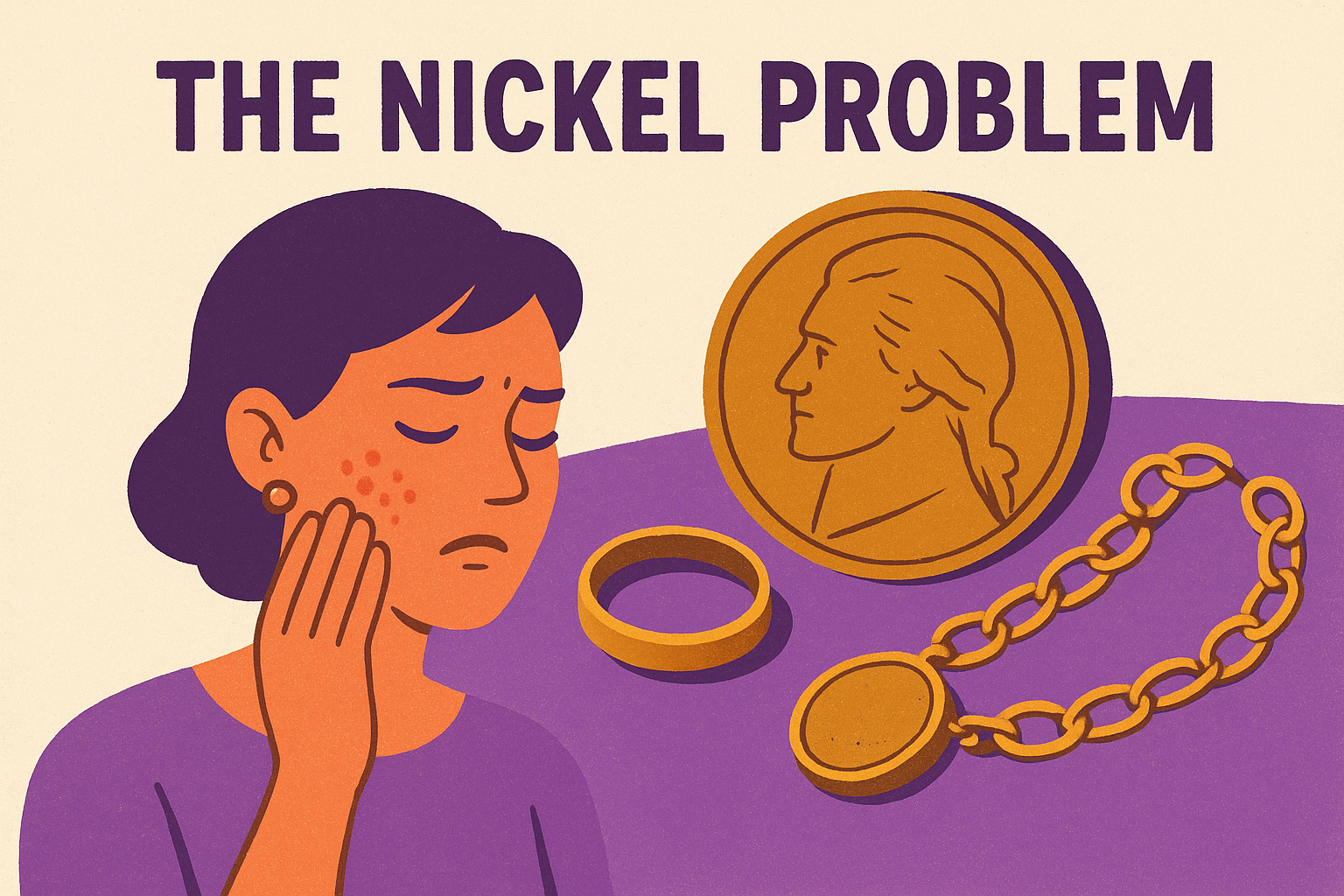
Once your immune system becomes sensitized to nickel, even small amounts of exposure can trigger a reaction, and that sensitivity typically gets worse with repeated contact, not better.
That sensitization doesn't disappear on its own. Every subsequent time you wear nickel-containing jewelry, your body reacts faster and often more intensely. Nickel allergies affect roughly 10 to 20 percent of people in the general population, with rates consistently higher among women, partly because ear piercings during childhood and adolescence expose skin to metal at a stage when sensitization is most likely to develop and stick.
What a reaction looks like
The symptoms of a jewelry allergy are hard to miss once you know what to watch for. Redness, itching, and swelling are the most common signs, typically appearing within 12 to 48 hours of contact with the offending metal. You might also notice dry, cracked, or scaly patches around your earlobes, along your neckline, or on your fingers, depending on which pieces you were wearing and for how long.
In more severe cases, blisters can develop and the skin can weep fluid before crusting over. These reactions aren't life-threatening, but they are genuinely uncomfortable, and repeated exposure over time can cause the affected skin to thicken and discolor. If you've ever written off your skin as "just too sensitive for jewelry," the more likely explanation is that the jewelry itself contained metals your immune system has learned to reject.
Why the right jewelry makes a real difference
Choosing metals that your skin can tolerate isn't a special consideration reserved for people with extreme sensitivities. Anyone can develop a nickel allergy at any point in their life, even after wearing nickel-containing pieces for years without any visible reaction. The immune system builds that sensitivity gradually, which means a pair of earrings you've worn a dozen times without issue can suddenly trigger noticeable irritation the next time you put them on.
Wearing skin-safe jewelry reduces your cumulative exposure to reactive metals, which lowers your risk of developing new sensitivities down the line. It also means you can keep your pieces on for longer stretches without discomfort, including during workouts, through a shower, or overnight, which standard fashion jewelry rarely allows without consequences. The right materials transform jewelry into something you wear freely and forget about, rather than something you watch and take off early.
What makes jewelry hypoallergenic
The short answer is material composition. Hypoallergenic jewelry is built from metals that are unlikely to trigger an immune response, which typically means they contain little to no nickel, cobalt, or chromium. These three metals are responsible for the overwhelming majority of jewelry-related contact allergies, so removing them from the formula removes the primary source of irritation for most people with sensitive skin. That sounds simple, but the reality of how jewelry is manufactured and labeled makes it a bit more complicated.
The term has no official definition
When you ask what is hypoallergenic jewelry, one of the first things to know is that no government body or industry standard formally defines or regulates the word "hypoallergenic." Any manufacturer can print it on a label without meeting a specific threshold for material purity or allergy risk. That doesn't make the label worthless, but it does mean you need to look past the marketing copy and examine the actual metal composition before you buy.
Check the product description for specific metal disclosures. If a brand doesn't list what their jewelry is made from, treat that as a warning sign and keep looking.
Metal purity and alloy composition
Purity is the core factor that determines whether a metal is genuinely skin-safe. Pure metals like solid titanium, surgical-grade stainless steel, and high-karat gold are generally well-tolerated because they don't release reactive ions the way lower-grade alloys do. Gold is a useful example: 24-karat gold is nearly pure and rarely causes reactions, while lower karats are blended with a higher percentage of other metals, which may include nickel depending on the manufacturer and the specific alloy used.
Alloy composition matters just as much for plated pieces. If the base metal underneath a gold or silver coating contains nickel, that nickel will eventually reach your skin once the plating wears thin. This is exactly why a piece can feel perfectly fine when it's new but start causing irritation after a few months of regular wear. High-quality plating applied over a nickel-free base metal is what separates a genuinely skin-safe piece from one that only carries the hypoallergenic label without backing it up with the right materials underneath.
Metals that are usually safe for sensitive skin
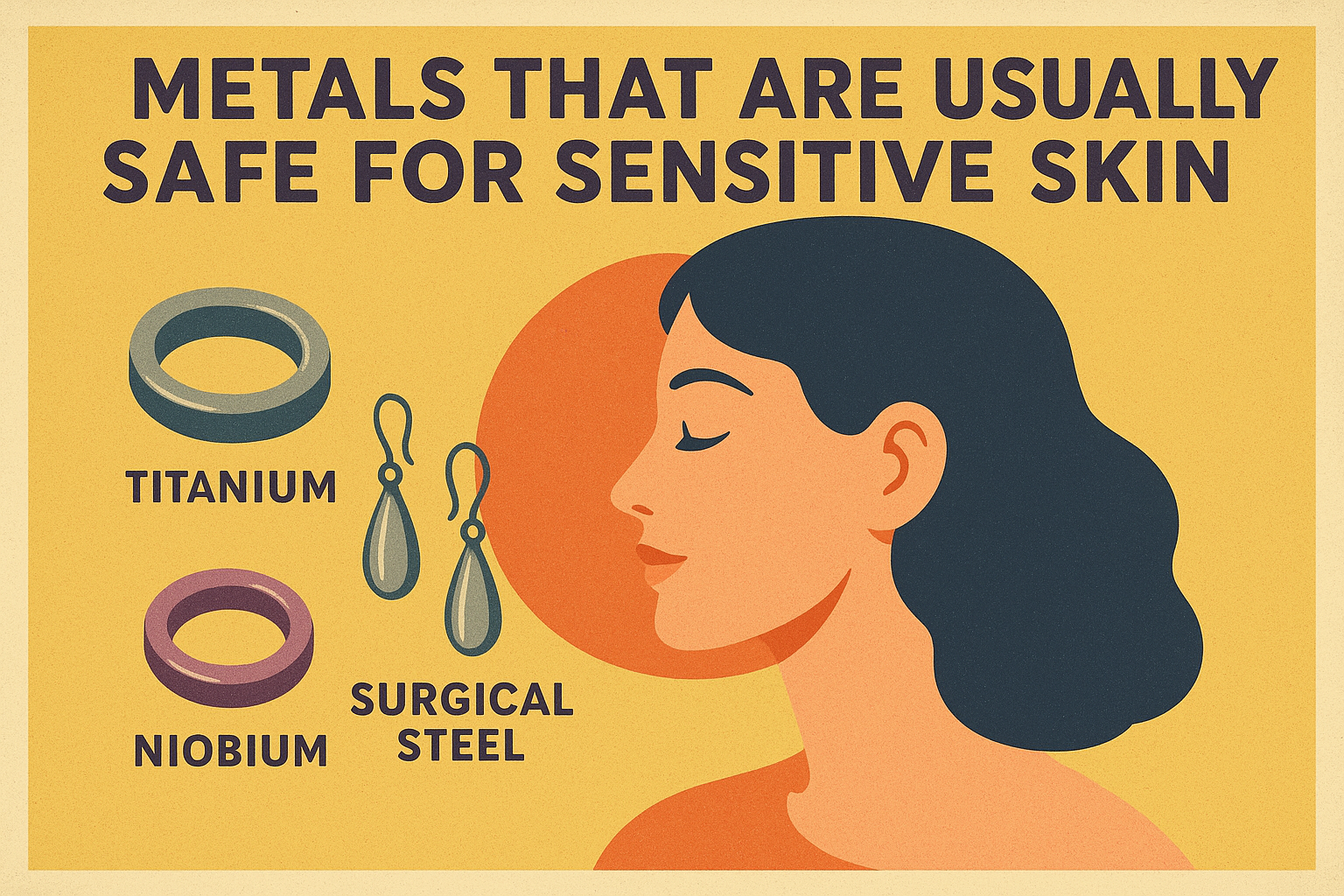
When you're working out what is hypoallergenic jewelry in practical terms, the answer starts with a short list of metals that have consistently low rates of allergic reaction across sensitive skin types. Not every metal on this list is equally pure or equally priced, but all of them offer a meaningful step up from the nickel-heavy alloys found in standard fashion jewelry.
Titanium, surgical steel, and niobium
These three metals sit at the top of the skin-safe spectrum for different reasons. Titanium is the most biocompatible option available, meaning it produces almost no reaction even in people with severe sensitivities, which is why it's the material of choice for medical implants and body jewelry. Surgical-grade stainless steel (316L) is more widely available across price points and works well for most people because its nickel content is tightly bound within the alloy rather than free to migrate onto your skin. Niobium is a lesser-known but genuinely nickel-free metal that's gaining traction for earrings and sensitive piercings.
Here's a quick comparison to help you choose:
| Metal | Nickel-free? | Best for |
|---|---|---|
| Titanium | Yes | Earrings, rings, body jewelry |
| Surgical steel (316L) | Near-zero free nickel | Everyday wear, all types |
| Niobium | Yes | Earrings, sensitive piercings |
Titanium is the most reliable choice if you've reacted to everything else, but surgical-grade 316L steel covers the vast majority of people with nickel sensitivities at a much lower price point.
Precious metals: gold, platinum, and silver
Platinum is naturally free of nickel and ranks among the most skin-compatible precious metals available, though its price reflects that purity. Sterling silver (.925) is safe for most people because it's 92.5 percent pure silver, but it's worth checking whether the remaining alloy portion includes nickel, since some manufacturers use it as a filler without disclosing it prominently.
For gold, the karat level determines how much additional metal sits alongside the gold, which is why higher karats generally carry less risk for people with sensitive skin. Solid gold at 14k or higher gives you a reliable balance between durability and purity, and it's a practical starting point for anyone who has had reactions to lower-quality gold pieces in the past.
Gold and gold-plated jewelry what to know
Gold is one of the most popular choices for people with sensitive skin, but not all gold jewelry is created equal. The word "gold" on a product label covers everything from nearly pure 24-karat pieces to thin gold coatings applied over metals that may contain nickel. Understanding the difference between these options is a key part of answering what is hypoallergenic jewelry when it comes to your everyday accessories.
Karat counts
The karat number tells you exactly how much of the metal is pure gold. Pure gold is 24 karats, meaning nearly 100 percent of the material is gold itself. Every step down from 24k introduces a higher percentage of filler metals into the alloy, and those fillers can include nickel, zinc, or copper depending on the manufacturer and the intended price point.
Here's how common karat levels compare:
| Karat | Gold content | Skin-safety note |
|---|---|---|
| 24k | 99.9% gold | Most skin-safe, but soft for daily wear |
| 18k | 75% gold | Good balance of purity and durability |
| 14k | 58.3% gold | Widely used, verify alloy composition |
| 10k | 41.7% gold | Higher filler content, higher reaction risk |
If you have a nickel sensitivity, aim for 14k or higher and confirm with the seller that the alloy doesn't use nickel as a filler metal.
What gold-plated really means
Gold-plated jewelry has a thin layer of gold deposited over a base metal, which is usually a less expensive alloy like brass or copper. The plating itself is rarely where the problem starts for sensitive skin. The real concern is what sits underneath it, because once that gold layer wears down from moisture, friction, and daily contact, the base metal begins touching your skin directly.
For gold-plated pieces to be a reliable option for sensitive skin, the base metal needs to be nickel-free from the start. High-quality plated jewelry built over a surgical-steel or titanium base holds up well for daily wear, including through showers and workouts, without exposing your skin to reactive metals. That combination of a clean base and durable plating thickness is exactly what separates jewelry you can wear all day from pieces you need to take off before the afternoon is over.
How to shop for hypoallergenic jewelry online
Shopping for jewelry online means you can't physically inspect a piece before it arrives, which makes it easy to get burned by vague product descriptions and misleading labels. Knowing what is hypoallergenic jewelry at a material level gives you a real advantage here, because you know exactly what information to look for and what to skip past when you're browsing product pages.
Read the material details closely
Every trustworthy jewelry listing should tell you what the piece is made from, including both the base metal and the plating material if applicable. Look for specific language like "surgical-grade 316L stainless steel base," "titanium posts," or "14k gold over a nickel-free alloy." If the listing only says "gold-toned metal" or "alloy," that's too vague to tell you anything useful, and you should treat it as a sign that the brand is either hiding the composition or doesn't know it.
If a product listing can't tell you what the metal is, the brand can't credibly promise the piece is safe for sensitive skin.
Pay attention to whether the listing distinguishes between the plating and the base metal separately. A piece described as "18k gold plated" without any mention of what sits underneath the plating leaves the most important piece of information out entirely. Both details need to be present and specific before you can evaluate the piece honestly.
Look at what other buyers say about skin reactions
Customer reviews are one of the most useful tools you have when shopping for skin-safe jewelry online. Sort by verified purchase reviews and scan for any mentions of redness, itching, or irritation. A few complaints scattered across hundreds of positive reviews may not represent the typical experience, but a pattern of skin reaction reports across multiple reviewers tells you something about the material quality that the product description won't.
Check the brand's return policy before you buy
Even with solid research, your skin may still react to a piece that technically checks all the right boxes. A clear, no-hassle return window gives you a genuine safety net when you're trying out new materials or new brands for the first time. Look for brands that offer at least 30 days for returns and don't require you to prove a defect to qualify, so you're covered if the piece simply doesn't agree with your skin.
How to tell if jewelry is not hypoallergenic
Knowing what is hypoallergenic jewelry helps you recognize pieces that fall short of that standard before they cause problems. Some warning signs show up on the piece itself before you ever put it on, while others only appear after you've been wearing it for a few hours. Learning to spot both categories puts you in a much stronger position when you're evaluating a piece you already own or something you picked up from a store that didn't disclose its materials clearly.
Physical signs on the piece itself
Discoloration on the surface is one of the clearest indicators that a piece contains reactive metals. If you notice green, gray, or dark streaks forming on areas of the jewelry that contact your skin regularly, that's oxidation from metals like copper or brass reacting with moisture and air. The same metals that cause that surface discoloration are often the ones most likely to transfer onto your skin and trigger irritation.
Check the back of earring posts and the inside of ring bands closely. These are the spots that experience the most prolonged contact with your skin, so they tend to show wear faster than the decorative front face. If the plating looks thin, scratched through, or if you can see a noticeably different metal color underneath, the base metal is already exposed and coming into contact with your skin whether you've noticed a reaction yet or not.
Warning signs when you're wearing it
Itching or warmth that starts within the first few hours of putting on a piece is a reliable early signal that something in the metal is irritating your skin. You might dismiss it as the jewelry sitting awkwardly or the clasp rubbing, but if the sensation persists or spreads to the surrounding skin, that's your immune system responding to the metal, not a fit issue.
Redness that fades quickly after you remove a piece and returns the next time you wear it is a pattern worth taking seriously, your skin is telling you the metal composition is the problem.
Green or dark marks left on your skin after removing a piece confirm that metal ions transferred onto your skin during wear. This doesn't always mean you'll develop a full allergic reaction, but it does mean the piece contains reactive metals that don't belong in contact with your skin for extended periods.
Care tips to avoid irritation and tarnish
Even the best hypoallergenic jewelry needs consistent care to stay that way. Skin-safe metals and quality plating can degrade faster than you'd expect when exposed to the wrong substances, and once the surface layer breaks down, the metals underneath start doing more damage to your skin. Good care habits are the difference between jewelry that lasts years and pieces that start causing reactions within a few months, which is especially relevant if you spent time researching what is hypoallergenic jewelry to find materials your skin actually tolerates.
Keep moisture and chemicals away from your pieces
Water itself isn't always the problem, but the substances that come with it are. Chlorine from pools and hot tubs is one of the fastest ways to degrade metal plating, and it can accelerate oxidation on even high-quality pieces. Saltwater from the ocean does the same thing, and the combination of salt and prolonged submersion speeds up the breakdown significantly.
Perfume, lotion, and hairspray are also worth watching. Apply these products first and let them dry fully before putting your jewelry on, so the chemicals don't sit directly on the metal surface. The same rule applies to sunscreen, which contains compounds that react with certain metals and cause discoloration faster than most people expect.
Taking your jewelry off before swimming and before applying products costs you thirty seconds and extends the life of your pieces by months.
Clean and store your pieces correctly
A soft, dry cloth is all you need for regular cleaning after daily wear. Wipe down your pieces at the end of the day to remove skin oils, sweat, and product residue before they have a chance to sit on the metal surface overnight. Avoid rough materials and skip jewelry cleaning solutions unless the brand specifically recommends them for your metal type, since harsh cleaners strip plating.
Storage matters just as much as cleaning. Keep your pieces in individual pouches or a lined jewelry box rather than piled together in a drawer, because metal-on-metal contact causes scratching that wears plating down faster. Humidity accelerates tarnish, so storing your jewelry somewhere dry and away from bathroom steam keeps the surface intact longer and reduces the chance of skin contact with exposed base metals.
Hypoallergenic jewelry questions answered
Even after doing your research on what is hypoallergenic jewelry, a few practical questions tend to come up before or after you make a purchase. The answers below cover the most common ones so you can buy with confidence and wear without second-guessing.
Is hypoallergenic jewelry completely reaction-proof?
No, and it's important to set that expectation clearly. Hypoallergenic means lower risk, not zero risk, because individual immune systems respond differently to different materials. Most people with nickel sensitivities do well with titanium, surgical steel, or high-karat gold, but a small number of people react to metals that are broadly considered safe. If you try a new material and notice redness or itching within the first day, remove the piece and try a different base metal before writing off jewelry altogether.
Titanium is the most universally tolerated metal available for jewelry, making it the best starting point if you've reacted to multiple materials in the past.
Can you wear hypoallergenic jewelry in water?
It depends on the specific metal and the quality of the finish. Solid titanium and surgical-grade stainless steel handle water well, including showers and light swimming, without significant degradation. Gold-plated pieces built over a nickel-free base can also handle daily water exposure as long as the plating is thick and applied over a clean, reactive-free base metal. Chlorinated pools and saltwater are a different story for any metal, and you should remove your pieces before swimming in either to protect the surface and extend how long the piece stays skin-safe.
Does hypoallergenic jewelry tarnish?
Solid hypoallergenic metals like titanium and platinum don't tarnish in the way that copper or brass-based alloys do. Surgical steel resists tarnish well under normal conditions. Gold-plated pieces can show wear over time, but the underlying metal, not the gold layer, is usually what oxidizes once the coating thins. Choosing thick plating over a nickel-free base slows that process considerably, especially if you follow the care habits covered earlier in this guide.
How do you know if you have a metal allergy?
Consistent redness, itching, or swelling in areas where your jewelry makes contact is the most reliable signal. A dermatologist can confirm a nickel allergy through a patch test, where small amounts of common allergens are applied to your skin under a controlled setting to identify which metals trigger a response. If your reactions are frequent and severe, getting tested gives you a definitive list of metals to avoid rather than guessing through trial and error.
Final takeaways
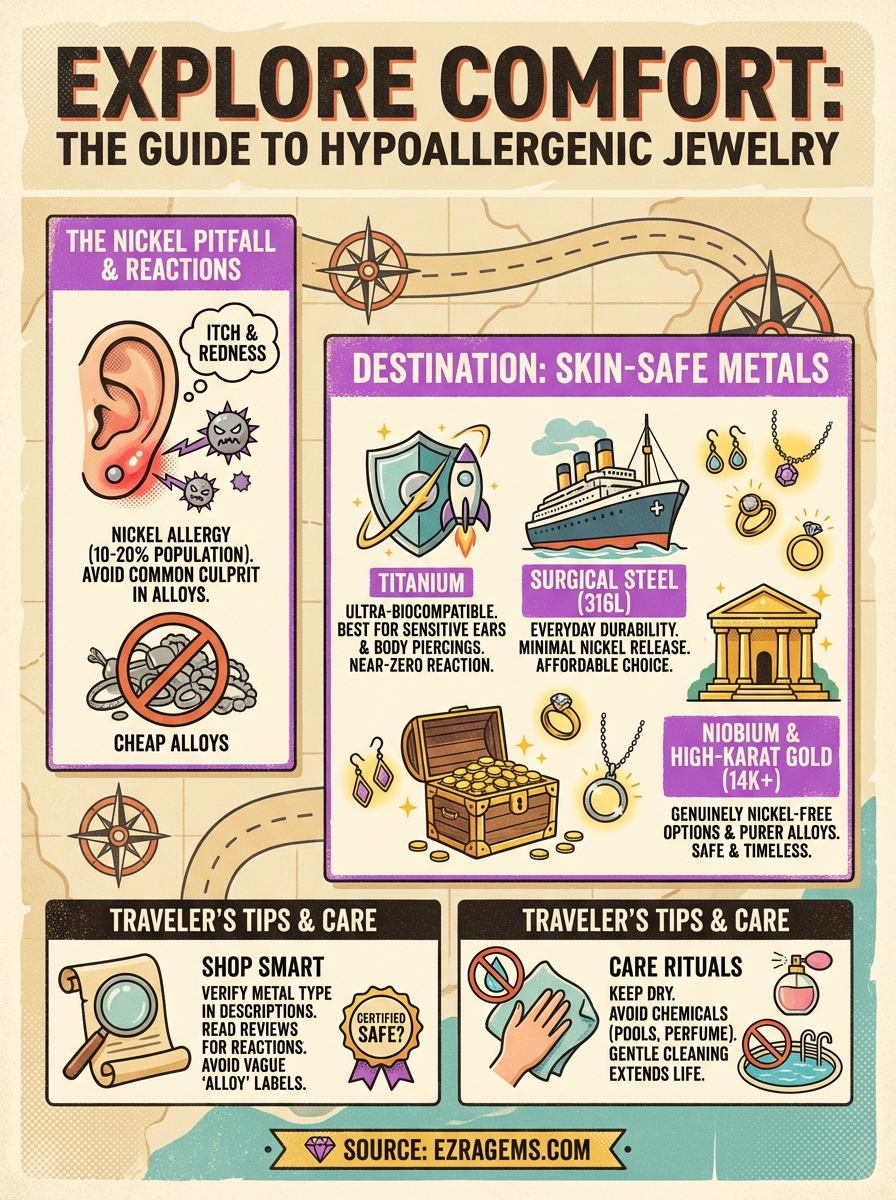
Understanding what is hypoallergenic jewelry comes down to one core principle: the metal touching your skin determines whether you wear a piece comfortably or spend the afternoon dealing with redness and itching. Nickel is the primary trigger for most jewelry-related reactions, and avoiding it means looking past the label to check what the base metal and alloy actually contain. Solid titanium, surgical-grade stainless steel, and high-karat gold over a nickel-free base are your most reliable options for daily wear without irritation.
Your care habits matter just as much as your material choices. Keeping pieces dry, storing them properly, and cleaning them regularly extends both their skin-safety and their appearance over time. The right jewelry should stay on your body without demanding constant attention or causing discomfort.
If you're ready to build a collection that works with your skin, browse skin-friendly everyday jewelry at Ezra Gems and find pieces built to last.
Leave a comment