


The metals that genuinely resist rust are 316L surgical stainless steel, titanium, solid 14k+ gold, and platinum. If a piece is plated rather than solid, look for PVD over stainless instead of standard electroplating over brass. Before buying, check the listing for three things: the exact base metal, the plating method, and whether reviewers mention wearing it in the shower or pool.
TL;DR:
- Seek jewelry made with 316L stainless steel, titanium, platinum, or 14 karat+ gold for the best water resistance and tarnish prevention.
- Prioritize PVD coatings over electroplating, as PVD bonds more durably and resists scratches better in water exposure.
- Verify the base metal is explicitly listed, and avoid products with vague descriptions like “gold tone” or unspecified alloys.
- Be cautious of plated pieces over brass or low-karat gold, which tend to discolor or tarnish quickly when exposed to moisture.
- Proper care, including rinsing, drying, and storing pieces separately, significantly extends jewelry longevity in wet conditions.
Table of Contents
- Which Metals Actually Resist Rust?
- PVD vs. Electroplating: Which Coating Actually Lasts?
- How Do You Choose Rust-Resistant Jewelry for Daily Wear?
- How Do You Care for Rust-Resistant Jewelry?
- What Ezra Gems Builds Into Every Piece
- A Practical, Water-Ready Jewelry Setup
- Which Ezra Gems Pieces Meet the Checklist?
- Sources
Which Metals Actually Resist Rust?
Rust is oxidation on iron and iron alloys. Most jewelry rust problems trace back to a base metal that was never designed to get wet in the first place, and understanding why some metals shrug off water while others discolor within weeks starts with a bit of chemistry.
Stainless steel resists corrosion because it contains chromium, and once chromium content reaches the minimum threshold, it reacts with oxygen to form an invisible, self-repairing layer called a passive film. Scratch it and it rebuilds itself almost instantly, which is why a stainless ring can survive years of showers without pitting the way a plain steel one would. This mechanism is well documented in metallurgical references on stainless steel.
Not all stainless is equal, though, and this is where a lot of jewelry shoppers get misled. Grade 304 is the more common, cheaper stainless alloy. Grade 316 adds molybdenum, which specifically improves resistance to chloride, the compound found in sweat, pool water, and ocean water. If you swim, work out daily, or live somewhere humid, 316 (often labeled 316L for its lower carbon content) is generally considered the more durable choice, and it’s a big part of why the term “surgical stainless steel” shows up so often on jewelry that’s marketed for daily wear.
Titanium and platinum sit in a different category entirely. Both are chemically inert in normal wear conditions, meaning they don’t meaningfully react with air, water, or skin oils at all. Solid gold behaves well too, but only above a certain purity. At 14 karat and higher, gold contains sufficient actual gold content to resist tarnish and corrosion; lower karats contain more reactive alloy metals, making them more prone to tarnishing.
The metals to watch out for:
- Brass oxidizes quickly in moisture and often turns skin green or black.
- Copper reacts fast with air and sweat, producing a greenish patina.
- Gold-plated brass looks fine until the plating wears thin, then the brass underneath takes over.
- Low-karat gold alloys (under 14k) contain enough non-gold metal to tarnish over time.
Stainless steel is corrosion resistant, not corrosion proof. In aggressive or contaminated conditions, even well-made stainless can stain, which is a distinction worth remembering before you assume any “stainless” label solves every problem, as Outokumpu’s metallurgical guidance points out.
PVD vs. Electroplating: Which Coating Actually Lasts?
The finish on a piece of jewelry matters almost as much as the metal underneath it, and this is where most waterproof jewelry claims either hold up or fall apart.
PVD (physical vapor deposition) bonds a metal coating to the base at a molecular level inside a vacuum chamber. The result is a coating that’s dense, thin, and genuinely hard to scratch off, which is why PVD coatings over stainless steel create some of the most water-durable finishes on the market, according to Mejuri’s guide on waterproof jewelry.
Electroplating uses an electrical current to deposit a thin metal layer, usually gold, onto a base metal. It’s cheaper and faster to produce, but the bond is weaker and the layer is typically thinner. Vermeil is a specific type of electroplating, sterling silver plated with a thicker layer of gold, that lasts longer than standard gold plating but still isn’t as durable as PVD.
Here’s the detail that trips people up: the coating is only half the story. What’s underneath it matters just as much.
- Plating over stainless steel wears gracefully. Even if the gold layer thins, you’re left with skin-safe, water-resistant steel.
- Plating over brass wears badly. Once the gold rubs off, the brass reacts with moisture and skin, causing discoloration and sometimes irritation.
Red flags to watch for on a product listing: no stated base metal, vague language like “gold tone” with no plating method named, or a price so low it likely means thin electroplating over an unspecified alloy.
Pro Tip: Search a product page for the words “base metal.” If you can’t find that phrase or its equivalent anywhere in the description, assume the seller doesn’t want you to know what’s underneath the plating.
Plating thickness (measured in microns), the bonding method, and the quality of the base metal’s surface finish before coating all affect how long a piece stays looking new. A well-finished stainless piece with a thick PVD layer will outlast a rough-finished brass piece with thin electroplating, even if they look identical on day one.
How Do You Choose Rust-Resistant Jewelry for Daily Wear?
Shopping for jewelry that survives real life comes down to reading past the marketing copy and checking a short list of specifics.
- Look for an explicit base metal. “316L stainless steel” or “surgical stainless steel” is a real disclosure. “Premium alloy” is not.
- Check the plating type, if any. PVD is preferable to standard electroplating for anything you plan to wear in water.
- Confirm it’s nickel-free. This matters for sensitive skin and is often listed alongside material specs.
- Read the warranty and return policy. Brands confident in their materials tend to back them with a real policy.
- Search reviews for real-world water use. A handful of reviewers mentioning showers, pools, or workouts tells you more than any product description.
The order of that list matters. Base metal outranks surface finish every time. A plain, unplated stainless steel piece will outlast a beautifully plated piece over a reactive base, so when you have to choose between the two, choose the base metal that survives on its own.
On pricing: durable stainless steel and PVD-coated stainless can be genuinely affordable because the raw material itself isn’t expensive, the cost comes from the coating process and craftsmanship, not the metal. Solid gold and platinum cost more because the material itself carries that value. Neither is a mistake. They’re just solving different problems, one for durability at a reasonable price, the other for the reasons people buy solid metal.
How Do You Care for Rust-Resistant Jewelry?
Even non-reactive metals benefit from basic care. The point isn’t to prevent rust so much as to protect the passive film and finish that’s already doing the work.
Daily habits that matter:
- Rinse jewelry after exposure to salt water, chlorine, or heavy sweat.
- Dry pieces completely before putting them away.
- Apply lotion and perfume before putting jewelry on, not after.
- Clean with mild soap and warm water using a soft cloth for routine upkeep.
Stainless steel’s passive layer is vulnerable to chloride exposure, low-oxygen crevices, and trapped debris. A ring with a tight setting or a chain with small links can trap moisture and residue in spots that never fully dry, which is often where discoloration starts even on genuinely good metal.
If you notice a small brown or reddish spot, don’t assume the worst. That’s frequently iron contamination, meaning tiny particles from another metal source have landed on the surface, rather than the stainless piece corroding itself. A gentle cleaning and inspection usually resolves it and tells you whether the mark was surface debris or something structural. True pitting looks different: it’s usually a small, permanent divot rather than a surface stain that wipes away.
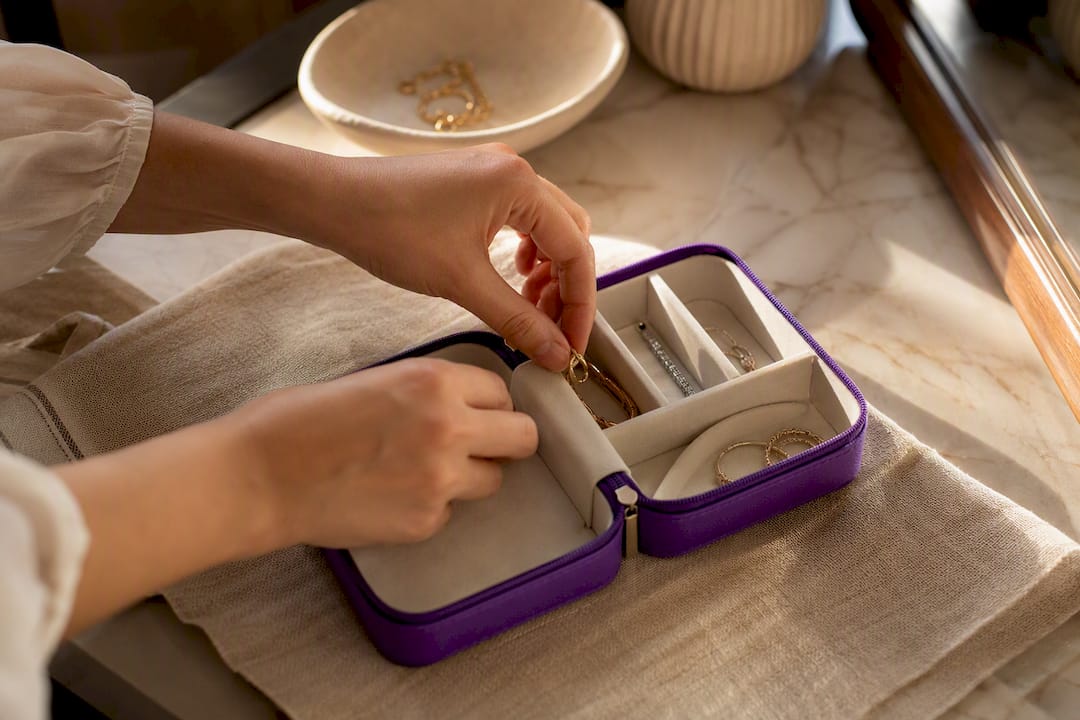
For storage, keep pieces dry and separated in a fabric-lined box or pouch rather than piled together in a humid bathroom drawer. Humidity and contact with other metals both speed up surface tarnish, even on materials that resist it well on their own.
What Ezra Gems Builds Into Every Piece
Ezra Gems designs around one core principle from this entire guide: base metal first, plating second. Every piece starts with a foundation meant to survive contact with water, not just look good in a product photo.
The brand’s core material choices include:
- 18k gold plating over surgical stainless steel, so the base underneath the finish is already water-resistant on its own.
- Genuine pearls, acrylic, and resin used in earrings, necklaces, bracelets, and rings for daily wear.
- Nickel-free construction across the catalog, aimed at sensitive skin and long-term comfort.
Customer feedback consistently points to pieces holding their color and shine through regular wear, showering, and swimming, which lines up with the material logic covered throughout this guide: a stainless base survives even when a coating eventually shows wear.
Three pieces built around that logic are the Unique Lock Stainless Steel Earrings, the Classic Stainless Steel Hoop Earrings, and the Two-Tone Bead Chain Bracelet, each using a stainless foundation rather than a reactive alloy hidden under plating. You can read more about how the brand approaches tarnish resistance in its own material breakdown.
A Practical, Water-Ready Jewelry Setup
If you only want to own a handful of pieces that never let you down, build around three categories instead of one. Start with a stainless steel staple, a plain chain or a pair of simple hoops, that you never have to think about before a shower or a swim. Add a plated accent piece where PVD sits over a stainless base, giving you variety in color without gambling on durability. Round it out with one titanium or solid-gold piece you treat as a long-term keeper, something with enough material integrity to outlast trends.
Replace plated pieces when the coating visibly thins, not before. There’s no reason to retire a piece early just because it’s not solid gold. Balance cost against how often you actually wear something in water. A $30 stainless piece you swim in every week is doing more real work than a $300 piece sitting in a drawer.
— Ezra
Which Ezra Gems Pieces Meet the Checklist?
Every rule in this guide points to the same shopping habit: check the base metal before you check the price. Ezra Gems built its catalog around that exact priority, which is a straightforward advantage if you’ve just spent this article learning what to look for and don’t want to start digging through vague listings from unfamiliar sellers.
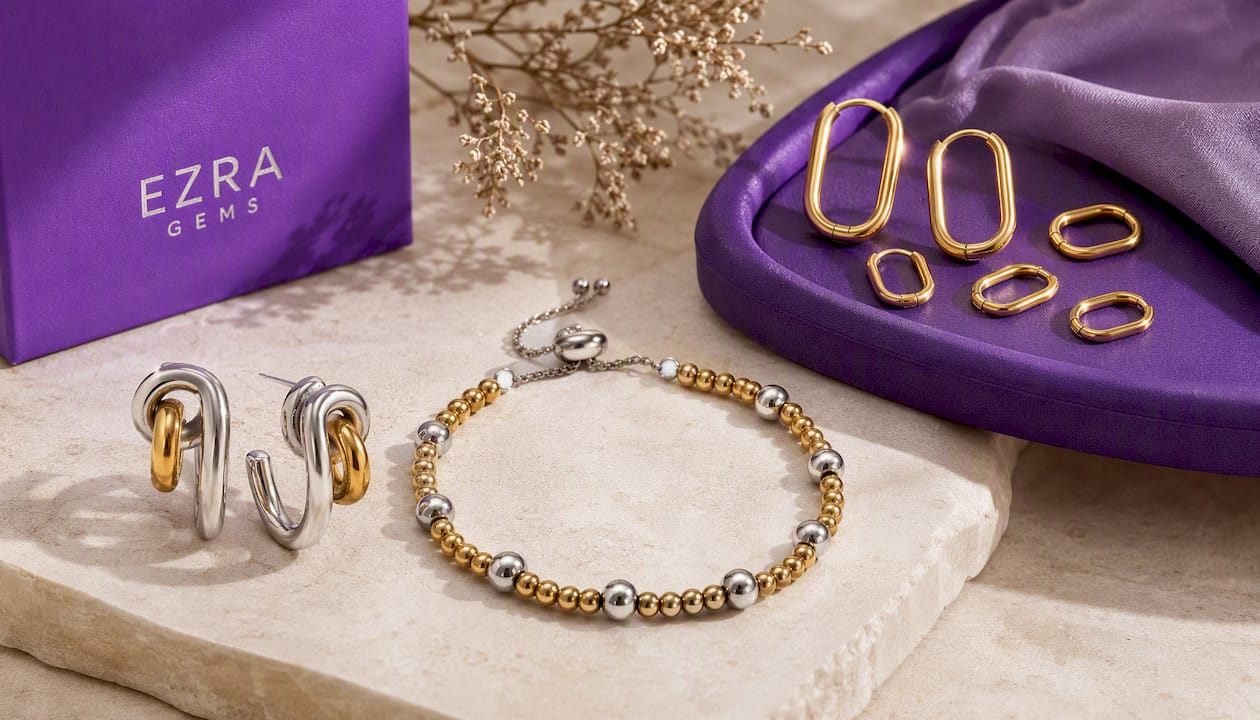
The earrings use a surgical stainless steel base, meaning the material doing the work is the same one covered in the metallurgy section above, not a coating masking something less durable. Other pieces offer no-fuss daily staples suitable for shower, workout, or beach use. Some pieces pair plating over a stainless foundation, giving two-tone styling without the risk that comes from plating over brass.
If you want to browse further, Ezra Gems also has a curated list of waterproof jewelry under $50 worth checking before you buy anywhere else. Start with the stainless steel earrings collection and check the product description for the same base metal and plating details this guide just taught you to look for.
Deje un comentario