


Most jewelry boxes are full of pieces that never get worn. A statement necklace from a vacation, earrings that matched one specific outfit, a ring that turned your finger green after two days. Sound familiar? The real challenge isn't finding jewelry you like, it's figuring out how to choose everyday jewelry that actually holds up and works with everything you already own. That distinction makes all the difference between a cluttered collection and a curated rotation you reach for daily.
The truth is, picking jewelry for everyday wear comes down to a few key decisions most people skip. Material matters more than aesthetics alone. Scale and proportion determine whether a piece feels right or slightly off. And layering compatibility, how well your necklaces, rings, and bracelets play together, is what separates a pulled-together look from a pile of accessories. These aren't things you figure out by browsing randomly; they take a bit of intention upfront.
At Ezra Gems, we design gold-plated jewelry specifically built for daily wear, waterproof, tarnish-resistant, and made to layer without overthinking it. So we've seen firsthand what works (and what gets returned). This guide breaks down exactly how to build an everyday jewelry collection that lasts through showers, workouts, and everything in between, while still looking intentional and put-together. We'll cover materials, proportions, layering strategies, and the specific pieces worth starting with, so you can stop second-guessing and start wearing your jewelry with confidence.
What "everyday jewelry" really means
"Everyday jewelry" gets used a lot, but most people haven't actually defined it for themselves. At its core, everyday jewelry means pieces you put on without thinking and take off without regret. Not special-occasion pieces you worry about losing or damaging. Not statement earrings that demand a whole outfit built around them. Just reliable, comfortable, versatile pieces that integrate into your real routine without any friction.
Occasion jewelry vs. everyday jewelry
The line between the two matters more than most people realize. An occasion piece is something you choose deliberately for a specific context: a wedding, a work event, a night out. Everyday jewelry has to perform across multiple contexts without looking out of place. Think about a simple gold chain that works with a work blouse, a gym tank, and a casual weekend outfit. That's the standard an everyday piece has to meet.
Occasion jewelry often prioritizes visual impact over durability. It can be heavier, more delicate, or more elaborate because you're wearing it for a few hours in a controlled setting. Everyday jewelry has to survive more: sweat, soap, layering, and constant handling. That's a completely different design brief, and understanding that difference helps you shop more deliberately instead of guessing at checkout.
The three qualities that define a true everyday piece
When you're figuring out how to choose everyday jewelry, these three qualities are the filter to run every piece through before you buy it.
A piece that fails any one of these three tests will end up sitting in your jewelry box unworn within a month.
Durability means the piece holds up to water, sweat, and daily contact without fading, tarnishing, or breaking down. Versatility means it pairs with at least four or five different looks you already own, not just one specific outfit. Comfort means you genuinely forget you're wearing it after the first five minutes.
Here's how each quality translates into real features to look for while shopping:
| Quality | What to look for |
|---|---|
| Durability | Waterproof coating, tarnish-resistant metals, solid construction |
| Versatility | Neutral metal tone, simple silhouette, mid-scale sizing |
| Comfort | Lightweight design, smooth edges, secure but not tight closures |
Why minimalist doesn't mean boring
A lot of people hear "everyday jewelry" and picture a plain stud earring and nothing else. That's a misread. Everyday pieces can absolutely have personality: a pearl detail, a subtle geometric shape, a mixed-metal finish. The key is that the design doesn't fight with the rest of your wardrobe on a typical Tuesday. Minimalist in this context means easy to wear, not stripped of character.
Your everyday collection can still feel distinctly yours. A dainty layered necklace stack, a bold but low-profile ring, a mix of gold hoops in different sizes: these aren't boring choices. They're intentional ones, and that intention is exactly what separates a collection you actually reach for from one that collects dust in a drawer.
Step 1. Match your picks to your real life
Before you think about trends or aesthetics, map your jewelry choices to how you actually spend your days. The biggest mistake people make when learning how to choose everyday jewelry is picking pieces they love in isolation, without considering whether those pieces fit into their real schedule. A delicate chain with a pendant that snags on everything isn't a good fit for someone who works with their hands. A chunky ring that digs into your palm during a two-hour commute isn't going to last long.
Take stock of your daily routine
Your routine tells you exactly what demands your jewelry needs to meet. Think through a typical weekday from start to finish. You wake up, maybe work out, commute, sit at a desk or move around a job site, run errands, then wind down. Each part of that day creates different conditions for your jewelry: sweat, friction, water, and contact with surfaces.
The goal is to choose pieces that can survive your whole day without you having to think about them once.
Write out your typical day in three to five bullet points, then note where jewelry could become a problem. This isn't about ruling out pieces you love; it's about knowing exactly when and how you need them to perform.
Match scale to your environment
Scale matters more than most people factor in. Large hoops or dangling earrings work great for a remote worker who spends most of the day at home. For someone in a physical job or surrounded by kids, those same earrings become a liability. Smaller, closer-to-the-ear styles suit active or hands-on days far better.
Here's a quick reference to match jewelry scale to your lifestyle:
| Lifestyle | Best scale | Pieces to prioritize |
|---|---|---|
| Office or remote work | Small to medium | Studs, slim chains, thin rings |
| Active or physical job | Small, secure | Flat studs, snug bands |
| Creative or social work | Medium to statement | Layered necklaces, bold rings |
| Mix of all three | Versatile, medium | Huggies, simple pendants, stackable rings |
Build your personal checklist
Before you buy any piece, run it through this quick three-question checklist:
- Does it fit my most common setting? (office, gym, outdoor, etc.)
- Will it stay comfortable for eight-plus hours of wear?
- Can I wear it with at least four things I already own?
If you answer yes to all three, the piece earns its place in your everyday rotation.
Step 2. Choose durable metals and materials
Material is the single biggest factor in whether a piece survives daily wear or ends up discolored after a week. When you're working out how to choose everyday jewelry, the metal you pick determines how often you'll need to replace pieces and whether your skin will react to them. Plenty of jewelry looks identical at point of sale but performs completely differently six months in. Knowing what to look for on a product page saves you money and frustration before anything ships to your door.
The metals worth buying
Not every metal is built for the conditions of a full day: sweat, hand washing, lotion, and friction against clothing. Some metals hold up consistently; others corrode or fade faster than most people expect. The list below covers the most common options and how they perform for daily wear.
- Solid gold (14k or 18k): The most durable option for everyday wear. It won't tarnish and is hypoallergenic for most people, but it comes at a higher price point.
- Gold-filled: A thick layer of gold bonded to a base metal under heat and pressure. Much more durable than plating, and it holds up well to water and sweat over years of daily use.
- High-quality gold-plated (vermeil or thick plating): Works well for daily wear when the plating is thick and applied over sterling silver. Look for pieces described as waterproof or tarnish-resistant, as those have been treated to hold up longer.
- Sterling silver: Durable and hypoallergenic, though it does tarnish over time when exposed to air and moisture. Easy to clean and a solid everyday choice.
- Surgical steel and titanium: Extremely durable, lightweight, and hypoallergenic. Both are excellent for people with sensitive skin and hold up to sweat and water without issue.
If a product listing doesn't tell you the base metal or plating thickness, treat that as a warning sign and look elsewhere.
What to avoid in daily wear
Brass and copper base metals are common in cheap fashion jewelry because they're inexpensive to produce. Without a quality coating, both metals react with skin oils and moisture and will leave green marks within days of consistent wear. Nickel is another material to skip if you have any sensitivity, since it's one of the most common causes of contact dermatitis from jewelry. Low-quality plating over these metals wears off quickly, and once the base metal is exposed, the damage to both the piece and your skin happens fast.
Thin electroplated pieces are a similar trap. They photograph beautifully but the coating is often just a few microns thick, which means regular contact with water, lotion, or even sweat strips it away within weeks. For everyday jewelry, prioritize construction over price if you want pieces that last longer than a single season.
Step 3. Start with a simple everyday capsule
Building an everyday jewelry collection works best when you treat it like a capsule wardrobe: a small, intentional set of pieces that cover every situation without overwhelming you. Most people jump into buying what catches their eye and end up with a pile of pieces that don't work together. A capsule approach flips that process. You define the slots first, then fill them, which keeps your collection coherent and makes layering far easier from day one.
The core five pieces to own first
When figuring out how to choose everyday jewelry for a starting capsule, you don't need a lot. Five pieces, chosen well, give you enough range to handle nearly any outfit or occasion without redundancy. Think of each slot as a role, not a specific item, so you have room to find the version that fits your style and budget.
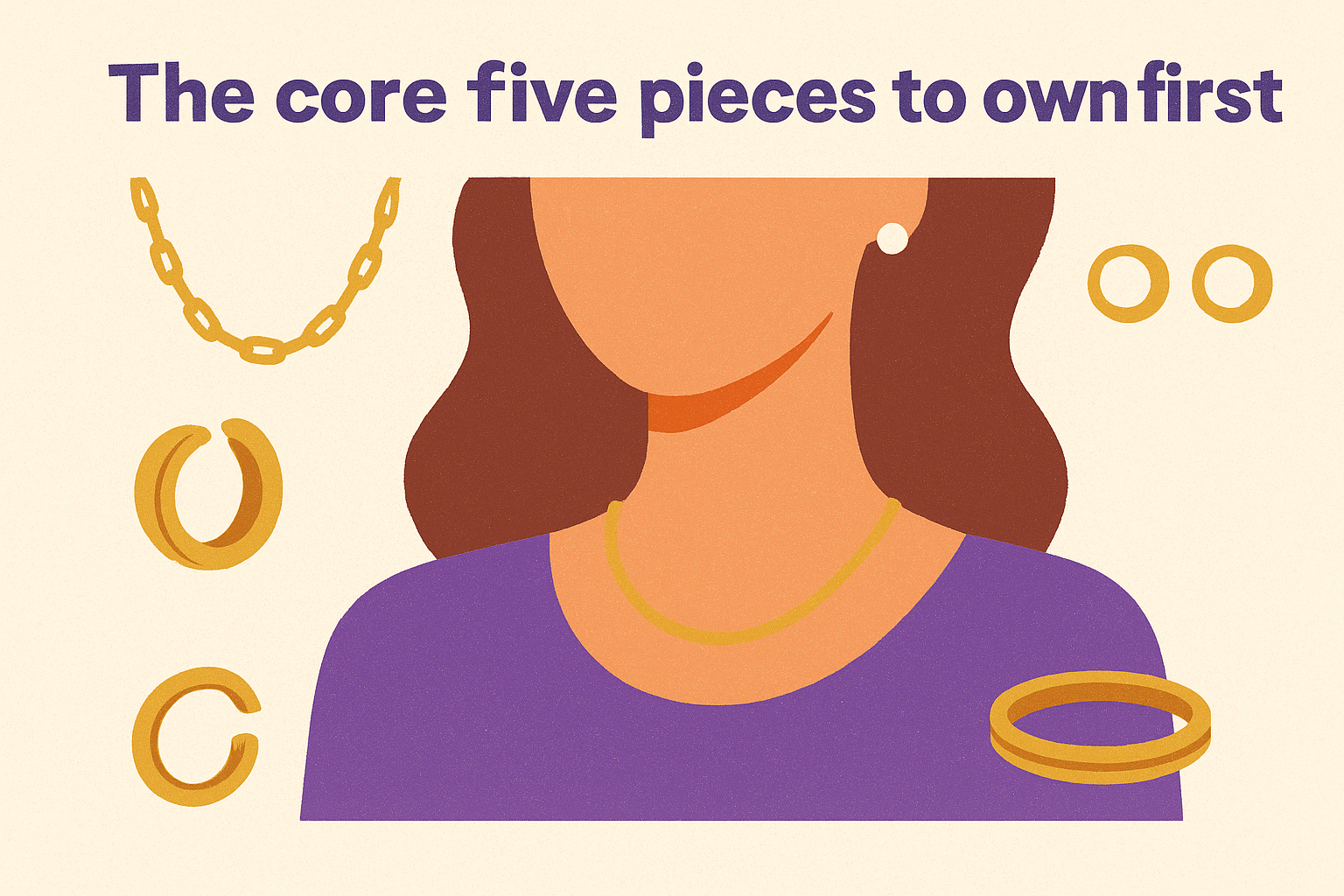
A capsule works because every piece earns its place by serving a clear function in your rotation.
Here are the five slots and what to prioritize in each:
| Slot | Role | What to look for |
|---|---|---|
| Everyday chain necklace | Wear-alone base or layering anchor | Simple silhouette, 16-18 inch length, gold or silver |
| Stud earrings | Low-profile daily option | Flat back, small to medium size, hypoallergenic posts |
| Huggie or small hoop earrings | More presence without bulk | Secure closure, lightweight, close-to-ear fit |
| Stackable ring | Finger detail that layers well | Thin band, comfort fit, consistent metal tone |
| Layering pendant necklace | Visual interest over your base chain | Simple charm, slightly longer than your chain |
How to build from your capsule
Once your five core pieces are in place, expanding becomes straightforward because you have a clear foundation to add onto. A second ring, a chunkier chain, a pair of statement studs for evenings: all of these slot in without disrupting the system you've already built. Your capsule acts as the anchor that keeps new additions from feeling random or mismatched.
Wear your five pieces together for a full week before buying anything else. Notice which combinations you reach for most and which pieces feel slightly off by the end of each day. That feedback tells you exactly where to fill gaps and what to prioritize next, so every new piece you add builds on what's already working rather than starting from scratch.
Step 4. Get sizing and fit right the first time
Wrong sizing is one of the most common reasons people stop wearing pieces they genuinely like. A necklace that sits at an awkward length on your neckline, a ring that spins constantly, or a bracelet that slides off every time you reach for something: these fit issues feel minor until they become the reason a piece sits unworn. When you're figuring out how to choose everyday jewelry, getting sizing right before you buy prevents most of this friction before it starts.
Necklace lengths and what they wear like
Every necklace length sits differently on your body and interacts differently with your neckline. A 14-inch choker grazes the base of the neck. An 18-inch chain falls just below the collarbone, which is the most versatile length for layering. A 20 to 22-inch length drops to mid-chest and pairs well with lower necklines or deeper cuts.
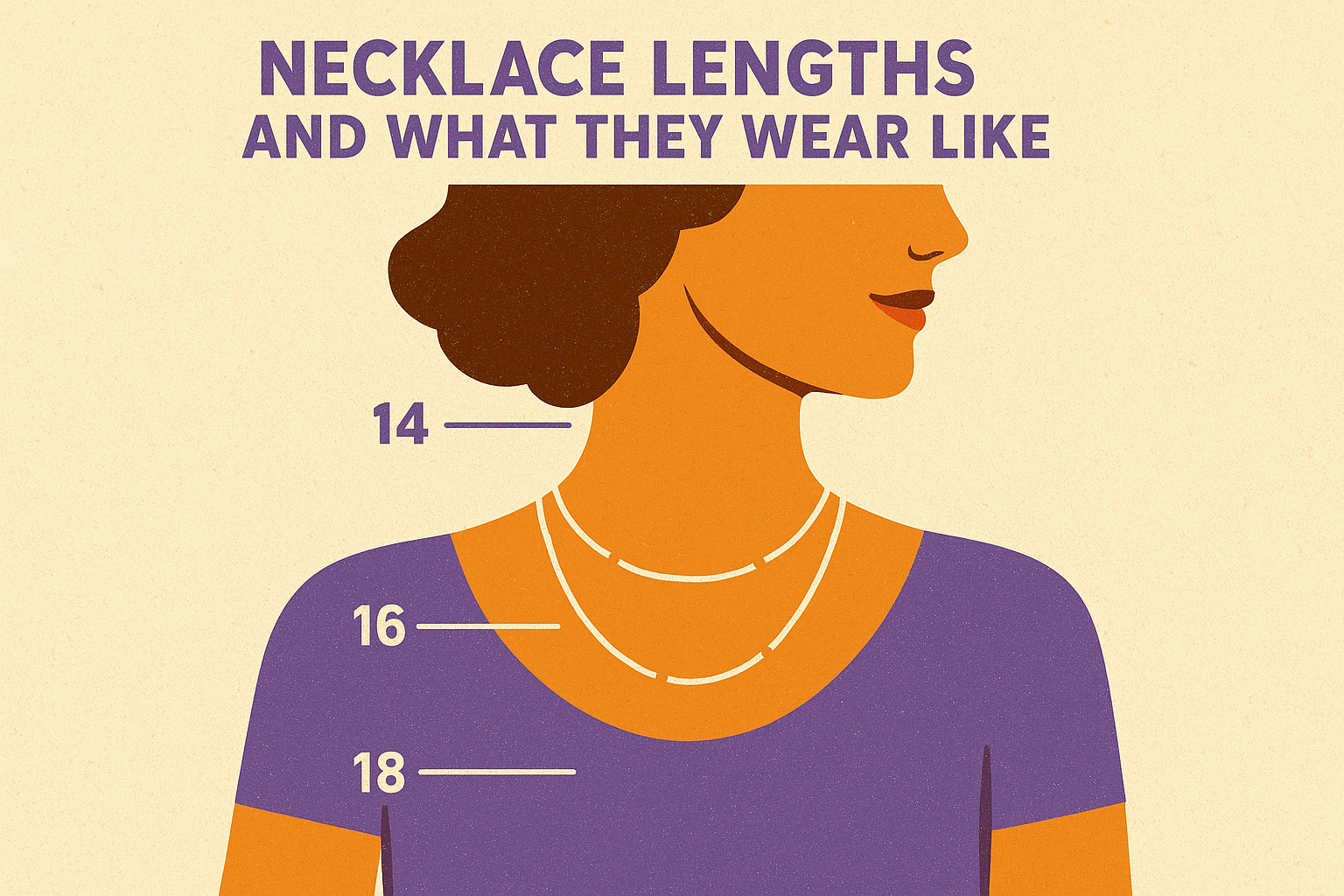
The 16 to 18-inch range is the sweet spot for an anchor chain because it works under crew necks, V-necks, and open collars without disappearing or competing with your neckline.
Use this guide to match length to your usual neckline:
| Necklace length | Where it falls | Best neckline pairing |
|---|---|---|
| 14 inches | Base of neck | Open, wide, or strapless |
| 16 inches | Collarbone | Crew neck, V-neck |
| 18 inches | Just below collarbone | Most necklines |
| 20-22 inches | Upper chest | Deep V, button-down |
Ring sizing you can measure at home
Ring sizing is easier to get right than most people think, and you don't need to visit a store. Wrap a thin strip of paper around the base of your finger, mark where it overlaps, then measure that length in millimeters. Compare it to a standard ring size chart. Measure in the evening when your fingers are at their largest from daily activity, since sizing up by half a size accounts for natural swelling throughout the day.
Bracelet and earring fit
Bracelets should leave about half an inch of movement when the clasp is fastened, enough that they don't dig in during wear but won't slip over your hand unexpectedly. For earrings, flat-back posts and hinged closures stay more secure than standard butterfly backs during active wear, and lighter earring designs under two grams reduce fatigue over long days.
Step 5. Build layers that look intentional
Layering jewelry looks effortless when it works and cluttered when it doesn't. The difference almost always comes down to having a system before you start stacking, not just grabbing whatever looks interesting in the moment. Understanding how to choose everyday jewelry for layering means thinking about proportion, spacing, and metal consistency before a single piece goes on. When those three elements align, the result reads as intentional rather than accidental.
Establish one focal point first
Every successful layer starts with a single anchor piece that the rest of the look builds around. That anchor is usually your everyday chain, the one from your capsule, worn at 16 to 18 inches. Everything else you add should sit at a different length and serve a supporting role, not compete for the same visual space. A pendant necklace layered two to four inches below your anchor chain creates clear separation and gives the eye a natural place to land.
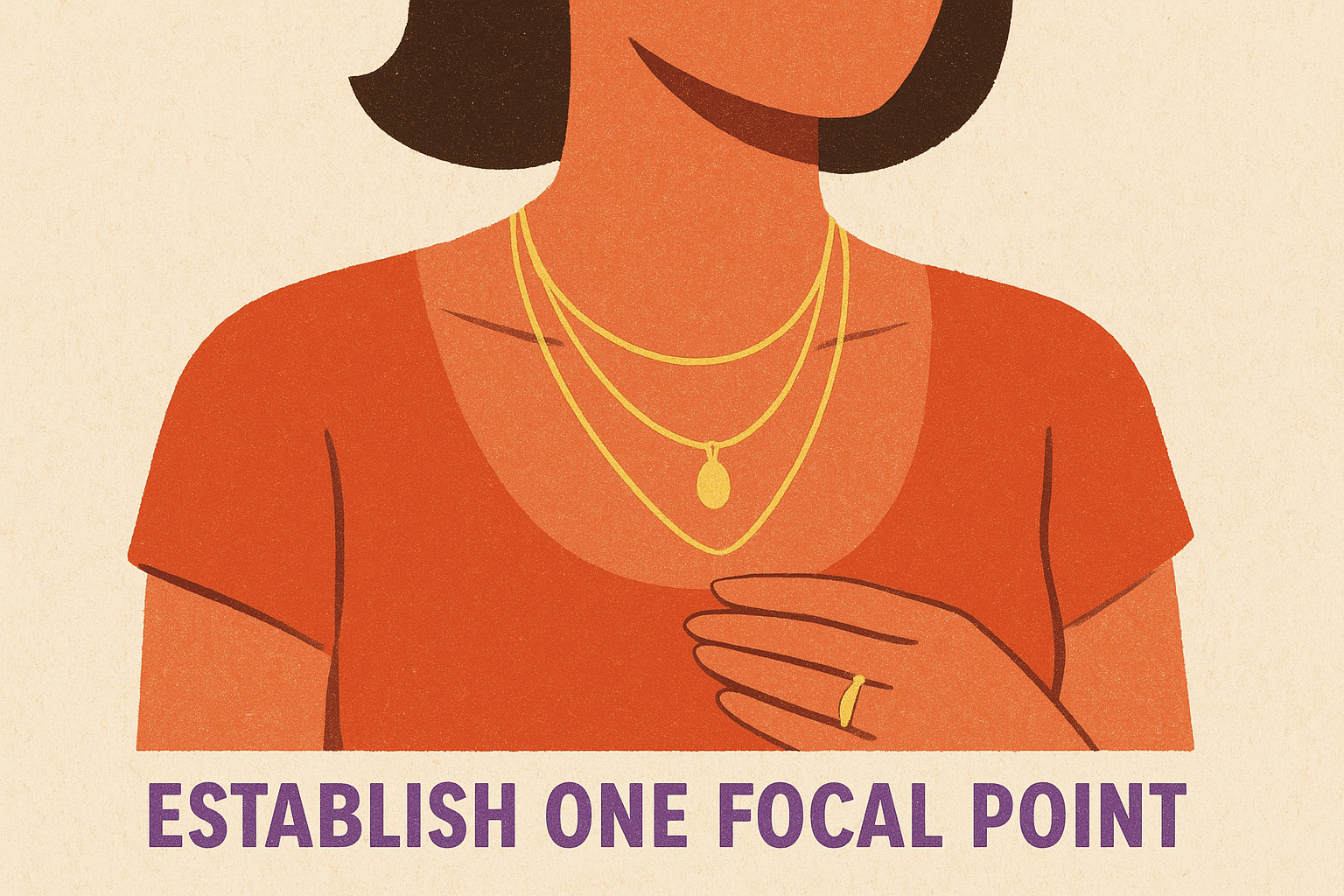
Pick your focal point before you add anything, then ask whether each new piece supports it or fights it.
Match metals or mix them deliberately
Mixing metals works, but only when you commit to the combination across your whole look. Wearing one gold necklace, one silver necklace, and a mix of both on your fingers looks like a mistake. Choosing two metals and repeating them consistently across your neck, ears, and hands makes the same combination look considered. A simple rule: anchor in one metal, then accent with the second across no more than one-third of your total pieces.
Here is a quick layering template you can follow for a three-piece necklace stack:
| Layer | Length | Piece type |
|---|---|---|
| First (base) | 16-18 inches | Plain chain, no pendant |
| Second (mid) | 20 inches | Simple pendant or charm |
| Third (accent) | 22-24 inches | Longer chain or coin pendant |
Keep scale consistent across your whole look
Scale on your neck should match scale everywhere else. Thin, delicate necklace layers pair best with small studs or huggies, not oversized hoops. If you're stacking three slim rings on one hand, keep the other hand minimal so the focus stays where you built it. Scaling up in one area while keeping everything else proportionate is how layered jewelry looks like a deliberate choice instead of an afterthought.
Step 6. Shop smart online and avoid common traps
Buying jewelry online means making material and quality decisions entirely based on a product page. You can't feel the weight, check the clasp, or hold the piece up to the light. Knowing what to look for in a listing gives you the same advantage as handling the piece in person, and it protects you from the most common mistakes people make when figuring out how to choose everyday jewelry without seeing it first.
Read the product listing like a checklist
Most shoppers scan photos first and skim the description second. Flip that habit entirely. The description tells you the metal composition, plating details, dimensions, and weight, which are the four things that actually determine whether a piece will survive daily wear. A listing that skips any of those details is telling you something important about the product before you've spent a cent.
Use this checklist before you add anything to your cart:
| What to check | What it tells you |
|---|---|
| Base metal listed | Whether the piece will tarnish or irritate skin |
| Plating thickness or type | How long the finish will hold under daily wear |
| Dimensions and weight | Whether the piece will be comfortable for all-day use |
| Care instructions included | Whether the brand stands behind the product's durability |
| Return policy clearly stated | Whether you can fix a sizing or fit issue after delivery |
Red flags that signal a low-quality piece
If a product page can't tell you what the piece is made of, that gap is almost never an accident.
Vague material descriptions like "gold tone" or "metal alloy" without further detail almost always indicate a brass or copper base with thin electroplating. Both corrode quickly under daily wear and leave marks on your skin within weeks. Unusually low prices with no material explanation are a second warning sign: a gold-plated piece priced under five dollars is using the thinnest possible coating, and daily contact with water and sweat will strip it fast.
Watch for these specific red flags before you buy:
- No base metal listed anywhere in the description
- Photos showing only one angle with no close-up of the clasp or back
- Customer reviews mentioning tarnish, discoloration, or skin reactions within the first month
- No mention of water resistance or care instructions
- Rings listed as "one size fits all" with no note about adjustability
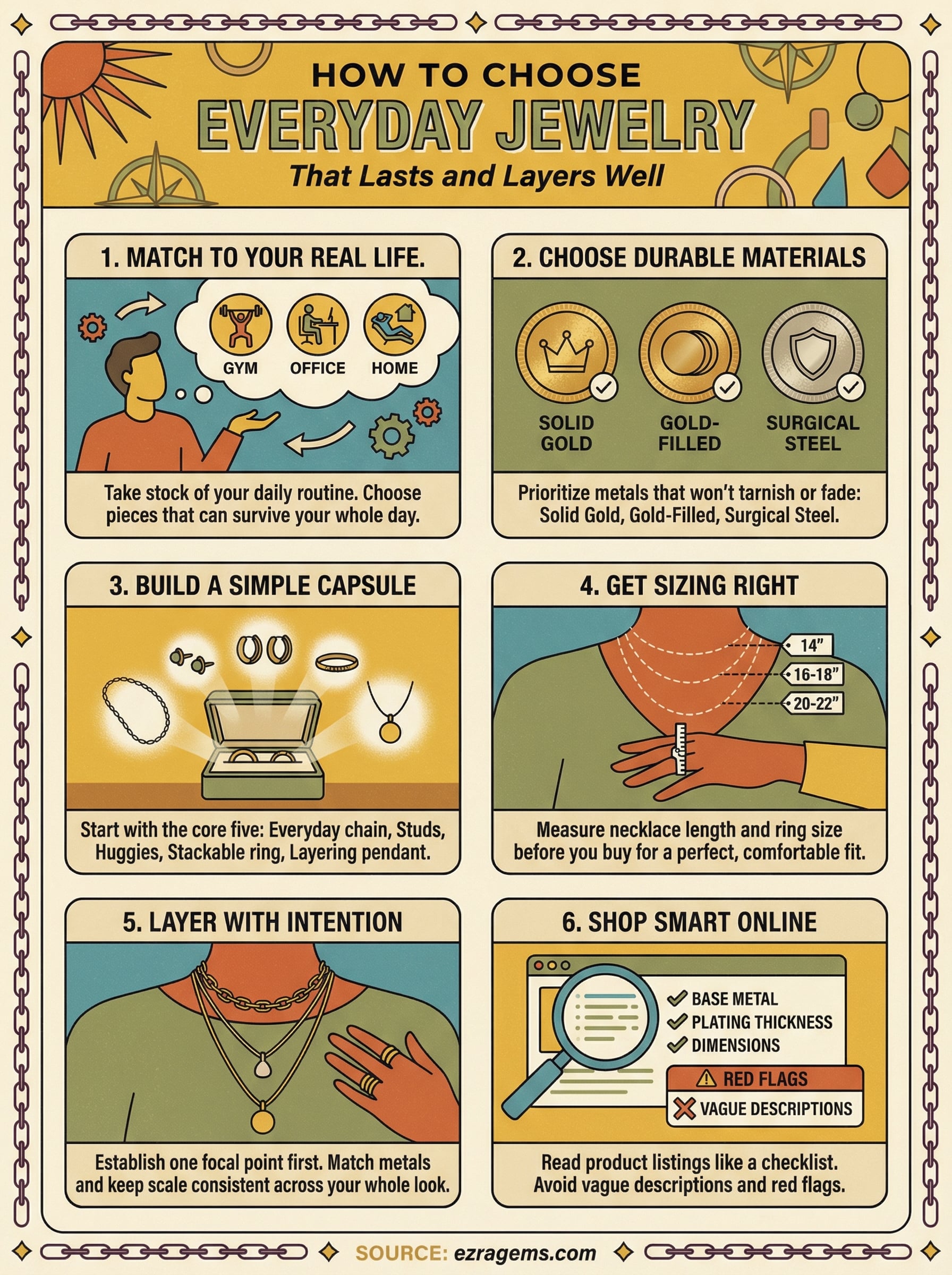
Put it all together
Knowing how to choose everyday jewelry comes down to six decisions made in the right order: match pieces to your real life, pick durable materials, build a five-piece capsule, get sizing right before you buy, layer with intention, and read product listings like a checklist. None of these steps require a large budget or a full collection to start. One well-chosen chain, a pair of secure studs, and a stackable ring give you more daily versatility than a drawer full of pieces that don't work together.
Your collection should grow slowly and deliberately, each new piece earning its place by adding something the rest of your rotation doesn't already cover. Start with the fundamentals, wear them long enough to understand your gaps, then add from there. If you're ready to build that foundation with jewelry designed specifically for daily wear, browse the Ezra Gems bestsellers and start with the pieces that hold up.
Leave a comment