


Yes. A DMG (dimethylglyoxime) spot test detects releasable nickel at the exact point that touches your skin, and it works within minutes at home. It’s a screening tool, not a lab measurement. A pink or rose color means nickel is present at that spot; no color change is a good sign, but it isn’t proof the whole piece is nickel-free. Test the skin-contact area directly, and if you need certified results for compliance or a resale, send the item to a lab instead.
TL;DR:
- The DMG spot test detects releasable nickel at the exact contact point within minutes and is useful as a screening tool, not a definitive measurement.
- Testing should focus on high-contact areas like earring posts, ring bands, clasp insides, and layered links, especially under plating or hidden parts.
- A positive result confirms nickel presence where tested, but a negative only indicates no release at that moment and not long-term safety.
- For compliance or medically critical cases, lab-grade testing measures actual nickel release rates and requires professional analysis.
- Long-term prevention involves choosing jewelry made from nickel-free, hypoallergenic materials like platinum, titanium, or high-karat gold, and regularly retesting high-wear items.
Table of Contents
- What To Test and Where To Check on Your Jewelry
- How To Test Jewelry at Home With a DMG Spot Test
- What a Positive or Negative Result Actually Tells You
- Home Kits vs. Laboratory Standards: When You Need Certified Testing
- Safer Metals and Smarter Buying Habits for Nickel-Sensitive Skin
- Ezra’s Take: Testing Cadence and Why Material Choice Comes First
- What To Do Right Now if You Suspect a Reaction
- Jewelry Made for Nickel-Sensitive Skin, Not Just Tested for It
- Sources
What To Test and Where To Check on Your Jewelry
Nickel hides in the parts of jewelry you’d least expect to inspect closely, which is exactly why so many people get blindsided by a rash months after buying a piece that seemed fine. The metal that actually touches your skin, not the visible face of a ring or pendant, is what matters.
Start with the spots that see the most skin contact and sweat exposure:
- Earring posts and the backs that sit against your earlobe
- The inner band of rings, where sweat and friction wear down plating fastest
- Necklace clasps and the small jump rings connecting them
- Bracelet closures and the backs of watch cases
- Belt buckles, jean snaps, and bra hooks
- Eyeglass frame hinges and nose pads
For pieces with hidden clasps or layered links, open the clasp fully and swab the underside where two metal surfaces meet. That’s often where plating is thinnest, since manufacturers rarely bother finishing a surface no one sees.
Heirloom jewelry deserves extra caution. Test an inconspicuous spot first, like the underside of a ring band, before touching anything visible or engraved. Wipe the area with a clean, dry cloth before testing. Oils, lotion residue, or old cleaning product can throw off your reading either direction. If you’re testing several pieces in one sitting, keep a quick written log: item, date, spot tested, and result. It sounds excessive until you’re trying to remember six months later which earrings passed and which didn’t.
How To Test Jewelry at Home With a DMG Spot Test
The DMG spot test has been used by dermatologists and allergy clinics for decades, and the consumer version works the same way. DermNet NZ notes that these kits are available from clinicians, pharmacists, and online retailers, and that plated jewelry can hide nickel beneath a surface that looks perfectly safe.
What you need:
- A DMG test kit (single-bottle formulas or two-part reagent systems both work)
- Cotton swabs or the swabs included in your kit
- Disposable gloves
- A nickel-free reference coin or item to practice on (some kits include one)
- A small dish or tray to protect surfaces from the reagent
Step-by-step:
- Put on gloves. The reagent isn’t dangerous in small amounts, but it can stain skin and fabric.
- Practice on a known reference item first, ideally a coin with a known nickel content, so you know what a true positive looks like before testing something you care about.
- Dip a clean swab in the DMG solution until it’s moist, not dripping.
- Rub the swab firmly against the test spot for 15 to 30 seconds. Consistent pressure matters more than speed.
- Watch the swab tip and the tested surface. A pink or rose color change indicates releasable nickel. No color change after 30 seconds generally reads as negative.
- Wipe down the tested area with a clean, dry cloth afterward to remove any reagent residue.
- Record the result before moving to the next item, especially if you’re testing a batch.
Work in a ventilated space, since the reagent has a faint odor some people find irritating in an enclosed room. Avoid testing on delicate antique finishes, engraved surfaces, or anything with sentimental or resale value without first checking an inconspicuous spot. A cotton swab won’t damage most metal, but lacquered or heavily oxidized surfaces can occasionally give you a false negative because the coating blocks the reagent from reaching the metal underneath.
Pro Tip: If a piece has a matte, brushed, or heavily textured finish, rub a little harder and hold slightly longer than you would on a smooth surface. Texture can trap the reagent unevenly and give you a weak, ambiguous color that’s easy to misread as negative.
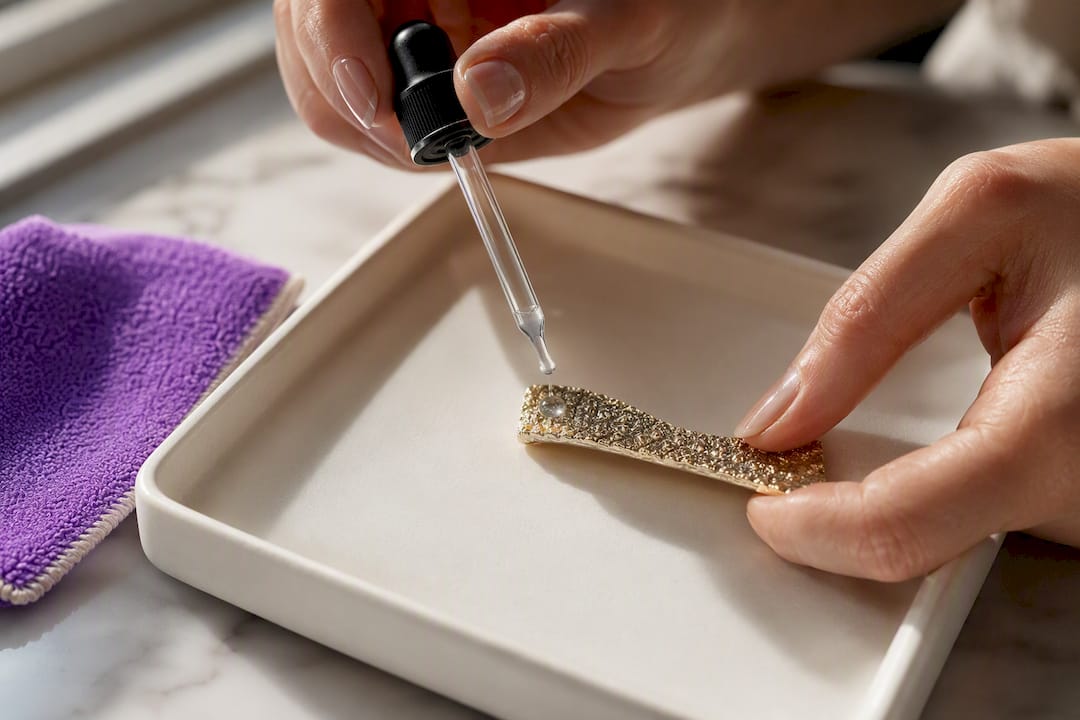
If your results seem unreliable, thick gold or rhodium plating, a clear protective lacquer, or surface tarnish are the usual culprits. Nickel Alert’s testing guidance suggests the test can pick up nickel at very low concentrations, but a coating between the reagent and the base metal will always mute the reaction. When you get a confusing result on a piece you’re worried about, the safest move is to stop wearing it rather than assume it passed.
What a Positive or Negative Result Actually Tells You
A positive DMG result means nickel is present and releasable at that exact spot, right now, under the conditions you tested. For anyone with a nickel sensitivity, that’s enough information to stop wearing the item. The chemistry is straightforward: the reagent reacts with nickel ions on contact, and the color change is the visual proof.
A negative result is where people get overconfident. It only tells you that spot, at that moment, didn’t release detectable nickel. It says nothing about:
- Other parts of the same piece you didn’t swab
- What’s underneath the plating, which can contain nickel even when the visible surface tests clean
- How the item will behave in six months, after sweat, lotion, and friction wear down a thin gold or rhodium layer
This is the single biggest gap between a home test and real-world safety. Nickel allergy specialists at DermNet NZ point out that plated jewelry frequently contains nickel in the base alloy, invisible until the coating thins. A ring that tested negative in January can start causing a rash by summer, not because the metal changed, but because the plating did.
Retest anytime you notice a color shift, a dulling of the surface, or the faint metallic smell that often shows up before visible wear does. If you’ve retested and gotten a clean result but still have redness, itching, or a rash where the jewelry sits, that’s a signal to stop guessing and get checked. Cleveland Clinic recommends seeing a dermatologist for patch testing, which places small amounts of allergens on your back for 48 hours and remains the most reliable way to confirm a nickel allergy diagnosis.
Home Kits vs. Laboratory Standards: When You Need Certified Testing
DMG spot tests and laboratory nickel-release testing answer two different questions, and mixing them up is where people run into trouble. A home kit tells you whether nickel is present and releasing at a specific spot. A lab test tells you how much nickel releases over time, measured against a regulatory threshold.
The European reference method, EN 1811, quantifies nickel release in micrograms per square centimeter per week, which is the figure regulators actually check against legal limits. PD CEN/TR 12471 describes the DMG-based screening approach as a faster, cheaper way to flag likely problem items before committing to the full quantitative test. In other words, the spot test you’re running at your kitchen table is a simplified version of the first stage of a two-stage professional process.
You need lab-grade testing, not a home kit, when:
- You’re a manufacturer or reseller who needs documented compliance proof
- You’re selling jewelry commercially and need a certificate for buyers or marketplaces
- You have a severe, medically diagnosed nickel allergy and need a precise release rate rather than a yes/no read
- A legal or regulatory dispute requires third-party, defensible data
Accredited labs like The Assay Office’s AnchorCert Protect service run this kind of testing for manufacturers who need REACH compliance documentation. A lab report typically states the measured release rate against the regulatory limit and a pass or fail determination, not just a color change. That’s a meaningfully different level of certainty than a home swab test can offer, and it’s the difference between “this probably won’t bother most people” and “this is documented safe under a specific legal standard.”
For personal use, the DMG test remains the practical first move. Reserve lab testing for the situations above, where a home kit’s qualitative answer genuinely isn’t enough.
Safer Metals and Smarter Buying Habits for Nickel-Sensitive Skin
Some metals carry a much lower risk of triggering a reaction, and knowing them changes how you shop. Titanium, platinum, and surgical-grade stainless steel rarely contain nickel in amounts that cause problems for sensitive skin. High-karat yellow gold (18k and above) has less alloy content overall, which usually means less nickel mixed in. Sterling silver is generally low-risk too, though cheaper silver-plated pieces can still have a nickel-containing base metal underneath.
White gold is the one to watch closely. It’s often alloyed with nickel specifically to get that white, silvery tone, then rhodium-plated to hide it. DermNet NZ warns that jewelry labeled “gold” or “silver” can still cause reactions because nickel is frequently used as an alloying metal, regardless of what the front label promises.
“Nickel-free” as a marketing phrase is also inconsistent from one seller to the next. Some brands mean the base metal contains zero nickel. Others mean it falls under a legal release threshold but technically still contains trace nickel. Before buying, ask sellers directly:
- What is the exact metal composition, not just the marketed name?
- If it’s plated, how thick is the plating and what’s underneath it?
- What’s the return policy if a piece causes a reaction after a few wears?
- Do they have any testing records or documentation to back up allergy-safe claims?
When a new piece arrives, test it before wearing it for an extended stretch, even if the listing promised hypoallergenic materials. If you’re shopping for nickel-free gold rings or need hypoallergenic earrings for sensitive ears, look for sellers who state exact materials rather than vague claims. Clear plastic or silicone barriers over posts can work as a short-term fix for a piece you’re not ready to give up, but they’re a patch, not a solution. If the jewelry itself contains nickel, a barrier just delays the inevitable contact.
Ezra’s Take: Testing Cadence and Why Material Choice Comes First
Testing jewelry once and filing it away as “safe” is the most common mistake I see people make. Plating wears. Sweat, lotion, chlorine, and everyday friction thin a gold or rhodium layer faster than most people expect, and a piece that tested clean in January can be releasing nickel by summer.
A practical retest schedule: check high-wear items like rings and earrings every three to six months, and immediately after you notice any dulling, discoloration, or a change in how the surface feels. Retest anything that’s been repaired or resized too, since jewelers sometimes solder with alloys that weren’t part of the original piece.
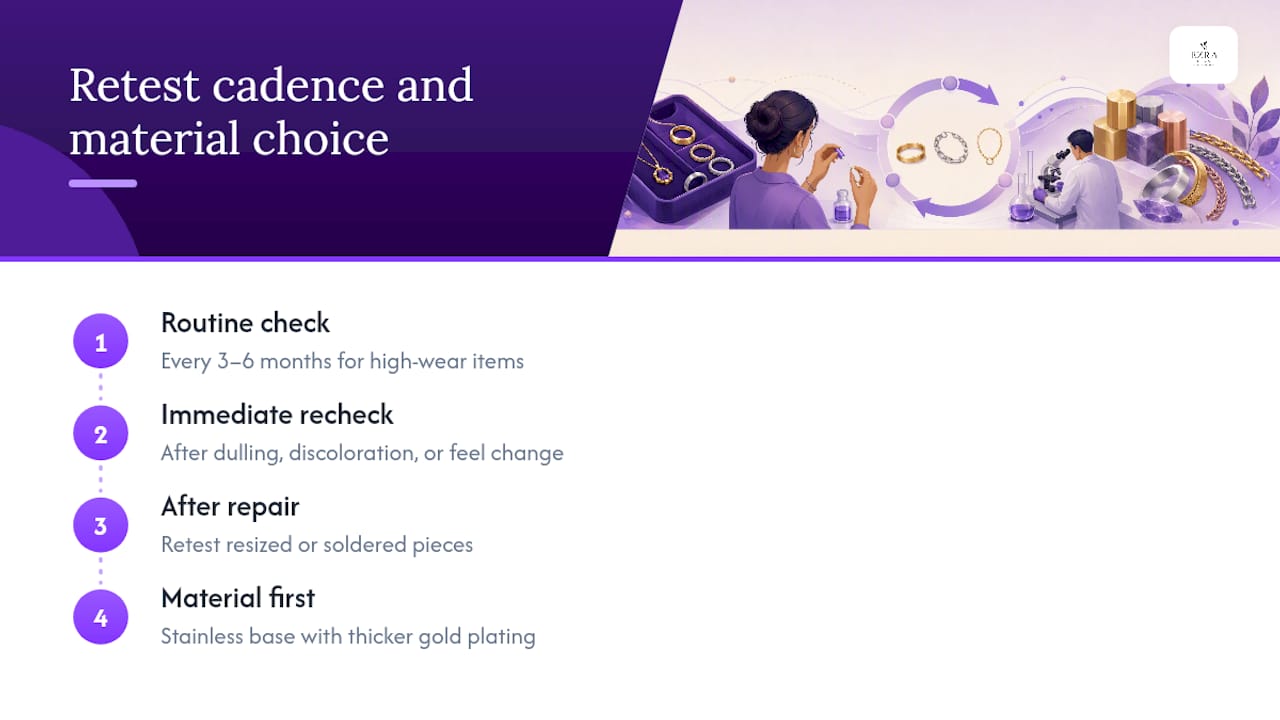
This is exactly why material selection matters more than any single test result. Some jewelers build around 18k gold plating over stainless steel and genuine pearls specifically because those combinations reduce the odds of nickel exposure creeping up over years of daily wear, not just at the moment of purchase. Stainless steel as a base metal, paired with a thicker gold layer, holds up differently than a thin plate over a nickel-heavy alloy core. It’s a design choice made with long-term skin contact in mind, not a one-time compliance checkbox.
None of that replaces your own testing habits. Even well-made hypoallergenic jewelry benefits from an occasional check, especially on pieces you wear daily. Routine care and cleaning also slows the kind of wear that exposes base metals in the first place.
— Ezra
What To Do Right Now if You Suspect a Reaction
If something you’re wearing right now is causing redness, itching, or a rash, take it off. That’s step one, before anything else. Once it’s off, swab the exact contact spot with a DMG test if you have one on hand. A positive result confirms what your skin already told you.
From there, swap the piece for something you know is hypoallergenic rather than trying to tough it out or apply a barrier and hope. If the irritation doesn’t clear up within a week or two, or keeps coming back with different jewelry, see a dermatologist for proper patch testing rather than continuing to guess with home kits.
If you’re testing pieces you plan to sell, gift, or pass down, keep it simple: a small tag or note with the test date and result saves the next person a lot of uncertainty, and it’s a courtesy that costs you nothing.
Jewelry Made for Nickel-Sensitive Skin, Not Just Tested for It
If constant retesting sounds exhausting, there’s a simpler path: start with jewelry built from materials that don’t put you in that position to begin with. Ezra Gems makes waterproof, hypoallergenic pieces from 18k gold plating and stainless steel, materials chosen specifically because they resist tarnish and hold up to daily wear without the plating wearing thin as fast as cheaper alternatives.
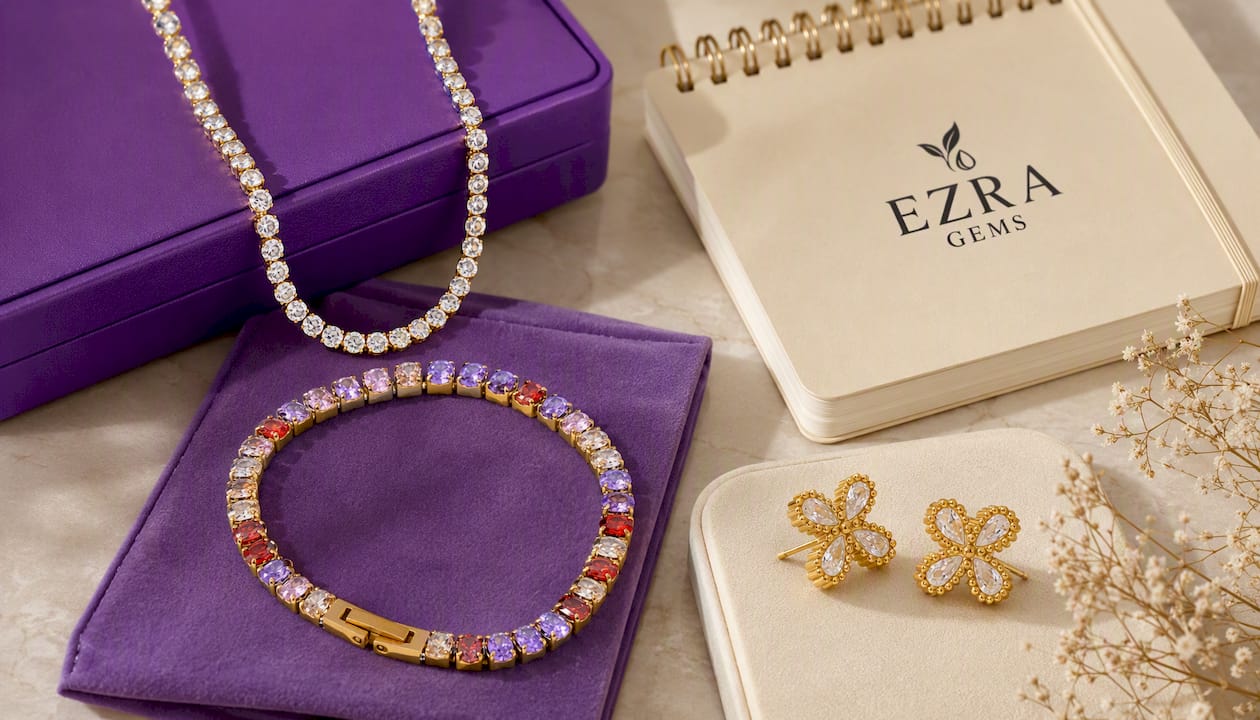
The Colorful Tennis Choker Necklace & Bracelet Set pairs everyday versatility with the same durable base metals across both pieces. The AAA Zircon Tennis Necklace gives you a statement piece without introducing the alloy uncertainty that comes with vintage or unlabeled gold. And for anyone who’s had trouble with sensitive ears specifically, the Cubic Zirconia Flower Stud Earrings are a straightforward daily option built on the same hypoallergenic foundation.
If you’re tired of testing old jewelry only to retire piece after piece, browse Ezra Gems and start with something built for sensitive skin from the first wear.
Sources
For deeper reading beyond this guide: the PD CEN/TR 12471:2022 screening standard covers the DMG method in full technical detail. Cleveland Clinic’s nickel allergy overview explains patch testing and symptoms. DermNet NZ’s jewellery allergy page covers hidden nickel in plated items. For lab-grade compliance testing, The Assay Office’s AnchorCert Protect service details accredited nickel-release testing for manufacturers.
- Jewellery allergy — DermNet NZ
- Nickel allergy — Cleveland Clinic
- Hypoallergenic testing and AnchorCert Protect — The Assay Office
Leave a comment