


You bought a gorgeous gold piece, wore it a few times, and now it looks like something you dug out of a clearance bin. Sound familiar? The debate between tarnish free jewelry vs gold plated comes down to one question: which actually holds up to real life? Both options promise that gold look without the gold price tag, but their performance over time tells very different stories.
At Ezra Gems, we've built our entire collection around jewelry that survives showers, workouts, and everyday wear, so we know exactly what separates pieces that last from pieces that disappoint. Gold plating has been the industry standard for decades, but newer tarnish-free technologies are changing what affordable jewelry can actually deliver.
This guide breaks down the materials, durability, and real-world performance of both options. You'll learn why some jewelry fades in weeks while other pieces stay bright for years, and how to spot the difference before you buy.
What tarnish-free jewelry really means
The term "tarnish-free" describes jewelry made from base metals coated with materials that resist oxidation and discoloration. Unlike traditional costume jewelry that turns green or black within weeks, tarnish-free pieces use advanced coating technologies like PVD (Physical Vapor Deposition) or thick layers of metals such as rhodium, which create a protective barrier against moisture, sweat, and air exposure. This isn't magic; it's metallurgy that actually works when done correctly.
The materials behind tarnish resistance
Most tarnish-free jewelry starts with a stainless steel or brass base, then gets coated with metals that naturally resist corrosion. Stainless steel contains chromium, which forms an invisible protective layer when exposed to oxygen, making it inherently resistant to rust and tarnish. Brass-based pieces rely on thick PVD coatings of gold or titanium nitride, which bond at the molecular level rather than simply sitting on the surface like traditional plating.
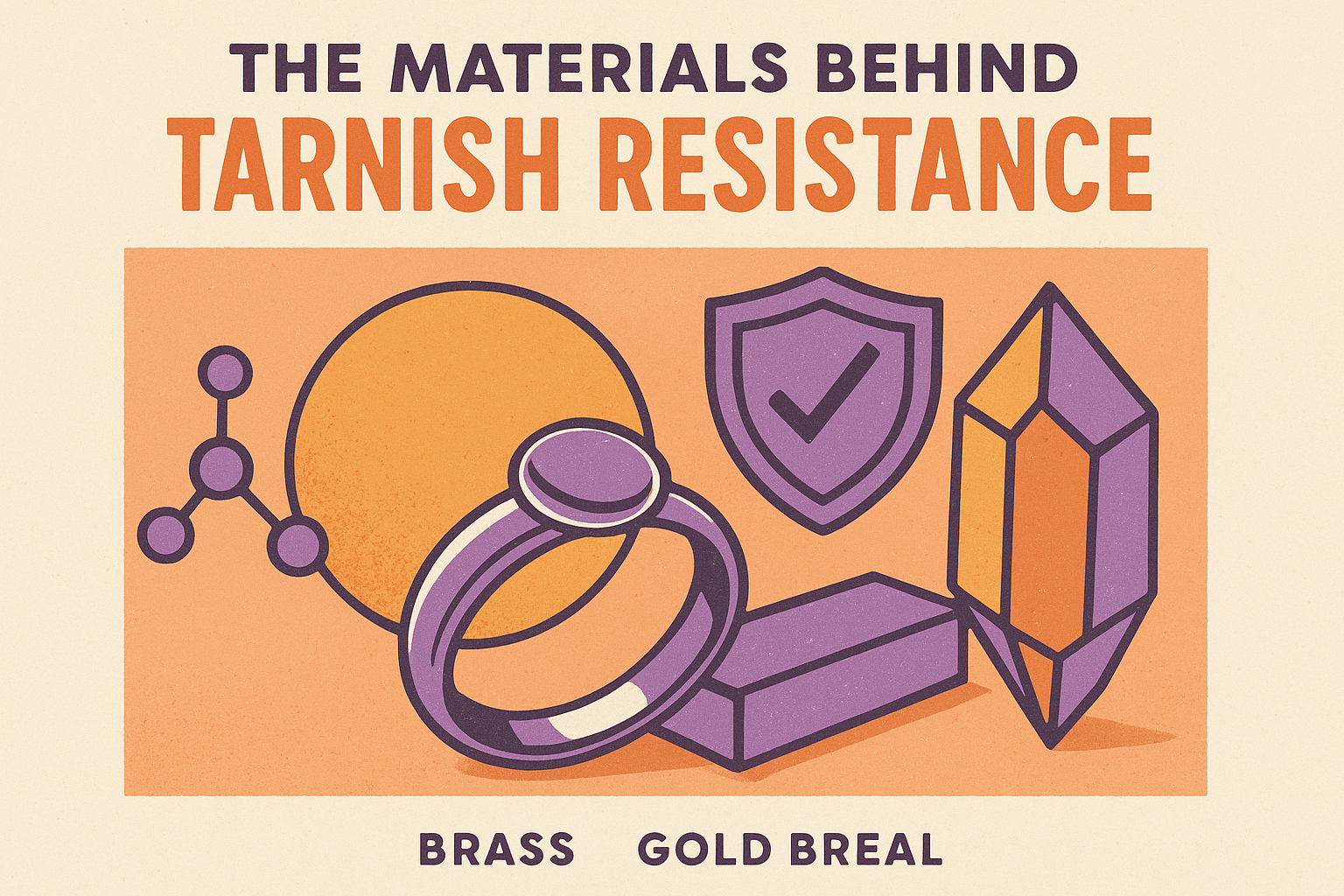
The coating thickness matters more than most people realize; industrial-grade PVD can be 10 times thicker than standard gold plating.
Real tarnish-free jewelry uses coating layers measured in microns (typically 0.5 to 3 microns), which sounds thin but actually creates substantial protection. These coatings don't just cover imperfections; they chemically bond to the base metal, creating a surface that resists scratching and wear better than electroplated alternatives. When comparing tarnish free jewelry vs gold plated options, the bonding method makes all the difference in how long that finish actually lasts.
What "tarnish-free" actually promises
No jewelry is completely immune to all damage, and honest brands acknowledge this reality. Tarnish-free pieces promise resistance to everyday exposure, not indestructibility against chlorine, harsh chemicals, or extreme abrasion. You can shower, sweat, and sleep in quality tarnish-free jewelry without seeing color changes, but you'll still damage it with prolonged exposure to pool chemicals or perfumes applied directly onto the metal.
The promise centers on normal daily wear without visible degradation. Your pieces should look the same after six months as they did on day one, assuming you treat them like everyday jewelry rather than lab equipment. Marketing terms like "waterproof" often mean water-resistant enough for showers and rain, not designed for deep-sea diving.
What gold plated jewelry really is
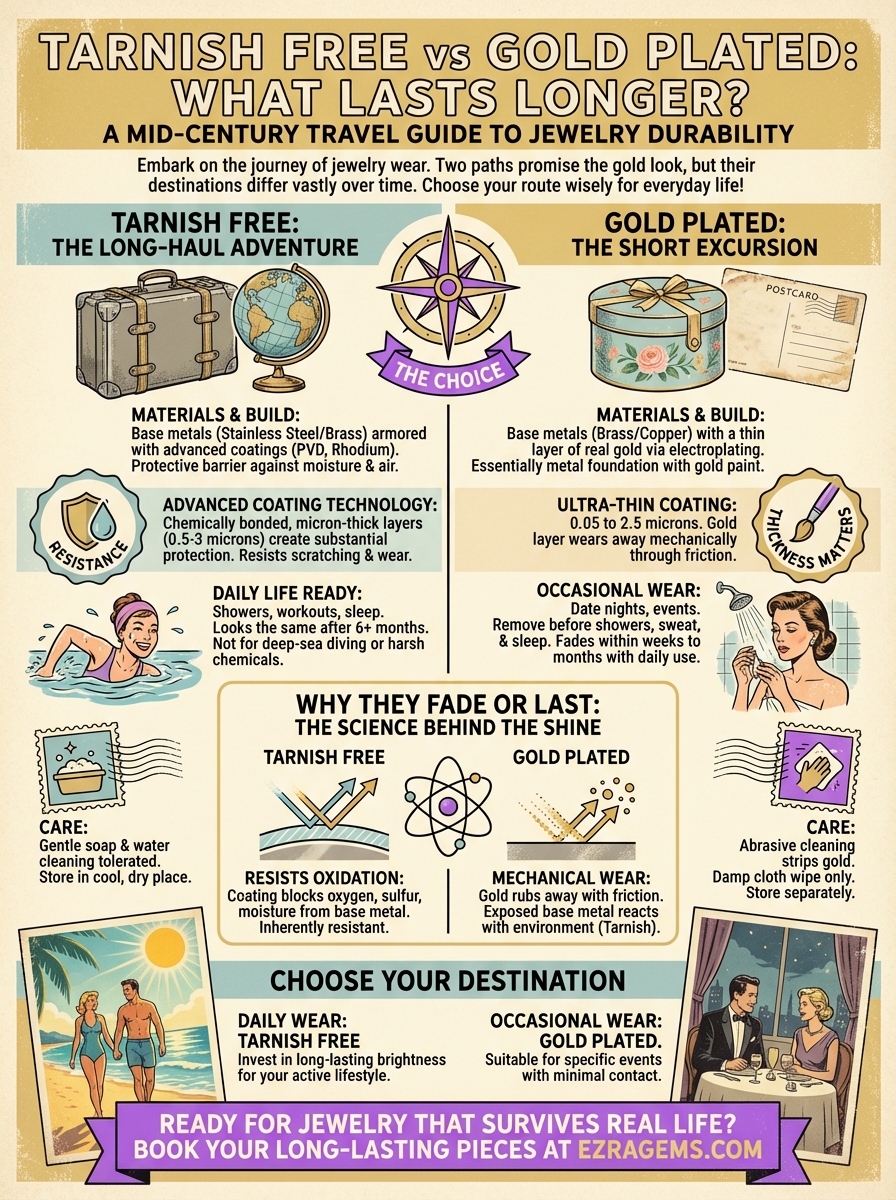
Gold plated jewelry uses a base metal like brass or copper, which gets covered with a thin layer of real gold through an electrical process called electroplating. The gold layer measures only 0.05 to 2.5 microns thick, which means you're essentially wearing a metal foundation with gold paint on top. This technique has dominated affordable jewelry for decades because it delivers that gold appearance at a fraction of the cost, but the ultra-thin coating creates inevitable durability problems.
The electroplating process
Electroplating suspends your jewelry piece in a chemical bath containing dissolved gold particles, then runs an electrical current through the solution. This current causes gold ions to bond to the base metal surface, creating a thin but visibly gold exterior. The process takes minutes rather than hours, and manufacturers control the thickness by adjusting voltage strength and bath duration.
The thinner the gold layer, the faster it wears away, which explains why bargain pieces lose their finish within weeks.
Why thickness determines lifespan
Standard fashion jewelry typically uses 0.5 microns or less of gold, barely enough to survive more than a few wears before the base metal shows through. Higher-quality plated pieces might reach 2.5 microns, extending their life to several months with careful handling. When evaluating tarnish free jewelry vs gold plated options, remember that even premium gold plating eventually wears down to expose the reactive base metals underneath, while proper tarnish-free coatings maintain their appearance far longer because they bond differently and resist daily wear more effectively.
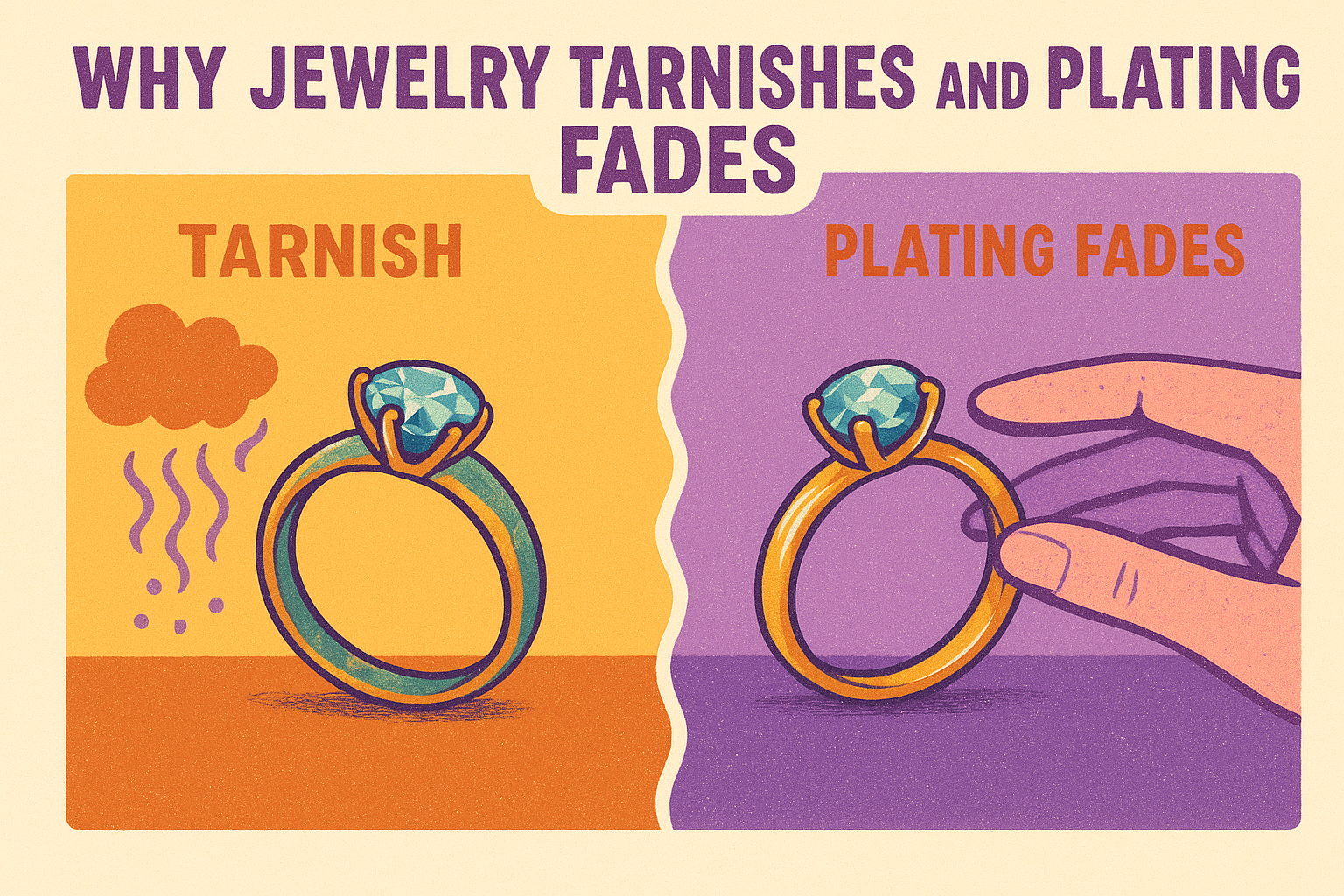
Why jewelry tarnishes and plating fades
Understanding the science behind jewelry deterioration helps you make better purchasing decisions. Tarnish and fading stem from chemical reactions between metals and their environment, not poor manufacturing alone. When you compare tarnish free jewelry vs gold plated options, you're really choosing between metals that resist these reactions versus metals that actively participate in them.
The chemistry of tarnish
Tarnish happens when base metals like copper, brass, or silver react with oxygen, sulfur compounds, and moisture in the air around you. Your jewelry literally combines with atmospheric elements to form new compounds on its surface. Copper turns green through oxidation, creating copper carbonate (the same substance on the Statue of Liberty). Silver reacts with sulfur in the air to form black silver sulfide, which is why your grandmother's silver spoons need polishing.
Your body's natural oils, sweat pH levels, and even the lotions you apply accelerate these chemical reactions by introducing additional moisture and compounds that speed up oxidation.
Why gold plating wears off
Gold plating disappears through mechanical wear rather than chemical reactions, since pure gold itself doesn't tarnish. Every time you touch your jewelry, put it on, or bump it against something, microscopic amounts of that thin gold layer rub away. The 0.5 to 2.5 micron coating has nowhere to go but off your jewelry and onto your skin, clothing, and surrounding surfaces. Once enough gold wears away, the reactive base metals underneath start their own tarnishing process, leaving you with discolored jewelry that looks nothing like what you bought.
How to choose what lasts for your lifestyle
Your daily routine determines which jewelry option makes sense for your money and expectations. If you shower twice daily, work out regularly, and sleep in your jewelry, tarnish-free pieces with PVD coatings or stainless steel bases will survive your lifestyle without constant maintenance. Gold plated jewelry requires removal before these activities, which means you'll spend time thinking about your jewelry instead of just wearing it.
Match your wearing habits to coating technology
Consider how often you'll actually remove your pieces throughout the day. People who wear jewelry constantly benefit most from tarnish-free options, since the coating handles moisture and friction without degrading. You can wear these pieces through your morning shower, afternoon workout, and evening routine without seeing color changes or exposed base metal. Gold plated jewelry works better for occasional wear situations like date nights, weddings, or events where you'll put pieces on for a few hours then take them off.
The best jewelry choice matches your actual behavior, not your ideal behavior, which means buying for the routine you live rather than the one you wish you had.
Consider your environment and activities
Your local climate and daily activities create specific challenges for jewelry durability. Humid environments accelerate tarnishing in poorly coated pieces, while dry climates extend the life of even basic gold plating. If you swim regularly, work with your hands, or apply lotions and perfumes multiple times daily, the tarnish free jewelry vs gold plated debate tilts heavily toward tarnish-free options that resist these exposures. Save gold plated pieces for controlled situations where you minimize contact with moisture and chemicals.
How to make both types last longer
Proper care extends the life of any jewelry, whether you're maintaining tarnish-free pieces or gold plated items. The difference between jewelry that lasts years versus months often comes down to storage habits and cleaning routines rather than the materials themselves. Both types need protection from their specific vulnerabilities, but the methods you use should match the coating technology involved.
Storage practices that prevent damage
Keep your pieces separated in individual pouches or compartments to prevent scratching and friction between items. Metal-on-metal contact wears down both tarnish-free coatings and gold plating faster than any other factor in normal use. Store jewelry in cool, dry locations away from bathrooms, since humidity accelerates tarnishing in exposed base metals and can eventually compromise even high-quality protective coatings.
Your jewelry box location matters more than its price tag; a basic fabric-lined box in your bedroom closet protects pieces better than an expensive organizer in your steamy bathroom.
Cleaning methods for each type
Tarnish-free jewelry tolerates gentle soap and water cleaning without damage to its protective coating. Use a soft cloth with mild dish soap, rinse thoroughly, and dry completely before storing. Gold plated pieces require more caution since abrasive cleaning strips away the thin gold layer faster than daily wear. Stick to damp cloth wiping only, avoiding any rubbing motions that create friction against the plating. When comparing tarnish free jewelry vs gold plated maintenance, tarnish-free options handle cleaning much better because their thicker coatings survive gentle scrubbing that would destroy delicate gold plating.
Final takeaway
The choice between tarnish free jewelry vs gold plated comes down to how you actually wear your pieces. Gold plated jewelry works for occasional wear when you'll remove it before activities, but tarnish-free options deliver better value for daily wear because they survive real life without constant maintenance. You save money long-term by buying pieces that last years instead of replacing faded jewelry every few months.
Your lifestyle determines which option makes sense. If you want jewelry that handles showers, workouts, and sleep without losing its finish, tarnish-free pieces with PVD coatings or stainless steel bases will meet your expectations. Gold plating still has its place for special occasions, but daily wear demands durability that traditional plating cannot provide.
Ready to find jewelry that actually lasts? Browse our collection of tarnish-free pieces designed for the way you really live, with waterproof durability and guaranteed resistance to the activities that destroy typical fashion jewelry.
Kommentar hinterlassen