


Pearls are one of the few gems that come from a living organism, and that's exactly why they need a little extra care. Unlike harder stones, pearls are soft, porous, and sensitive to chemicals, heat, and even dryness. Toss them in a regular jewelry box with your other pieces, and you're asking for scratches, dullness, and long-term damage. Knowing how to store pearl jewelry the right way is the difference between pieces that stay luminous for years and ones that lose their luster in months.
At Ezra Gems, our Pearl & Gold collection is designed to be durable enough for daily wear, but even the toughest pearl jewelry benefits from smart storage habits. Whether you just picked up your first pearl necklace or you've been building a collection, proper storage protects your investment and keeps every piece looking its best.
This guide covers everything you need to know: the best containers, materials to avoid, ideal conditions, and a few mistakes that quietly ruin pearls over time. Let's get into it.
What pearls need in storage
Pearls are organic gems built from calcium carbonate layers called nacre, and that biological structure makes them uniquely vulnerable to the wrong environment. Heat dries them out, chemical exposure from perfume, hairspray, or even sweat erodes the nacre over time, and physical contact with harder materials scratches the surface quickly. Before you sort out how to store pearl jewelry correctly, you need to understand exactly what conditions keep pearls stable and what conditions quietly destroy them.
Temperature and humidity
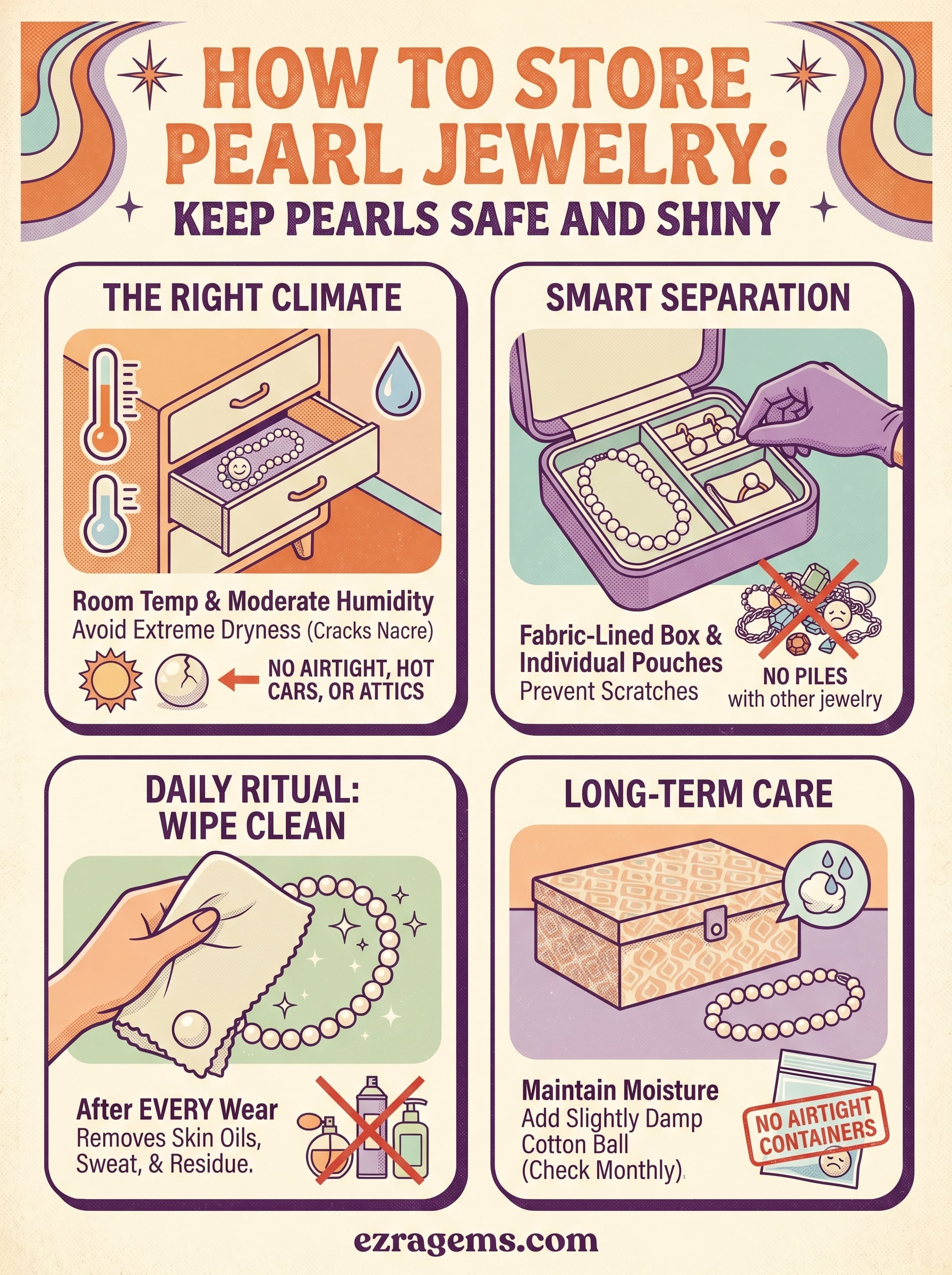
Extreme dryness is one of the fastest ways to crack nacre and dull the surface sheen of your pearls. Unlike diamonds or sapphires, pearls actually need a small amount of ambient moisture to stay hydrated. Storing them in an airtight safe, a hot car, or a dry attic pulls that moisture out over time and causes surface crazing. A [room-temperature environment with moderate humidity](https://ezragems.com/blogs/blog-posts-by-ezra-gems/are-pearls-waterproof), like a bedroom drawer or a closet shelf where you spend regular time, is close to ideal for most pearl pieces.
Pearls are one of the few gems that do well in the same conditions humans find comfortable, so normal indoor living spaces tend to work in your favor.
Separation and soft materials
Hard surfaces and other jewelry are the two biggest physical threats to pearls in everyday storage. Pearls sit at just 2.5 to 3 on the Mohs hardness scale, which means nearly any metal clasp, chain, or gemstone can scratch the nacre if pieces are stored together in a pile. You need to keep each pearl item separated and cushioned, whether that means individual pouches, a fabric-lined jewelry roll, or soft compartments in a jewelry box.
Material choice matters just as much as separation. Plastic bags and synthetic liners trap moisture unevenly and can create surface damage over time. Natural fabrics like cotton, silk, or chamois leather are your safest options because they breathe without scratching and maintain a stable microenvironment around the pearl surface.
Step 1. Clean pearls after every wear
Cleaning pearls before storage is not optional if you want them to last. Skin oils, sweat, and residue from lotions or perfume sit on the nacre surface and slowly eat into it if you leave them there overnight. A quick wipe-down after each wear takes under a minute and is the single most effective habit you can build when thinking about how to store pearl jewelry properly.
What to use
Use a soft, lint-free cloth, like microfiber or clean chamois, to wipe each pearl gently. Work along the surface and around any knots if it's a strung necklace. Here is a simple guide for when to use each method:
| Situation | Method |
|---|---|
| Normal daily wear | Dry wipe with a lint-free cloth |
| Visible residue or stickiness | Dampen cloth slightly with lukewarm water, then dry immediately |
| After wearing perfume or lotion | Dry wipe thoroughly before placing in storage |
Never let moisture sit on pearls before storage, even a small amount of trapped dampness can weaken the silk thread on strung pieces and dull the surface over time.
What to avoid
Ultrasonic cleaners, steam, and chemical jewelry cleaners will damage pearls fast. These methods work on metal and hard gemstones, but they strip nacre and create permanent surface dullness. Also skip paper towels, tissues, and rough fabrics, which carry enough texture to leave micro-scratches on pearl surfaces with repeated use.
Step 2. Pick a safe container and location
Knowing how to store pearl jewelry means choosing the right container first. Your storage choice protects pearls from both physical contact and environmental damage, so picking the wrong box or spot in your home creates problems even if you clean your pieces carefully after every wear.
Best container options
A fabric-lined jewelry box with individual compartments is the most practical everyday option for keeping pearls separated and cushioned. Soft pouches made from cotton or silk work well for single pieces if you prefer something compact and portable. Avoid hard plastic cases and unlined metal boxes since both can scratch nacre and create dry, sealed environments that pull moisture away from the pearl surface.
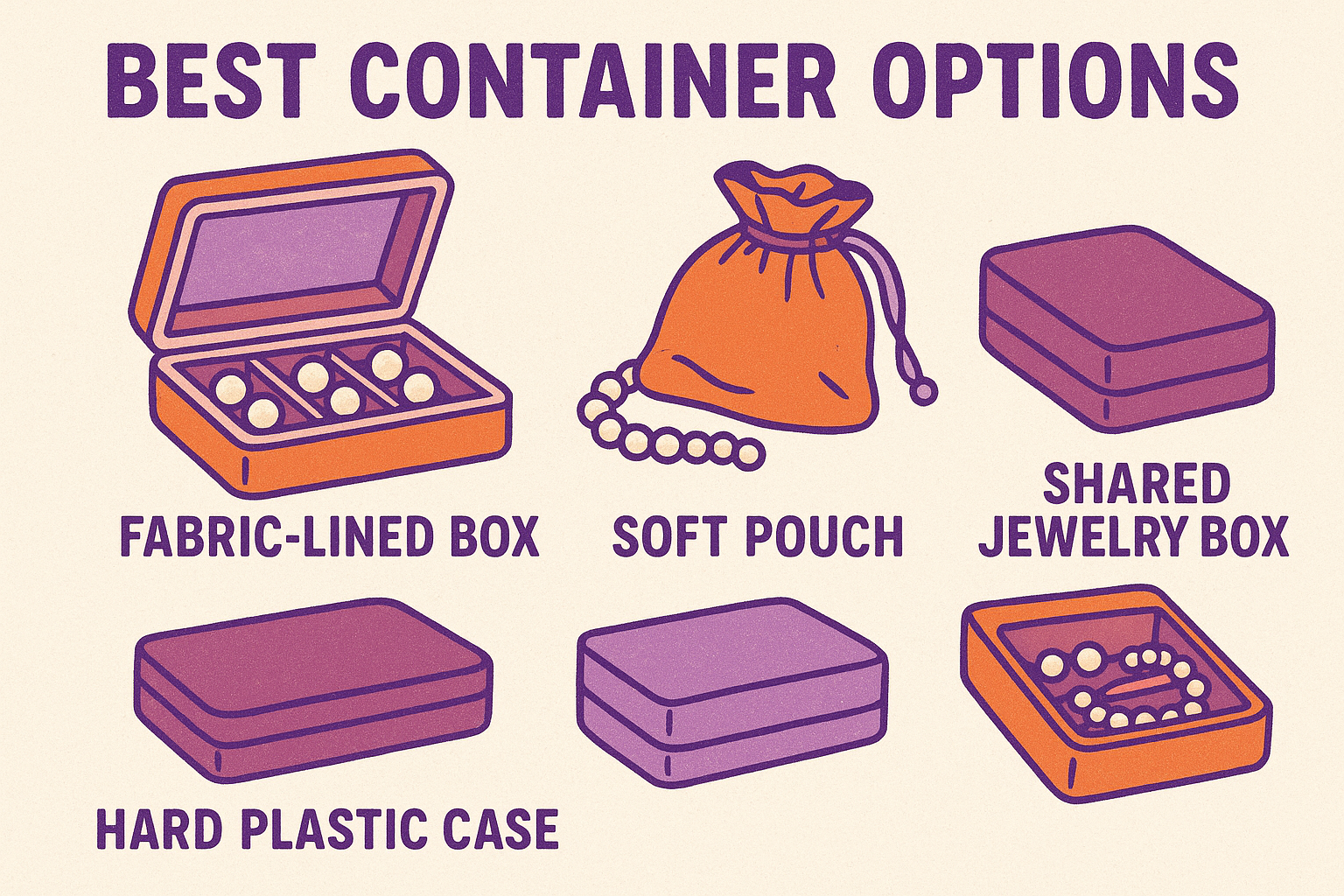
| Container | Safe for pearls? | Notes |
|---|---|---|
| Fabric-lined box with dividers | Yes | Best for full collections |
| Soft cotton or silk pouch | Yes | Good for individual pieces |
| Hard plastic case (unlined) | No | Traps moisture unevenly |
| Shared jewelry box (no dividers) | No | Other pieces scratch pearls |
Where to keep them
Room temperature and low light are your two location requirements that matter most. A bedroom drawer or a closet shelf away from windows is ideal because it keeps humidity stable and protects pearls from UV exposure, which yellows nacre over time.
Avoid storing pearls in bathrooms, near windowsills, or close to heating vents where temperature swings are constant.
Keep your storage spot consistent and easy to reach so you actually use it after every wear.
Step 3. Store each pearl piece the right way
Different pearl pieces have different storage needs, and treating them all the same is a common mistake. Necklaces, earrings, and rings each carry unique risks depending on how they're constructed, so adjusting your approach to each type is a key part of knowing how to store pearl jewelry without causing accidental damage over time.
Necklaces and bracelets
Strung pearl necklaces need to lie flat rather than hang in storage. Hanging puts constant tension on the silk or nylon thread, which stretches and weakens it over time, especially at the knots between each pearl. Lay them flat inside a soft pouch or padded compartment to keep the strand relaxed between wears.
If your pearl necklace is strung on silk thread, plan to have it professionally restrung every one to two years, since worn thread breaks suddenly and causes you to lose pearls.
Pearl bracelets follow the same rule. Keep them unclasped and flat so the thread or wire carries no tension while sitting in storage.
Earrings and rings
Store pearl earrings in individual slots or small fabric pouches to prevent the pearl cabochons from knocking against each other or against metal posts. Pearl rings are especially vulnerable because the setting raises the pearl above the band, making it easy to bump and chip the nacre if stored loosely with other rings in a shared tray.
Step 4. Handle travel and long-term storage
Travel and long-term storage are two situations where how to store pearl jewelry gets more complicated. Everyday habits that work at home stop protecting your pearls the moment you pack them in a bag or put them away for months at a time.
Traveling with pearls
A dedicated travel jewelry roll with soft fabric compartments is the safest way to carry pearl pieces on the road. Hard-shell cases without interior padding leave your pearls rattling against clasps and other stones with every bump, which chips nacre fast. Keep your pearl roll in your carry-on bag rather than checked luggage to avoid the temperature and pressure swings that cargo holds create during flights.
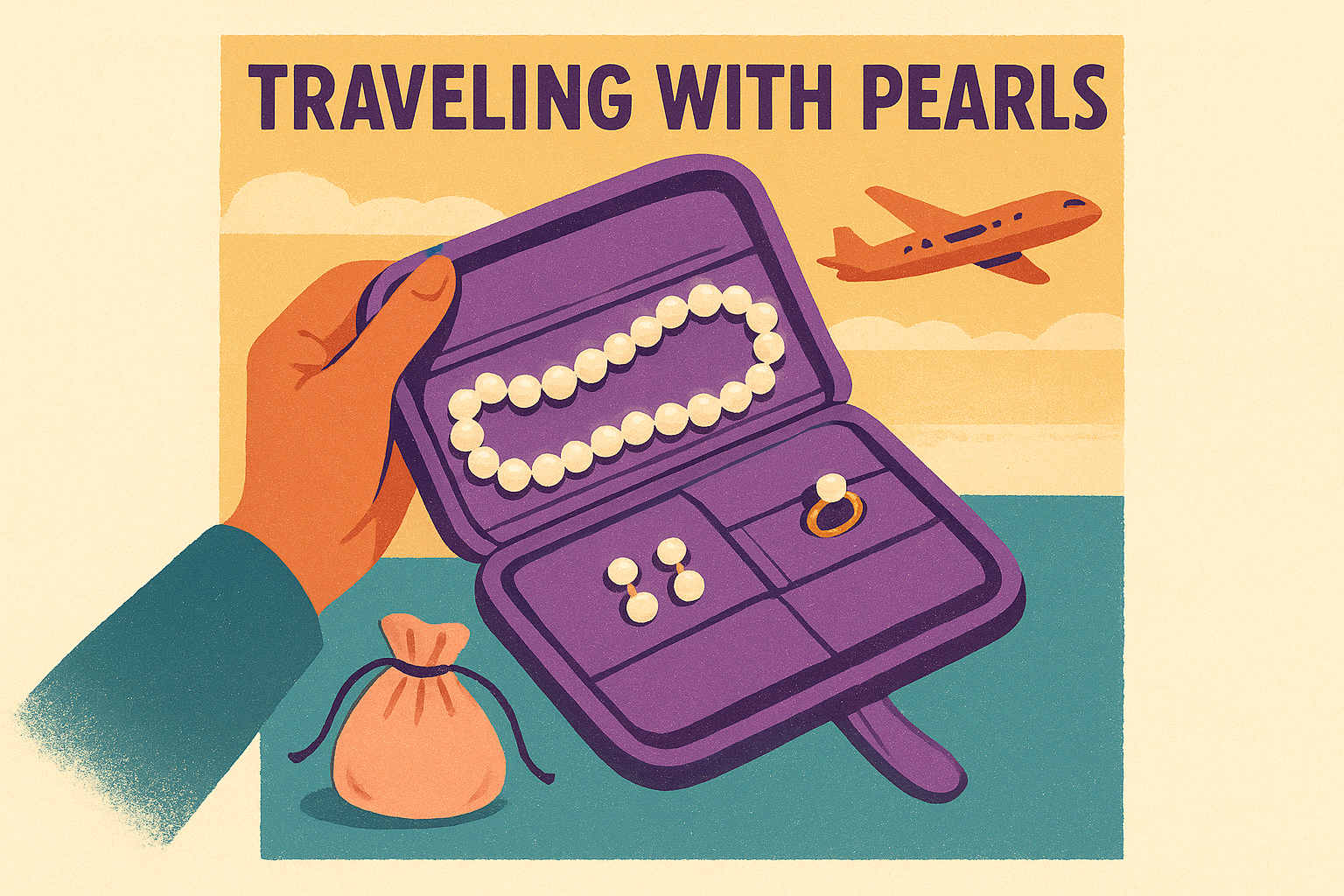
Never wrap pearls in tissue paper for travel since the paper absorbs moisture unevenly and can stick to the nacre surface.
Pack each piece in its own small cotton pouch first, then place the pouches inside the travel roll. This double-layer approach prevents contact between pieces even if the roll shifts in your bag.
Storing pearls long-term
Long-term storage, meaning several months or longer, requires one extra step. Place a small, slightly damp cotton ball near your stored pearls to maintain ambient moisture and prevent nacre from drying out. Check the cotton monthly and re-dampen as needed. Avoid airtight containers entirely for extended storage since sealed environments accelerate dryness and can cause surface crazing over time.
Final check
Now you have everything you need to know about how to store pearl jewelry the right way. The core rules are straightforward: wipe your pearls clean after every wear, keep them separated from other pieces in soft fabric containers, maintain moderate humidity, and adjust your approach for both travel and long-term storage.
Applying these habits consistently is what separates pearl pieces that stay radiant for decades from ones that fade and crack within a few years. Small daily actions, like reaching for a lint-free cloth before putting your necklace away, protect the nacre layers that give pearls their distinct glow. Check your storage setup once a month to catch any issues early.
If you're looking to add new pearl pieces worth protecting, browse the Pearl & Gold collection at Ezra Gems for 18k gold-plated styles made with genuine freshwater pearls built to last through years of careful wear.
Laissez un commentaire