


Gold vermeil sits in a sweet spot between solid gold and basic gold-plated jewelry, but what actually earns a piece that label? Understanding how gold vermeil is made matters because the process directly affects how long your jewelry lasts, how it looks over time, and whether you're getting real value for your money.
The short answer: vermeil starts with a sterling silver base and gets coated in a thick layer of gold through electroplating. But there are strict legal standards involved, specific base metals, minimum gold thickness, and karat requirements that separate true vermeil from regular gold plating. These aren't just technicalities. They're the reason vermeil holds up to daily wear while cheaper alternatives flake and tarnish within weeks.
At Ezra Gems, we spend a lot of time thinking about what makes jewelry last. That's why we want to break this process down clearly, from the electroplating method itself to the FTC standards that govern it. This article covers exactly how gold vermeil is manufactured, what thickness and purity benchmarks matter, and how to tell whether a piece actually qualifies. Let's get into it.
What gold vermeil is and what it is not
Before understanding how gold vermeil is made, you need to know what separates it from the broader world of gold-coated jewelry. The word "vermeil" gets used loosely in marketing, which makes it easy to buy something labeled vermeil that doesn't actually meet the standard. Knowing the definition protects your purchase and helps you shop with confidence.
What vermeil actually is
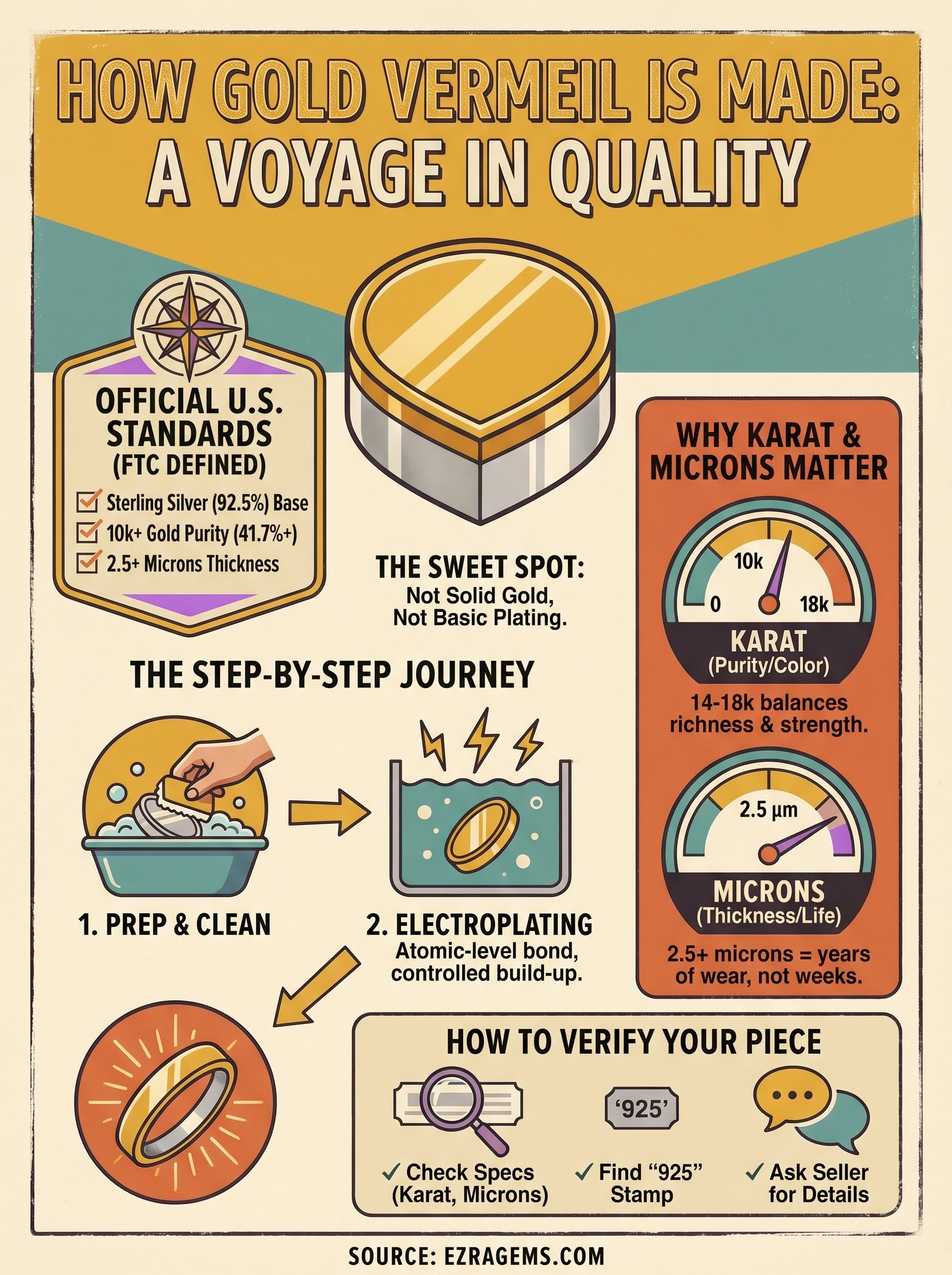
Vermeil is a specific type of gold-plated jewelry built on a sterling silver foundation. It is not solid gold, and it is not a gold alloy throughout. Instead, it is sterling silver that has been coated with a layer of real gold using an electroplating process. For a piece to qualify as genuine vermeil in the United States, it must meet three requirements simultaneously: the base must be sterling silver, the gold must be at least 10 karats, and the gold layer must be at least 2.5 microns thick.
If a piece misses any one of these three requirements, it cannot legally be called vermeil in the US, no matter what the label says.
These requirements exist because each element contributes to the piece's durability and value. Sterling silver gives the base structural integrity and is itself a precious metal. Higher karat gold coatings contain more actual gold. And a minimum thickness ensures the coating survives real-world wear rather than fading within weeks.
What vermeil is not
Vermeil is not the same as standard gold plating, even though both involve applying gold to a metal surface. Regular gold-plated jewelry often uses brass, copper, or other base metals, and the gold layer can be far thinner than 2.5 microns. That thinner coating wears away faster, and the base metals underneath can cause skin reactions or turn your skin green over time.
Vermeil is also not gold-filled jewelry, which is a different construction method where gold is bonded mechanically rather than electroplated. Gold-filled pieces typically contain significantly more gold by weight than vermeil, making them more expensive. Understanding where vermeil sits between these options, above basic plating but below gold-filled and solid gold, helps you make realistic choices based on your budget and lifestyle.
Standards that define gold vermeil in the US
In the United States, the Federal Trade Commission (FTC) sets the legal definition for vermeil. These standards exist to protect buyers from misleading claims, and they give you a concrete way to verify whether a piece of jewelry deserves the vermeil label. Knowing these rules is part of understanding how gold vermeil is made to meet a recognized quality threshold.
The FTC's three-part requirement
The FTC specifies that a piece must satisfy three distinct conditions to be marketed as vermeil. Each condition targets a different aspect of the jewelry's construction, and all three must be met at the same time for the label to apply legally.
Miss any one of these three conditions and a piece cannot legally carry the vermeil label in the US.
| Requirement | Minimum Standard |
|---|---|
| Base metal | Sterling silver (92.5% pure silver) |
| Gold purity | At least 10 karats (41.7% gold content) |
| Gold thickness | At least 2.5 microns |
Why these standards protect your purchase
These requirements are not arbitrary. Sterling silver as a base ensures you are starting with a precious metal that carries real value, not a cheap alloy that corrodes or causes skin reactions quickly. The 10-karat minimum means the gold coating contains enough actual gold content to resist tarnishing and maintain its color longer than lower-karat alternatives would allow.
The 2.5-micron thickness rule is arguably the most practical of the three. A thicker gold layer holds up far better against daily contact with skin, clothing, and moisture, which means the jewelry stays looking good longer without peeling or fading prematurely.
How gold vermeil is made step by step
Understanding how gold vermeil is made comes down to a precise, multi-step process that jewelers follow to bond gold to silver at a consistent, legal thickness. Each stage matters, and cutting corners at any point produces a coating that fails to meet the standard or wears away far faster than genuine vermeil should.
Preparing the silver base
The process starts with sterling silver, which must be 92.5% pure silver before any gold gets applied. Jewelers shape and finish the piece into its final form at this stage, since surface imperfections directly affect how evenly the gold adheres later.
After shaping, the piece goes through a deep cleaning sequence to remove oils, oxidation, and any surface debris. This typically involves ultrasonic baths and chemical rinses. A contaminated silver surface leads to adhesion failures, bubbling, or an uneven finish, so you need the base completely clean before moving forward.
Electroplating the gold layer
Once clean, the silver piece gets submerged in an electroplating bath, a tank filled with a gold-based electrolyte solution. An electric current runs through the solution, pulling dissolved gold ions out and depositing them directly onto the silver surface at the atomic level.
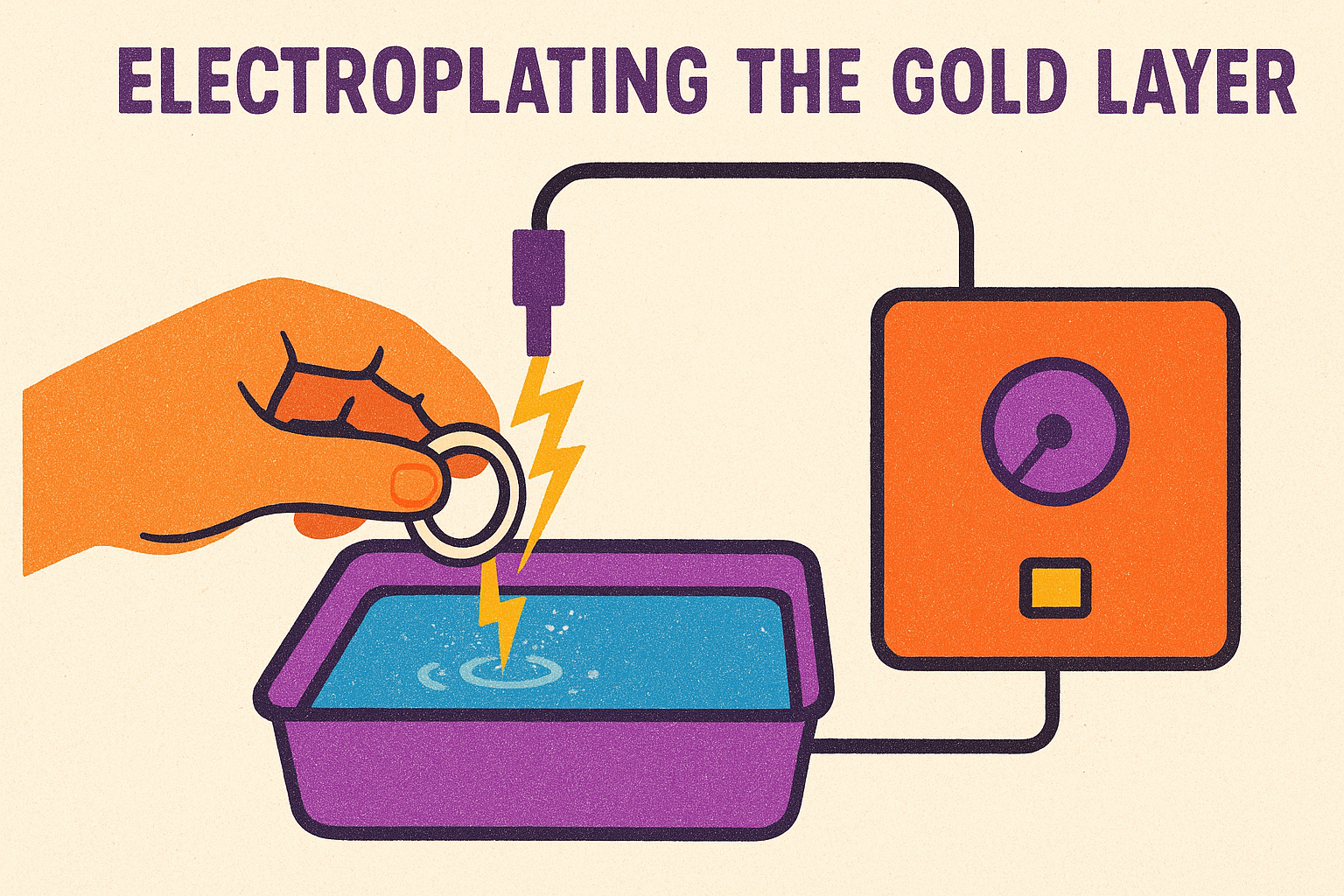
This atomic-level bond is what separates genuine vermeil from basic dipped or painted alternatives, where the gold sits on top rather than fusing with the base.
The jeweler controls current strength and immersion time to build the gold layer up to the required minimum of 2.5 microns. Longer immersion with a carefully calibrated current produces a thicker, more durable coating that holds its color and resists wear through daily use.
Gold thickness, karat, and why microns matter
When you're evaluating how gold vermeil is made, two technical details stand out above everything else: karat and microns. These numbers tell you exactly how much real gold sits in the coating and how thick that coating runs, which directly predicts how long a piece holds its color through daily wear.
How karat affects gold content
Karat measures gold purity on a scale where 24 karats equals pure gold. A 10-karat coating contains 41.7% gold, while an 18-karat coating contains 75% gold. Higher-karat coatings look richer and resist tarnishing better, but they are also softer and more prone to fine scratching since pure gold is a relatively soft metal. Most quality vermeil pieces land between 14 and 18 karats, balancing color depth with real-world durability so the piece survives contact with skin, clothing, and moisture without losing its finish.
The karat you choose affects not just appearance but also how the piece responds to sweat, chlorine, and daily friction over time.
Why 2.5 microns is the threshold that matters
A micron is one-thousandth of a millimeter, which sounds negligible until you consider that standard gold plating often runs 0.5 microns or less. At that thickness, the coating disappears within weeks of regular wear. The FTC's 2.5-micron minimum for vermeil exists precisely because that thickness provides meaningful durability, not just a temporary surface sheen.
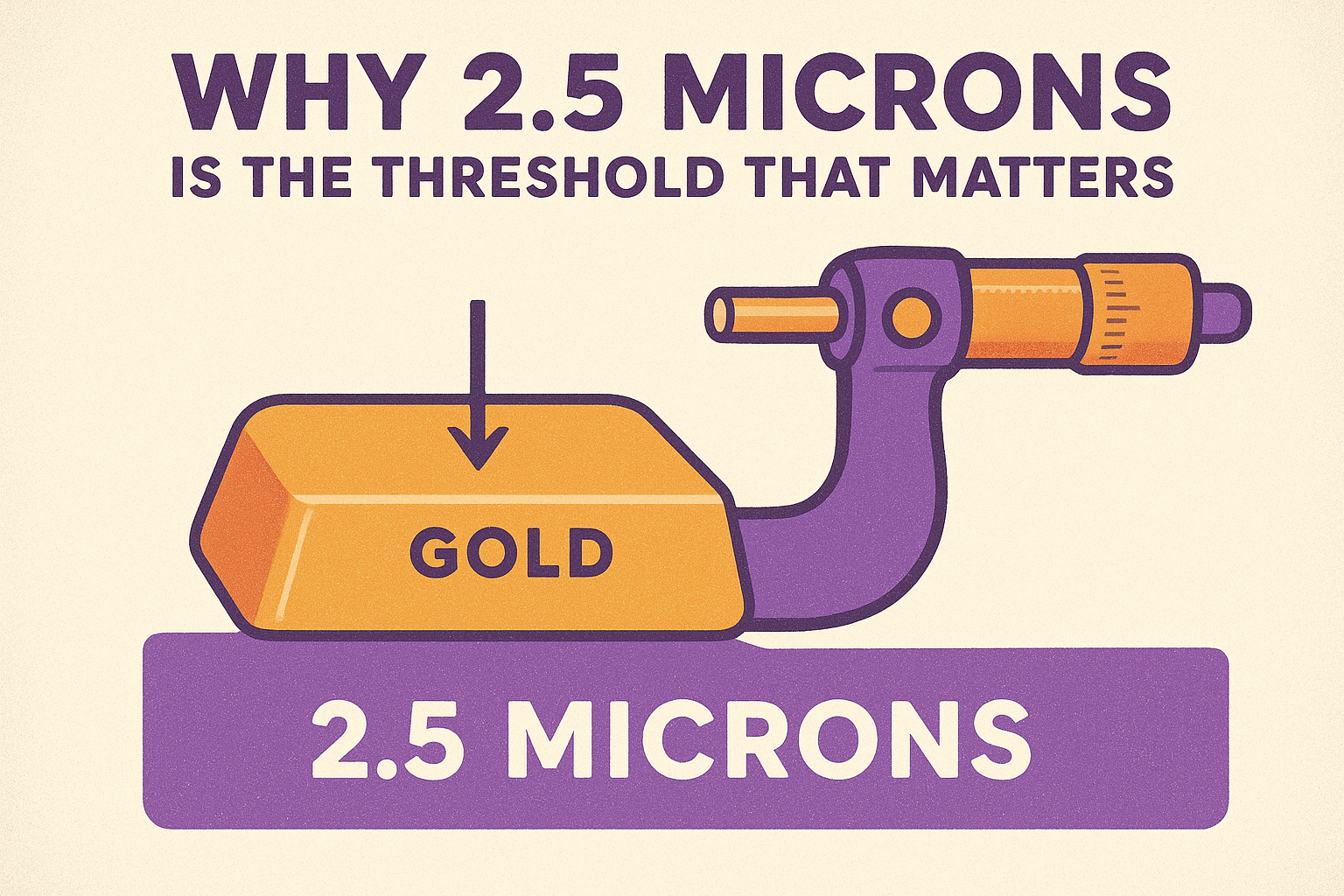
Some jewelers plate at 3 or even 4 microns, which produces noticeably longer-lasting results than pieces that barely clear the legal minimum. Asking a seller for the exact micron thickness before you buy gives you a straightforward way to compare quality across different vermeil pieces.
How to check if a piece is real gold vermeil
Knowing how gold vermeil is made gives you a practical advantage when you shop. You can use that knowledge to quickly evaluate whether a piece actually meets the standard or whether a seller is using the word loosely to move cheaper inventory.
Check the listed specifications
A legitimate vermeil piece will have clear, specific product details that confirm all three FTC requirements: sterling silver base, at least 10-karat gold, and a minimum 2.5-micron gold thickness. Look for these numbers directly in the product description. If a listing only says "gold vermeil" without specifying the base metal or micron thickness, treat that as a warning sign.
Vague product descriptions are often a signal that the piece doesn't fully meet the FTC's legal definition of vermeil.
Verify the base metal
You can physically check the base metal on older or second-hand pieces by looking for a 925 stamp, which indicates sterling silver at 92.5% purity. This hallmark typically appears in a small, inconspicuous area like the clasp or the inside of a ring band. No 925 stamp on a piece claiming to be vermeil means the base metal is likely something cheaper, such as brass or copper, which disqualifies it automatically.
Ask the seller directly
If the product page leaves you guessing, contact the seller and ask for the exact gold thickness in microns and the specific karat of the gold coating. A reputable seller answers both questions without hesitation. Sellers who cannot or will not provide these details are telling you everything you need to know about the actual quality of the piece.
Quick recap
Understanding how gold vermeil is made gives you a real edge when shopping for jewelry that lasts. Genuine vermeil requires a sterling silver base, a gold coating of at least 10 karats, and a minimum thickness of 2.5 microns. These three requirements come from the FTC and exist to protect you from misleading claims.
The manufacturing process moves from cleaning and preparing the silver base to electroplating gold ions onto the surface using a controlled electric current. That atomic-level bond is what separates true vermeil from basic plating that fades within weeks.
When you shop, ask for the exact micron thickness and verify the 925 stamp on the base metal. Sellers who provide clear answers are the ones worth trusting with your money. If you want jewelry that meets these standards and holds up to daily wear, browse the Ezra Gems bestsellers collection to find pieces built to last.
Part of our complete guide to gold vermeil jewelry.
Want the gold look without the tarnish problem? Gold vermeil is real gold over sterling silver — beautiful, but once the gold layer thins, the silver underneath tarnishes. Ezra Gems takes a different approach: 18K gold over surgical stainless steel, a base that does not react with water, sweat, or salt. That is why our pieces stay waterproof and tarnish-free with no polishing routine at all.
Leave a comment