


Yes: 316L stainless steel is one of the most reliable choices for durable, low-tarnish, mostly hypoallergenic jewelry, thanks to its molybdenum content and low carbon level. The trade-offs are minor but real. It’s not guaranteed 100% nickel-free, resizing is limited, and plated finishes wear faster than the raw metal. Some jewelry providers build entire product lines around this grade because it holds up to daily life without asking much in return.
TL;DR:
- 316L stainless steel contains molybdenum, which significantly enhances its resistance to chloride corrosion from sweat, chlorine, and seawater.
- Its low carbon content prevents chromium depletion at weld seams, making it ideal for long-term durable jewelry, especially in humid conditions.
- 316L jewelry is harder and more scratch-resistant than silver and gold alloys, and it can be safely worn during water activities like swimming and showering.
- It is not entirely nickel-free, so those with severe allergies should consider alternative hypoallergenic metals, and resizing often requires laser welding.
- Its environmentally friendly aspect lies in its recyclability and long lifespan, reducing waste compared to cheaper, short-lived jewelry options.
Table of Contents
- What Is 316L Stainless Steel and Why It Matters for Jewelry
- What Makes 316L Jewelry Durable, Waterproof, and Skin-Friendly?
- What Are the Downsides of 316L Stainless Steel Jewelry?
- 316L vs 304 Stainless Steel vs Sterling Silver: Which Should You Buy?
- Which Finishes and Product Types Are Common in 316L Jewelry?
- How Do You Verify You’re Buying Genuine 316L Jewelry?
- How Should You Clean and Care for 316L Jewelry?
- Why Ezragems Builds Around 316L Stainless Steel
- Beyond Nickel: What Other Skin Reactions Should You Watch For?
- Is 316L Stainless Steel Jewelry Environmentally Friendly?
- What Should You Expect to Pay for 316L Jewelry?
- What Should Guide Your 316L Jewelry Purchase?
- Ezragems’ 316L Picks Worth Adding to Your Cart
- Standards and Specs Worth Bookmarking
- Sources
What Is 316L Stainless Steel and Why It Matters for Jewelry
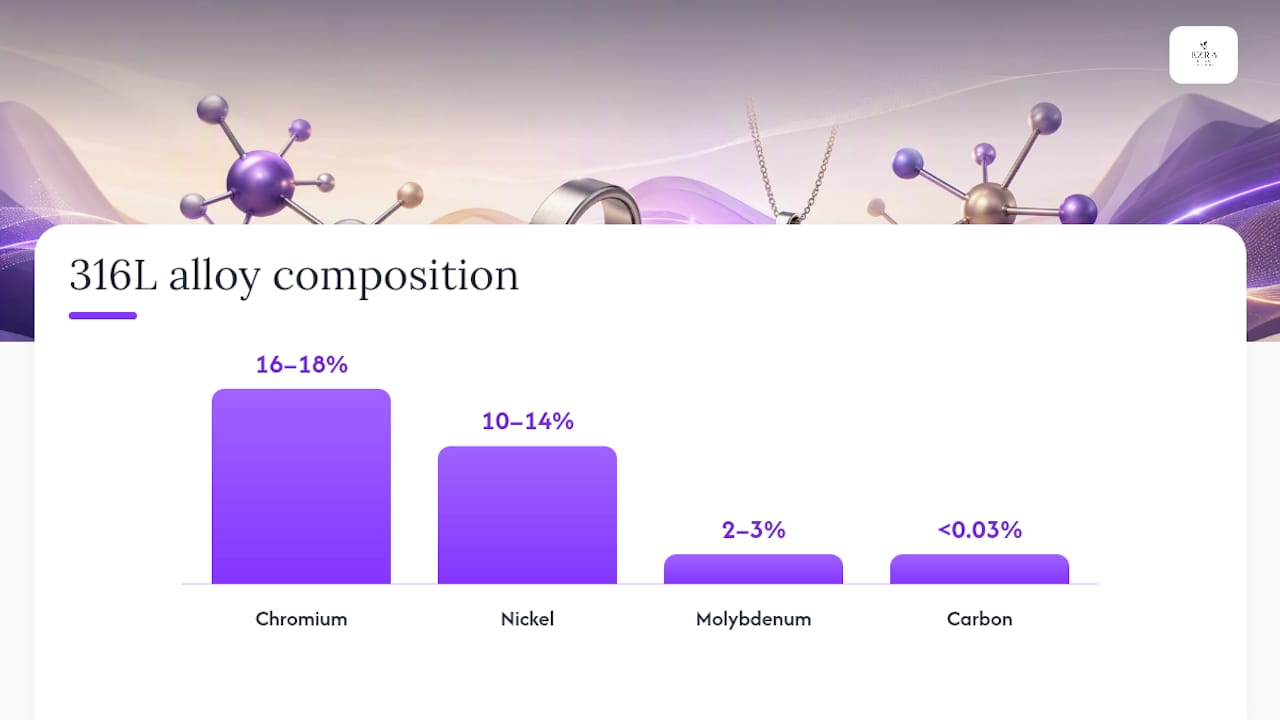
316L is an austenitic stainless steel alloy, meaning its internal structure stays stable across a wide temperature range and resists the kind of corrosion that eats away at cheaper metals. The numbers behind the name tell the real story.
- Chromium: roughly 16 to 18 percent, forming a thin invisible oxide layer that shields the metal from air and moisture
- Nickel: roughly 10 to 14 percent, stabilizing the steel’s structure and adding a bit of flexibility
- Molybdenum: roughly 2 to 3 percent, the ingredient that separates 316L from lower grades
- Carbon: kept below 0.03 percent, which is what the “L” in 316L stands for (low carbon)
Molybdenum is the piece that does the heavy lifting for jewelry specifically. It sharply improves resistance to chloride-based corrosion, the kind caused by sweat, pool chlorine, and seawater, according to the material’s own SAE 316L stainless steel specification. Without it, a piece worn daily in humid conditions would eventually develop pitting, those tiny dark spots that signal the metal is breaking down at a microscopic level.
The low carbon content matters for a less obvious reason: welding. When metal is welded, heat can cause carbon to bond with chromium at the seams, a process called sensitization. That reaction depletes the chromium available to form the protective oxide layer right where the weld sits, leaving a weak spot prone to corrosion. Keeping carbon under 0.03 percent all but eliminates that risk, which is why technical datasheets list 316L as the preferred grade anywhere welded joints need to survive long term, from surgical implants to jewelry clasps.
One manufacturing quirk catches buyers off guard: a 316L piece can turn slightly magnetic after cold working, the process of bending or shaping the metal without heat, or after welding. This is a normal fabrication artifact, not a sign you got a mislabeled or lower grade, according to Xometry’s material guide. If your “stainless steel” ring sticks faintly to a fridge magnet, that’s chemistry, not a red flag.
What Makes 316L Jewelry Durable, Waterproof, and Skin-Friendly?
The composition above translates into three benefits that actually matter when you’re deciding what to wear every day.
Durability first. 316L is noticeably harder than sterling silver and most gold alloys, so it resists the scratches, dents, and bent prongs that plague softer metals. A silver bracelet that gets tossed in a gym bag daily will show wear within months. A 316L one usually won’t.
Waterproof performance is where it separates from almost everything else in a jewelry box. You can shower in it, swim laps in a chlorinated pool, and wear it into the ocean without triggering the corrosion that would tarnish silver or degrade base-metal plating. That’s the direct result of the chromium oxide layer and molybdenum resistance described above, backed by manufacturer product data on how the alloy performs in marine and chemical environments.
Hypoallergenic behavior rounds out the case. 316L releases nickel at a much lower rate than nickel-plated base metals or lower stainless grades, which is why it’s a common recommendation for sensitive ears and skin, alongside dedicated hypoallergenic earrings for sensitive ears. It’s not a nickel-free metal, but for most people who react to cheap costume jewelry, 316L doesn’t cause the same irritation.
Where does this show up in real product choices?
- Hoops and huggies worn 24/7 without removal
- Layered chains that go from office to gym to beach without a second thought
- Stacking rings that need to survive hand washing dozens of times a day
- Bracelets worn during workouts, showers, and travel
Pro Tip: If you’re testing a new piece for sensitivity, wear it continuously for a full week before deciding it’s not for you. Most reactions to genuinely low-nickel alloys show up fast, within a day or two, so a slow-building irritation is often the plating or a bonding adhesive, not the base 316L metal.
What Are the Downsides of 316L Stainless Steel Jewelry?
No metal is perfect, and 316L has a short list of limitations worth knowing before you buy.
Limitations of 316L stainless steel jewelry include:
- It is not completely nickel-free, so individuals with severe nickel allergies should exercise caution.
- Resizing can be more challenging than with gold or silver, often requiring laser welding not available at all jewelers.
- Standard electroplated finishes may wear off faster than the underlying metal, while PVD coatings offer superior durability.
- Slight magnetism can occur from cold work or welding, which is cosmetic and does not impact corrosion resistance or safety.
For anyone with a documented severe nickel allergy, nickel-free hypoallergenic rings built on alternative alloys may be worth comparing before committing to any stainless piece. And if you need a piece resized down the road, ask the seller about their repair policy before you buy, not after.
316L vs 304 Stainless Steel vs Sterling Silver: Which Should You Buy?
The short answer: 316L for anything you wear daily, in water, or against skin for long stretches; sterling silver only if you specifically want a precious metal and don’t mind the maintenance.
The metallurgy explains why. Both 316L and 304 stainless steel share a similar chromium base, but 304 lacks molybdenum, according to comparative material data on AISI 316L. That missing ingredient means 304 corrodes faster under chloride exposure, sweat, pool water, and saltwater included. It’s not a dramatic difference over a weekend, but over years of daily wear, the gap shows.
Sterling silver plays a different game entirely. It’s a precious metal with genuine resale and heirloom value, and many buyers simply prefer the look and feel of real silver over steel. The trade-off is upkeep: silver tarnishes when exposed to air, sulfur compounds, and moisture, requiring regular polishing to stay bright, something detailed further in guidance on whether stainless steel jewelry tarnishes. Silver is also softer, meaning it dents and scratches more easily under daily stress.
Here’s a simple way to decide between them:
- Choose 316L if you want to wear a piece in the shower, gym, or ocean without thinking about it
- Choose 304 only for short-term fashion pieces where budget matters more than longevity
- Choose sterling silver if you specifically want a precious metal and are willing to polish occasionally
- Choose 316L over silver if low maintenance is your top priority, full stop
Which Finishes and Product Types Are Common in 316L Jewelry?
316L shows up across nearly every jewelry category, and the finish on top of it determines both the look and the maintenance level.
Chains, hoops, huggies, stud earrings, bracelets, and stacking rings dominate the category, along with mixed-material designs that set gemstones or pearls into a stainless base, like the Baroque Pearl Stainless Steel Earrings. The steel provides the structural durability while the accent material carries the visual interest.
On finishes, buyers generally see three options:
- Unplated, mirror-polished 316L, which shows the metal’s natural silvery tone and needs almost no maintenance since there’s no coating to wear off
- PVD-coated 316L in gold, rose gold, or black, where the color is bonded at a near-molecular level for genuinely long-lasting wear
- Standard electroplated finishes, the budget option, where a thin metal layer sits on top and tends to fade or rub off within months of regular wear
The finish you choose changes what “waterproof” actually means in practice. Unplated and PVD-coated 316L both hold up to water exposure without color loss. Standard electroplating is a different story: the base metal underneath resists corrosion just fine, but the colored surface layer can dull or wear thin faster, especially with frequent water contact. That’s why brands focused on daily-wear pieces tend to favor PVD over cheap plating for anything marketed as swim-safe or shower-safe.
How Do You Verify You’re Buying Genuine 316L Jewelry?
Buying online means trusting a listing you can’t touch, so a quick verification habit saves you from vague marketing language later.
- Look for explicit grade labeling. A trustworthy listing states “316L” or its formal designation, UNS S31603, directly in the product description, not a vague phrase like “stainless look” or “steel alloy.”
- Ask for material test reports on bulk orders. If you’re buying in quantity for resale or gifting, a legitimate supplier can provide documentation confirming the alloy composition.
- Check seller trust signals. Verified customer reviews, a clear returns or warranty policy, and specific care instructions on the product page all suggest a seller who stands behind their material claims.
- Ask about plating warranties on colored pieces. PVD coatings should come with some assurance of thickness or durability; if a seller can’t answer basic questions about their finish, that’s worth noting.
- Consider titanium for fresh piercings or severe allergies. If you’re dealing with a brand-new piercing or a documented severe nickel reaction, implant-grade titanium is generally the safer starting material, even though 316L works well for healed piercings and general wear.
Pro Tip: Screenshot the product listing at checkout, especially the material claim. If a piece ever discolors or irritates your skin unexpectedly, having the original description on file makes any warranty claim far easier to process.
How Should You Clean and Care for 316L Jewelry?
Care for 316L is refreshingly simple compared to silver or gold-plated pieces, but a few habits extend its life noticeably.
- Wash pieces with mild soap and warm water using a soft brush, then rinse thoroughly and dry completely before storing
- Avoid harsh chemicals, chlorine-heavy cleaning products, and abrasive polishing compounds, especially on PVD-coated pieces where aggressive scrubbing can dull the finish over time
- Limit prolonged contact with perfume, lotion, and other cosmetics, which can build up residue on any jewelry surface, plated or not
- Feel free to shower, swim, or take pieces into the ocean; the base alloy resists that kind of exposure well, though pearls, glued accents, or delicate plated details may need more caution than the steel itself
For step-by-step routines, including how often to clean based on wear frequency, a detailed tarnish-free jewelry care guide covers the specifics, and anyone with pearl-set stainless pieces should check dedicated pearl cleaning instructions since pearls need gentler handling than the metal they’re set in.
Why Ezragems Builds Around 316L Stainless Steel
Some brands focus on waterproof, hypoallergenic jewelry crafted from materials chosen for daily durability, including 316L stainless steel, 18k gold plating, and genuine pearls. This focus often responds to common buyer complaints about cheaper jewelry: fading, itching, and pieces that can’t survive a shower.
Numerous verified customer reviews back such positioning, suggesting that durability claims can hold up under real daily wear rather than just marketing copy.
Beyond Nickel: What Other Skin Reactions Should You Watch For?
Nickel allergy gets most of the attention, but it’s not the only sensitivity that can show up with metal jewelry. Chromium sensitivity, while less common, does affect a subset of people, and since chromium makes up 16 to 18 percent of 316L’s composition, it’s worth knowing the signs.
Chromium contact dermatitis typically looks similar to a nickel reaction: redness, itching, or a mild rash localized to where the metal touches skin. It tends to develop more slowly than a nickel reaction and can sometimes be mistaken for simple dryness or friction irritation, which is part of why it goes underdiagnosed.
If you suspect a reaction to any metal jewelry, a patch test is the standard way to confirm it. Dermatologists apply small amounts of suspected allergens, including nickel sulfate and potassium dichromate (the chromium compound used in testing), to the skin under adhesive patches for 48 hours, then check for a reaction. This isn’t something to DIY with a piece of jewelry taped to your arm; a dermatologist-administered patch test panel is the only reliable way to distinguish between nickel sensitivity, chromium sensitivity, and simple irritation from moisture or friction trapped under a ring or bracelet.
For most people, general irritation from wearing any metal jewelry for extended periods, especially in humid conditions, resolves once the piece comes off and the skin dries out. Persistent reactions that continue after removal are the clearer signal that a formal allergy test is worth pursuing.
Is 316L Stainless Steel Jewelry Environmentally Friendly?
Stainless steel earns a genuine environmental advantage that a lot of jewelry marketing skips over: it’s fully recyclable, and recycling it doesn’t degrade its properties.
Unlike gold plating, which typically can’t be recovered once it wears off a base metal, or costume jewelry alloys that mix multiple metals in ways that complicate recycling, 316L can be melted down and reformed into new steel products indefinitely without losing its corrosion resistance or structural strength. Scrap stainless steel is a standard input for new steel production across multiple industries, not just jewelry.
The bigger environmental story is longevity. A piece of jewelry that lasts a decade without tarnishing, fading, or breaking down replaces a dozen cheap, short-lived pieces that end up in landfills within a year or two. From a pure waste-reduction standpoint, buying one durable 316L piece instead of cycling through disposable costume jewelry is the more resource-efficient choice, even before recycling enters the picture.
That said, mining and refining the raw chromium, nickel, and molybdenum that go into any stainless steel does carry an environmental footprint, the same as any metal extraction process. No metal is impact-free at the sourcing stage. The honest framing is that 316L’s advantage isn’t a zero-impact origin story. It’s that the finished product tends to stay in use far longer than the alternatives, which reduces the total resource draw over time.
What Should You Expect to Pay for 316L Jewelry?
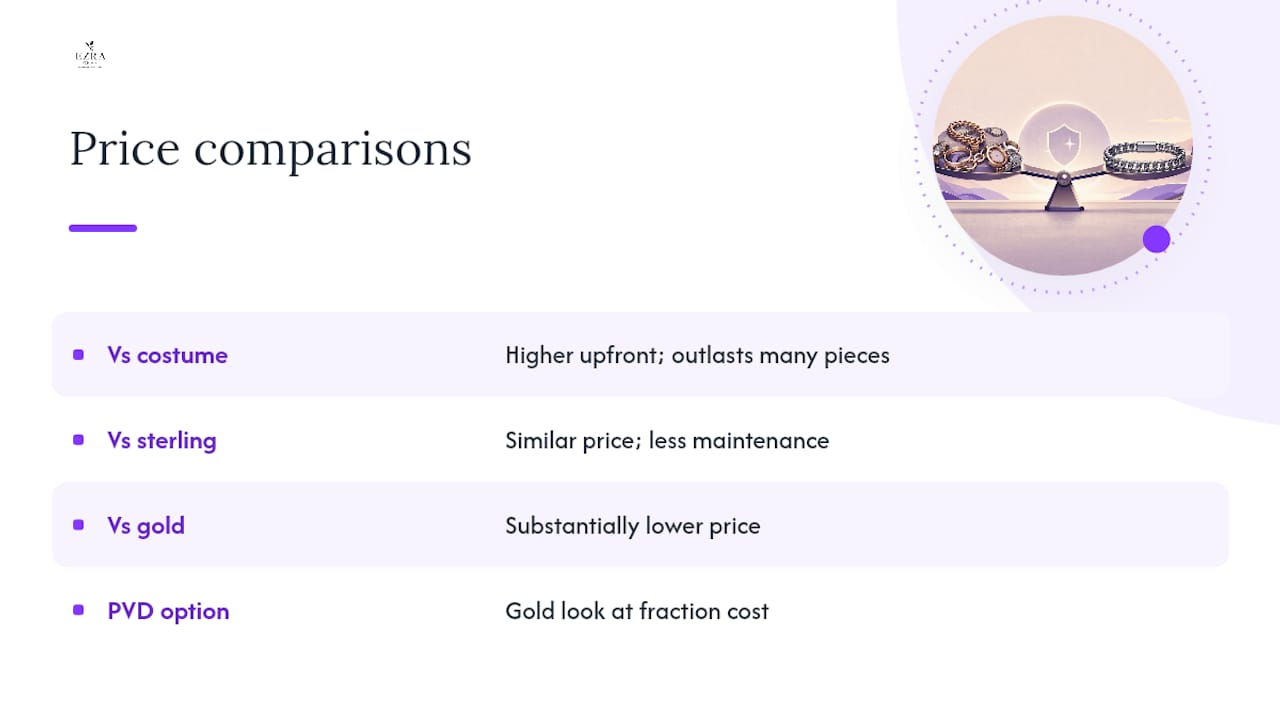
316L stainless steel sits in a distinct price tier: noticeably more affordable than solid gold or platinum, generally comparable to or slightly above sterling silver, and a step up from disposable costume jewelry in both price and lifespan.
The value case comes down to cost per year of wear rather than sticker price alone. A cheap costume piece might cost less upfront, but if it tarnishes, fades, or irritates skin within months, you’re replacing it repeatedly. A 316L piece costs more than that costume alternative but typically outlasts several of them combined, without the recurring irritation or discoloration issues.
Compared to sterling silver, pricing is often similar for comparable design complexity, but the ongoing cost differs. Silver requires periodic polishing supplies and occasional professional cleaning to stay bright, small recurring costs that add up. 316L skips most of that maintenance overhead.
Compared to solid gold, the price gap is substantial, and that’s expected since gold carries precious-metal value that steel simply doesn’t have. For buyers who want the look of gold without the price or upkeep, PVD gold-coated 316L bridges that gap, offering a gold-toned finish at a fraction of solid gold’s cost, with better durability than standard gold electroplating.
The practical takeaway: if your budget priority is low cost per year of ownership rather than lowest price at checkout, 316L usually wins that comparison against both cheap costume jewelry and precious metals requiring heavy upkeep.
What Should Guide Your 316L Jewelry Purchase?
If I had to boil this down to one habit, it’s this: check for the grade before you check the price. A listing that says “stainless look” or “steel alloy” without naming 316L specifically is a listing hiding something, usually a lower grade or a mixed-metal blend that won’t perform the way you expect.
Beyond that, prioritize PVD finishes over unlabeled electroplating, and buy from sellers who publish real care instructions and stand behind returns. Vague material claims are the single biggest red flag on any product page.
— Ezra
Ezragems’ 316L Picks Worth Adding to Your Cart
If you want daily-wear pieces without the guesswork, Ezragems’ 316L lineup covers the styles most people reach for first. The Unique Lock Stainless Steel Earrings suit anyone who wants a distinctive silhouette that still holds up to gym bags, showers, and long workdays. The Classic Stainless Steel Hoop Earrings are the no-brainer everyday pick, simple enough to wear with anything and durable enough to forget you’re wearing them. And the Baroque Pearl Stainless Steel Earrings give you the softness of genuine pearls without sacrificing the corrosion resistance of a 316L base, so you’re not choosing between style and durability.
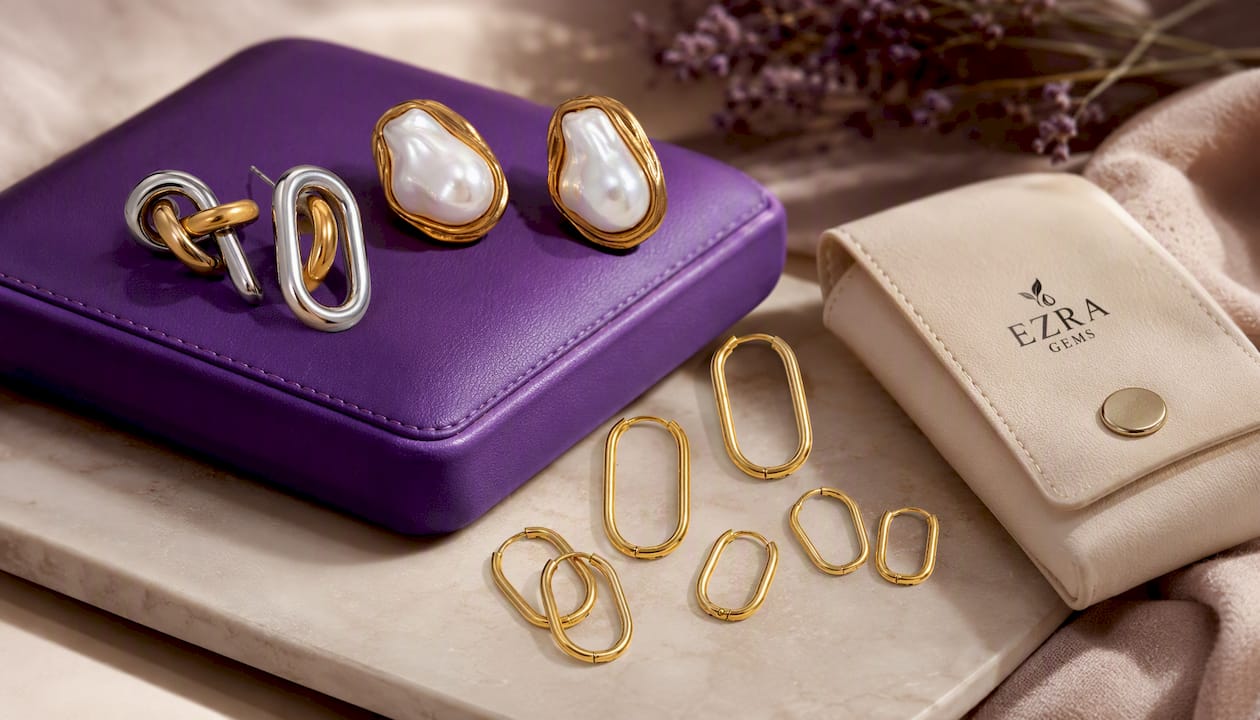
Every piece is built on genuine 316L, not a vague “stainless look” substitute, and backed by warranty and returns coverage so you’re not stuck guessing whether a purchase was the right call. Browse the full collection at Ezragems and check the specific care notes and warranty details listed on each product page before you buy.
Standards and Specs Worth Bookmarking
For readers who want the raw technical detail, the SAE 316L specification covers alloy composition, while eFunda’s property tables detail mechanical performance. Manufacturers sourcing or exporting stainless jewelry should consult both before making grade claims.
Sources
- eFunda: Properties of Stainless Steel AISI Type 316L
- 316 / 316L stainless steel product data (Cleveland-Cliffs)
- 316 stainless steel material guide — Xometry
Laat een reactie achter