


Gold-plated jewelry gives you the look and warmth of solid gold without the four-figure price tag, but have you ever wondered how is gold plated jewelry made? The process is more involved than most people realize, and understanding it can help you make smarter buying decisions the next time you shop for everyday pieces.
At its core, gold plating uses a technique called electroplating to bond a thin layer of real gold onto a base metal like brass, stainless steel, or sterling silver. The thickness of that gold layer, the quality of the base metal, and the preparation steps before plating all play a direct role in how long the piece lasts and whether it'll turn your skin green after a week. These are details that matter, especially if you want jewelry that can keep up with daily wear, from morning workouts to dinner plans.
At Ezra Gems, we've built our collections around gold-plated and gold-filled pieces designed to be waterproof, tarnish-free, and hypoallergenic. We know this process inside and out because it directly affects the quality our customers depend on. This guide breaks down every step of the gold plating process, from selecting the base metal to the final polish, so you can see exactly what separates jewelry that lasts from jewelry that doesn't.
What gold plating is in jewelry
Gold plating is the process of bonding a thin layer of real gold onto the surface of a base metal using an electrical current. The result is a piece of jewelry that looks and feels like solid gold on the outside but carries a different metal at its core. This technique has been in use across manufacturing for decades, spanning industries from electronics to aerospace, and it's especially common in fashion jewelry because it makes the aesthetic of gold accessible without the cost of solid gold.
The electroplating process defined
To understand how is gold plated jewelry made, you first need to know what electroplating actually does at a chemical level. When a jeweler submerges a metal piece into a gold-ion solution and runs an electrical current through it, the gold ions in the solution are attracted to the surface of the object. The current causes those ions to deposit themselves as a thin, even coating of gold, creating a permanent molecular bond between the gold layer and the base metal rather than a loose surface application.
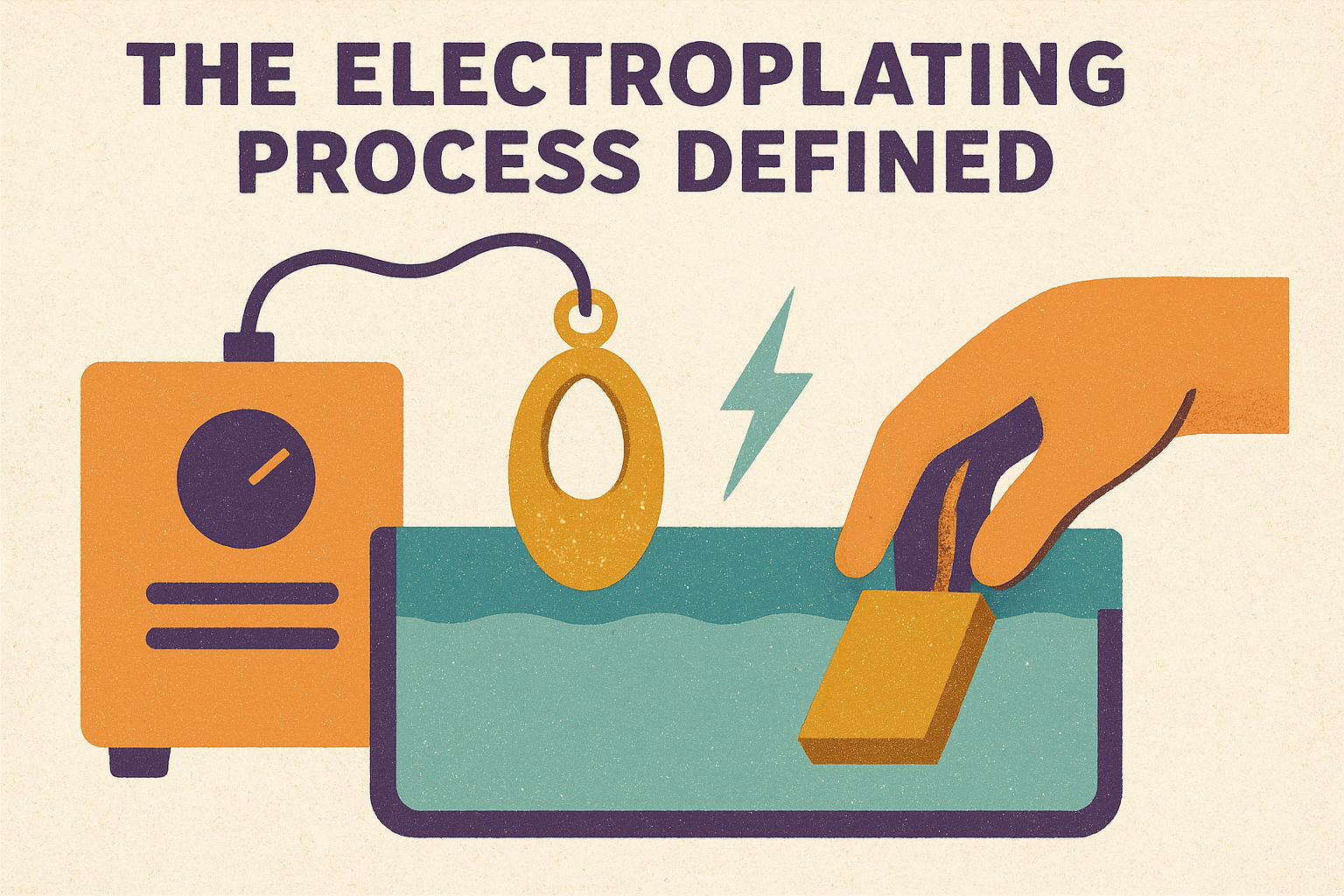
A properly electroplated piece bonds gold at a molecular level, which is what separates it from cheaper dipped or painted alternatives that wear away quickly.
This bond is also why electroplated jewelry behaves differently from gold-dipped pieces. With electroplating, the gold integrates directly with the outer surface of the base metal rather than sitting on top of it. That integration gives a well-made electroplated piece the ability to hold up to daily friction from clothing, skin contact, and water exposure over time. The quality of that bond depends heavily on how well the manufacturer prepares the metal before it ever enters the plating solution.
Gold plated vs. gold filled vs. solid gold
These three terms get used interchangeably sometimes, but they describe very different products with very different compositions. Gold-plated jewelry carries a thin gold layer over a base metal, typically between 0.5 and 2.5 microns thick. Gold-filled jewelry uses a much thicker layer of gold mechanically bonded to the base metal, making up at least 5% of the item's total weight by law. Solid gold runs gold throughout the entire piece, with no base metal core at all.
| Type | Gold Layer | Durability | Typical Price |
|---|---|---|---|
| Gold plated | 0.5 to 2.5 microns | Moderate, care-dependent | Most affordable |
| Gold filled | 5% of total weight minimum | High | Mid-range |
| Solid gold | Throughout the entire piece | Highest | Most expensive |
Your choice should come down to your budget and how you plan to wear the piece. For everyday jewelry that looks great without costing hundreds of dollars, high-quality gold plating is often the most practical option, especially when the manufacturer selects a strong base metal and applies a generous, even layer of gold from the start. The difference between plating done right and plating done cheaply is significant, and the next sections explain exactly what drives that difference.
Why gold plated jewelry quality varies
Not all gold-plated jewelry is made equally, and understanding how is gold plated jewelry made at different quality levels helps you recognize what you're actually buying. Two pieces can look identical in a product photo but perform very differently after six months of daily wear. The gap usually comes down to three core factors: the base metal used, the thickness of the gold layer, and the preparation steps a manufacturer takes before plating begins.
The base metal matters more than most people think
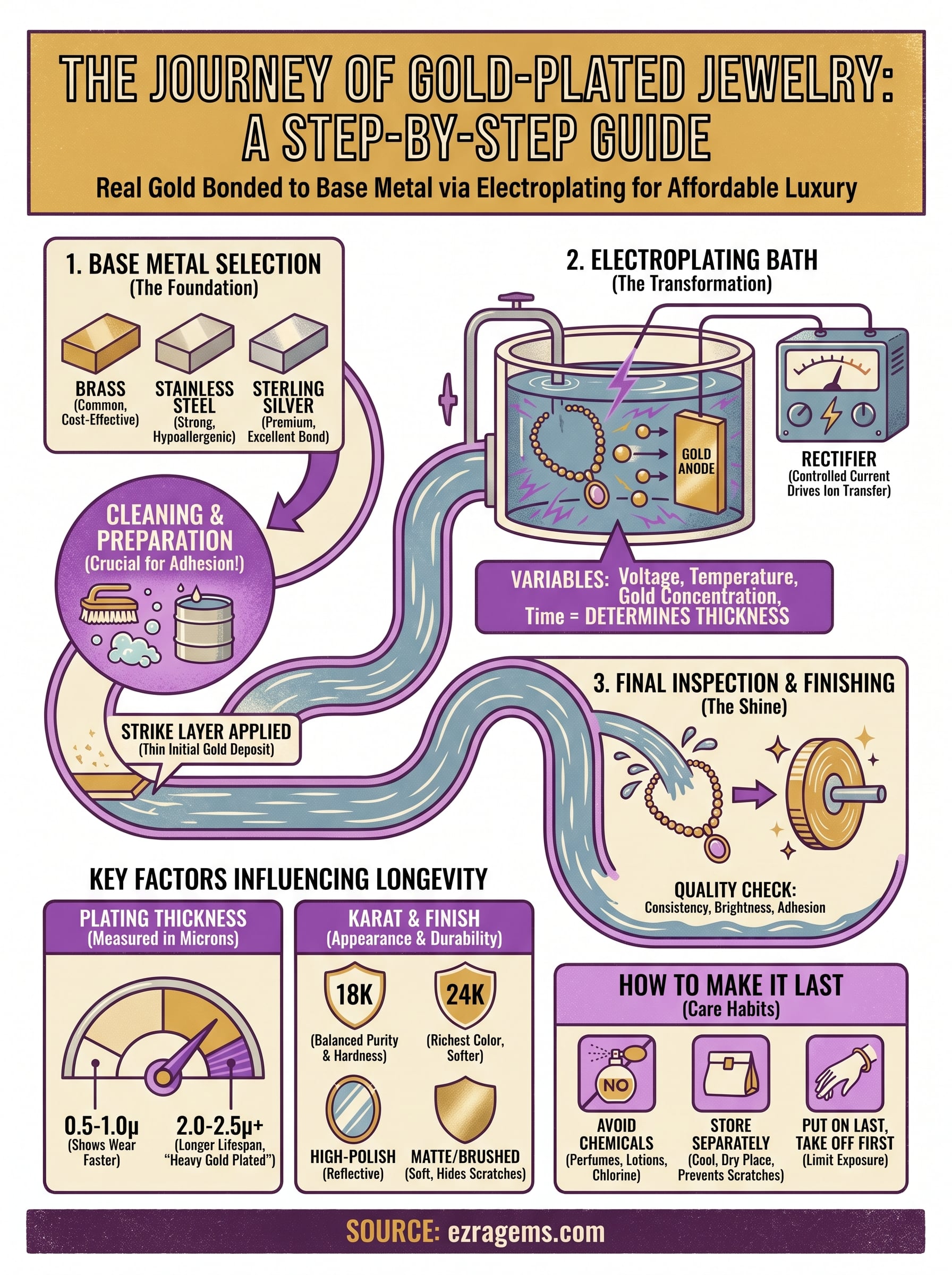
The metal underneath the gold layer isn't just filler. It directly affects how well the gold bonds to the surface, how the piece holds up under pressure, and whether your skin reacts to it. Brass is one of the most common base metals because it's inexpensive and easy to shape, but it contains copper and zinc, which can eventually migrate through a thin gold layer and cause discoloration or skin irritation. Stainless steel and sterling silver offer cleaner, more stable surfaces that bond better with gold and resist oxidation from the inside out.
Here's how the most common base metals compare at a glance:
- Brass: affordable and workable, but higher risk of skin reactions as the gold layer thins
- Stainless steel: strong, corrosion-resistant, and hypoallergenic
- Sterling silver: excellent gold adhesion and a higher starting material quality
- Copper: highly conductive but prone to oxidation if the gold layer wears
The base metal you can't see has just as much impact on how your jewelry holds up as the gold layer you can.
How plating thickness affects longevity
A thicker gold layer gives the piece a longer lifespan because there's simply more material for daily friction to work through before the base metal starts showing. Industry standards measure plating thickness in microns. A piece plated at 0.5 microns will show wear significantly faster than one plated at 2.5 microns, even if both look identical when new. Budget manufacturers often cut costs by applying the minimum possible layer, which is why some gold-plated jewelry fades within weeks while other pieces hold up for years.
Plating consistency matters just as much. Uneven application leaves some areas of the piece with thinner coverage than others, so those spots wear through first. Quality manufacturers run controlled electroplating cycles to keep the deposit thickness uniform across the entire surface of each piece.
Materials and equipment used in electroplating
Understanding how is gold plated jewelry made starts with knowing what goes into the process before a single piece of metal ever enters a plating tank. The materials and equipment a manufacturer uses directly shape the quality, consistency, and durability of the finished product. Cutting corners on any one of these elements produces results you'll see on your skin within months.
The metals and solutions in the plating bath
The plating bath is the liquid solution that carries gold ions to the surface of the base metal. Most professional plating operations use a gold salt solution, typically gold potassium cyanide, which dissolves gold into a stable, ionized form that the electrical current can move and deposit. The concentration of gold in the solution determines how efficiently and thickly the gold deposits onto each piece. A diluted bath produces a thinner, less consistent layer, while a properly maintained solution delivers the even, dense coverage that makes a plated piece durable.
The chemistry of the plating bath is what separates a controlled industrial process from a low-cost shortcut.
Beyond the gold solution itself, manufacturers add electrolyte compounds and pH buffers to keep the bath stable throughout production. These additives control how smoothly the gold deposits and prevent uneven buildup at edges or recessed areas. The base metal also plays a role here, since metals with higher electrical conductivity like copper and silver accept gold ions more readily and produce a cleaner, more uniform bond than denser or more resistant metals.
The equipment that controls the process
The core piece of equipment in electroplating is a rectifier, which converts standard electrical current into a controlled direct current that drives the ion transfer from the bath to the metal piece. Jewelers also use insulated plating tanks, hangers or fixtures to hold each piece at the correct distance from the anode (the positive terminal that releases gold ions), and temperature controllers to keep the bath at a consistent level. Most quality operations also run filtration systems to remove impurities from the solution that would otherwise create blemishes or weak spots in the gold layer. The precision of this setup is what allows a manufacturer to produce consistent results across an entire product run.
How gold plated jewelry is made step by step
Now that you know the materials and equipment involved, walking through the actual production sequence shows exactly how is gold plated jewelry made from raw metal to finished piece. Each step builds directly on the one before it, and rushing or skipping any stage weakens the bond between the gold layer and the base metal.
Cleaning and preparing the base metal
The process starts with thorough cleaning of the base metal. Manufacturers remove surface oils, oxidation, and debris using a combination of ultrasonic cleaning tanks and chemical degreasers. Any contamination left on the surface at this stage prevents the gold from bonding properly, leading to peeling or uneven coverage later. After the initial cleaning, the piece goes through an electrocleaning step where a low electrical current pulls remaining impurities off the surface.
Preparation accounts for most plating failures: a poorly cleaned surface is the single most common reason gold plating peels or fades prematurely.
Applying a strike layer and entering the plating bath
Before the piece enters the main plating bath, most quality manufacturers apply a thin initial gold deposit called a strike. This strike layer creates a chemically receptive surface that helps the thicker gold deposit adhere more uniformly. Without it, the gold in the main bath may bond inconsistently, leaving thin spots across the piece. Once the strike is in place, the piece enters the primary plating bath. The manufacturer controls four key variables throughout this stage:
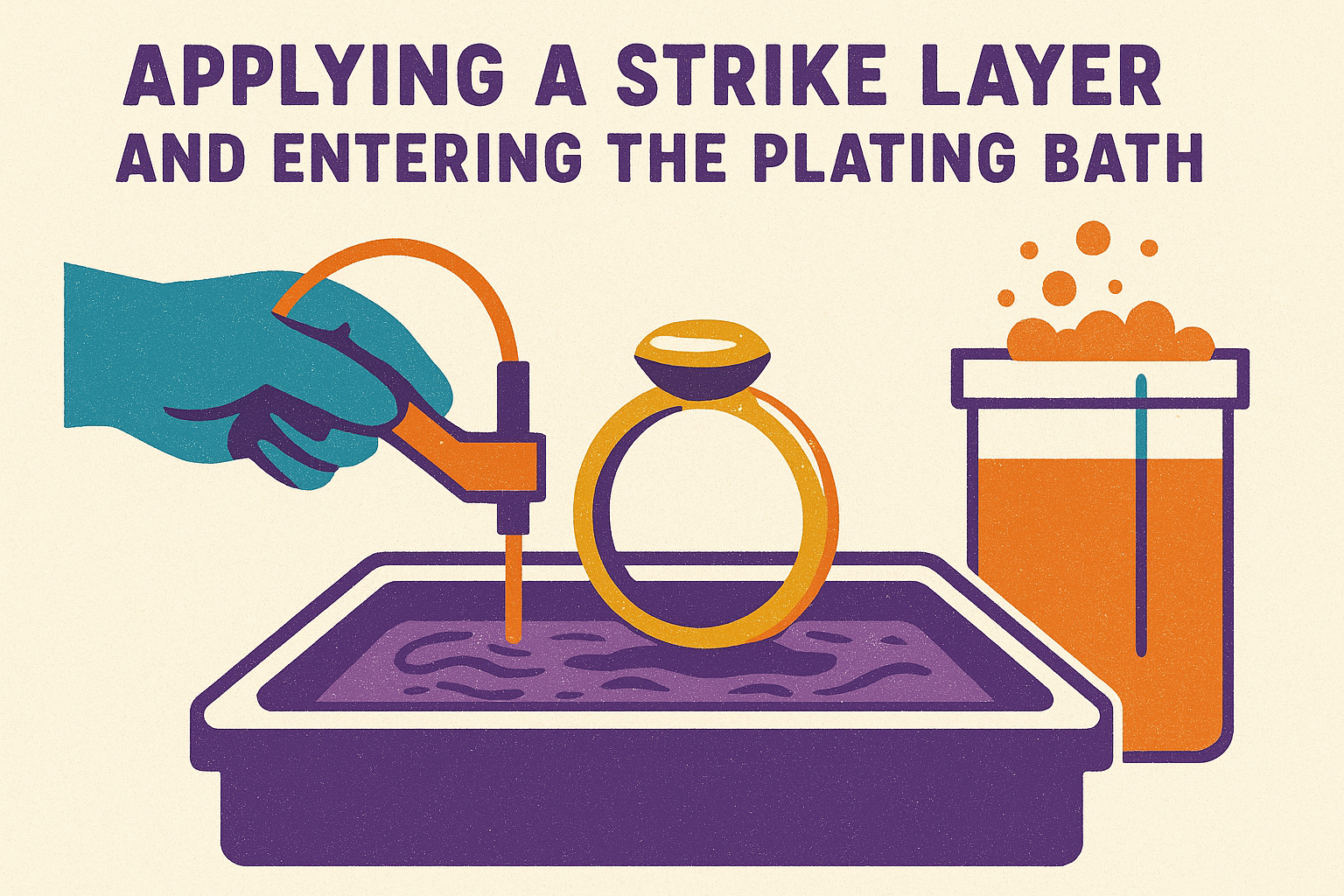
- Voltage and current density: determines how quickly gold ions deposit
- Bath temperature: affects the smoothness and adhesion of the layer
- Gold ion concentration: controls deposit thickness and consistency
- Submersion time: sets the final plating thickness
Final inspection and finishing
After the piece exits the plating bath, technicians rinse it thoroughly to remove residual plating solution. Then the piece goes through a quality inspection where the gold layer is checked for consistency, brightness, and adhesion across the full surface.
Many manufacturers follow this with a light polishing or buffing step to bring out surface shine, and some apply a clear protective coating to help the gold layer hold up against daily wear. Only after passing inspection does the piece move to packaging.
Thickness, karat, and finishes explained
When you understand how is gold plated jewelry made, three numbers matter most: the thickness of the gold layer, the karat of the gold used, and the type of finish on the surface. Each variable changes both the appearance and the durability of the final piece in measurable ways, so knowing what they mean helps you evaluate quality before you buy rather than after the piece starts showing wear.
Micron thickness and what it tells you
Plating thickness is measured in microns, and this number tells you how much real gold sits on top of the base metal. Standard fashion jewelry often carries a layer between 0.5 and 1.0 microns, which is functional but will show wear faster under daily use. Higher-quality pieces use 2.0 to 2.5 microns or more, giving the gold layer more material to withstand friction from skin, clothing, and water. Anything labeled "heavy gold plated" typically starts at 2.5 microns.
The micron thickness is the single most useful number you can ask for when evaluating a gold-plated piece.
Karat ratings in gold plating
The karat number on a gold-plated piece refers to the purity of the gold in the plating solution, not the piece as a whole. A 24-karat gold plating uses pure gold, which gives the richest, most yellow color but is also the softest and most prone to surface scratching. A 14-karat or 18-karat plating mixes gold with other metals, producing a slightly warmer or cooler tone depending on the alloy while adding hardness to the surface. Most quality jewelry brands use 18-karat plating as the standard because it balances color richness with wear resistance in a way that holds up to everyday contact.
Surface finishes and how they affect appearance
Your choice of finish changes how light hits the surface and how the piece reads in person. High-polish finishes reflect light sharply and create the mirror-like look most people associate with gold jewelry. Matte or brushed finishes scatter light for a softer, more understated effect, and some pieces combine both with textured or hammered patterns across the surface. The finish also affects how visible everyday scratches become over time, with matte surfaces hiding minor wear more effectively than high-polish ones.
How long gold plating lasts and how to care for it
Knowing how is gold plated jewelry made gives you a real advantage when it comes to predicting how long your pieces will hold up. A well-made gold-plated piece with a 2.0+ micron layer on a quality base metal can last two to five years with consistent care, while a thin-plated piece worn carelessly may fade in a matter of weeks. The gap between those outcomes comes down almost entirely to what your jewelry is exposed to and how you store it between wears.
The habits you build around your jewelry matter just as much as the quality of the plating itself.
What shortens the lifespan of gold plating
Several everyday substances work against the gold layer faster than most people expect. Chlorine and saltwater are the most aggressive, breaking down the bond between the gold layer and the base metal with repeated exposure. Perfumes, lotions, and cleaning products do similar damage because their chemical compounds react with the gold surface and accelerate wear. Friction is also a factor, especially on rings and bracelets that make constant contact with hard surfaces or other jewelry pieces in a pile.
Here are the main factors that reduce plating lifespan:
- Chlorine exposure from pools and cleaning products
- Saltwater from the ocean or heavy sweat
- Perfumes and body lotions applied directly over the jewelry
- Storing multiple pieces together without separation
- Abrasive surfaces and frequent hard contact
Daily habits that protect your plating
Protecting your gold plating doesn't require a complicated routine. The two most effective habits are putting your jewelry on last when getting ready, after applying any sprays or lotions, and removing it first when you're done with the day before washing your hands or showering. Both steps limit chemical exposure during the moments when your skin products are freshest and most reactive.
Storing your pieces correctly extends their life significantly. Keep each piece in a separate pouch or compartment to prevent scratching, and store them away from humidity by avoiding bathroom counters or windowsills. A cool, dry drawer keeps the gold layer stable between wears and slows oxidation of the base metal underneath.
Key takeaways
Gold plating is a precise manufacturing process, and knowing how is gold plated jewelry made puts you in a much stronger position as a buyer. The base metal, gold layer thickness, and karat rating all work together to determine whether a piece holds up over months of daily wear or fades within weeks. Preparation steps like cleaning and the strike layer matter just as much as the plating itself, and shortcuts at any stage show up quickly on your skin and your jewelry.
Your care habits extend the life of your pieces significantly. Keeping jewelry away from chlorine, perfumes, and humidity reduces wear on the gold layer, and storing each piece in a separate pouch prevents surface scratching between wears. If you want pieces built with these standards in mind from the start, browse the gold-plated jewelry collections at Ezra Gems and find something designed to hold up to real daily life.
Laat een reactie achter