


Gold-plated jewelry looks stunning, until it starts to fade, discolor, or lose its luster. And most of the time, the culprit isn't the jewelry itself. It's how you store gold plated jewelry when you're not wearing it. Moisture, air exposure, and even friction from other pieces can break down that gold layer faster than you'd expect, turning your favorite accessories into dull, tarnished versions of what they used to be.
At Ezra Gems, we design our gold-plated pieces to be waterproof and tarnish-resistant for everyday wear. But even the most durable jewelry benefits from proper storage. Think of it this way: good storage habits are the easiest thing you can do to keep your pieces looking new for years, not months.
This guide breaks down exactly how to store your gold-plated jewelry the right way, from choosing the right containers to controlling humidity and separating your pieces. Whether you own a few staples or a full collection, these steps will help you protect your investment and skip the frustration of premature tarnishing. Let's get into it.
Why gold-plated jewelry tarnishes in storage
Gold-plated jewelry has a thin layer of gold bonded over a base metal, usually brass or copper. That layer is typically only 0.5 to 2.5 microns thick, which means it's far more vulnerable to environmental damage than solid gold. Understanding what causes tarnish gives you a clear picture of exactly how to store gold plated jewelry in a way that actually protects it.
Humidity and air exposure
Moisture in the air is the number one enemy of gold-plated jewelry, even when you're not wearing it. When humid air sits in contact with the base metal beneath the gold, it triggers oxidation. That chemical reaction causes the metal to discolor, turning your pieces yellow-brown, green, or dull gray over time.
The bathroom, despite being convenient, is one of the worst places to store jewelry because steam and humidity levels spike repeatedly throughout the day.
Air exposure compounds the problem because oxygen reacts with both the gold plating and the base metal underneath. An open dish on your dresser might look stylish, but it leaves your pieces fully exposed to everything in the surrounding environment, including dust, moisture, and airborne chemicals.
Friction and chemical residue
Tossing multiple pieces into the same drawer or jewelry box creates constant friction between your pieces. That rubbing wears down the thin gold layer faster than almost anything else. A chain scratching against a ring, or earrings tangled with a bracelet, gradually strips away the plating in the spots that matter most.
Chemical residue from everyday products is another hidden cause of storage tarnish. Lotions, perfumes, and even natural skin oils don't fully evaporate when you take your jewelry off. If you store a piece without cleaning it first, those residues keep reacting with the metal while it sits in your drawer, slowly eating through the gold layer from the surface down.
| Cause | What it damages | Speed of damage |
|---|---|---|
| High humidity | Base metal and plating | Fast |
| Open-air storage | Surface of the plating | Moderate |
| Friction from other pieces | Gold layer edges | Fast |
| Chemical residue left on surface | Plating from the outside in | Slow but consistent |
What you need before you store your pieces
You don't need an expensive jewelry armoire to protect your collection. A few specific materials make the biggest difference, and most of them are easy to find or already in your home. Getting the right setup before you start storing your pieces means you avoid undoing tarnish damage after the fact, which is a much harder problem to fix.
The right containers and materials
Before figuring out how to store gold plated jewelry for the long term, gather your supplies first. Anti-tarnish pouches or small zip-lock bags are your most important tool because they create a sealed environment that limits air and moisture exposure. Soft-lined jewelry boxes or velvet pouches also work well, since the interior lining prevents friction between pieces and protects the gold surface from scratches.
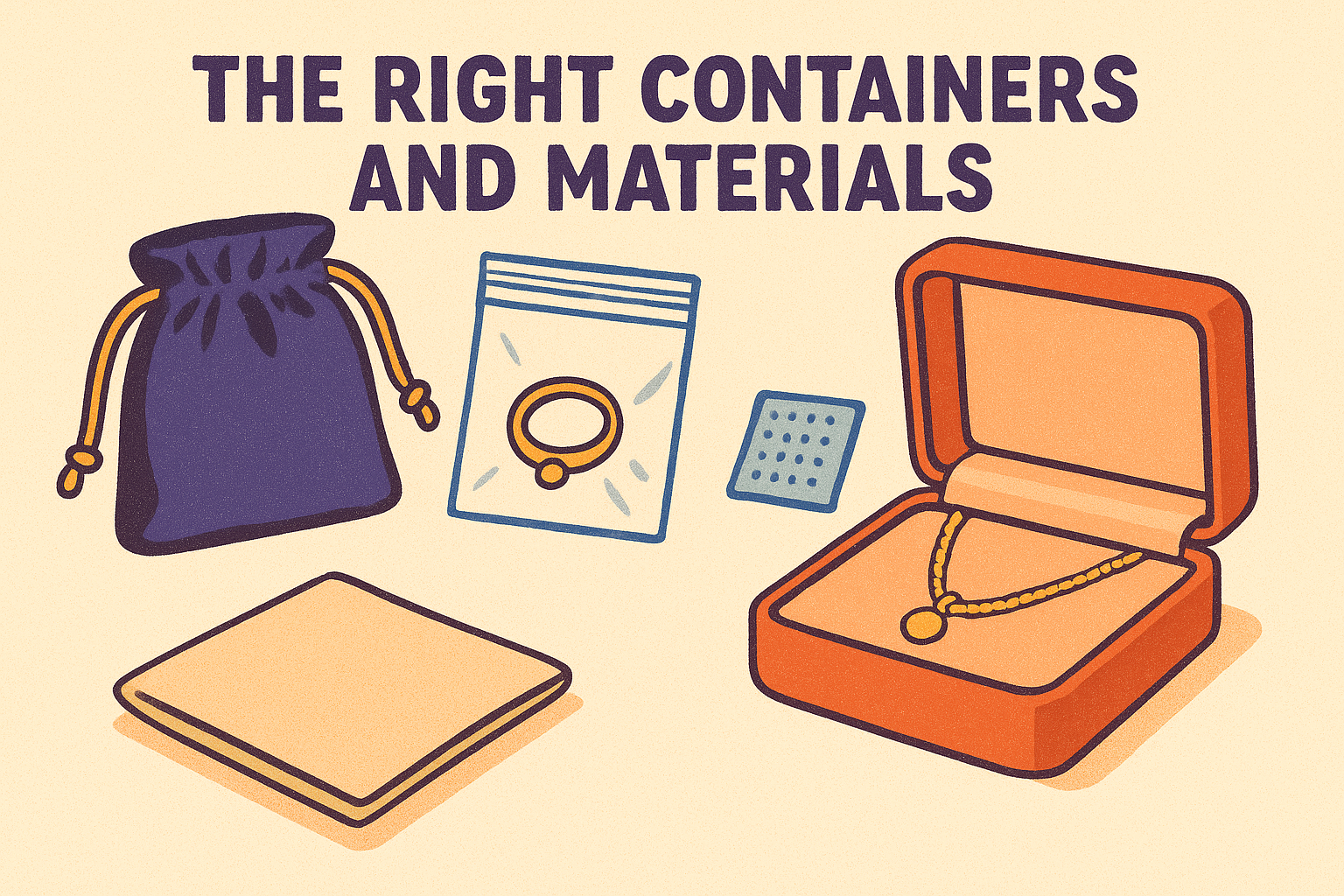
Silica gel packets, the kind that come in shoe boxes or vitamin bottles, are worth placing inside your storage container to absorb excess moisture and slow oxidation.
Here's a quick checklist of what to have on hand:
- Anti-tarnish pouches or small zip-lock bags (one per piece)
- Soft-lined jewelry box or velvet pouches
- Silica gel packets for humidity control
- A soft lint-free cloth for wiping pieces down
- Dividers or separate compartments to prevent contact between pieces
A clean starting point
Your soft, lint-free cloth is the other essential item on this list. Wiping each piece down before storage removes leftover oils, lotions, or residue sitting on the surface. Locking in those residues by going straight from your wrist to a sealed pouch means chemicals stay in direct contact with the gold layer the entire time the piece sits in storage.
Step 1. Clean and dry jewelry after wearing
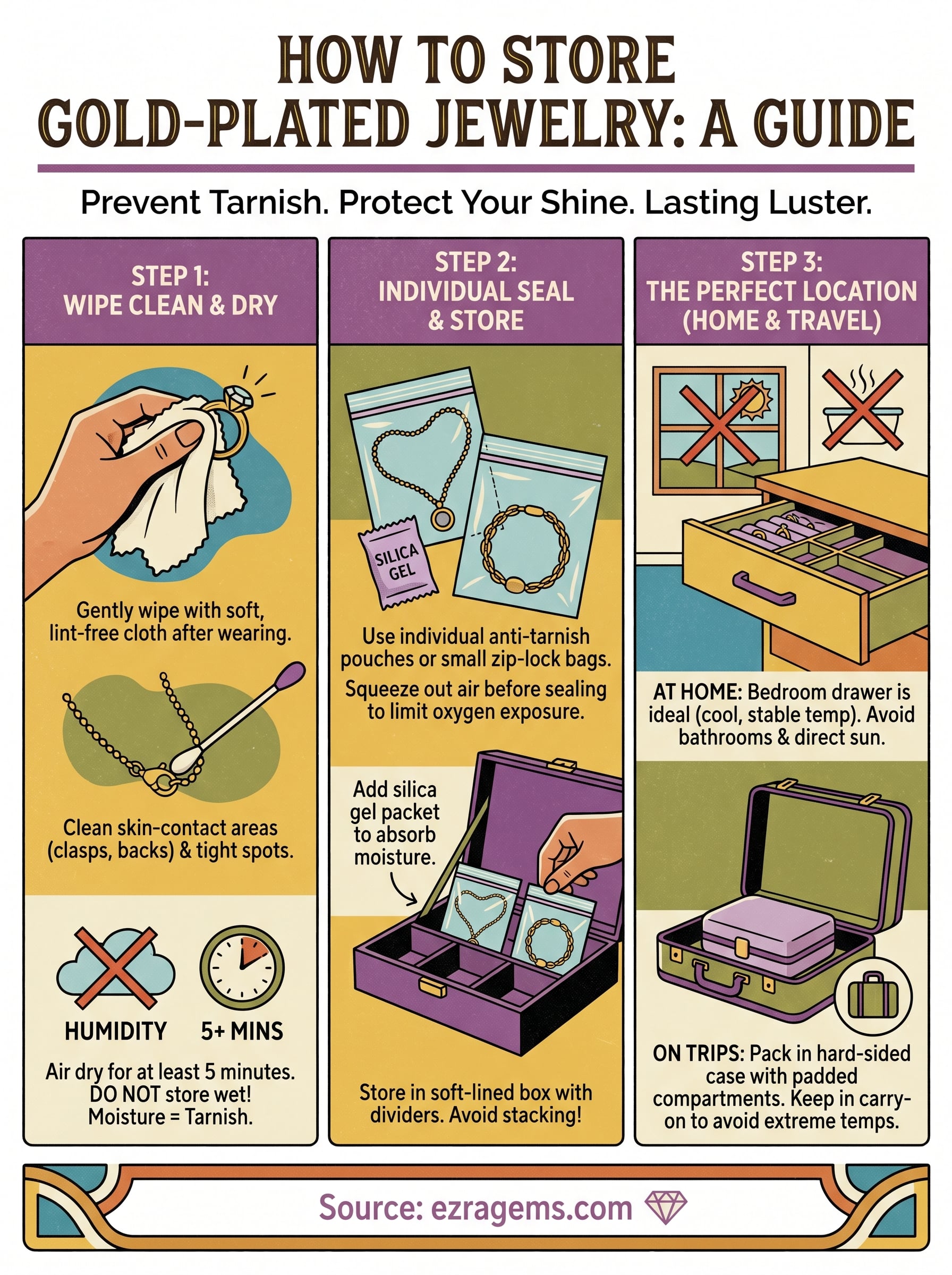
Before you even think about storage, cleaning your jewelry first is the most important step you can take to prevent tarnish from forming while pieces sit unused. Residue from skin oils, sweat, lotion, and perfume stays chemically active on the gold surface, which is why knowing how to store gold plated jewelry properly starts well before a piece ever reaches a drawer or pouch. Sealing that residue inside a bag or box accelerates damage rather than preventing it.
How to wipe down each piece
A soft, lint-free cloth is all you need for a routine clean after wearing. Gently wipe the entire surface of each piece, paying extra attention to areas that sit directly against your skin, like the back of pendants, the inside of rings, and the clasps of bracelets and necklaces. Avoid abrasive materials like paper towels or rough fabric since these can micro-scratch the gold layer even with light pressure.
For pieces with detailed settings or small links, a dry cotton swab gives you precise control in tight spots without risking damage.
Follow this simple routine each time you take a piece off:
- Wipe the piece gently with a lint-free cloth
- Use a dry cotton swab for small links, settings, or clasps
- Let it air dry on a clean, dry surface for a few minutes
Why drying completely matters
Storing a piece with any moisture still on it, even a small amount, creates a humid microenvironment inside your pouch or bag. That trapped moisture accelerates oxidation on the base metal beneath the plating, which is exactly the outcome you're trying to avoid. Give each piece at least five minutes of air-drying time before placing it in storage.
Step 2. Store each piece to reduce air and rubbing
Once your jewelry is clean and dry, the next step in how to store gold plated jewelry correctly is sealing each piece individually before it goes into any shared container. This single habit eliminates the two biggest causes of storage damage: air exposure and metal-on-metal friction. Skipping individual wrapping and dropping everything into one jewelry box undoes all the cleaning work you just did.
Seal each piece individually
A small zip-lock bag or anti-tarnish pouch is the most effective way to limit air contact around each piece. Squeeze out as much air as possible before sealing the bag, which reduces the oxygen sitting directly against the gold surface. For your most frequently worn pieces, small resealable jewelry bags work well because you can grab and go without disturbing your other stored items.
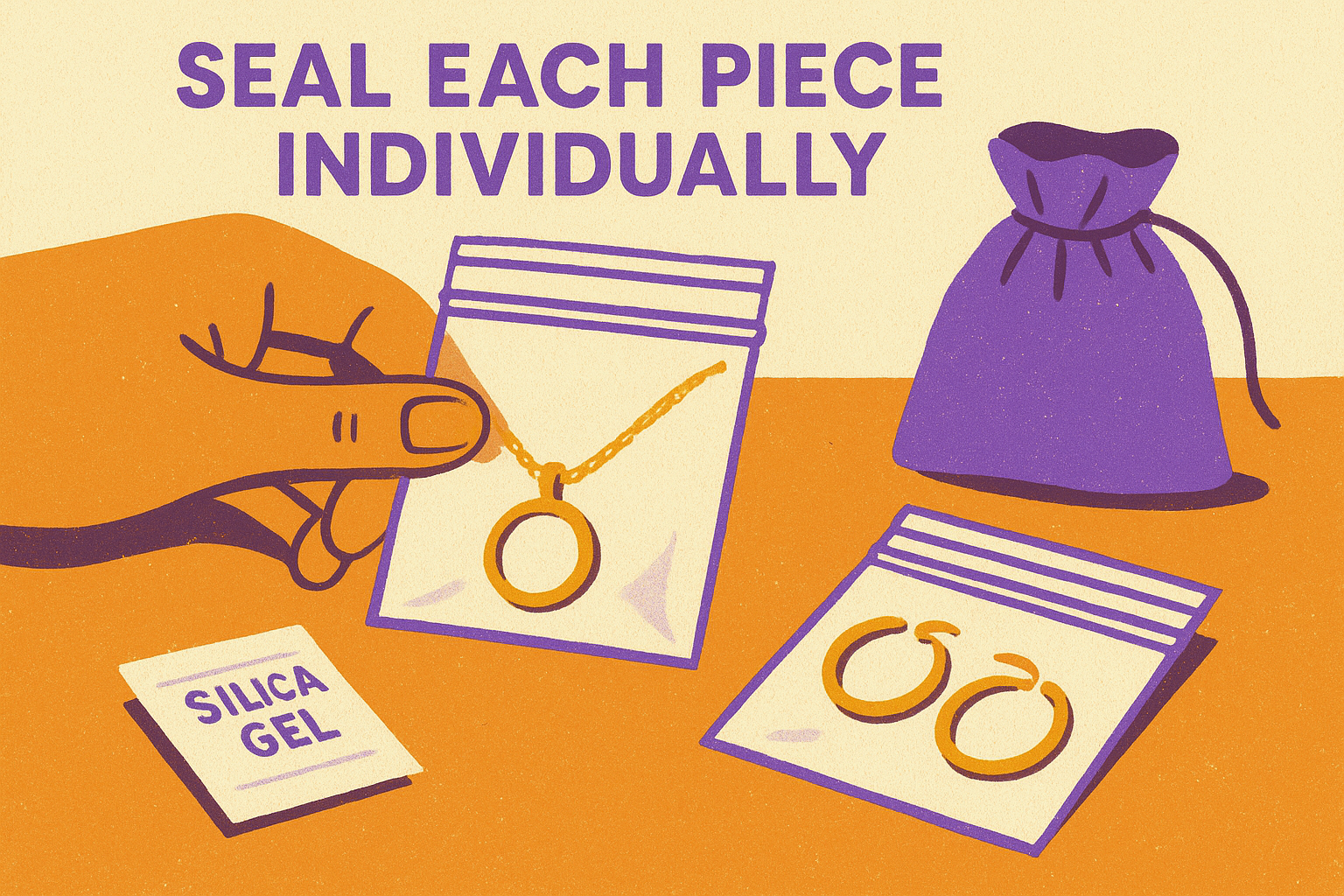
Dropping a silica gel packet inside each bag before sealing it removes residual moisture and extends how long the piece stays tarnish-free.
Keep pieces separated in shared storage
Once individual pieces are sealed, place them in a soft-lined box or velvet-lined drawer organizer with separate compartments. This prevents sealed bags from pressing against each other and keeps heavier pieces like chain necklaces from resting on top of delicate earrings or rings. Use this layout as a starting point:
| Piece type | Storage method |
|---|---|
| Necklaces | Individual bag, laid flat or hung |
| Rings | Soft-lined ring holder or separate pouch |
| Earrings | Paired in one small bag per set |
| Bracelets | Individual bag, unclasped and flat |
Keeping your pieces organized by type also makes your routine faster, since you spend less time untangling or searching and more time actually wearing the jewelry you love.
Step 3. Choose the right place at home and on trips
Where you physically keep your jewelry matters just as much as how you package it. Knowing how to store gold plated jewelry properly means picking a location that stays cool, dry, and away from direct light, since UV exposure and heat both degrade the gold layer over time. Even a well-sealed pouch sitting on a sunny windowsill will tarnish faster than one kept in a drawer.
Best spots at home
A bedroom drawer or closet shelf is the ideal location for most people. These spots tend to stay at a stable room temperature, away from steam and humidity. Avoid storing jewelry on top of a dresser in direct sunlight, near a heating vent, or anywhere in the bathroom.
The best rule of thumb is simple: if the spot feels warm or humid to you, it will feel the same to your jewelry.
Good home storage locations include:
- Inside a bedroom drawer, away from windows
- A closet shelf with consistent temperature
- A lidded jewelry box stored inside a cabinet
Storing on trips
Travel introduces moisture, heat, and friction risks all at once, so your approach needs to adjust. Pack each piece in its individual sealed bag first, then place those bags inside a hard-sided travel jewelry case with padded compartments. Soft pouches tossed into a toiletry bag leave your pieces exposed to humidity and crushing pressure from other items.
Keeping your travel case in your carry-on rather than checked luggage also protects pieces from extreme temperature swings in cargo holds.
Keep your gold-plated pieces looking new
Knowing how to store gold plated jewelry correctly is the difference between pieces that last years and pieces that fade within months. Cleaning each piece before storage, sealing it individually, and keeping it in a cool, dry spot removes every major risk factor covered in this guide. None of these steps take more than a few minutes, and the payoff is jewelry that stays bright and wearable for far longer than most people expect.
Consistency matters more than perfection here. A quick wipe-down and a sealed bag each time you take a piece off builds a habit that protects your collection automatically. You do not need expensive tools or a dedicated jewelry room to see real results.
If you want pieces built to hold their look from the start, browse the gold-plated jewelry collections at Ezra Gems and find styles designed for everyday wear without the worry.
Laat een reactie achter