


You spent good money on a piece you love, and now it's dull, discolored, or leaving green marks on your skin. Figuring out how to keep jewelry from tarnishing isn't complicated, but most people don't learn the basics until the damage is already done. The good news? A few simple habits can dramatically extend the life of your favorite pieces.
Tarnish happens when metals react with moisture, air, chemicals, or even your own sweat. Silver, brass, copper, and gold-plated jewelry are all vulnerable, though some pieces hold up far better than others. At Ezra Gems, we design our jewelry to be waterproof and tarnish-resistant for everyday wear, but proper care still matters if you want your collection to stay looking fresh for years.
Below, you'll find eight practical ways to protect your jewelry at home, from smart storage solutions to easy DIY tricks. Whether you're preserving a sentimental piece or maintaining your daily stack, these tips work across the board.
1. Start with tarnish-resistant jewelry
The single most effective step you can take in how to keep jewelry from tarnishing is choosing the right metal from the start. No amount of storage tricks or cleaning routines will fully compensate for a piece made from highly reactive base materials.
Why it works
Tarnish is a chemical reaction. When certain metals contact oxygen, moisture, or sulfur compounds in the air, they oxidize and discolor. Metals that are more chemically stable simply react more slowly, which means you spend less time maintaining them and more time wearing them. Choosing stable metals is the prevention, not just the cure.
The material your jewelry is made from sets the ceiling on how long it stays bright, regardless of how well you store or clean it.
Best metals and finishes for everyday wear
Solid gold (14k or higher), platinum, and titanium resist tarnish best because they are dense, non-reactive metals. Sterling silver is naturally more reactive, but pieces coated with rhodium plating hold up much better against daily exposure. Stainless steel is another strong option for budget-friendly everyday wear because it resists both moisture and oxidation reliably.
If you wear jewelry during workouts, showers, or in humid climates, gold-plated stainless steel offers a practical balance between durability and long-term appearance. The stainless steel base stays stable, and a thick gold layer slows down wear significantly compared to brass or copper-based plated pieces.
What to look for when shopping at Ezra Gems
When you browse Ezra Gems, look for pieces listed as waterproof and tarnish-resistant. These are built on stainless steel bases with high-quality plating designed to handle daily wear, including sweat, water, and humidity. Collections like "Just Gold" and "Pearl & Gold" are specifically designed for people who want fashionable pieces without constant upkeep.
Cost and tradeoffs compared to plated jewelry
Solid gold and platinum cost significantly more upfront, but they last a lifetime with basic care. High-quality gold-plated stainless steel pieces sit in a practical middle ground: affordable enough to build a real collection without the fragility of brass-based plating. The tradeoff with any plated jewelry is that the coating will eventually wear through with heavy use, especially on high-friction areas like ring bands and bracelet clasps.
2. Put jewelry on last and rotate your pieces
Two habits that cost nothing can make a measurable difference in how to keep jewelry from tarnishing: putting your pieces on last, and not wearing the same ones every single day.
Why it works
Lotions, perfumes, hairsprays, and deodorants all contain chemicals that accelerate tarnish and plating wear. When you apply these products with your jewelry already on, they settle into crevices and sit against the metal for hours. Skin oils and product residue compound over time, breaking down protective coatings faster than almost anything else.
Applying skincare and fragrance before jewelry keeps the most reactive substances off your metal entirely, rather than trying to clean them off later.
The right order for skincare, fragrance, and jewelry
The rule is simple: finish your full routine first, then put your jewelry on right before you leave. Follow this order every time:
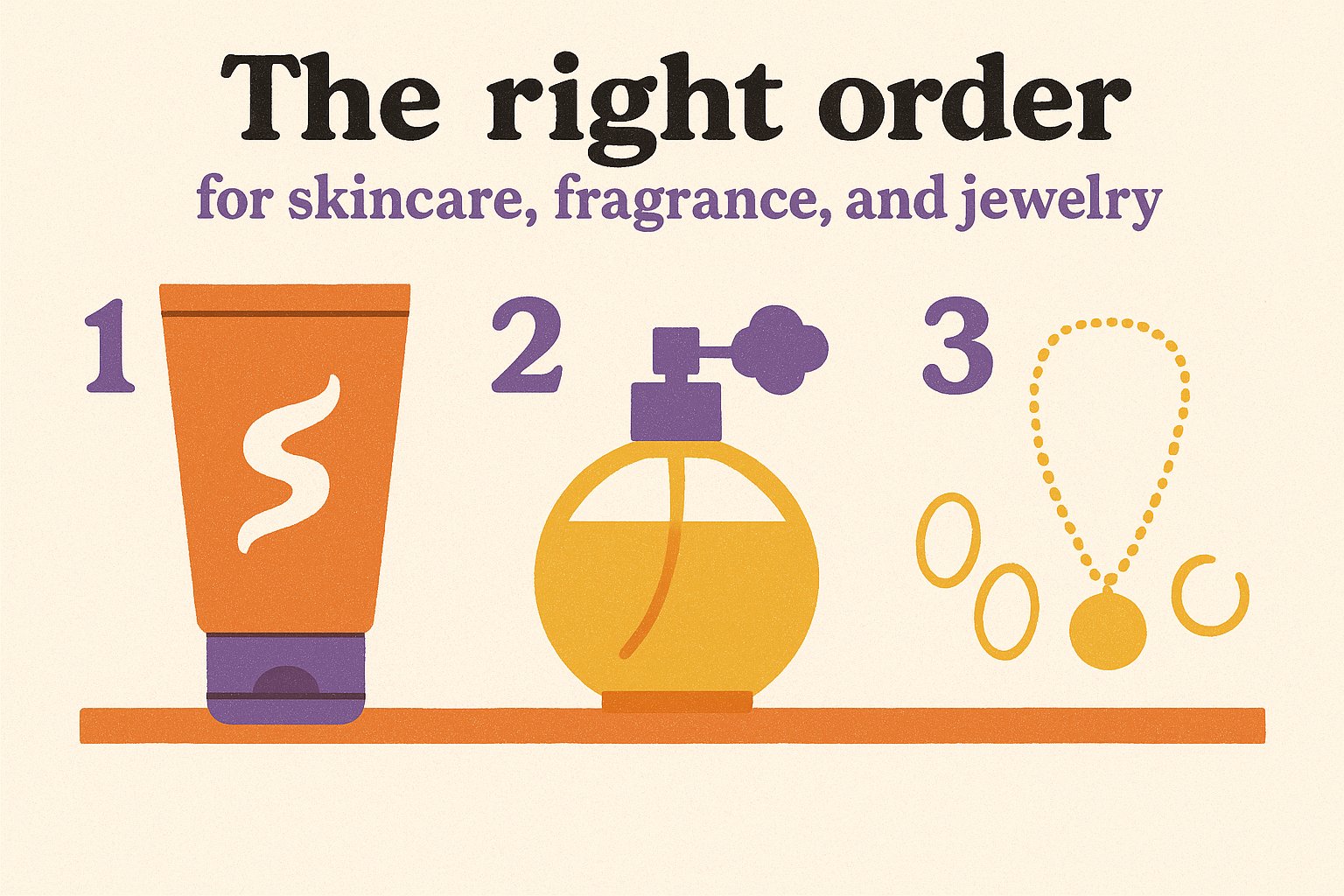
- Moisturizer and sunscreen
- Perfume or body spray
- Wait one to two minutes for everything to dry
- Put jewelry on last
How rotation slows down plating wear
Wearing the same piece every day creates constant friction and exposure that wears down plating faster than intermittent use. Rotating through your collection gives each piece time to air out between wears. Even alternating between two or three necklaces or rings throughout the week noticeably extends how long each piece holds its finish.
Rotation also helps you spot early signs of wear before a piece fully dulls. Catching thin spots in plating early gives you the option to recoat or swap out a piece before the damage becomes permanent.
Cost and tools
This approach costs nothing extra. A small jewelry dish or tray on your dresser makes it easy to set pieces down after taking them off and pick them up last before heading out, keeping the habit consistent without any real effort.
3. Keep it dry around water and sweat
Water and sweat are two of the most consistent tarnish triggers you'll encounter, and they're easy to underestimate because jewelry often looks fine right after exposure. The cumulative effect of repeated moisture contact is what causes lasting damage over time, not a single splash.
Why it works
Metal reacts faster when it's wet. Water, chlorine, salt, and the acids in your sweat all speed up oxidation and strip protective coatings off plated pieces. Keeping moisture away from your jewelry is one of the most straightforward ways to slow that process down significantly.
Even "waterproof" jewelry holds up better long-term when you limit unnecessary water exposure, especially in harsh conditions like pools or hot tubs.
Showering, swimming, workouts, and hot tubs
Take your jewelry off before any activity involving water or heavy perspiration. Showers expose metal to soap, shampoo, and steam repeatedly. Pools and hot tubs add chlorine and high heat, which accelerate plating breakdown faster than fresh water. During workouts, sweat sits against the metal for an extended period, which is particularly hard on rings and bracelets where friction is highest.
What to do if a piece gets wet
If a piece gets wet, dry it immediately with a soft, lint-free cloth rather than leaving it to air dry. Pay attention to clasps, prongs, and any areas where water can pool. Letting moisture sit in those spots is where tarnish and oxidation start first.
Cost and tools
A dedicated soft microfiber cloth is all you need here, and it costs under five dollars. Keep one near your sink, gym bag, or jewelry storage area so drying your pieces becomes automatic.
4. Store jewelry airtight and separated
How you store your jewelry when you're not wearing it has a direct impact on how to keep jewelry from tarnishing over time. Exposure to open air is a steady source of oxidation, and pieces that rub against each other pick up scratches that damage protective coatings.
Why it works
Air contains oxygen, moisture, and sulfur compounds that all react with metal surfaces. Sealing your jewelry in an airtight container dramatically reduces that contact, slowing the tarnish process significantly. Keeping pieces separated from each other prevents the physical abrasion that chips plating and creates entry points for oxidation.
Best at-home storage options that prevent scratches and tangles
Zip-lock bags with the air squeezed out are one of the simplest and most effective options for individual pieces. Anti-tarnish pouches made from treated fabric work well for silver. Jewelry boxes with divided, fabric-lined compartments keep pieces from touching each other while adding a layer of cushioning. For long-term storage, small airtight containers work better than open trays.
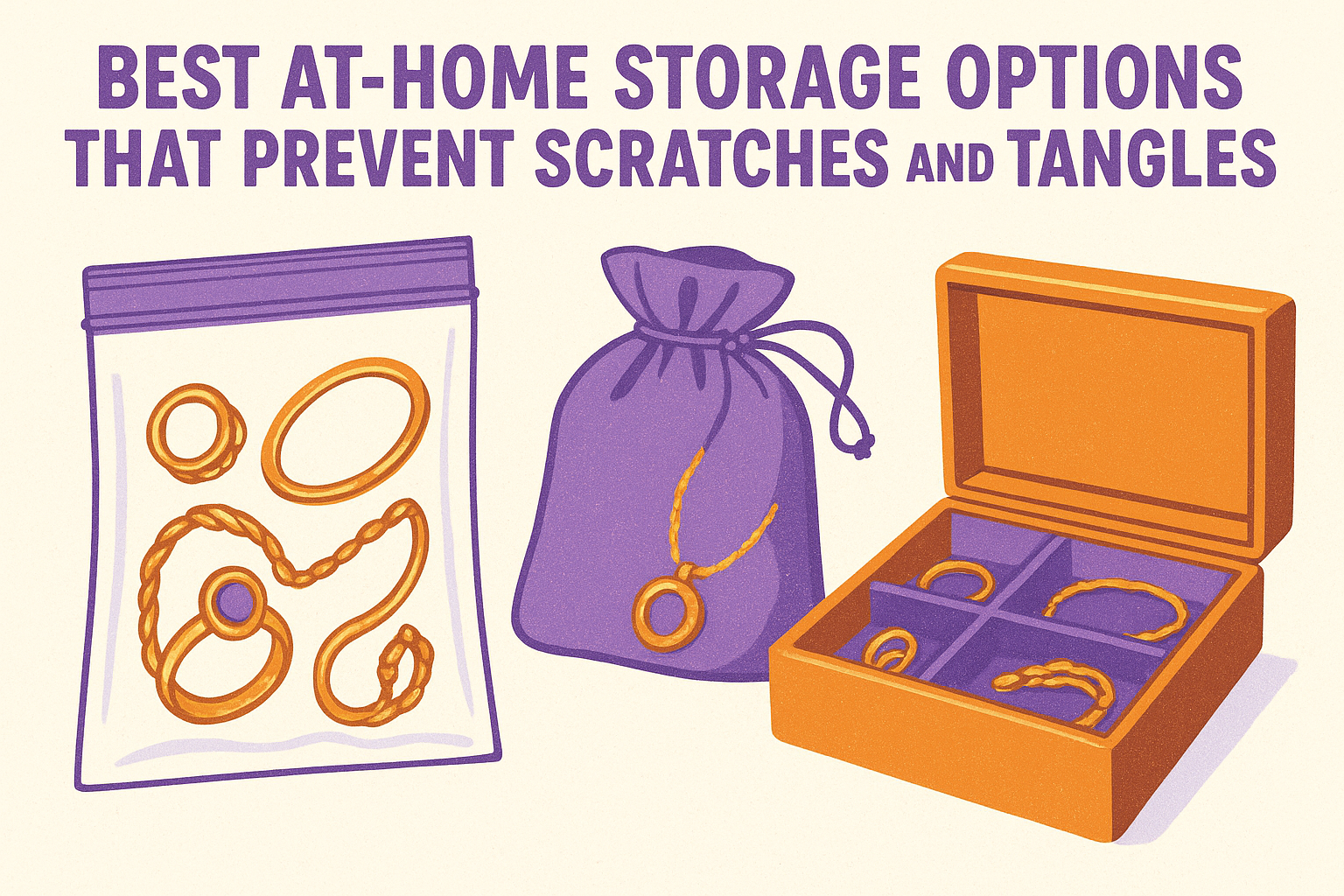
Storing each piece separately is as important as the container itself, since metal-on-metal contact causes damage even inside a closed box.
Where not to store jewelry in your home
Avoid leaving jewelry on bathroom counters, windowsills, or anywhere exposed to steam and humidity fluctuations. Open trays in damp rooms accelerate tarnish faster than almost any other storage mistake. Kitchen surfaces are also problematic because cooking releases airborne oils and sulfur compounds that settle directly onto metal.
Cost and tools
Basic zip-lock bags cost almost nothing, and anti-tarnish pouches run between five and fifteen dollars for a pack. A divided jewelry box with a lid is a worthwhile upgrade if you own more than a few pieces.
5. Control humidity and tarnish-causing gases
Humidity and airborne gases are two factors most people overlook when thinking about how to keep jewelry from tarnishing. Controlling the environment around your stored pieces works alongside airtight storage to give your collection an extra layer of protection that requires almost no daily effort.
Why it works
Metal tarnishes faster in humid conditions because moisture in the air accelerates oxidation on the surface. Beyond humidity, sulfur-containing gases from rubber bands, wool, and even certain paints react with silver and plated metals to create dark discoloration that's hard to reverse without abrasive cleaning.
Keeping the air around your jewelry dry and free of reactive gases is one of the most passive and effective ways to slow tarnish long-term.
Silica gel, activated charcoal, anti-tarnish strips, and chalk
You can drop a few silica gel packets directly into your jewelry box or storage container to absorb moisture before it contacts your pieces. Anti-tarnish strips go one step further by neutralizing airborne sulfur compounds in addition to absorbing moisture. A stick of plain white chalk works similarly as a low-cost moisture absorber if silica packets aren't on hand. Activated charcoal pouches pull both moisture and odor-causing compounds from the air inside sealed containers.
Target humidity range and simple ways to monitor it
Your storage area should stay between 45 and 55 percent relative humidity. A small digital hygrometer, available for under ten dollars, lets you monitor this without any guesswork. If your home runs humid, a compact dehumidifier placed near your storage area makes a measurable difference.
Cost and tools
Silica gel packets and anti-tarnish strips both cost under ten dollars for a multi-pack. A digital hygrometer adds another five to ten dollars. These are low-cost tools that require no ongoing effort once they're in place.
6. Add a protective barrier to high-friction areas
Applying a thin protective coating adds a layer between your jewelry and everything it contacts. This matters most for rings, bracelet clasps, and inner bands where constant friction wears through plating fastest.
Why it works
Coatings seal the metal from moisture, skin oils, and air exposure. High-friction zones lose plating faster because repeated contact chips away protective layers over time. A barrier is one of the most targeted approaches to how to keep jewelry from tarnishing on pieces you wear daily.
Apply coatings only to high-friction zones rather than decorative surfaces, since coating detailed areas can dull their finish.
Clear nail polish, jewelry protectant sprays, and wax coatings
Clear nail polish works well on the inner bands of rings and the backs of pendants. Apply a thin layer, let it dry completely, and reapply every two to three weeks. Here are three options by durability:
- Clear nail polish: most accessible, low cost, needs frequent reapplication
- Jewelry protectant spray: broader coverage, holds up longer between applications
- Renaissance Wax: museum-grade, creates a non-yellowing, breathable seal on metals and plated finishes
When to avoid coatings and what to use instead
Skip coatings on pieces with porous stones like opals, pearls, or turquoise. Sealants can trap moisture beneath the surface and cause cracking over time. For those pieces, your safest approach is careful dry storage and minimal direct handling rather than any surface treatment.
Cost and tools
Clear nail polish costs almost nothing if you already own a bottle. Protectant sprays run ten to twenty-five dollars, and Renaissance Wax is around fifteen to twenty dollars for a tin that lasts years with minimal use.
7. Clean and reverse tarnish without damaging finishes
Regular cleaning is one of the most overlooked parts of how to keep jewelry from tarnishing long-term. Removing buildup before it hardens gives you a real chance to reverse early tarnish without damaging the finish underneath.
Why it works
Tarnish builds in layers. The sooner you remove surface-level oxidation and residue, the less likely it is to etch into the metal or strip a plated finish. Waiting too long turns a simple wipe-down into an aggressive cleaning job that risks permanent damage.
Consistent, gentle cleaning prevents the kind of deep tarnish that requires abrasive methods to fix.
Daily wipe-down routine that prevents buildup
After each wear, use a soft, lint-free cloth to wipe down your pieces before storing them. This removes skin oils, sweat, and product residue before they have time to react with the metal. Thirty seconds of wiping after each use prevents the gradual buildup that causes tarnish in the first place.
Safe cleaning methods by material type
Different metals require different approaches. Use these as your baseline:
- Gold-plated pieces: warm water, a drop of mild dish soap, soft cloth, then dry immediately
- Sterling silver: a paste of baking soda and water applied gently, then rinsed and dried thoroughly
- Stainless steel: mild soap and water, or a small amount of rubbing alcohol on a cloth
Avoid ultrasonic cleaners and abrasive polishing cloths on plated finishes, as both strip the coating faster than regular wear does.
When to stop and get professional help
If tarnish has gone deep into the metal or a plated layer is visibly flaking, stop cleaning at home. Further scrubbing causes more damage than the tarnish itself. A local jeweler can assess whether professional replating is worth the cost compared to replacing the piece outright.
Keep the shine longer
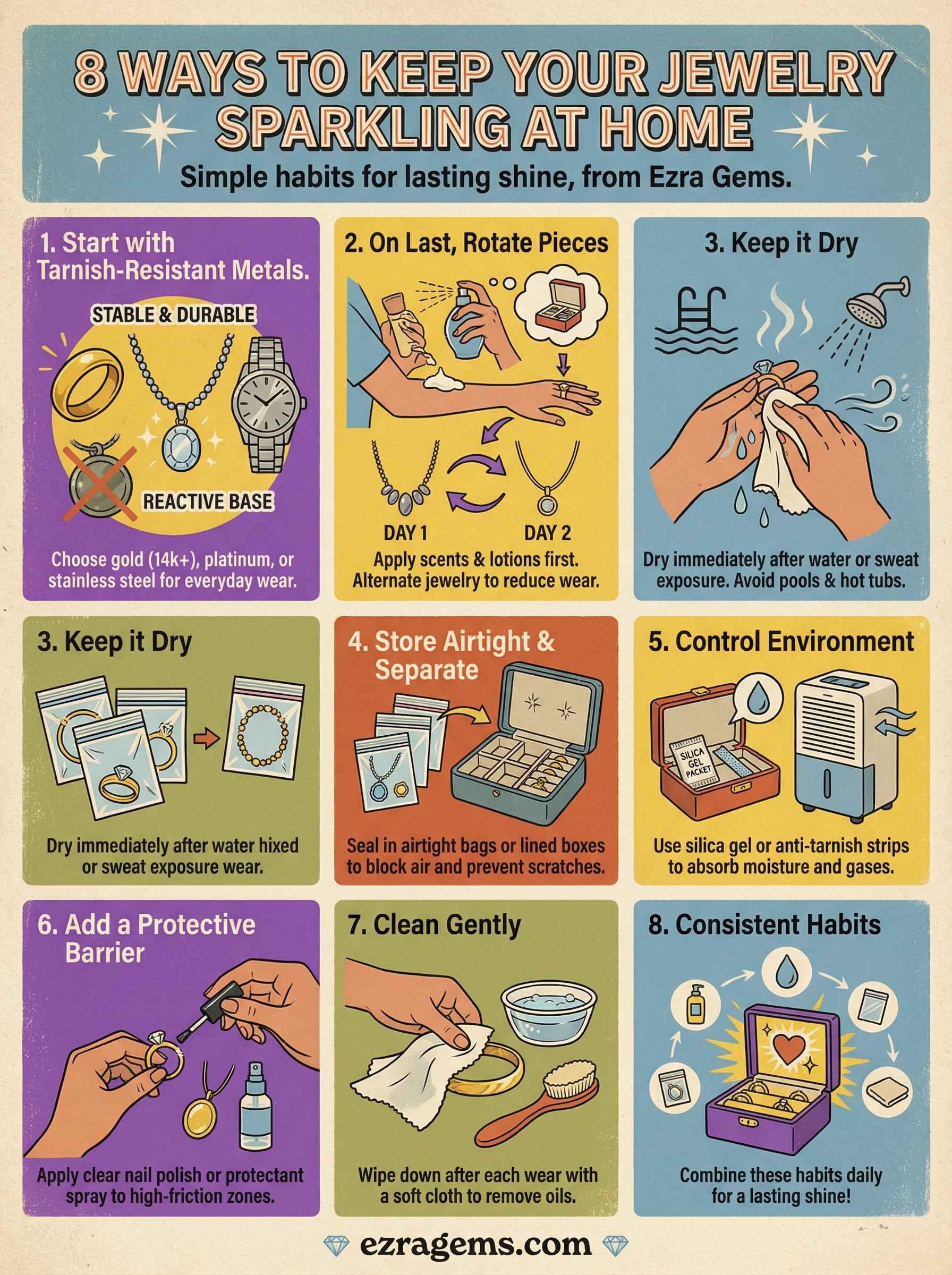
Tarnish isn't inevitable. Most pieces lose their finish because of small, avoidable habits rather than poor material quality. Now that you know how to keep jewelry from tarnishing, the real work is building a consistent daily routine: put pieces on last, keep them dry, store them properly, and wipe them down after each wear.
Every tip in this list works on its own, but combining two or three of them is where you see the biggest difference. A well-stored piece that you rotate regularly and clean after each wear can stay bright for years longer than one left on a damp bathroom counter night after night. Small adjustments compounded over time make a real impact on how long your collection holds up.
Starting with high-quality, tarnish-resistant pieces makes every other habit work better. If you want jewelry built to last from day one, browse the Ezra Gems bestsellers for pieces designed to handle daily wear without losing their finish.
Leave a comment