


You found a stainless steel ring you love, but now you're second-guessing it because your skin turns red, itchy, or bumpy every time you wear certain metals. So, is stainless steel jewelry hypoallergenic? The short answer: it depends on the grade, the alloy composition, and your individual sensitivity level.
Nickel is the most common cause of contact dermatitis from jewelry, and stainless steel almost always contains some percentage of it. That doesn't automatically make it unsafe, but it does mean you need to know what you're buying. Not all stainless steel is created equal, and the wrong choice can leave your skin irritated for days.
At Ezra Gems, we get questions about metal sensitivities all the time, it's one of the reasons we focus on gold-plated, tarnish-free pieces designed for everyday wear. This guide breaks down exactly how stainless steel interacts with sensitive skin, which grades are safest, and what alternatives actually deliver on the "hypoallergenic" promise.
Why hypoallergenic jewelry matters for sensitive skin
Skin reactions to jewelry are far more common than most people realize. Contact dermatitis from metal exposure affects roughly 10 to 20% of the general population, with nickel sensitivity being the single leading cause. When you wear a piece containing a metal your immune system treats as an irritant, it triggers an inflammatory response, and that response can range from mild redness to persistent rashes that take weeks to fully clear.
How common nickel allergies actually are
Nickel allergy is the most prevalent contact allergy worldwide. Research consistently shows that women develop nickel sensitivity at higher rates than men, largely because of more frequent early exposure through pierced earrings and costume jewelry. Once your immune system builds that sensitivity, it does not disappear. Each additional exposure tends to make the reaction faster and more intense than the last.
If you've ever written off a rash as a fluke, the metal in your jewelry is likely the real culprit.
Rates of nickel sensitivity have climbed over the past few decades, which is why jewelry labeling and metal composition now get significantly more scrutiny from both consumers and regulators in many countries.
What a reaction looks and feels like
Recognizing a metal reaction early protects your skin from prolonged damage. Common symptoms include redness, itching, swelling, and small blisters that typically appear within 12 to 48 hours of contact. The irritation shows up precisely where the metal touched your skin, whether that's your earlobe, wrist, or finger.
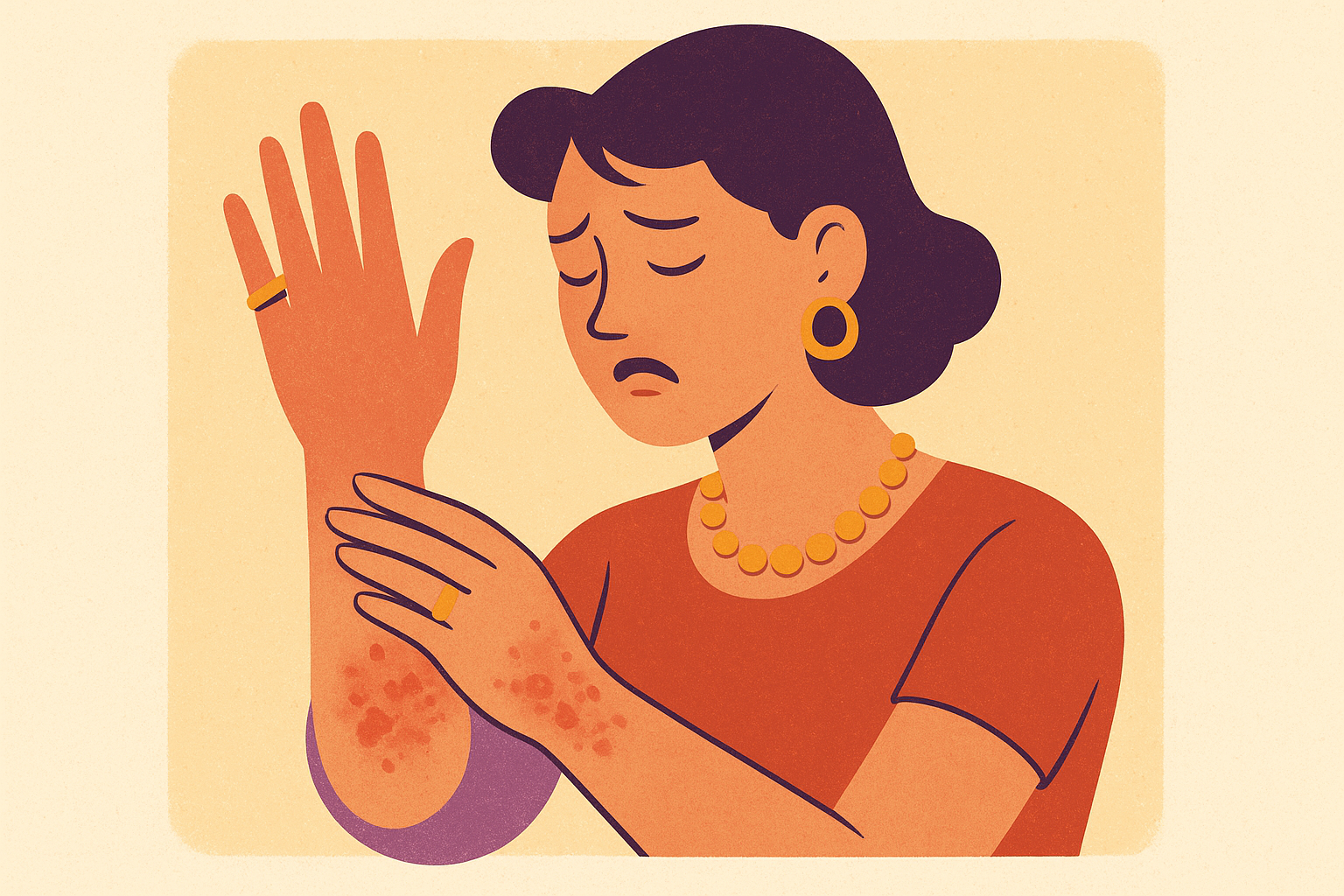
Chronic exposure without addressing the root cause can lead to thickened, discolored skin in those areas over time. This is exactly why asking whether stainless steel jewelry is hypoallergenic before you buy matters, because the right answer can spare you from a reaction that repeats every single time you get dressed.
What stainless steel is made of and what triggers reactions
Stainless steel is an iron-based alloy that combines iron with chromium, carbon, and in most cases, nickel. The chromium creates a passive oxide layer that resists corrosion, which makes it durable in humid or wet environments. Nickel is the key variable when you ask whether stainless steel jewelry is hypoallergenic, because it is the primary driver of contact dermatitis in people with metal-sensitive skin, not the iron or chromium content.
Why nickel leaches out over time
Even when nickel is bound within the alloy, sweat and friction gradually pull trace amounts to the surface through a process called ion release. Your skin absorbs those ions directly, and if your immune system treats them as a foreign threat, it triggers an inflammatory response that appears as redness, swelling, or a persistent itch.
The grade of stainless steel determines how much nickel your skin actually contacts.
Not all stainless steel alloys release nickel at the same rate. Higher-chromium, lower-nickel formulations keep ion release minimal, while cheaper compositions allow significantly more leaching, especially with extended daily wear. Checking the specific alloy designation before purchasing is a practical step that directly affects how your skin responds.
How to tell if stainless steel jewelry is truly hypoallergenic
Not every piece labeled "hypoallergenic" actually delivers on that claim. Manufacturers use the term loosely, and without checking the underlying alloy grade, you have no reliable way to predict how your skin will respond.
Check the grade label before you buy
316L surgical stainless steel is the benchmark grade for skin-safe jewelry. It contains lower carbon and tighter nickel levels than standard grades, which directly reduces ion release during extended wear. If a listing specifies 304 or a generic "stainless steel" label with no further detail, treat it as a higher-risk option for sensitive skin.
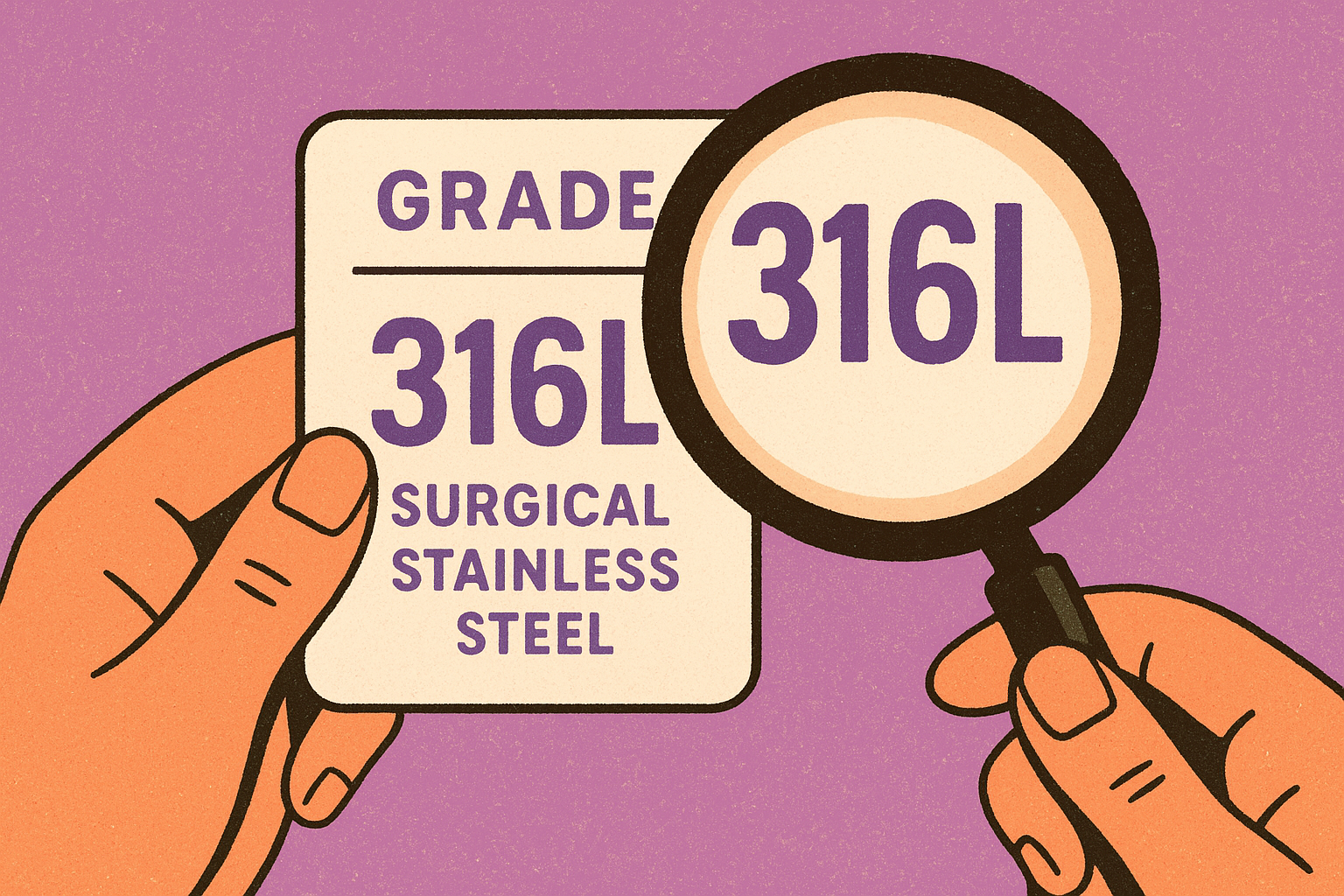
A quick reference for the most common grades:
| Grade | Nickel Content | Skin Safety |
|---|---|---|
| 316L | Low | Best for sensitive skin |
| 316 | Moderate | Acceptable for most |
| 304 | Higher | Higher risk for reactive skin |
The grade number on a jewelry listing is one of the most useful pieces of information you can find before purchasing.
Look for nickel compliance disclosures
Some sellers provide nickel release test data or reference compliance with standards like the EU Nickel Directive, which caps nickel ion release for items in prolonged skin contact. When evaluating whether stainless steel jewelry is hypoallergenic, a seller who openly discloses alloy testing gives you far more confidence than a vague label alone.
How to choose the right grade for your skin
Selecting the right stainless steel grade comes down to knowing your skin's reaction history and matching it against the alloy's composition. If you've had reactions before, start by defaulting to 316L surgical stainless steel, which offers the lowest nickel ion release among common jewelry grades and gives sensitive skin the strongest chance of staying clear through daily wear.
Match the grade to your reaction history
Your personal history with metal jewelry is the most reliable guide you have. Mild or infrequent reactions from past pieces suggest that 316L is likely sufficient for your needs. If your skin responds strongly even to low-nickel exposures, surgical-grade titanium or solid gold may serve you better than any stainless steel option, regardless of grade.
When evaluating whether stainless steel jewelry is hypoallergenic for your skin, your reaction history matters as much as the alloy grade on the label.
Ask the seller directly before purchasing
Reputable sellers disclose alloy grades without hesitation when you ask. Request the specific grade designation and any available nickel compliance documentation before committing to a purchase. Vague answers or missing documentation should push you toward a different seller, because transparency around metal composition is a basic standard any responsible jewelry brand should meet consistently.
What to do if you react and safer alternatives
If your skin reacts to a piece you're wearing, remove it immediately and rinse the affected area with mild soap and cool water. Continuing to wear the piece through irritation will intensify the response and significantly extend your recovery time.
Immediate steps when a reaction starts
Over-the-counter hydrocortisone cream helps reduce mild inflammation quickly, but if redness or swelling persists beyond a few days, see a dermatologist. A doctor can run a patch test to confirm which specific metals your skin reacts to, which makes every future jewelry purchase far more straightforward.
If you're still unsure whether stainless steel jewelry is hypoallergenic for your specific skin, a patch test removes the guesswork entirely.
Keep a record of which pieces triggered reactions and the metal composition listed on each, so you can identify your personal pattern before buying again.
Metals that genuinely work for sensitive skin
When stainless steel keeps causing problems, switching the base metal is the most direct solution. Solid 14k or 18k gold, titanium, and platinum all carry extremely low nickel levels and work well for reactive skin. Gold-plated jewelry over a hypoallergenic base offers a budget-friendly path that keeps your skin clear without forcing you to spend significantly more per piece.
Key takeaways
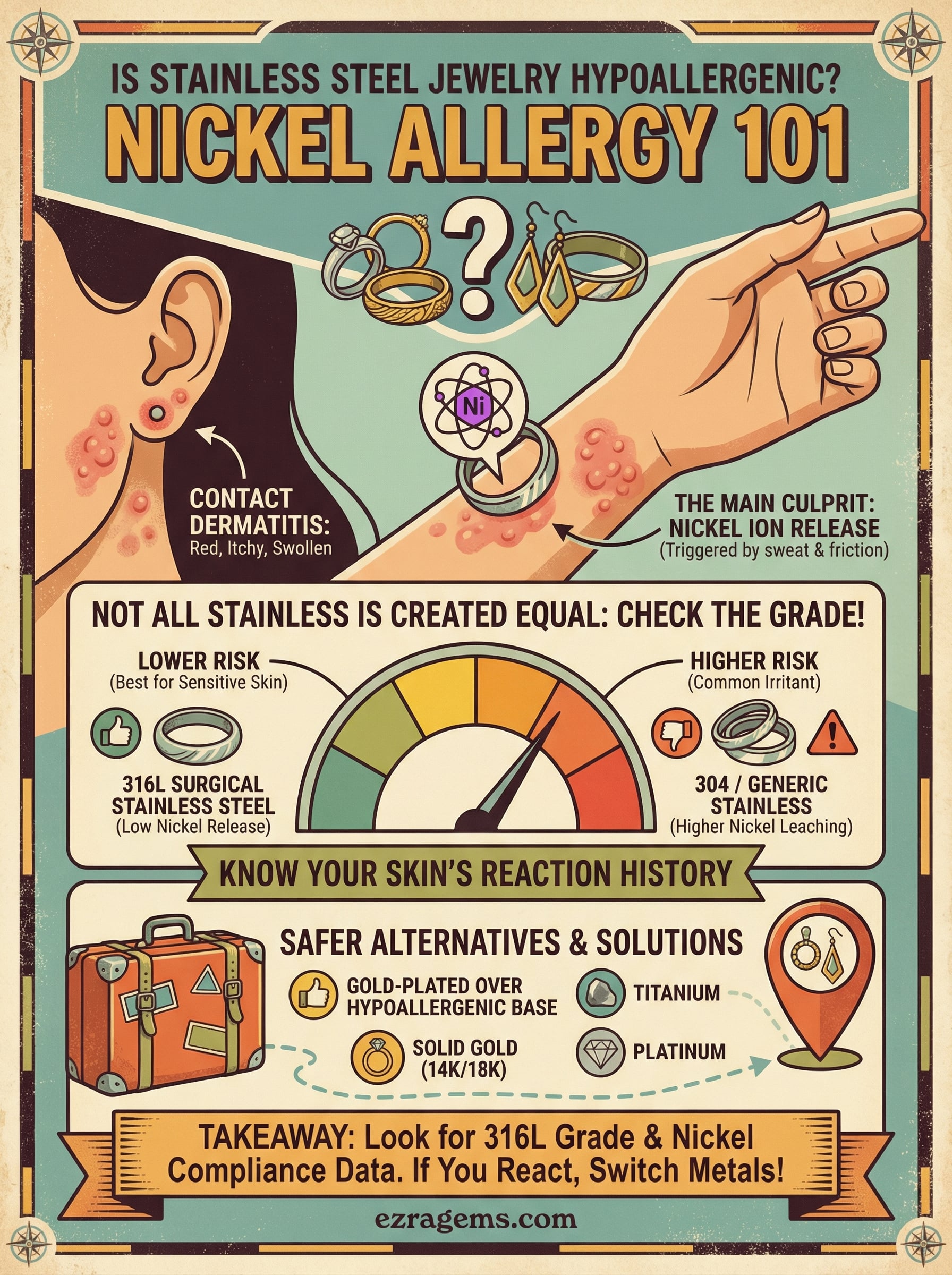
So, is stainless steel jewelry hypoallergenic? The honest answer is: sometimes. 316L surgical stainless steel keeps nickel ion release low enough for most people with mild sensitivities, while cheaper grades like 304 release significantly more nickel and frequently trigger reactions. Your skin's personal reaction history is your best guide, and a clear grade disclosure from the seller matters more than a vague "hypoallergenic" label on any product listing.
When stainless steel keeps causing problems, gold-plated jewelry over a hypoallergenic base offers a practical alternative for reactive skin without a steep price increase. Remove any piece at the first sign of irritation, document what triggered the reaction, and see a dermatologist for a patch test if reactions persist. Knowing exactly which metals your skin tolerates saves you from repeated discomfort and helps you build a collection you can wear every single day.
Browse skin-friendly gold-plated jewelry at Ezra Gems to find pieces built for daily wear.
Leave a comment