


You just bought a stainless steel ring or bracelet, and now you're staring at your finger wondering: will stainless steel jewelry turn skin green? It's a fair concern. Nobody wants to pull off a piece of jewelry and find a weird greenish mark underneath. The short answer is that pure stainless steel rarely causes green skin, but the full picture involves a bit more chemistry than most jewelry brands care to explain.
That green tint isn't dirt or dye, it's the result of a chemical reaction between certain metals and your skin's natural oils, sweat, and moisture. The type of stainless steel, any added alloys, and even the quality of plating all play a role in whether discoloration happens. At Ezra Gems, we chose to build our collections around waterproof, tarnish-free materials specifically because we got tired of the "it looked great for a week" problem that plagues so much fashion jewelry.
This article breaks down the actual science behind green skin stains, explains which grades of stainless steel are most likely (and least likely) to cause them, and helps you spot low-quality jewelry before you buy. Whether you're comparing metals or just trying to figure out why your last bracelet left a mark, you'll walk away with clear, practical answers.
Why skin turns green from some jewelry metals
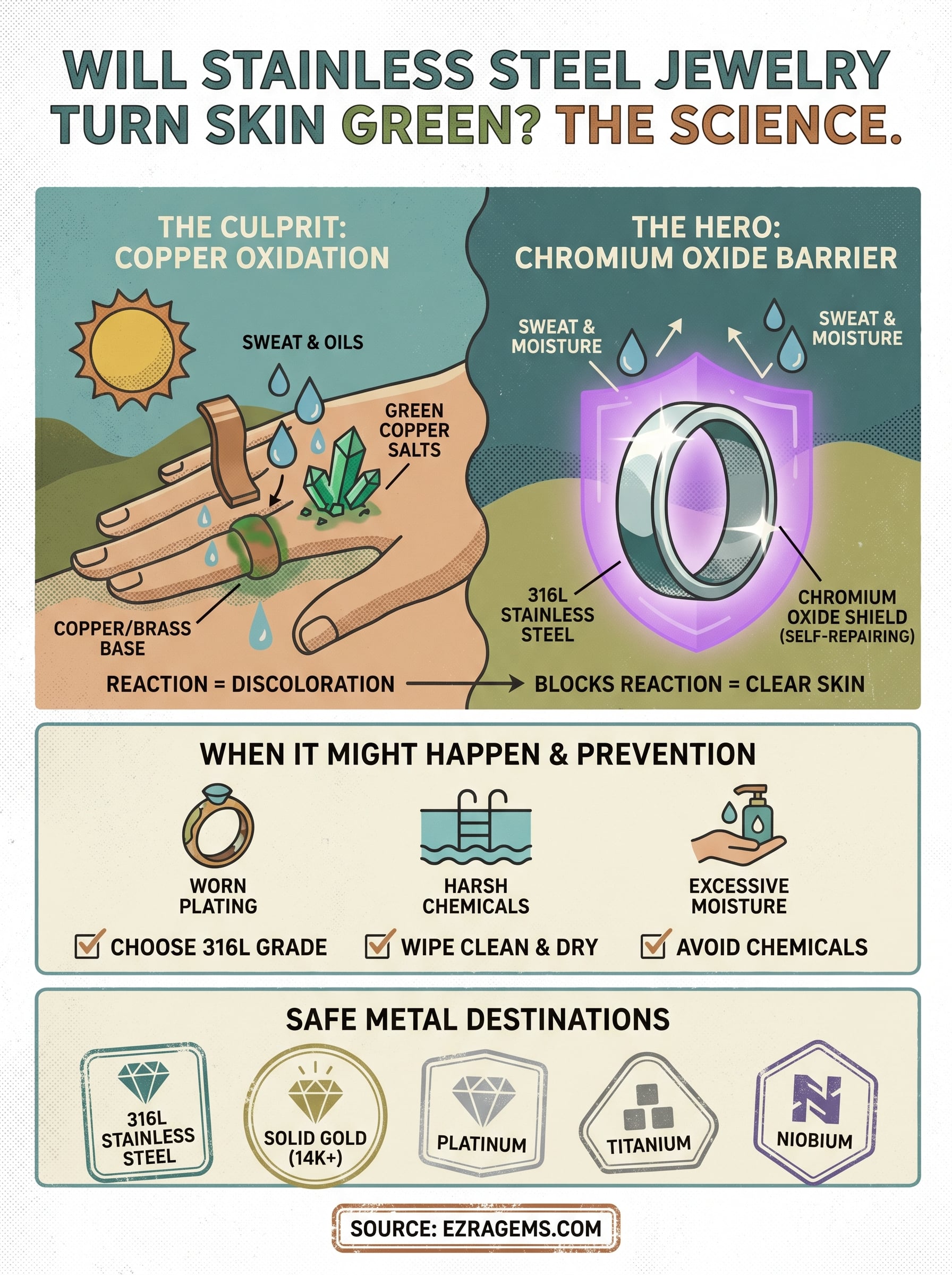
The green mark that appears under a ring or bracelet is almost always traced back to copper oxidation. When copper, or a metal alloy that contains copper, comes into contact with your skin's moisture, sweat, and natural oils, it reacts chemically to form copper salts such as copper chloride and copper carbonate. These compounds are green or bluish-green, and they transfer directly onto the outer layer of your skin.
The role of copper in green skin reactions
Copper is one of the most widely used metals in affordable jewelry because it shapes easily and keeps manufacturing costs low. The problem is that copper is also highly reactive. When your sweat introduces chloride ions and organic acids to the metal surface, a chemical reaction produces copper chloride, the same greenish patina you see on old bronze statues. That compound absorbs into your skin and leaves behind a visible green or teal stain that can last hours after you remove the piece.
Most green skin reactions come not from direct metal contact, but from the invisible chemical byproducts that form between the metal and your body chemistry.
How sweat and skin chemistry accelerate discoloration
Your skin's pH level and sweat composition matter more than most people realize. People with higher acidity in their sweat tend to see green marks faster and more intensely. Several everyday factors push the reaction forward quickly:
- Exercising or sweating heavily while wearing jewelry
- Applying lotion, perfume, or hand sanitizer before putting on a piece
- Wearing jewelry in humid environments or while swimming
- Skin conditions that alter your body's natural pH balance
Why low-quality plating increases the risk
Many budget jewelry pieces use thin gold or silver plating over a copper or brass base metal. The coating looks clean at first, but it wears down with regular use, especially at high-contact points like the inside of a ring band. Once the plating thins or chips, the copper base sits directly against your skin, and green marks appear fast.
This is one of the main reasons people ask whether stainless steel jewelry will turn skin green. They experienced this with copper-based pieces and assume all metals behave the same way. The base metal is what actually determines your risk, not the surface finish.
Why stainless steel usually does not turn skin green
Stainless steel sits in a different category from copper, brass, and low-grade alloys because of what it is made of at the molecular level. Unlike jewelry metals that react aggressively with sweat and moisture, stainless steel is engineered specifically to resist corrosion, and that resistance is what keeps your skin clear.
How the metal composition works in your favor
Stainless steel is an alloy made primarily of iron, carbon, and chromium, with chromium content typically sitting at 10.5% or higher. Some grades also include nickel and molybdenum for added durability. The specific blend of these elements is what separates stainless steel from cheaper metals, and it directly answers the question of whether stainless steel jewelry will turn skin green. Because there is little to no copper in the base alloy, the copper oxidation reaction that causes green stains simply has nothing to work with.
The chromium oxide barrier that blocks skin reactions
The real reason stainless steel protects your skin comes down to a thin, invisible layer called chromium oxide that forms automatically on the metal surface when chromium is exposed to oxygen. This layer is self-repairing, meaning if you scratch the surface, the barrier rebuilds itself through continued oxygen exposure.
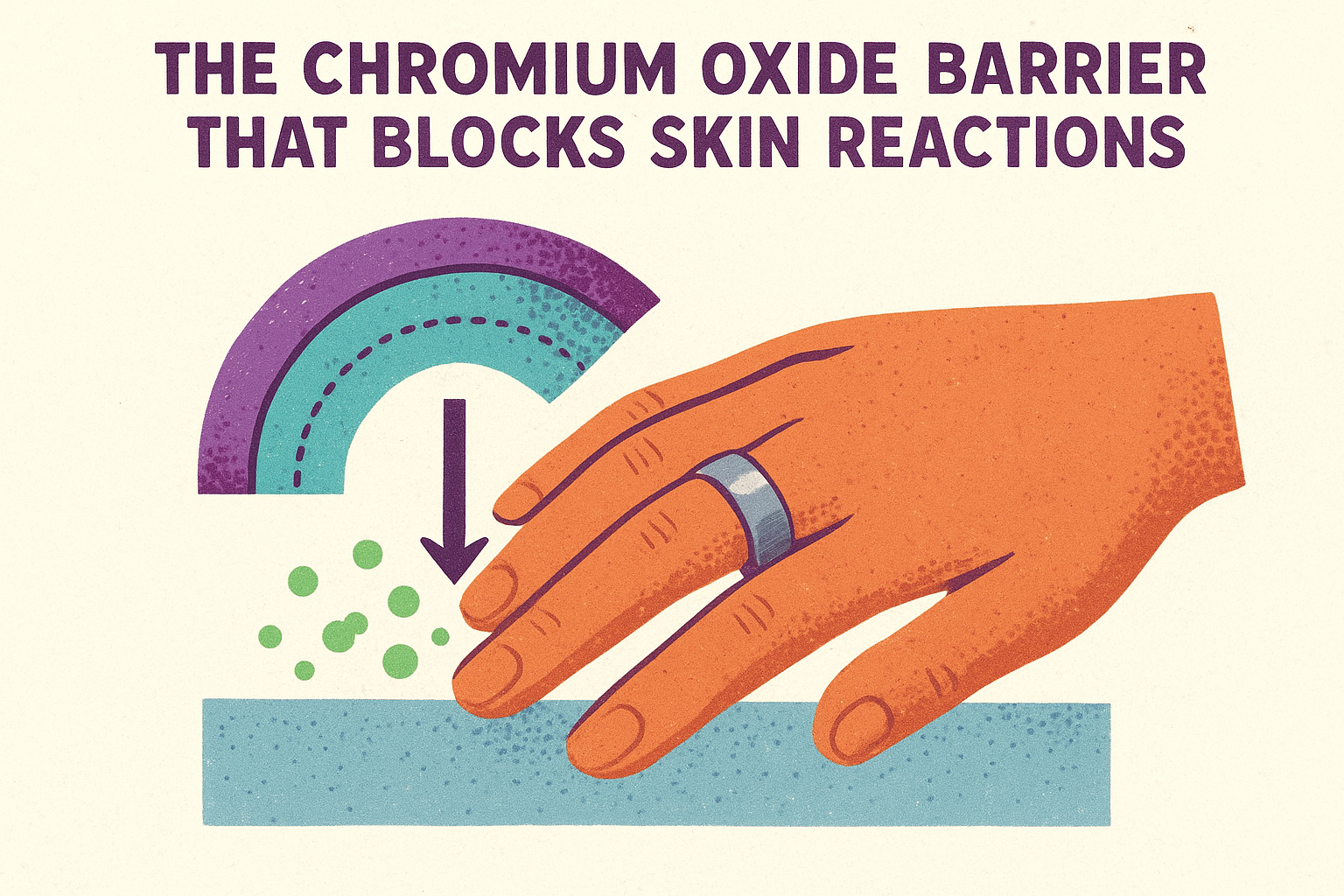
This passive oxide layer acts as a shield between the metal and your skin, blocking the chemical reactions that produce green or dark stains.
Because this barrier stays stable in the presence of sweat, water, and body heat, stainless steel resists the reactions that cause discoloration far better than brass or copper-based metals do.
What this looks like in practice
Stainless steel pieces that won't mark your skin
Every Ezra Gems piece is built on a stainless steel core with 18K gold PVD plating over it — no copper base, nothing to oxidize. Waterproof and nickel-free.


When stainless steel can still leave marks
Stainless steel is resistant, but it is not completely immune to leaving marks on your skin. Certain conditions and product quality issues can break down its natural protection and trigger minor skin reactions, especially with prolonged wear.
Low-Grade Alloys That Bypass the Barrier
Not all stainless steel is the same. Grade 316L (surgical-grade) contains very low carbon and added molybdenum, making it highly resistant to corrosion. Grade 304, which is cheaper and more common in budget jewelry, has a less stable chromium oxide barrier and can degrade faster under sweat and saltwater exposure. If a brand uses a lower-grade stainless steel alloy in its pieces, you will still face the risk of discoloration over time.
The grade of stainless steel in your jewelry matters as much as the material category itself when it comes to whether it will leave marks on your skin.
When Plating Changes the Equation
Many stainless steel pieces come with gold or rose gold PVD coating or standard electroplating applied over the base metal. PVD (Physical Vapor Deposition) coatings are more durable than standard plating, but regular gold plating over stainless steel still wears down at friction points. Once that layer thins, whatever compounds exist in the adhesion layer or the plating process itself, including trace reactive elements, can contact your skin directly.
This is where the broader question of will stainless steel jewelry turn skin green becomes more nuanced. The stainless steel base itself is rarely the culprit, but the added layers on top can introduce reactive compounds that leave dark or discolored marks with regular, long-term wear.
How to prevent and remove green or dark marks
Preventing green or dark marks starts with understanding what triggers the reaction in the first place. Whether stainless steel jewelry will turn skin green comes down to moisture, friction, and product contact. Keeping those factors in check dramatically reduces your risk of discoloration, regardless of the metal you choose.
Simple habits that reduce your risk
The most effective prevention strategy is to limit direct moisture exposure at the points where jewelry contacts your skin. A few consistent daily habits make a noticeable difference over time:
- Remove jewelry before swimming, showering, or heavy exercise
- Apply lotion, perfume, and hand sanitizer before putting on any piece, and let products fully dry first
- Wipe down your jewelry with a clean, dry cloth after each wear
- Store pieces separately to prevent surface scratches that compromise protective coatings
- Rotate your pieces rather than wearing the same item every day without a break
The single most effective step you can take is removing jewelry before activities that generate significant sweat or expose the metal to chemicals.
How to clean green marks off your skin
If you already have a green or dark stain, removing it is straightforward. Soap and warm water work well for most surface-level marks. Scrub the area gently with a mild antibacterial soap, rinse thoroughly, and the stain typically lifts within a minute or two.
For more stubborn marks, rubbing alcohol applied with a cotton ball breaks down the copper compounds faster. Pat the area dry afterward and avoid re-wearing the piece until you identify and address what caused the reaction.
What jewelry metals will not turn skin green
If you are choosing jewelry specifically to avoid skin discoloration, knowing which metals are safe before you buy saves you a lot of frustration. Several base metals and alloys are well-established for their low reactivity with skin, and understanding what to look for helps you make smarter decisions whether you are shopping for everyday wear or gifts.
Metals with a strong track record for skin safety
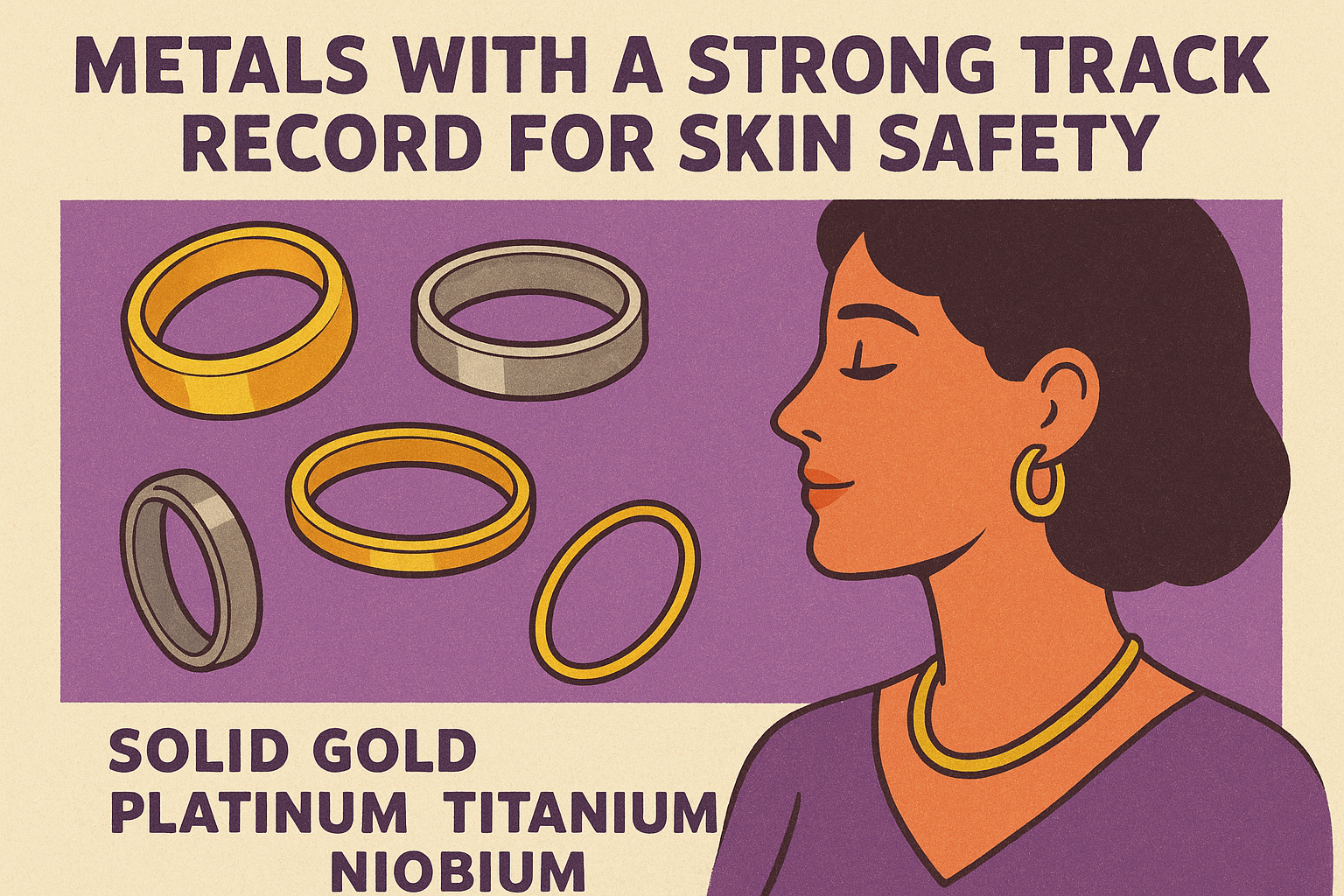
Surgical-grade stainless steel (316L), solid gold (14k or higher), platinum, titanium, and niobium are the most consistently skin-safe options available. These metals either contain no copper in meaningful quantities or form stable surface barriers that block chemical reactions with your sweat and oils. Titanium and niobium are particularly reliable for people with sensitive skin because they are nearly inert and do not release reactive ions at all.
Gold-filled jewelry is another solid option, distinct from gold-plated pieces. Gold-filled construction bonds a thick layer of real gold to a base metal through heat and pressure, meaning the gold content is substantial enough that it rarely wears through to the base layer under normal daily use.
How to evaluate a piece before you buy
When you are asking whether will stainless steel jewelry turn skin green applies to a specific piece, look for clear material disclosures from the brand. Grade markings, material certifications, and waterproof guarantees are signs that a brand stands behind what is actually in their jewelry. Vague descriptions like "metal alloy" or "gold-tone" are red flags that typically point to copper-based materials with thin surface coatings.
The safest approach is to buy from brands that name the exact metal grade and back their claims with a durability guarantee.
Final takeaways
So, will stainless steel jewelry turn skin green? In most cases, no. The chromium oxide barrier that forms on stainless steel's surface blocks the copper oxidation reactions responsible for green and dark skin stains. Grade 316L surgical stainless steel is your safest bet, while lower grades or thin plating over reactive base metals can still cause discoloration with enough wear and moisture exposure.
Your biggest risk factors are cheap plating that wears through, low-grade alloys, and wearing jewelry through heavy sweat or chemical exposure without cleaning it afterward. Removing pieces before swimming, letting skincare products dry before putting on jewelry, and wiping pieces down after each wear all reduce your risk significantly.
Choosing jewelry from a brand that clearly names its materials and backs them with a durability guarantee matters more than most people expect. Ezra Gems builds every piece on a stainless steel core with 18K gold plating, priced between $33 and $50 — browse the Wear It Everywhere collection and see what that standard actually looks like.
Ready to shop? Explore Wear It Everywhere — waterproof, hypoallergenic, and tarnish-free, built on a stainless steel core.
Laissez un commentaire