


You want jewelry that looks good, holds up, and doesn't cost a fortune. That's exactly why so many people are searching for stainless steel jewelry benefits before their next purchase. It's a metal that punches well above its price point, but it's not perfect for every situation, and knowing both sides matters before you commit.
Stainless steel has quietly become one of the most popular base metals in fashion jewelry. It resists tarnish, shrugs off water, and works for people with sensitive skin, which is a big deal if you've ever dealt with green fingers or itchy earlobes. At Ezra Gems, durability is something we take seriously across our collections, and stainless steel is one of the reasons our pieces are built to handle showers, sweat, and everyday wear without losing their shine.
This article breaks down eight clear benefits of stainless steel jewelry and three honest drawbacks. By the end, you'll know exactly whether it's the right metal for your style and budget, and what to watch out for when shopping for pieces that actually last.
1. Ezra Gems stainless steel jewelry for daily wear
One of the most practical stainless steel jewelry benefits is how well it fits into a daily wear routine. At Ezra Gems, the collections are built around pieces you can put on in the morning and forget about for the rest of the day. That means no scrambling to remove your jewelry before the gym, the shower, or a long shift on your feet.
Where Ezra Gems fits in a stainless steel wardrobe
Ezra Gems focuses on fashion jewelry that layers well and transitions easily between casual and dressed-up looks. Collections like "Just Gold" and "Stack & Slay" are designed to be worn together, and stainless steel as a base material makes that possible without sacrificing durability. Because the metal holds its shape and finish better than softer alloys, you can build a consistent wardrobe of pieces that look just as sharp after six months as they did on day one.
Stainless steel's strength and corrosion resistance make it one of the most practical choices for building a jewelry wardrobe you wear every single day.
What "waterproof" means in real life for jewelry
When Ezra Gems uses the word "waterproof," it means the pieces are built to handle real-life exposure: showers, hand washing, sweat during a workout, and light rain. The stainless steel core does not rust or corrode from normal water contact, and gold plating over stainless steel holds up far longer than the same plating over brass or copper. That said, "waterproof" is not the same as "indestructible," and prolonged soaking in pools or hot tubs can still wear the finish down over time.
How to pick the right piece for your routine
Think about how you spend most of your day before choosing a piece. If you work with your hands, a flat-profile ring or a snug bracelet sits better than a statement piece that catches on everything. Layering necklaces works well when you choose lightweight stainless steel chains that give you the visual effect without pulling on your neck. Match the finish, whether gold-tone, silver-tone, or two-tone, to what you already own, and you will get more wear out of every piece you add to your collection.
2. Stainless steel resists rust and tarnish
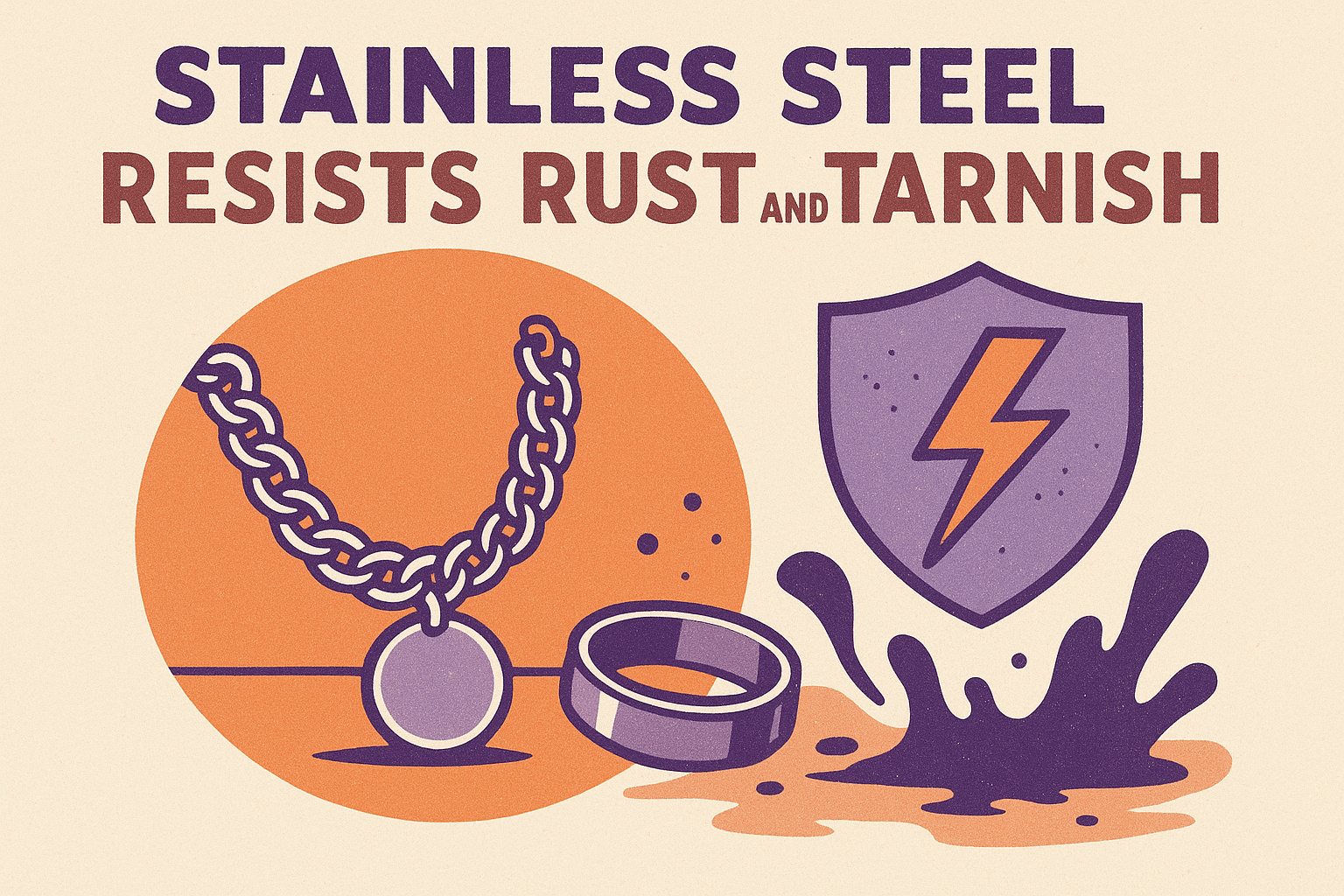
One of the most talked-about stainless steel jewelry benefits is how well the metal handles exposure to air and moisture over time. Unlike brass or copper, stainless steel does not oxidize the way those metals do, which means your pieces keep their original finish for months and even years without special treatments or frequent polishing.
Why stainless steel stays "stainless"
Stainless steel contains chromium, typically at least 10.5% by composition, which forms a thin, invisible oxide layer on the surface when exposed to oxygen. That layer acts as a self-repairing shield: if you scratch the surface lightly, the chromium oxide rebuilds itself and keeps corrosion from taking hold. This is why stainless steel earrings or rings can sit in your jewelry drawer for weeks and come out looking the same.
The chromium oxide layer in stainless steel is what separates it from metals that discolor and corrode within months of regular wear.
What environments it handles best
In everyday conditions like humidity, rain, and light sweat, stainless steel performs reliably well. Office environments, outdoor walks, and gym sessions are all well within what the metal can handle without showing signs of oxidation or surface degradation. You can also store stainless steel pieces without airtight bags the way you would with sterling silver, which saves you a step in your routine.
Drawback: chemicals and chlorine can still dull it
Even stainless steel has limits. Chlorinated water from pools and harsh cleaning products can strip the surface finish or dull the plating on gold-tone pieces. You should remove your jewelry before swimming or using bleach-based cleaners to keep the finish looking its best long-term.
3. It holds up to daily dings and scratches
Stainless steel sits near the top of the hardness scale for fashion jewelry metals, which is one of the most practical stainless steel jewelry benefits you get at this price point. That hardness means your chains, rings, and earrings resist surface scratches from everyday contact with keys, bags, and hard countertops far better than softer alternatives like sterling silver or brass.
What durability looks like for chains, rings, and earrings
Chains made from stainless steel hold their shape under tension better than softer metals. Individual links are less likely to stretch or warp from daily bending, which extends the life of your necklaces significantly without any extra maintenance on your part.
Rings keep their rounded profile and polished finish even after months of contact with desks and gym equipment. Earring posts and hoops also handle repeated flexing from daily wear without the post bending or weakening at the base.
Stainless steel's hardness means your jewelry picks up far fewer visible scratches than comparable pieces made from silver or gold-filled metals.
What can still damage stainless steel over time
Repeated contact with abrasive materials, such as rough concrete or coarse fabric, can gradually dull a polished finish. Dropping a piece hard onto stone or tile also risks leaving surface marks, though the damage is typically less severe than it would be on a softer metal like gold vermeil.
Drawback: you can dent it and repairs can cost more
Stainless steel is hard but not impact-proof. A sharp blow can leave a visible dent on hollow pieces like tubular bangles or larger link chains. Repairs are also a real issue because most local jewelers lack the specialized tools and soldering materials required to work with stainless steel properly, which means a repair job often costs more than buying a replacement piece outright.
4. It feels safer on sensitive skin
One of the most personal stainless steel jewelry benefits is how the metal behaves against your skin over long periods. Many people who react to cheaper alloys with redness, itching, or discoloration find that surgical-grade stainless steel sits against their skin for hours without causing irritation. That alone makes it worth considering if earrings or rings have given you trouble in the past.
Why many people tolerate stainless steel well
Stainless steel used in jewelry is often 316L surgical grade, which contains a tightly bound alloy structure that limits how much metal transfers to your skin. The surface is dense and non-porous, which reduces the skin contact that cheaper metals like brass or copper create when they oxidize and leach against your skin throughout the day.
What "hypoallergenic" means and what it does not mean
"Hypoallergenic" means a material is less likely to cause an allergic reaction, not that it is completely reaction-free. Stainless steel earns this label because its composition is more stable than most fashion metals, but the term carries no regulated standard in the jewelry industry. You should treat it as a signal to look closer at the alloy details, not as a blanket guarantee.
Hypoallergenic is a relative term, not a medical certification, so always check the specific alloy grade before buying.
Drawback: some alloys can trigger nickel reactions
Stainless steel contains nickel as part of its composition, and for people with a diagnosed nickel allergy, even low-migration alloys can still trigger a reaction over time. If you know you react to nickel, ask specifically about the alloy grade and nickel content before purchasing any stainless steel piece.
5. It handles water and sweat, with limits
Water resistance is one of the most practical stainless steel jewelry benefits for people who don't want to stop and remove their pieces at every sink or gym session. The metal's chromium oxide layer makes it highly resistant to moisture and surface corrosion, which is why stainless steel consistently outperforms silver and brass in wet conditions.
Showering, sweating, and handwashing: what's fine
Your stainless steel rings, necklaces, and earrings handle daily showers, workout sweat, and repeated hand washing without developing rust or discoloration. The water exposure in these situations is brief and low in chemical content, so the metal's protective layer stays intact. You can keep a ring on during a morning run and rinse it off afterward without any visible damage to the finish.
Swimming and hot tubs: what to avoid and why
Chlorinated pools and hot tubs are a different situation entirely. The high concentration of chlorine in these environments can gradually break down the surface finish on your pieces, especially on gold-plated stainless steel where the outer layer is thinner and more vulnerable to chemical contact.
Salt water from ocean swimming also accelerates surface wear over time. Remove your jewelry before you swim or soak to protect the finish long-term.
Chlorine attacks plated finishes far faster than regular tap water, so removing your jewelry before pool time is the single most effective step you can take to preserve its appearance.
Fast care steps after water exposure
After heavy water exposure, pat your pieces dry with a soft cloth and let them air out before you store them. Avoid placing wet jewelry directly into a closed pouch or box, since trapped moisture can still dull the finish even on stainless steel when it builds up over repeated cycles.
6. It delivers a modern look with many finishes
One often-overlooked stainless steel jewelry benefit is the range of finishes the metal supports. Manufacturers can polish it to a high-gloss mirror shine, brush it for a matte texture, or apply PVD coating to create gold-tone and rose gold-tone surfaces that hold their color longer than traditional electroplating.
Popular styles that look best in stainless steel
Chain link necklaces and geometric rings translate particularly well into stainless steel because the metal holds crisp edges and clean lines that softer alloys cannot maintain at the same price point. Hoop earrings and flat cuff bracelets also benefit from the metal's rigidity, keeping their shape over months of daily wear without warping or losing definition.
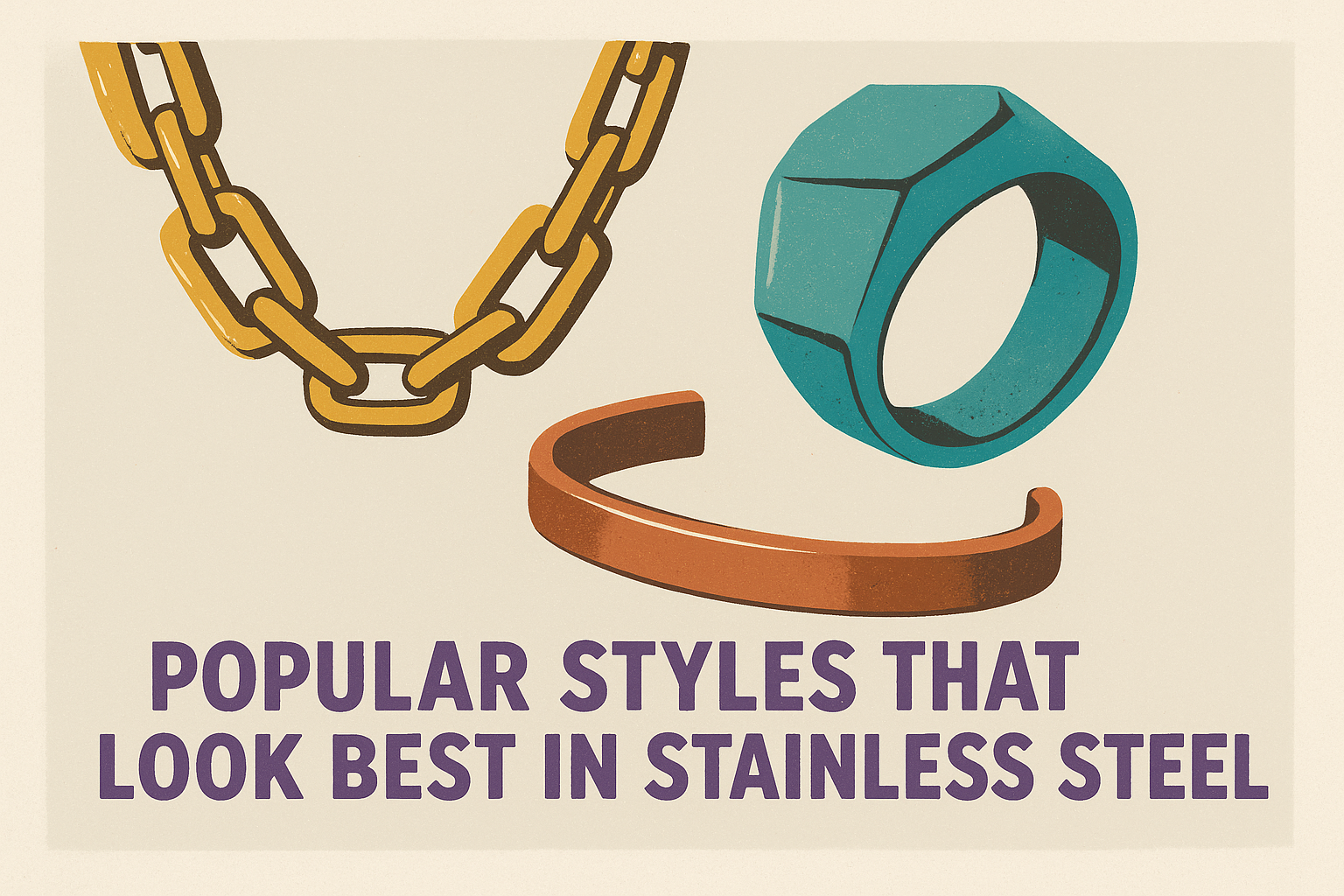
Stainless steel's ability to hold a sharp finish makes it the go-to base metal for clean, modern designs that look expensive without the price tag.
How to mix stainless steel with gold-plated pieces
Mixing metals is one of the strongest trends in fashion jewelry, and stainless steel pairs naturally with gold-plated pieces because both metals hold a consistent finish. Start with a silver-tone stainless steel base layer and add one or two gold-tone pieces to create contrast without the combination looking unintentional or mismatched.
How to choose the right tone for your skin and outfits
Cool undertones in your skin tend to complement silver-tone stainless steel, while warm undertones suit gold-tone or rose gold-tone finishes better. Your wardrobe color palette matters too: neutral and earthy outfits work with either tone, but if you wear a lot of cool-toned blues and grays, silver-tone stainless steel ties the look together more naturally. If you're unsure where to start, a two-tone piece that combines both finishes in a single design removes the guesswork entirely.
7. It costs less and still looks premium
Cost is one of the most compelling stainless steel jewelry benefits for anyone building a full, layered jewelry wardrobe on a real budget. Stainless steel is significantly cheaper to source and produce than precious metals, and manufacturers pass that savings directly to you at checkout without sacrificing the look.
Why stainless steel stays affordable
Stainless steel is an abundant industrial metal, which keeps raw material costs low and production costs predictable. Unlike gold or silver, its price does not move sharply with commodity markets, so retail prices stay consistent year-round. That stability means you can buy multiple pieces at once without worrying the same ring costs twice as much six months later.
The price stability of stainless steel makes it one of the smartest metals to buy when you are building a jewelry collection on a set budget.
How to compare stainless steel vs sterling silver
Sterling silver often costs three to five times more than comparable stainless steel pieces, and it demands regular polishing to prevent tarnish. Stainless steel skips that upkeep while delivering a similar visual weight and shine at a fraction of the price.
| Factor | Stainless Steel | Sterling Silver |
|---|---|---|
| Price | Low | Medium to High |
| Tarnish resistance | High | Low |
| Maintenance | Minimal | Regular polishing needed |
Drawback: stainless steel rarely holds resale value
The affordability of stainless steel works against you if you ever plan to resell a piece. Because the metal carries no precious metal content, secondhand buyers assign it little to no monetary value regardless of the brand name or design quality attached to it.
Quick recap and what to do next
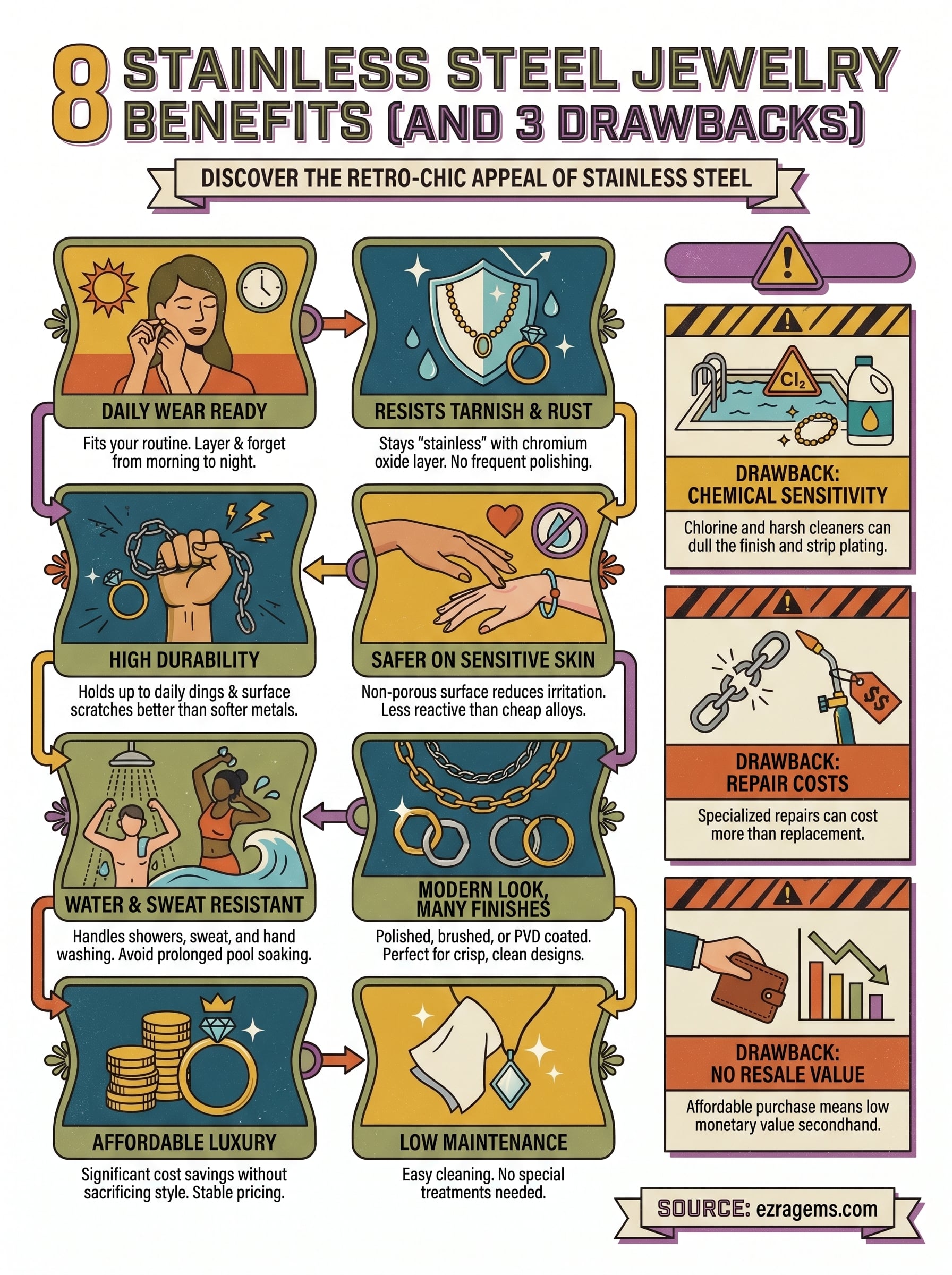
Stainless steel jewelry benefits the everyday wearer in ways that most other metals at this price simply cannot match. It resists rust and tarnish, holds up against daily wear, works for sensitive skin, handles water exposure, and delivers a modern look at a price that lets you build a full collection without stretching your budget. The three drawbacks, chemical sensitivity, repair costs, and zero resale value, are real but manageable if you know them going in.
Your next step is straightforward: find pieces you will actually reach for every morning. Start with a chain or a ring that fits your daily routine, then layer from there. Durable, low-maintenance jewelry does not have to look like a compromise, and the right pieces prove that immediately. Browse the Ezra Gems bestsellers to find designs built for everyday wear that hold their finish long after the first time you put them on.
Laat een reactie achter